13 Reasons to join a group ride; a Fraser River Fuggitivi listicle

160606FRFReasons
Hmmm, something looks familiar about the way the Fraser River Fuggitivi crosses the railroad tracks at Begbie St.

This article was originally published on Tenth to the Fraser

With apologies to the Eagles, there’s a new kit in town.

Actually, the Fraser River Fuggitivi road bike group has been rolling up and down the hills of New Westminster and beyond for about five years. But this spring the squadron has achieved a milestone coveted by every collective of roadie riders; they’ve got kit.

That’s cycling speak for fancy custom-designed jerseys and shorts emblazoned with the team’s name as well as the logos of various local sponsors. They’re not just riders anymore; they’re rolling billboards for an elite selection of supportive businesses. They’re also ambassadors for the city (minus the talent competition or commitment to wave from a parade float).

The Fuggitivi was formed by New Westminster roadie and New Zealand expat Guy Wilson-Roberts. He lives along the Quay and he got tired of trudging up the city’s interminable hills and rolling all the way into Vancouver to join a peloton of like-minded weekend athletes. By the time he got there, he was already pooped and of a mind to head back home.

So he put out a call on social media for fellow riders to come to him.

A few did. Those early pelotons were pretty modest; sometimes Wilson-Roberts’ group ride was just him.

But his persistence paid off; the group is growing.

This year there are about about 20 Fuggitivi (it’s the Italian word for fugitive) escaping the responsibility of their everyday lives twice a week for a few hours of freedom on the road; the group does a long ride of about 80-100 km every Sunday morning and a shorter, more intense climbing ride on Tuesday evenings.

There’s plenty of advantages to riding with a collegial group:

1. Camaraderie

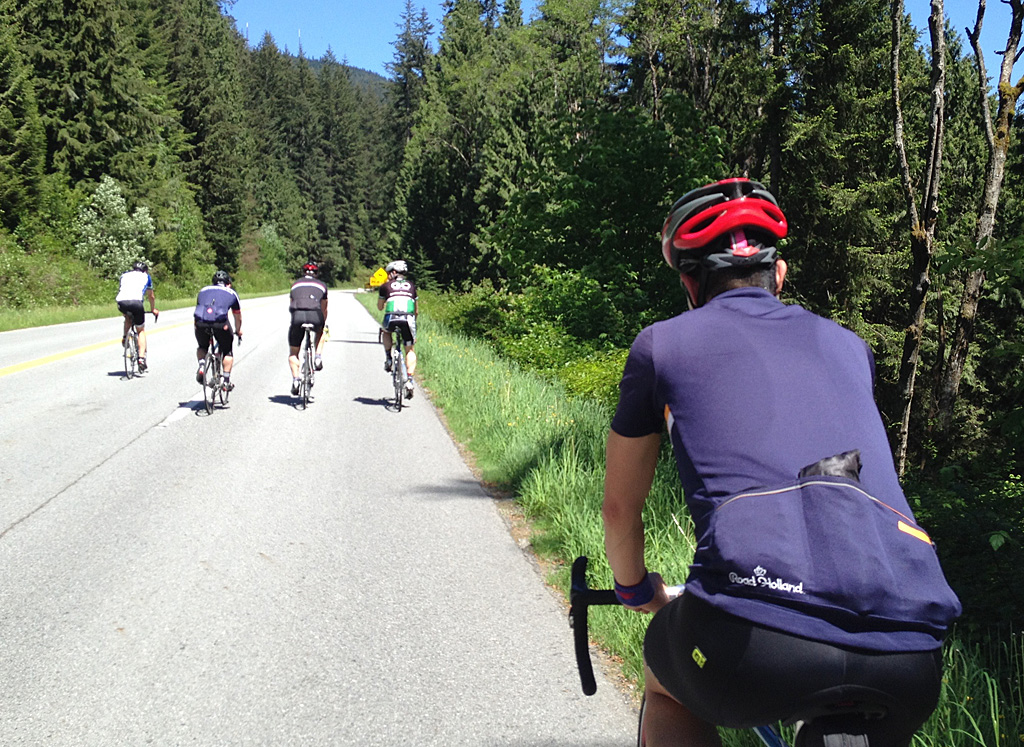
In a group, you never ride alone. Unless you’re off the back early on a major ascent like Mt. Seymour. Then you’re left to the bears.
Actually, a good group ride will often splinter into smaller pelotons to accommodate different paces. And confuse the bears by giving them too many options.
160606FRFReasons1b
In the Tour de France, the last rider in the pelton is known as the Laterne Rouge. On an FRF group ride up Mt. Seymour, he’s called bear kibble.

2. Beer

The FRF’s official hashtag is #moremilesmorebeer. And more refreshing than the Wayans’ brothers’ movie Mo’ Money.

160606FRFReasons2
Beer!

3. Mechanical assistance

See how the group pitches in to help a fellow cyclist who’s flatted get back on the road as quickly and cleanly as possible. Face it, best to leave the complicated repairs to the expert wrenches at The Original Bike Shop (shameless sponsor plug #1)

160606FRFReasons3
It’s all hands on handlebars when an FRF rider has to repair a flat.

4. Beer

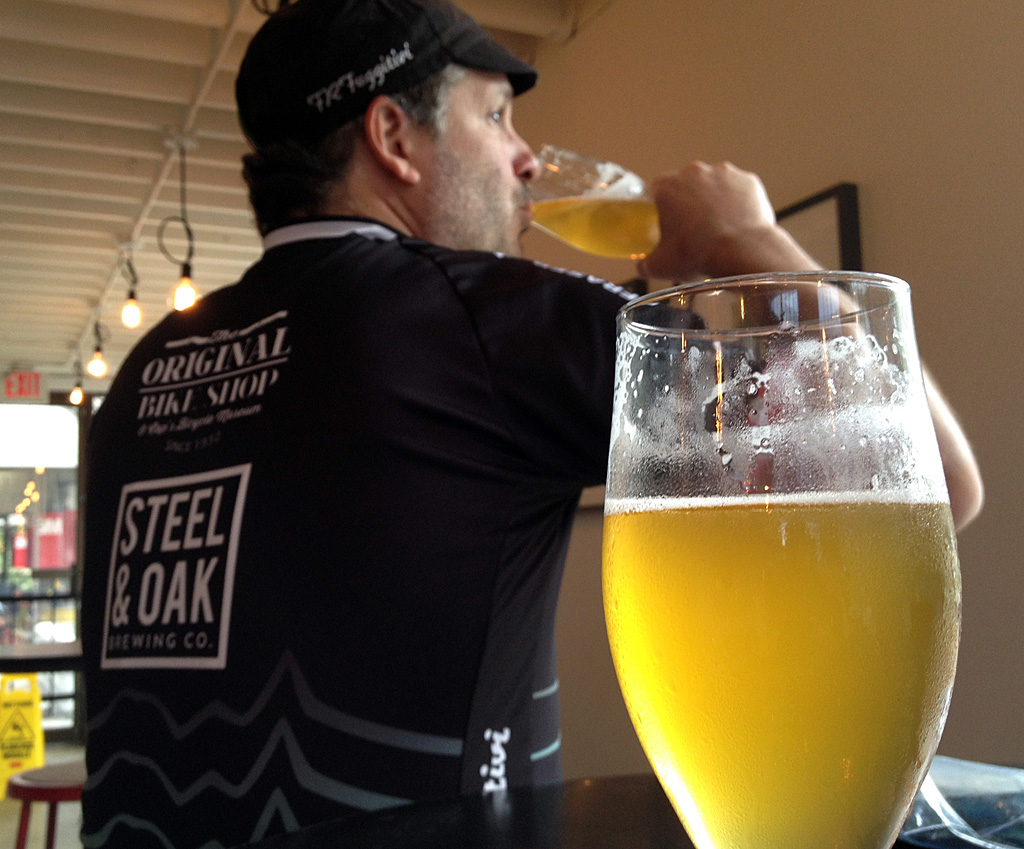
Yes, some FRF rides make pitstops at craft breweries. Heck one of the group’s sponsors is a brewery!  It’s in our DNA.
160606FRFReasons13
Beer.

5. Aerodynamics

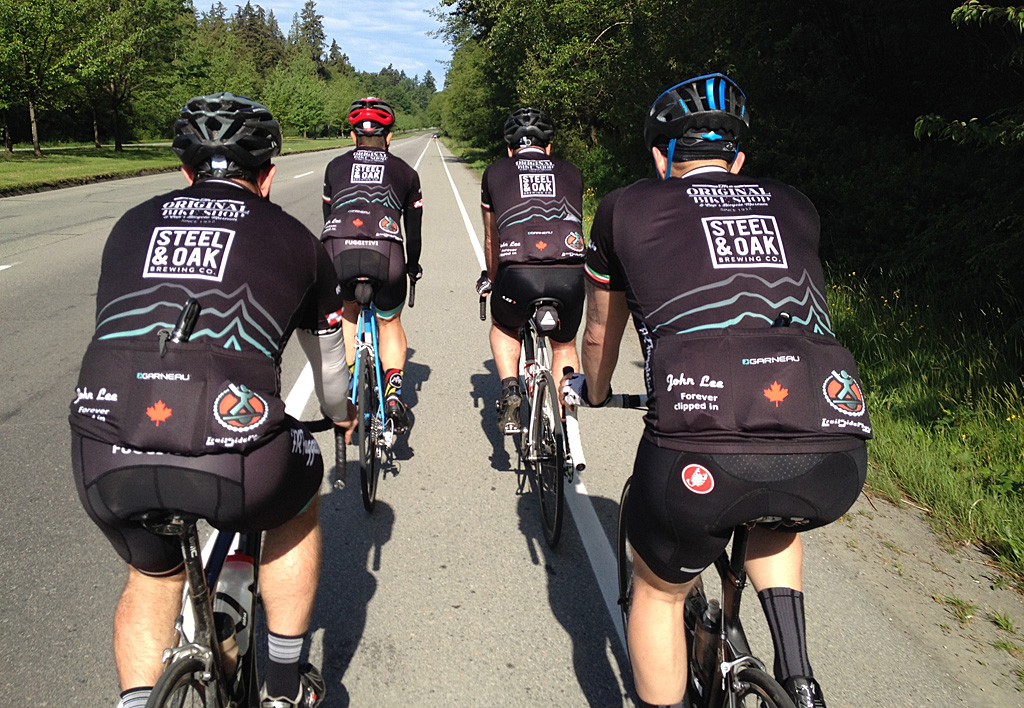
Riding into a cool headwind, it’s actually an advantage to be off the back. Because that’s where you’ll be able to take advantage of the rest of the group slicing a path for you through the breeze. You can conserve about 30 per cent of your energy that way, giving you more endurance to bend your elbows for no. 6. Some group’s call such opportunists a “wheel suck;” in the FRF, that’s just smart riding.
160606FRFReasons6
This is how to stay out of the wind and conserve energy on a group ride.

6. Beer

Really, it’s just a four-letter word for carbo-loading.

160606FRFReasons10
Beer!

7. Sightseeing

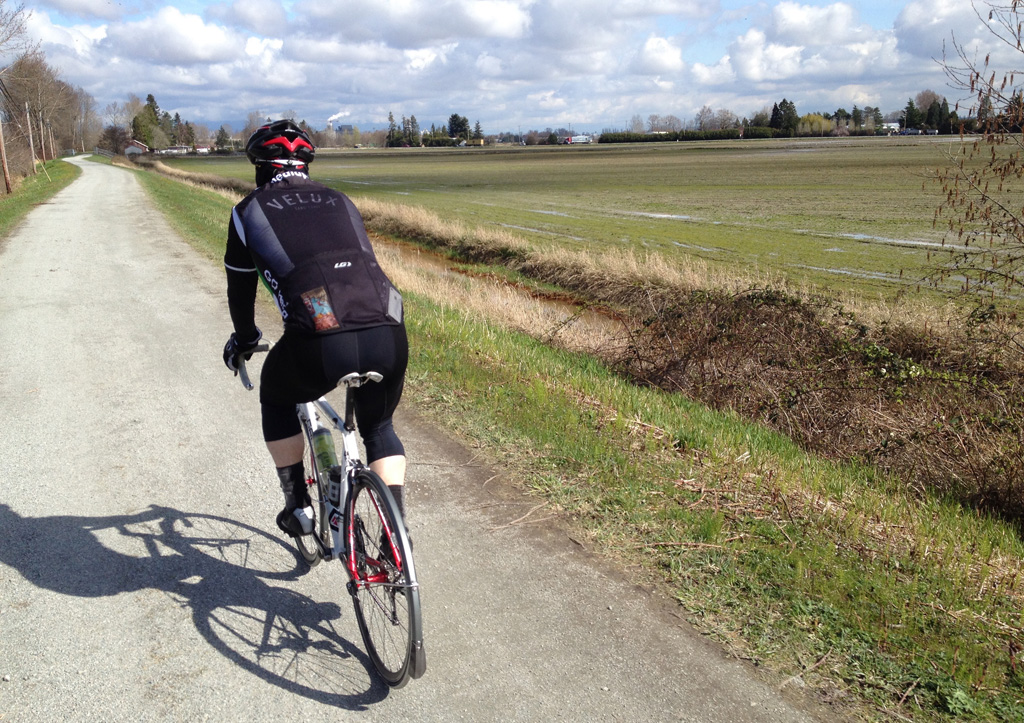
Every week a new captain is responsible for the ride’s route. That means discovering new ways to reach familiar destinations. And sometimes subjecting your lithe road bike to knee-rattling gravel. That’s called channeling your inner Flandrian.
160606FRFReasons7
Channeling our inner Paris-Roubaix on a stretch of gravel in Richmond.

8. Um, beer

A traditional post-ride beverage favoured by cyclists is a radler. It’s a refreshing mix of beer and fizzy lemonade. It originated in Bavaria, where the drink was called a radlermass, which means “cyclist mass.” Lore has it an innkeeper just outside Munich was running low on beer during a cycling party, so he extended his dwindling kegs by mixing in lemon soda. BTW, Steel & Oak mixes a killer radler (shameless sponsor plug #2).

160606FRFReasons8
Radler!

9. Food

Cycling burns calories. We know this because our Garmin computers tell us so. Ride 100 km with your buddies and eat whatever you want the rest of the day. Especially if you crave delicious tacos at El Santo (shameless sponsor plug #3).
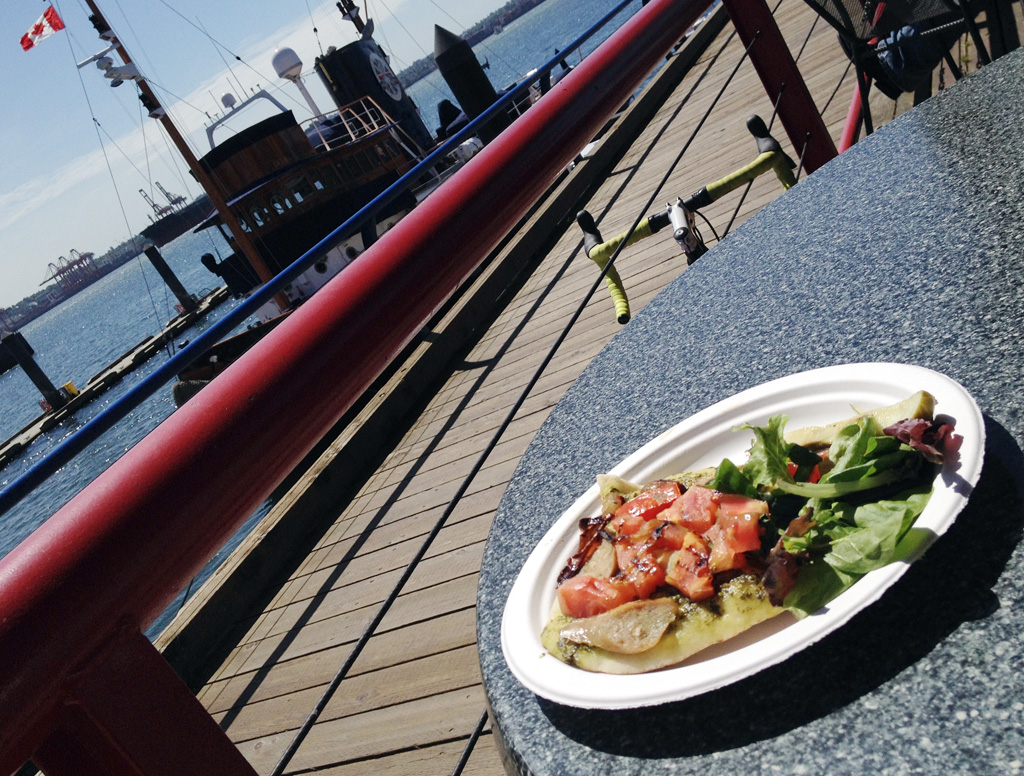
160606FRFReasons9
The lunch break or snack stop is a key highlight of the group ride.

10. Yup, beer

According to Bicycling Magazine, beer is an excellent natural source of folic acid, which helps reduce the chances of developing a cramp as you ride. If you stay cramp free, you’re less likely to try to ride through it and risk injury because your suffering body wasn’t up to the challenge. Unfortunately that means you won’t need to be taking advantage of the excellent rehab care at Trailside Physio anytime soon (shameless sponsor plug #4).

160606FRFReasons4
Beer!

11. Cool swag

Cyclists were wearing cycling caps long before it was cool to wear cycling caps. FRF’s cycling caps are amongst the coolest around. They’re even made by one of the group’s own members, Richard Lee of Red Dots Cycling (shameless sponsor plug #5). Richard also designed the FRF’s stylish new kit.
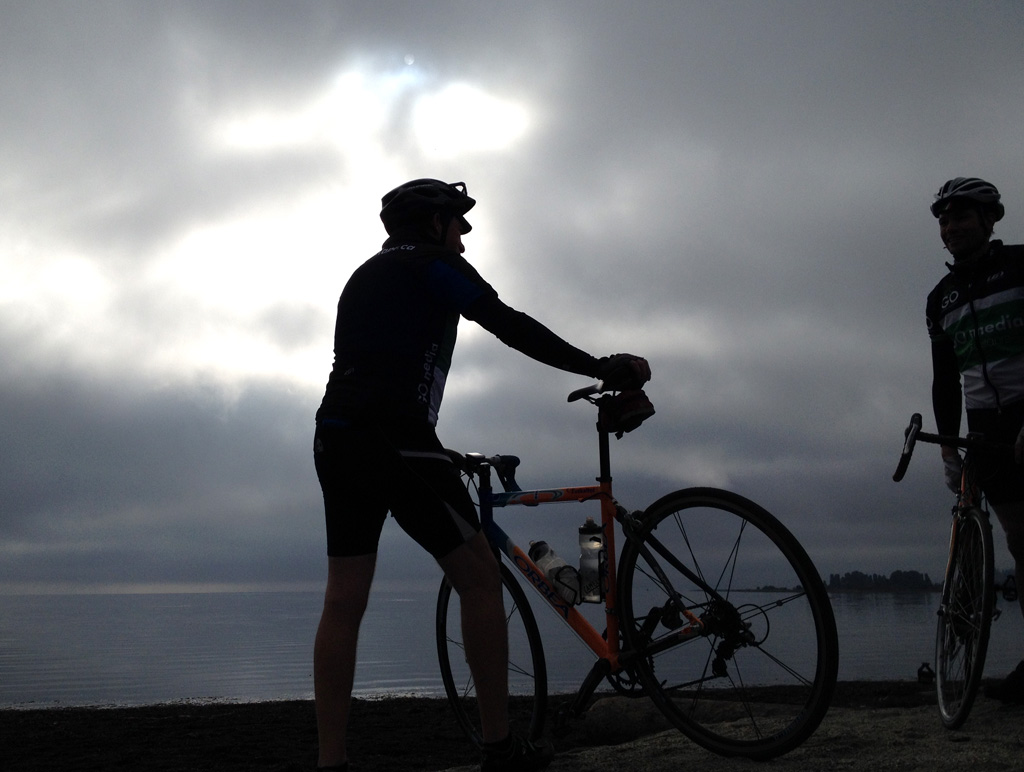
160606FRFReasons1
Oh yeah, you’ll also likely appear in cool photos like this at some point.

12. Navigation

When you ride with the FRF, you never get lost. Especially in Delta, the Bermuda Triangle of Cycling. Nobody gets lost in Delta. Ever.

160606FRFReasons12
To cyclists, Delta is the Bermuda Triangle that swallows whole groups whole and never releases them.

13. Beer

You’ve read this far; you’ve earned a beer. Then, oil the chain on your road bike, join the FRF and enjoy more beer.
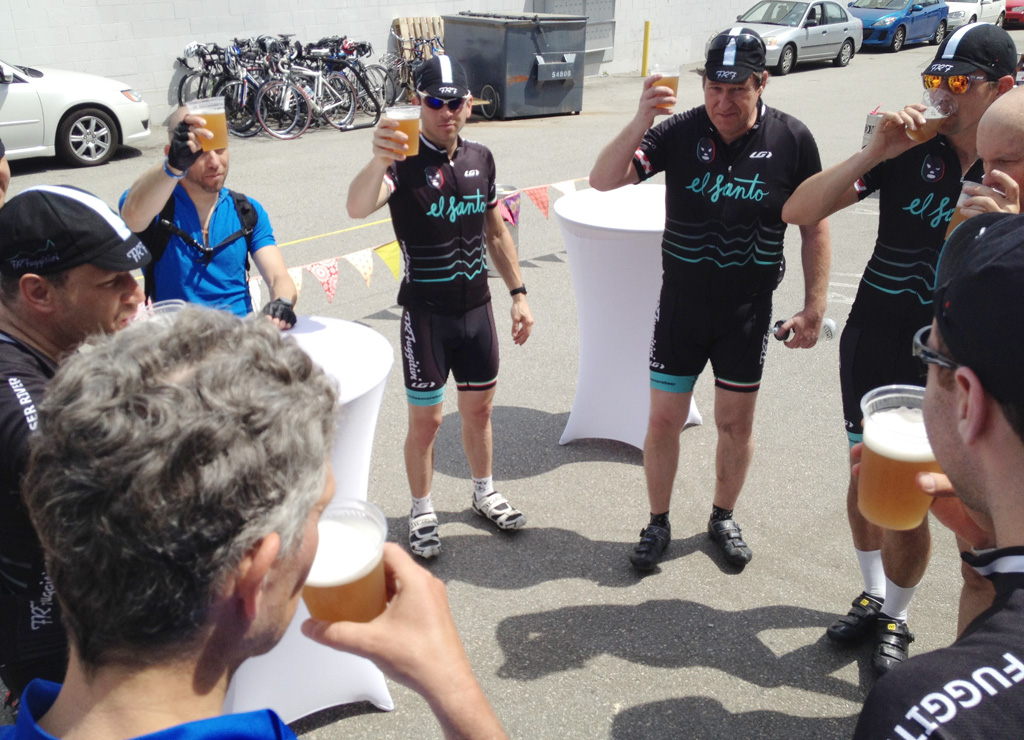
160606FRFReasons11
And….beer!

To learn more about the Fraser River Fuggitivi, check their website or follow their Twitter feed @frfuggitivi. Cap’s The Original Bike Shop also conducts group rides on various days.
The day Strava forgot about me

160606stravasadness
Not even a week off the bike and Strava has already forgotten about me.

The following article was first published on The Big Ring

Strava has forgotten who I am.

It’s six days into June and I’ve yet to throw a leg over the Lapierre. And already my mileage barometer has forsaken me.

I’m working again. That means trying rediscover a balance between working, riding and life.

A new job means adjusting to new routines that have a ripple effect on other aspects of our busy lives, like getting Little Ring to and from daycare, when to get groceries, managing household chores, finding time to binge-watch Silicon Valley. Too frequently in the past few weeks, it’s been the riding that’s been left behind.

My mileage on the bike is taking a hit.

In the months after my newspaper closed, I settled into a pretty simple routine; I still got up at 5:30 a.m. to shower and prepare breakfast for the family, get the household going. Once their days were established, I put time into scanning job sites, targeting possibilities, preparing resumés, drafting cover letters as well as crafted stories for my various blogs and freelance accounts to maintain my writing and social media chops. If there weren’t any other pressing errands, I was then free to ride.

Minus the niggling little problem of no income to replenish a dwindling bank account, it was a good routine that kept the household in order, my spirits up, my legs fit and my Strava account active.

While searching for new employment, I kept an eye out for opportunities that might allow me to commute by bike. As a journalist, I’d been denied that chance my entire career because we’re pretty much on the job once we step out the door, and during the drives around town or on the way home. That meant packing along the camera gear in case I was diverted to some sort of breaking news story or last-minute assignment. Or just scheduled to cover something on my way in or from the office because it was convenient.

A number of FRF members are regular bike commuters. I look at their Strava accounts with envy; those 20 km pedals to and from work really add up. And inevitably they’re the guys off the front during our weekly recreational rides.

160524elevator
I did manage to join one of the Tuesday climbing rides. But I thought that meant pedaling up and down hills, not riding elevators!

My new gig is a 400 metre walk from home! Which is awesome! But doesn’t afford me the chance to join the bike commuting culture.

I’m four weeks into the new position and I’m still getting my legs under me. Now I just have to figure out how to get those legs pedalling more frequently.

Drummer expresses cycling passion in photos

This story was originally published in Tenth to the Fraser

Jesse Cahill doesn’t think he’s “weird enough” to be mentioned in the same breath as David Byrne.

But the New Westminster drummer and the Talking Heads’ frontman known for his herky-jerky dancing and shock of white hair share a similar passion for bicycles.

Byrne expresses his love for two-wheeled transport in prose; he authored a book about his experiences riding his folding commuter bike between gigs around the world. Cahill uses a medium-format film camera to photograph bikes he’s encountered while traveling through Europe, Asia, and the Americas with his rockabilly band, Cousin Harley. In June, an exhibition of eight of his photos will be on display at the New Westminster Public Library in conjunction with Bike Month.

Cahill, 40, says he’s been commuting by bicycle for as long as he can remember; to school as a kid, to McGill University where he studied music, to his job in Downtown Vancouver where he teaches at the VSO School of Music.

He never really considered his bike as more than a cheap way to get around until he started photographing other bikes he saw during road trips with his band. In places like Belgium and the Netherlands, where the bike is essential transportation, he regarded bicycles as the solution for moving lots of people in a small space.

“Everybody has one,” says Cahill. “They’re utilitarian and egalitarian.”

They can also be stylish, with flourishes to their form that give them a timeless quality and bely their function to convey people or parcels or often both.

“They have a certain style to them,” says Cahill. “When it’s all over, there will be nothing left but cockroaches and old steel bikes.”

Cahill’s bike photography became a serious project a few years ago. He sets aside time at every stop while on tour to seek out distinctive or unique bikes leaning against walls, locked to trees, chained to fences. He tries to photograph them in isolation, standing apart from the hustle and bustle of a car-centric world.

“I want people to consider the possibilities of cycling,” says Cahill, who often builds narratives in his head about the owners of the bikes he photographs but rarely encounters them. “It can be transformative. It can be an escape. You can ride for the pure joy of it. You can be yourself.”

Cahill’s exhibition of bike photographs, Escape Plan, is on display in the upstairs gallery at the New Westminster Public Library through the month of June.

Anvil salute endures as New West’s quirkiest tradition

This photo essay was published originally on Tenth to the Fraser

Photos and story by Mario Bartel

The first time I was assigned to cover the Hyack Anvil Battery’s annual Victoria Day salute to the Queen, I heeded all the precautions from my photo colleagues; wear earplugs and keep my mouth open to help dissipate the concussion from the gunpowder blast. And prepare for the cacophony of car alarms from around the neighbourhood that answers every concussion.

The event itself perplexed and captivated me.

Any time people gather to blow things up, there’s the potential for great photos. Dress in bright red historical costumes, repeat the explosions 21 times and, well, that’s a good day for any photographer.

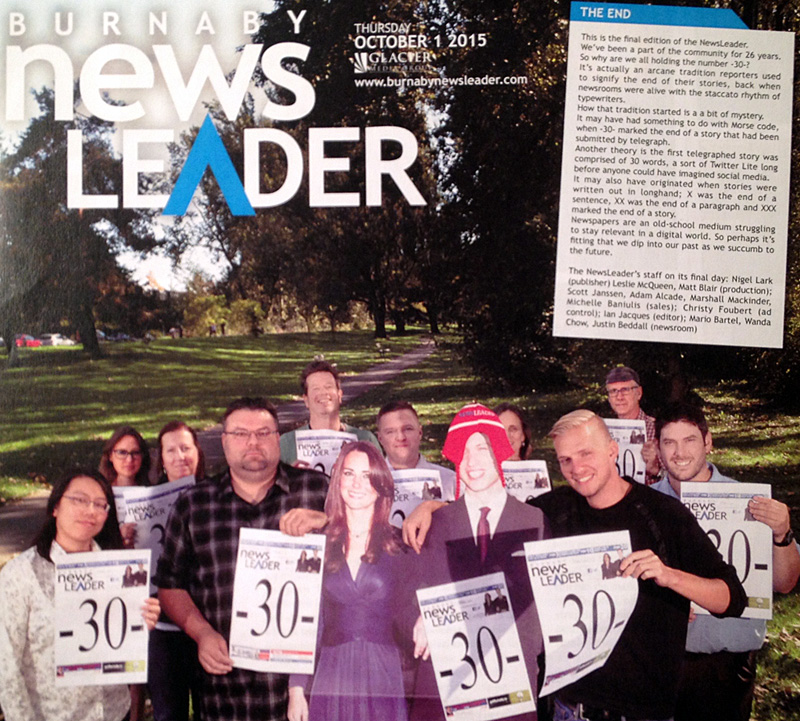
Over 25 Victoria Days at the NewsLeader, I missed only a handful of anvil salutes; usually when the spring holiday coincided with my own vacation.

The anvil salute is the perfect New Westminster tradition; steadfastly rooted in the city’s history, quirky in a modern context. Its origin was an improvised solution by the city’s fire brigade when a cannon wasn’t available for the annual salute to be fired on Queen Victoria’s birthday. One of the members, a former Royal Engineer, recalled seeing gunpowder placed between two anvils to create a cannon-type concussion.

Blacksmith Thomas Ovens, who would go on to become Mayor, donated a pair of anvils and members of the brigade set to work experimenting with the amount of gunpowder needed to create the desired explosions without blowing off anyone’s head or hands. The ceremony has endured ever since.

And while attendance in the grandstand at Queen’s Park Stadium waxes and wanes according to the weather, witnessing the anvil salute has become a kind of rite of passage for new residents to the city; every year when emcee Archie Miller asks how many people are seeing the ceremony for the first time, about half the hands go up.

I may no longer be employed by the local media, but it somehow feels wrong to walk away from the tradition of the anvil salute. There’s familiarity in seeing the same old faces of the Anvil Battery, a twinge of sadness when one of those faces is no longer there. There’s comfort in the event’s rhythm and Miller’s annual history lesson. And when the first blast ignites, its concussion punching my chest, I still feel the thrill of being a part of something uniquely New West.

Is journalism school still relevant?

It’s a three-peat!

For the third year running, newspaper reporter is the worst job in America, as determined by careercast.com .

The job hunting website looks at a job’s environment, income and employment prospects as well as stresses like stability and danger, to rate 200 careers. According to the survey, newspaper reporter ranks lower than soldier, logger or pest exterminator.

With such a dismal assessment, along with an ever-shrinking job market as traditional media like newspapers and broadcast shrink newsrooms, consolidate or shut altogether, serious questions are being asked about the relevance of journalism schools that continue to pump thousands of grads every year into a career that can no longer sustain them.

It’s not much fun being a journalist these days. Reporters are perpetually haunted by the scythe of unemployment swinging ever lower as traditional media outlets struggle to reinvent themselves in the digital era of social media and instant messaging. Mostly that reinvention consists of cutting costs as much as possible, then cutting some more, in a desperate attempt to maintain profit levels.

Instead of trading war stories from in the field, we gather in the lunchrooms and around the bulletin board to trade rumours about impending buyout offers, looming layoffs.

Even after eight months since my own paper closed, and my 30-year career as a photojournalist and multimedia journalist was cut down at the knees, I don’t miss that daily dose of gloom and doom.

But I don’t regret the education path I took to launch that career.

Time and again, as I search for meaningful work that will fuel my creativity as a storyteller as well as recharge my bank account, I see “Journalism” pop up in job ads as a desirable education or experience attribute.

The tools of journalism: curiosity, empathy, the ability to ask questions, gather information, find context, get to the core of a story and then convey that simply and succinctly in either words or photos, transfer to many careers. And, if my experience scanning job ads daily is any indication, the range of those careers is only growing.

Smart companies and organizations are realizing the best way to connect with their audience of customers is emotionally, by building a relationship. The foundation of that emotional bond used to be slick, intelligent campaigns borne from market research and devised by ad copywriters. Social media eliminates the need for that middleman.

Companies and organizations can communicate directly with consumers, wrest control of their story away from the suits on Madison Avenue.

But it can’t happen off the side of someone’s already full desk.

And so whole new job titles and classifications are being created every day: digital content manager; engagement specialist; even marketing journalist. Almost all those jobs are looking for someone with journalism education or experience. But they’re also seeking a background in marketing, branding, search engine optimization, communications strategy. Those are skills you’re likely to learn in business school.

Journalism school is still relevant and valuable. Prospective journalists heading into post-secondary education need to look past the increasingly obsolete career path as a reporter for traditional media and guide their storytelling skills to very specific outlets that value a professional telling their story.

Complement those basic reporting courses with subjects like marketing and communications. At the very least, if you do land a rare gig at a newspaper or broadcast outlet, you’ll make a heck of a business reporter. But you’ll have a lot more job prospects, security and growth potential outside that rut.

Adding and subtracting in the FRF peloton

The following piece was originally published on The Big Ring

The peloton giveth. And the peloton taketh away.

The most well-attended FRF ride thus far rolled out from River Market powered by 13 pairs of legs. Over the course of the planned 85 km route, we were joined by four more, bringing our peloton to 17. But it’s the 18th rider who wasn’t there that brought us all together for a special Saturday outing.

It’s the one-year anniversary of the passing of John Lee, our peloton’s missing man.
John was a devoted family man who made it one of his life’s missions to instil his love for cycling into his daughter.

He brought her along to local races to share with her the excitement of the pack rounding a corner at speed, pedals and spokes whirring, the breeze generated by its passing blowing hair and hats askew.

During our group rides John told us of his cycling adventures with his daughter. Often, if our planned route was a long one, he’d veer off and head for home for an afternoon ride with her.

When word spread through our peloton last year of his sudden passing, we were all in disbelief; John seemed fit, a strong rider whose calves tirelessly pumped like pistons up hills, through the countryside, along the urban bike routes.

Sometimes the clock of life operates on its own schedule.

John made our group stronger in its formative seasons; he was ready to ride in all weather. He wasn’t caught up in cycling’s fickle fashion foibles; he loved his classic steel bicycle and eschewed modern clipless pedals for old-timey toe clips and leather straps wrapped snugly around his vintage lace-up shoes.

But he’d be proud of the group’s growing dynamic and the new kit that turned heads as we rode into the turf of other established groups like Glottman-Simpson on their traditional riding day. It was as if the FRF was announcing its official arrival on the local road riding scene.

It’s fitting then, that our John Lee Memorial Ride was also a bit of a coming out celebration for the Fraser River Fuggitivi.

Filmmaker’s Storyhive project hits close to home

160510Storyhivewinners1b
Photo by Mario Bartel Joel McCarthy, right, and Nach Dudsdeemaytha are two-thirds of the creative force behind This Is A Spoon Studios on Auckland Street. The New Westminster filmmakers just won a $10,000 Storyhive grant from Telus to produce a pilot for a possible tv series.

Joel and Rachel have just discovered they’re pregnant.

The only problem is – well, actually there’s several problems: Joel is an ambitious young filmmaker who’s not sure how fatherhood will fit into his career plans. And Rachel prefers the company of women.

If that sounds like the set-up for a primetime sitcom, it could soon be.

It’s also Joel McCarthy’s real life.

McCarthy, 25, is a New Westminster filmmaker. His friend, Rachel Kirkpatrick, is pregnant with their child. And as they kept explaining the nuances of their non-traditional relationship to friends and family and planned to navigate their impending parenthood, they realized they had the seeds for a pretty funny story.

“I’ve got the ability to find things before they’re funny,” said McCarthy, a Capilano University film grad. “I realize when life is funny.”

McCarthy operates This is a Spoon Studios in New Westminster with two of his fellow grads, Nach Dudsdeemaytha and Charles Chen. They pay the bills by shooting corporate videos and travel documentaries in places like Peru, Morocco, India and Panama for non-profit organizations.

But their passion is turning their own personal adventures into crazy narratives.

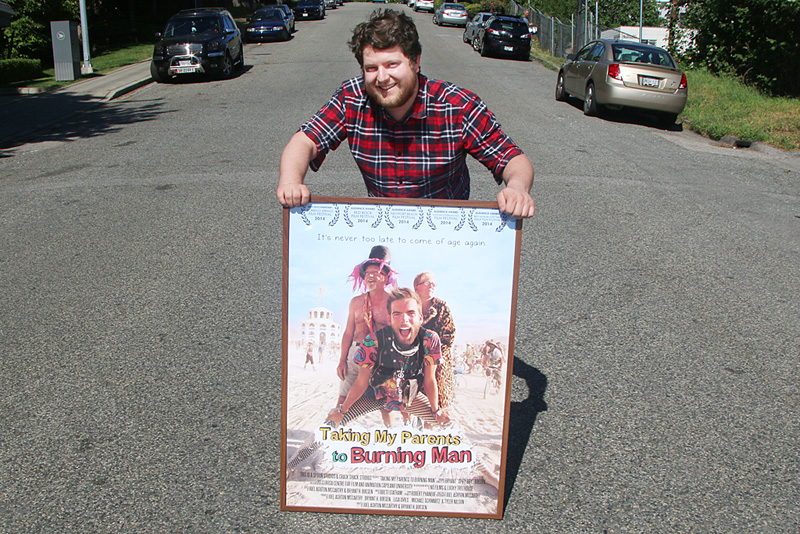
Their first feature, a documentary called Taking My Parents to Burning Man, followed the foibles of a colleague, Bryant Boesen, as he took his parents to the Burning Man festival, an annual ritual of debauchery, music , mind-altering substances and fire in the middle of the Nevada desert. They endured a broken-down RV and party-hearty travelling companions. They were rewarded with accolades on the festival circuit.

160510StoryhiveWinners2b
Photo by Mario Bartel Joel McCarthy’s first feature success was a documentary about an unconventional roadtrip to the Burning Man festival in Nevada.

Their second feature, Shooting the Musical, is a no-budget mockumentary about a group of film school grads trying to produce the most offensive film of all time. It was shot with a crew of volunteers on the sly at local schools after McCarthy submitted fake scripts to gain approvals from administrators. It’ll be released in August.

“I’m not exactly proud of how we got it done,” said McCarthy, smiling. “But it’s hard to sue people with so little.”

McCarthy, Chen and a couple of buddies also produced a web series called Average Dicks and they recently participated in the Crazy 8’s competition that challenges filmmakers to deliver a finished project in just eight days.

But Inconceivable will be their most ambitious effort to date. It’s also the first time the’ll have a budget they didn’t have to beg, borrow or crowd-fund.

That’s because they just learned their pitch for Inconceivable won a $10,000 grant from Storyhive, an initiative by Telus to help up-and-coming filmmakers get passion projects off the ground. The money will allow them to hire real actors to play the autobiographical parts as well as give them the freedom from financing concerns to develop, write  and produce the script for the 10-minute pilot by July 27, which could evolve into a five-episode series or more.

“It’s going to free us up to get access to the things we need,” said McCarthy.

Their entry into the competition almost didn’t happen. McCarthy and Didsdeemaytha didn’t create their one-minute video pitch until just before the deadline. Once submitted, they spent a solid week on social media getting out the vote.

Now that their project has been green lit, McCarthy faces the reality of spinning his own awkward life situation into comedic gold.

“It’s going to end up hitting close to home,” said McCarthy. “It’s going to be about the pressure a lot of creative people feel between having security versus keep creating to push their career forward.”

Hopefully, he said, his own life will follow the latter path. After all, he’s got a lifetime of fodder to fuel his ideas.

“It’s easier when you have so much source material,” said McCarthy. “We’re just a group of nerds. A lot of what we do is like summer camp.”

Life cycle

Mario Bartel storyteller blog cyclist photographer communicator
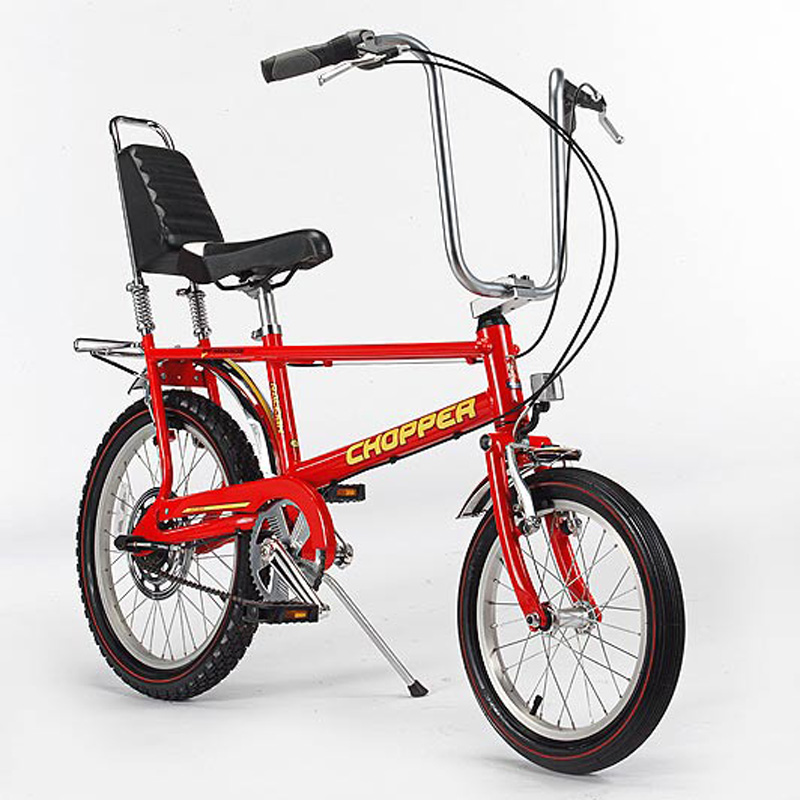
A Chopper bike from Canadian Tire that looked a lot like this one, was my first memorable ride.

Cyclists can  define the stages of their lives by their bikes.

The first significant bike I remember was an orange Chopper-style bike from Canadian Tire that arrived under the Christmas tree when I was 7 or 8 years-old. It was a sweet, tricked out ride, with an elongated black seat supported by a low-rise “sissy bar,” a three-speed “stick” shifter mounted on the wide top tube and, of course, the obligatory hi-rise handlebars which I occasionally adorned with streamers. It was a bad-ass ride; apparently I liked to channel my inner Easy Rider when I was a kid.

When I outgrew that, I convinced my parents to spend $89 on a Shields road bike from the Consumers Distributing catalogue store with proper curved handlebars and a four-speed internal hub gear system. It weighed a ton; I think the tubes were cast from iron. But it took me on adventures to distant parks, gave me my first taste of freedom on the road.

In high school, I started to get more serious about my cycling endeavours. I saved my allowance money and eventually accumulated enough to purchase a real Peugeot road bike from a real bike shop. The grey steel frame was accented with chromed forks. The downtube shifters connected to a bonafide 10-speed derailleur. It weighed about a third of the clunky Shields, but it was no thoroughbred by any means.

When I caught the occasional glimpse of the Tour de France highlights on TV, hosted by John Tesh, I cheered for the riders on Peugeots.

I rode far, and tried to go fast on that bike.

In university I kicked my bike game up another notch.

A chance visit to a local Italian bike shop to kill time while getting new tires put on my dad’s car introduced me to a beautiful Rossi stallion. It’s chromed Columbus Aelle tubing glinted in the sunlight. The Campagnolo Nuovo Record group sounded exotic, but was renowned for its simplicity and durability. The Mavic wheelset gave it racing cred, although I had no intentions of testing my legs in that way.

The $900 price tag was a major kick to my meager student finances; but I was in love. The next Saturday, she was mine.

Astride the Rossi, I was a “serious” cyclist. She took me on epic 100 km rides. She carried me on cycling dates. I upgraded parts, affixed a fancy set of red Look clipless pedals.
She was my ride and joy for about 10 years, although I hung onto her long after she was retired. Her lithe silhouette had a place of honour in my bachelor apartment, a piece of gleaming chromed kinetic sculpture leaned against a living room wall.

When I moved west, the Rossi and my Kona mountain bike mounted on the Thule roof rack upon my red Toyota Tercel, I rewarded my assurance of a new job by heading to the nearest high-end bike shop. I picked out a sweet Cramerotti frame with a red, white and blue fade paint job on the Columbus SLX tubes and, of course, chromed stays and fork. I cherry-picked the groupset, brakes and wheelset to build her up. She was practically a custom bike, my dream machine.

The Cramerotti carried me up and down the local mountains with ease. She took me out to the countryside and navigated busy city streets. And when I signed on for a cycling tour to accompany the 2003 Tour de France, she was to transport me through the streets of Paris, up the legendary Pyreénean climbs of Col d’Aspin and Luz Ardiden.

That was the plan, at least; until a fateful detour after a visit to the bike shop to get her pedals removed in preparation for packing her into a travel box took me under an overhang that was too low for the Cramerotti mounted on the roof rack of my car. The thud was sickening, the damage heartbreaking. And terminal. My flight departed in 36 hours!

A panicked visit to the bike shop set me up with a Specialized Allez Comp. Not my first choice, especially the wild and crazy zebra-stripe livery; but it fit, and the shop could have it set up for me by the end of the day.

The Allez performed admirably in France, turned heads even. My attachment to her stiff, responsive ride and assured ascending grew. But ours was an ill-fated relationship; a week after returning from France I was hit by a car turning left and the bike was bent out of alignment.

Insurance set me up with my next ride, a bright orange and blue Orbea.

I was enamoured with the Spanish brand after watching their bikes perform for the small Basque team, Euskaltel-Euskadi. They were a plucky bunch, scrapping their way up mountainsides amongst the best climbers, then faltering miserably against the time trialing machines like US Postal and ONCE. They were a regional outfit playing in the same sandbox as multinational big boys. And Orbea is a co-op, where the workers each own an equal share in their employer.
The Orbea’s bright colours caught admiring glances, her unusual brand sparked conversations. Her light aluminum frame climbed like a demon and she descended on a rail.
Orbea and I spent more than 32,000 kms together. I knew her every quirk, her every squeak and squeal. She carried me to my wedding. She was my ride of choice on my first Gran Fondo.

She would have been my forever bike, until my heart was stolen by a sassy French Lapierre.

Each of my bikes (well, I’m not so sure about the clunky Shields department store bike), or at least parts of them, went on to another life. The Cramerotti’s pedals were ported over to the Specialized. When it’s short life ended, it’s components were installed on the Orbea, which is still being ridden by a friend.
The beloved Rossi, after years of collecting dust interrupted by occasional service as a winter trainer bike, became a throw-in when I sold an old mountain bike to another buddy; it sparked another’s love for the road.

The chainring of life…

The pursuit of weird

This travelogue was originally published on The Big Ring

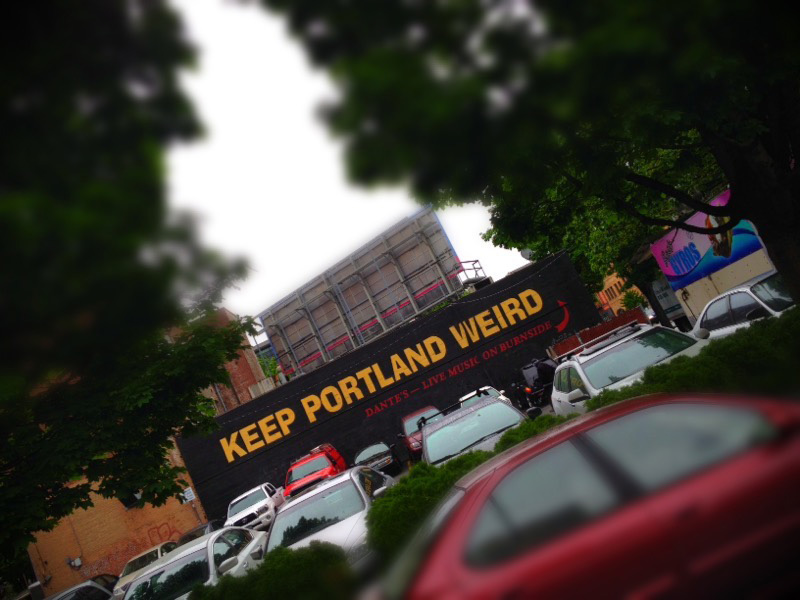
There’s something about Portland.

Yeah, it’s weird. But in a comfortable, endearing way.

Portland’s weirdness is fun, not threatening.

Mario Bartel storyteller photographer writer blog communicator Portland
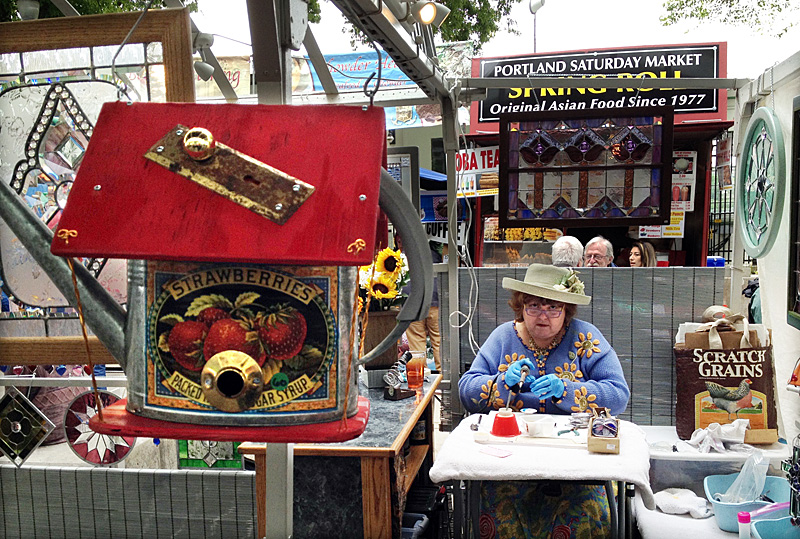
There’s no shortage of wonderful weirdness at Portland’s Saturday market in Old Town.

My first visit to Stumptown was a respite from a camping road trip down the Oregon coast with a buddy. We’d secured tickets to They Might be Giants at the Crystal Ballroom, so a night in the city, bunked in a motel room was a bit of a break from sleeping in a damp tent.

The city’s network of geographical streets and avenues is confusing; the first place we alighted after exiting the interstate was a leafy part of town called Nob Hill.

We booked into a cheap motor hotel called the Carriage Inn that seemed stuck in the 1960s. The linoleum was worn, the bedding threadbare; but it was  reasonably clean and all the rooms had fully-equipped kitchens.

We explored the neighbourhood, populated with old, well-kept Victorian homes and apartment blocks. People sat on their porches, chatted in manicured courtyards. Nearby 21st Avenue was alive with people enjoying dinner or a beer on tables in front the numerous restaurants, bistros and pubs. Two blocks away, on 23rd Avenue, couples and families strolled past shops and boutiques.

In the opposite direction, Powell’s Books and Portland’s downtown were only a 10-minute walk away.

But mention Nob Hill to an outsider, and they usually just shrugged; they never heard of it.

Nob Hill became my go-to district for subsequent visits to Potland, for the GI Joe’s Indy, for journalism conferences.

Then, the Carriage Inn closed.

When it reopened it had been funkified into an eclectic boutique hotel with chartreuse walls, lime green and orange furniture, tubs of colourful saltwater taffy and Starburst chewies in the lobby. It was renamed the Inn at Northrup Station, after the new tram line right out front.

It was time to share my love for Portland with Princess of Pavement.

She immediately took to the city’s friendly folk and their slightly off-kilter vibe.

We went there for part of our honeymoon. We went for her first marathon. We went just because we felt a need for a little dose of Portland.

Last week we went to celebrate the conclusion of another grueling semester in the Princess’ transformation from journalist to science geek.

As always we had no set plan.

I was hoping to catch an exhibit by American photographer William Eggleston at the Portland Art Museum. The Princess wanted to visit her favourite boutiques on 23rd. We both wanted to explore some new neighbourhoods. And, of course, renew our allegiance to Salt and Straw ice cream.

The Eggleston exhibit was brilliant, the Art Museum quite fine with a bold collection of contemporary works.

We used Portland’s transit network of trams, streetcars and buses to get to the Hawthorne/Belmont area and up to Williams/Mississippi on the city’s north side where we popped into Hopworks’ Bike Bar. Sadly , other than some frames hanging from the ceiling and taps adorned with repurposed hubs and stems,the cycling vibe was somewhat lacking in this bike-themed bar. The Flandrian it is not.

Mario Bartel storyteller photographer writer blog communicator Portland
Sure, the Bike Bar has bikes; but it lacks a cycling atmosphere.

But our visit did connect us with one of the guys behind another recent addition to Portland’s craft beer taps, Labrewatory. One of its owners was visiting Bike Bar and recognized my Steel & Oak hoodie as he’d done some consulting work to help them set up their brewing system. He invited us to stop by.

Mario Bartel storyteller photographer writer blog communicator Portland
Beer + science = great taste at Labrewatory in Portland.

Labrewatory doesn’t just help other brewers get off the ground, they also serve up some pretty fantastic beers in their stylish tasting room; their Golly G Porter and Abuelita Stout are outstanding.

In our eternal quest for a great sandwich, we time-travelled back to the 1970s in a cluttered hole-in-the-wall counter called Bunk, where their excellent Cubano was served up by a guy rockin a ‘fro to ELO on the sound system. But Lardo’s pork meatball Banh Mi, so beloved on the foodie blogs, was a letdown; it just doesn’t compare to the light freshness of Freebird’s at our own River Market.

Mario Bartel storyteller photographer writer blog communicator Portland
The Princess of Pavement time travels to the 70s at Bunk sandwiches.

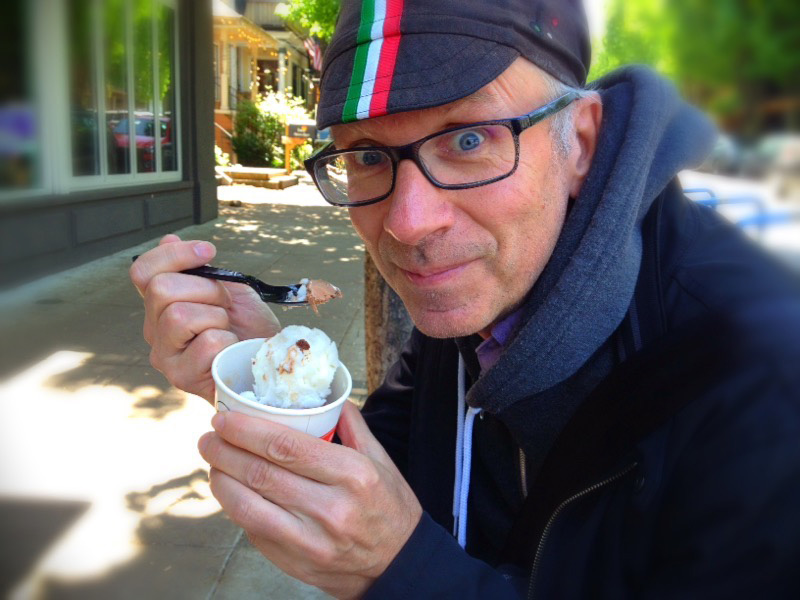
As for Salt and Straw; we visited every day during our time in Stumptown. Let’s just say their chocolate gooey brownie may be my most favourite ice cream, ever.

Mario Bartel storyteller photographer writer blog communicator Portland
Salt + Straw = Joy!

Modern touches honour the past in heritage home

The following story was originally published on Tenth to the Fraser

Kathryn Matts grew up in a heritage home on Queen’s Avenue. So when she and husband Brian decided in 2009 to move their family back to New Westminster from Burnaby, she knew she wanted to surround herself with walls that breathed history.

Finding the George and Delina Reid House on 10th Street was love at first sight, said Matts.
The Craftsman house was built in 1911 and still features the original shingles and clapboard siding on its exterior. Inside, the hardwood floors, wooden ceiling beams, dark fir panels, leaded glass doors and 17 stained glass windows are all original, as are some of the art deco lamps.

“It’s pretty amazing when you think of everything that survived,” said Matts.

The house was occupied by CPR warehouseman Joseph H. Method from 1925-26, and then by rancher Alex McPhail and his family until 1963.

Subsequent owners made some changes, like building an illegal suite in the basement; but the bones, the home’s character, endured.

Matts knew they’d have to respect that legacy as they modernized their new home to accommodate  her family and their contemporary lifestyle. Electrical and plumbing systems were updated, a music room was converted to a laundry room and powder room. But the biggest change was to the kitchen, which was moved to the opposite side of the house, enlarged and opened up to a family room.

A fireplace was sacrificed, but other details were painstakingly honoured.

“Some things had to go,” said Matts. “We wanted to keep elements that were really important.”

Each piece of dark wood moulding was removed, numbered, restored and then put back into place, like a puzzle. A pair of stained glass windows from the old music room were given new frames and a new home in the family room. The oak floor was matched to the finish of the original floors elsewhere in the house. New pocket doors between the kitchen and dining room were patterned and finished after the originals, still in place between the dining room and front parlour. An original archway in the front entrance was recreated at the hallway’s other end, leading into the family room.

“It’s the best of both worlds,” said Matts. “I want people to see they can have the kitchen of their dreams with an open concept feeling, but still hold onto the heritage value. Living in a heritage home isn’t all creaky floors and drafts.”

The Heritage Homes Tour has been a New Westminster tradition for 37 years. This year’s tour will be held Sunday, May 29, from 10 a.m. to 5 p.m.