On Saturday I was on assignment for the Royal City Record at the PacWest women’s soccer final between the Douglas Royals and Vancouver Island University Mariners. The lighting at most local outdoor sports fields is pretty dismal; this was my first real test of the Canon 70D’s low-light capabilities. By the end of the evening match, I had pushed the camera’s ISO to 8,000, a far cry from the old film days when 3,200 ASA was stretching the medium’s capabilities to its limit.
Tag: photographer multimedia
Fat Paint Company a big success
A version of the following story was originally published in Invest New West, a magazine about the city’s economic development.
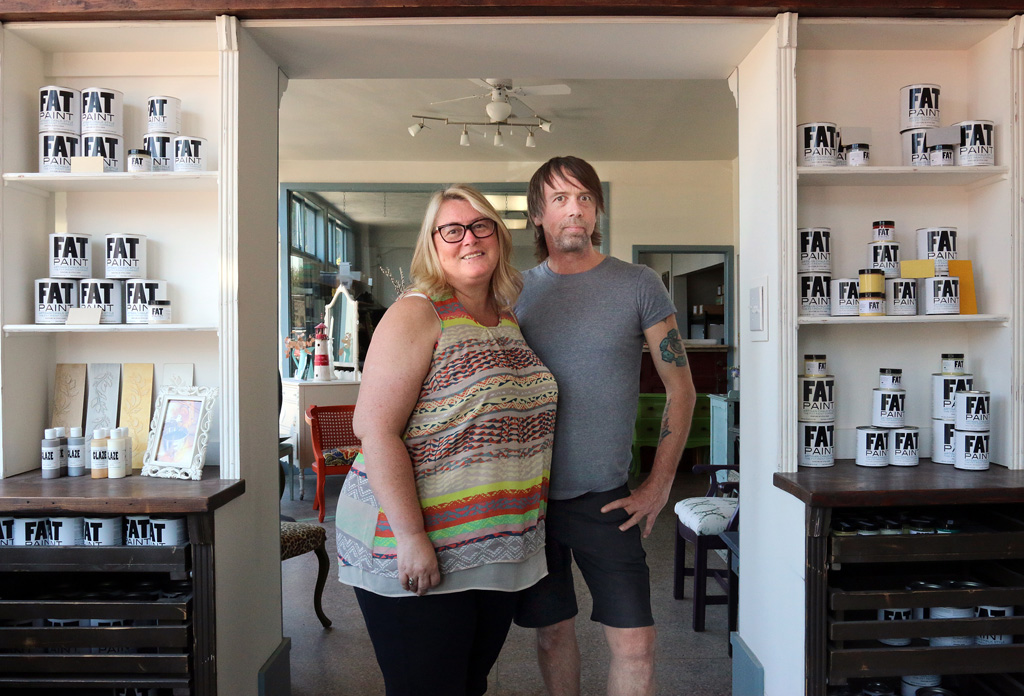
The FAT Paint Company is a New Westminster success story.
It started on a kitchen counter when Victoria Lambert and her brother, Bradford, were refinishing some furniture pieces.
Bradford worked in the film industry and he was familiar with a technique of mixing paint and chalk used by set decorators to give wood a weathered, authentic look. The chalk paint, known in the biz as “fat paint,” was versatile, easy to work with, dried quickly.
The refinished furniture pieces were a hit. The siblings decided to can their paint, and share their technique.
Today the Lamberts and their staff develop, mix, can and market their FAT Paint from a 3,065-square-foot production facility in a converted auto repair garage at the foot of 11th Street. More than 100 retailers across North America, from St. John’s, Newfoundland to San Antonio, Texas to Fort Nelson, British Columbia, sold 357,359 cans of their paint last year.
FAT Paint is available in nine provinces and 14 states, with plans to expand overseas in 2017.
But much of the work to make FAT Paint is still done by hand.
Until a recent move to automate the mixing process, the chalk and paint were combined in an old, repurposed industrial bread mixer.
Pouring the paint into 1-litre cans, sealing the lids and affixing the brand’s distinctive black and white labels gets the human touch.
Celebrating a life’s milestone
Not a lot of life’s milestones achieve 25 years anymore. Jobs at the same employer rarely endure that long, let alone careers. People rarely live in the same apartment, same home for a quarter of a century. And fewer couples are attaining their silver wedding anniversary.
So I’m pretty proud that the little pick-up road hockey game I started with some buddies one fall morning 25 years ago is still going on. In fact, it may rank as one of my life’s achievements.
Over the years, generations of players have come and gone; only two of us remain from that inaugural match.
We’ve played through all kinds of weather. We’ve survived injuries, bad feelings, spells of complacency, goalie crises, shoddy equipment, no equipment and even the occasional locked-up court.
Through it all, we’ve been driven by the game’s spirit of camaraderie, the joy of competition without consequence, the connection we forge with the changing seasons and passing years, the pursuit of lasting youth.
Most of the games have been documented by renowned road hockey beat reporter and photographer Jay Suburb; first in a photocopied handout, The Road Hockey News, then on a Geocities website, Road Hockey Illustrated, and for the past 13 years on the blog, roadhockey.net.
Sunday, we officially opened Sunday Morning Road Hockey’s silver anniversary season.

Quick shots a victorious recipe for undermanned team in season opener
Colonel’s languid attempt to wrap a shot around from the back of the net past Joker’s outstretched pad late in the game may have been the longest anyone on his team possessed the ball Sunday.
And while he didn’t score on that play, the wily veteran and his mates used quick crisp passes and timely shots to overwhelm their opponents 15-10 in Sunday’s regular season opener.
Playing without the benefit of a spare player to shift off for refreshed legs, Colonel and his mates kept the pressure on all game by keeping the evil orange plastic ball moving, even if their feet weren’t. That kept their opponents on the run, and Joker on his heels.
“Our passes were a little crisper, our shots were a little faster,” said Colonel. “Sometimes all you need is that extra split second and they go in as opposed to not going in.”
Joker admitted he had trouble tracking the ball at times as it moved quickly back and forth between the opposition’s stick blades.
“They were one-timing shots, and we were taking our time.”
The up-tempo playmaking was rewarded by a quick 5-2 advantage. But Colonel and his mates were wary to keep the pressure on.
“We came out pretty fast, but we learned pretty quick the game would go on for a while,” said the veteran centreman. “We had to keep our noses down and take chances when there were opportunities.”
Joker said his side’s man advantage may have kept their legs fitter but dulled their mental sharpness. Knowing they might be able to outlast their opponents in a longer game, played hung onto the ball, made the extra pass, moved the ball around the court more before taking a shot.
“We were taking our time,” said Joker. “We were accepting the pass and then setting up to shoot as opposed to shooting right away.”
That gave Lak Attack ample time to set up for saves. And, but for a brief lull in the second period, he was equal to the task.
That lull coincided with the underdog’s renewed effort sparked by Joker’s temper tirade after successive goals stretched the lead even further. Kid, Bam Bam and even a pair by the Living Legend pulled the underdogs to within a goal, 10-9, at the second break.
But that was as close as they got.
Of mud and glory
What happens when you cross a bike race with a mud bog?
Queens Cross.
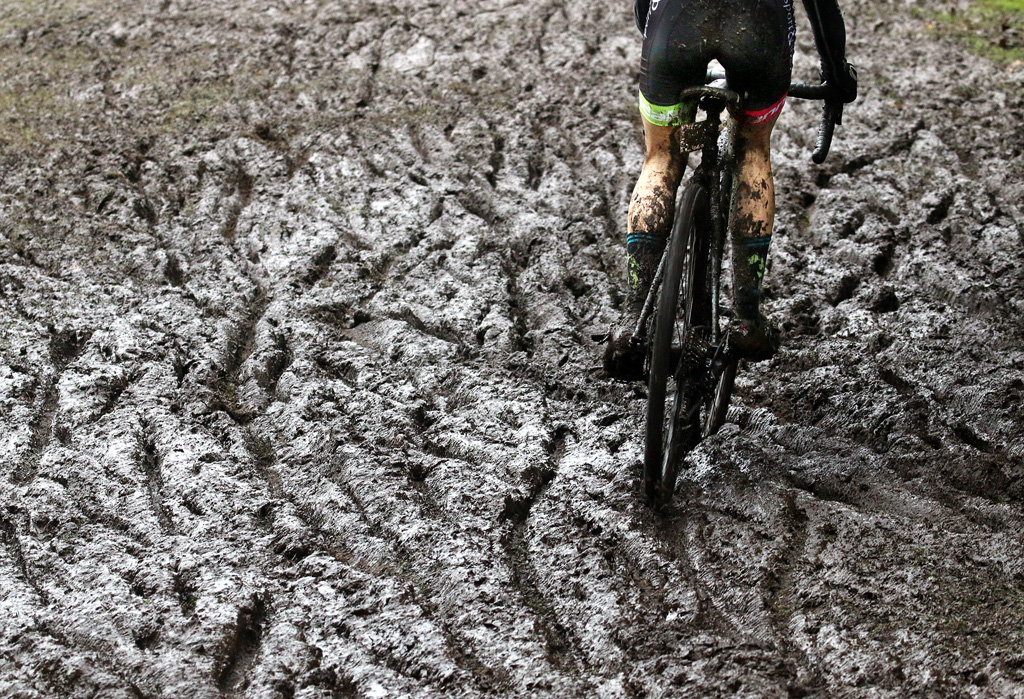
Saturday’s driving rainstorm may have deterred all but the hardiest spectators, but dozens of riders from beginners to elite men and women relished the chance to battle each other and the elements at New Westminster’s Queen’s Park in the fifth race of the eight-race Vancouver Cyclocross Coalition’s series.
Cyclocross is an off-road version of a road cycling criterium race in which riders lap a number of circuits on a two or three kilometre course comprised of dirt trails, grassy meadows, over barriers and across creeks or gullies. It evolved in Belgium and Northern France in the early 1900s as a way for road cyclists to stay fit during the fall and winter off-season. Sometimes getting to the warmth and shelter of the nearest café or brasserie meant cutting across farmer’s fields and through forests; cyclocross replicates that experience.
Saturday’s cold torrential downpour was worthy of the worst weather of the Ardennes and turned most of the course at the west end of Queen’s Park into a track of thick, viscous muck. At the end of each event, the line at the hose station was 20-30 muddy cyclists deep. Even through their exhaustion, many managed a smile. After all, there’s often a rainbow at the end of a rainstorm.
Full results
One year out; post journalism reflections
A year ago I walked out of a newsroom for the last time.
Oh sure, there have been social visits to other newsrooms, even a couple of freelance gigs. But when the new owners of the Burnaby and New Westminster NewsLeaders decided to pull the plug and end the illusion of competition with their established papers they’d maintained for six months, I knew my 31-year run as a newspaper journalist was done.

It’s been happening everywhere in our industry. As readers and advertisers abandon newspapers that can’t decide whether they want to be newspapers or low-rent TV stations because owners have no idea how to harness the internet, reporters, photographers and editors are being kicked to the curb by closures, layoffs and buyouts. Many of us are senior, experienced leaders in our newsrooms with years of institutional knowledge, deep connections in the communities we cover. Management regards that as a burden on their bottom line. For readers and advertisers it’s a tragedy, as they lose voices they’ve come to trust and appreciate. And so the swirl down the drain accelerates.

Journalists don’t just wear their journalism jacket when they’re on the clock. You live and breathe it 24/7; when you watch the evening news, surf the web, read the work of other journalists, you do it through the prism of journalism. You have an appreciation and respect for the work it took to tell a story.

As a photographer my head was always on a swivel as I drove around town, keeping an eye out for something new or different that might be newsworthy or could make a good photo.
I still do that.
As recently as five years ago, I could never have imagined myself not being employed as a journalist. But as the dominoes of our industry began falling all around and parties for parting colleagues became more frequent, the possibility became more and more real.
Still, we forged on, the stress of uncertainty roiling our bellies even as we put out good papers with fewer resources and increasing demands on our time to feed the internet beast even if it never reciprocated our attention to its insatiable demands; of the hundreds of crappy videos our newsroom produced for our websites, I don’t recall ever seeing one second of advertising pre-roll.
When the hammer dropped, it fell with a thud of inevitability.
Not that that made it any easier. Denial is a powerful coping mechanism. It’s also extremely exhausting. When our fate was sealed, it was as liberating as it was frightening.
As far as I know, most of my NewsLeader colleagues are working again. Some of us are still finding our legs in new professions, learning new skills. We’re moving forward, instead of hanging on for dear life.
All steamed up
Steinbier is German for stone beer. It’s a traditional method of brewing beer in Bavaria and parts of Scandinavia that uses super-heated granite stones to boil the wort.
The quick caramelization when the rocks are dropped into wort, or the wort poured over the hot rocks, creates a smokey, slightly sweet and malty beer.
German brewmaster Sebastian Sauer, of Freigeist Bierkultur in Cologne, recently visited Steel & Oak Brewing Co. in New Westminster, to share this old-world brewing technique.
Following the gravelly road
For three years, the FR Fuggitivi has pulled the curtain down on its summer riding season with a climactic, epic ride. We call it the Fondon’t.
It has all the perks of a Fondo – camaraderie, timed intervals, snacks, beer, big mileage – but none of the expense.
The first Fondon’t was the Tour de Huit Ponts.
Last year we climbed Mt. Baker, the biggest rideable mountain in the Pacific Northwest.
This year our ride patron took us on some familiar roads but with fresh and fun new twists, not the least of which was a gravel climb that forced more than a few riders to unclip and portage the loose stones and rocks.
Since last year’s smokey ride up Baker, the Fuggitivi has evolved into a proper, official group. We’re registered, we have directors, sponsors and pro kit. We have numbers; 17 riders took the start although one quickly abandoned because of a recurred leg injury.
Of course, big numbers bring bigger aspirations; we can no longer just slap the Fondon’t label on a long year-end ride and call it an epic day. Sunday, the epic bar reached a new level.
The day started with a national anthem singer and only got better.
The 140 km route traversed seven gravel sectors, including the 800 metre 11 per cent gravel climb.
It included three fast and flowing descents, one of which had never been ridden by most of the FRF, two sprint and four tough King of the Mountain competitions marked by signs, a lunch stop with reservations, a close encounter with a family of deer and even a champagne surprise.
It also included one total tire blowout, a couple of flats, and a shower of rain.
Most cyclists know what to expect on a long ride. It’s the unexpected that can turn a familiar route into an epic day out.
New Westminster shows its Pride
New Westminster was under the rainbow on Saturday.
The third annual Pride Street Party took over Columbia Street to celebrate diversity in the community and beyond.
Setting goals
It’s good to have goals; even better to achieve them.
For the past 12 years, my July’s have been defined by my goal to ride 1,000 kilometres in the month.
I came up short in 2009, a sweltering July, and in 2014, for some unknown reason.
But otherwise, it’s been pretty achievable.
Especially as I tend to take two weeks off to get up early to watch the Tour de France then, suitably inspired, spend the rest of the day riding my own bike.
In 2008 I must have been particularly inspired, as I achieved 1,600 km, including 608 in one incredible week!
Eight days ago, my beloved 1,000 seemed out of reach.
The demise of my newspaper meant I’d seen the last of my six weeks’ annual vacation that I’d toiled 20 years to attain. In fact, the beginning of a new job meant no vacation at all.
But two unexpected gift rides last week, and a favourable calendar with a long weekend to close the month, opened the door to the possibility of reaching that 1,000. Good legs, recovered from the gruelling Triple Crown, put me over the top.
To ride those 1,095 km took me 44 hours and 53 minutes; that’s like a full work week plus half a day of overtime!
Of course in the Strava universe, 1,000 km in a month is but a molehill. The month’s distance champion was a woman from Florida, who clocked more than 11,000 km! That means she rode more than 370 km a day, 12 hours of every day of the month!
My legs wilt just at the thought.
As does my brain. Because she did her rides covering laps of the same 20 km circuit, over and over and over again. I can only imagine the mental fatigue and boredom of watching the same countryside roll past hour after hour, day after day, week after week.
Her Strava profile says she has a goal to set a new record for ultra marathon cycling. To achieve that, she’ll have to ride more than 122,432 km by next July 1. Because this was the first month of her challenge.
I am humbled.
We all are.
The gift of free kilometres
Never look gift kilometres in the mouth.
When Princess of Pavement asked me two days running, “aren’t you going for a ride?” the nature of her enquiry and the way she asked it implied encouragement.
I hadn’t planned to ride.
On Sunday I was scheduled to work on a special project so I was resigned to missing the weekly FRF ride. Instead I went for a solo roll on Friday. When I reminded PofP after her ride query Saturday night, she suggested I could head out early, before I had to work.
Hmmmmmm, free kilometres!? Yes please!

Living in an open loft presents challenges for any early or late activities. There’s no door to close to muffle the noise. And while Little Ring has a separate room with a doorway, his senses seem to roust at first light and await any cue that the day is set to begin, especially if that cue indicates breakfast is being prepared.
“Is it morning yet?” he’ll cry out. “I’m hungry.”
So an early-morning ride requires meticulous preparation the night before. That means placing the bike by the door, hanging kit in the bathroom for changing, placing shoes, helmet, gloves and emergency kit somewhere clear of creaking floor boards, honing muscle memory to avoid those noisy floor boards, putting out breakfast utensils and dishes to minimize drawer and cupboard opening, rounding up breakfast ingredients to limit the number of times the fridge has to be opened and closed.

The pressure is enormous. One false step, one moment’s inattention could disturb the pre-dawn silence.
The unexpected evening ride, however, usually comes with a peace dividend. It seems Little Ring is more amenable to sticking to his bedtime script when there’s only one of us around; it’s as if he has an innate sense there’s no “good cop” around who will accede to his various nighttime stalling games just to keep the peace.
So when Princess of Pavement asked again on Monday whether I was going for a ride, I was gifted another great big mozza ball of free kilometres.

And while they’ll help get me a little closer to my usual July goal of 1,000 kilometres for the month, I’m resigned that I likely won’t attain it this year. Working at a new job and not having my traditional two weeks holiday during the Tour de France to pile on the rides has been the Yoko Ono to my Strava goals.