Port Coquitlam pitcher toils for his Major League shot

Port Coquitlam’s Curtis Taylor is the definitive journeyman baseball pitcher. Since being selected in the fourth round of the 2016 MLB draft by the Arizona Diamondbacks, he’s toiled for 18 different teams, including one in Mexico.
In February, Taylor signed a minor-league contract with the St. Louis Cardinals, his seventh MLB organization. He’s off to a promising start, with a win, 15 strikeouts and a 3.68 earned run average in seventh appearances for the Memphis Redbirds, the Cardinals’ top AAA affiliate.
I talked to Taylor in January, 2019, early in his journey through baseball’s hinterlands.

This article originally appeared in the Tri-City News in Feb., 2019.

Port Coquitlam pitcher Curtis Taylor is headed to the Tampa Bay Rays spring training camp in Port Charlotte, Fla., Feb. 13, as a non-roster invite. He’s ranked among the top 50 young prospects for the Major League Baseball team.

That’s a long way, and many degrees warmer than when Taylor’s dad, Wes, used to haul the family’s TV into the garage of their Port Coquitlam home in the fall so he could enjoy watching his beloved New York Yankees battle for the playoffs and then the World Series like he was in the same chill air as Yankee Stadium.

The experience instilled in Curtis a love for the game and set him on a path that may yet let him experience fall baseball in New York City for real. From the pitcher’s mound.

Taylor, 23, was drafted in the fourth round of the 2016 MLB draft by the Arizona Diamondbacks, and he’s been rising through baseball’s minor leagues ever since.

The 6’6” right-hander honed his fastball from atop the mound at Coquitlam’s Mundy Park for the Coquitlam Reds of the BC Premier Baseball League. His 91 mph heater landed him a stellar stint at the University of British Columbia Thunderbirds, where he filled out to 225 lbs and increased his velocity to 96 mph.

Those numbers caught the attention of pro scouts and the Diamondbacks made Taylor the highest draft pick out of UBC since former major league ace Jeff Francis was selected in the first round of the 2002 Major League draft by the Colorado Rockies.

Taylor opted to turn pro instead of returning to UBC for his senior year. He took his first step on the ladder to the Major Leagues in Hillsboro, Ore., where the Hops are the short-season A-League affiliate of the Diamondbacks. He pitched 16.1 innings in 17 games as a reliever, allowing only four runs and earning one win along with three saves.

The next season he was off to Geneva, Ill., to play full-season A-ball with the Kane County Cougars where coaches groomed him to be a starter. In 13 starts he won three games, lost four and allowed an average of 3.32 earned runs a game.

Injury problems

But the expanded role took a toll on Taylor’s shoulder and he missed the last month of the season with an impingement injury, where the rotator muscles get too loose and become trapped between the joint.

It was the first major injury of his career, and Taylor said he was terrified.

“It felt like getting stabbed in the shoulder.”

It was also Taylor’s first taste of the drudgery and hard work of rehab, living in a hotel room near the Diamondbacks’ training facility near Scottsdale, without a car, working in the gym every day to strengthen the joint.

“Rehab is a tough place to be,” Taylor said. “All your focus is on getting your arm better. I worked hard to stay positive.”

Traded

Then, on Nov. 30, 2017, Taylor experienced another first. He was traded to the Tampa Bay Rays for an established big leaguer, Brad Boxberger.

Initially, Taylor said he wasn’t thrilled with the move. But once he got to Tampa, and was able to talk to the coaches who wanted to return him to his customary role as a reliever, he was excited to take the next step in his journey.

That started in Port Charlotte, Fla., where he got three wins and two saves in the eight games he appeared in during the month he was there before getting promoted to the Rays’ AA affiliate in Montgomery, Ala.

In 30 games with the Biscuits, Taylor pitched 60 innings, earning three wins, four losses and six of eight save opportunities. More importantly, he was learning what it takes to be a pro baseball player.

“One of the biggest things is staying calm mentally,” he said. “You can’t get too high or too low. If you pitch bad you have to accept you’ll have bad days.”

He also got a sense of what it means to be a pro baseball player in the Deep South, making appearances in the community on behalf of the team, volunteering for charity work, interacting with fans.

“They’re really into it, they pay attention to the game,” Taylor said of the scrutiny. “You have to carry yourself as a reasonable, nice, kind person.”

Expanding his repertoire

A slight injury to Taylor’s elbow late in the season meant he wasn’t able to play in the Arizona Fall League, a prestigious off-season circuit to which only baseball’s top prospects are invited. But he did get to spend some time at a special pitching camp put on by the Rays in Florida where coaches were able to analyze his pitching with special high-speed cameras that track how the ball spins and moves vertically and horizontally.

Taylor said the experience was invaluable as he works to expand his pitching repertoire beyond his fastball and slider.

“It gives you instant feedback and you can compare it to big leaguers,” he said. “It was the best thing I’ve ever done as a baseball player.”

Taylor spent most of his off-season in the Lower Mainland, working out every day at his old stomping ground at UBC to “get stronger and trim body fat.”

And when the baseball playoffs and World Series were on TV last fall, he watched them from the warm comfort of his living room.

“Watching games on TV, you see guys you’ve played against and it’s exciting,” he said. “Hopefully that will be me in a year or two.”
Coquitlam Express face off-season challenges after playoff disappointment

The following story was scheduled to appear in the Tri-City News.

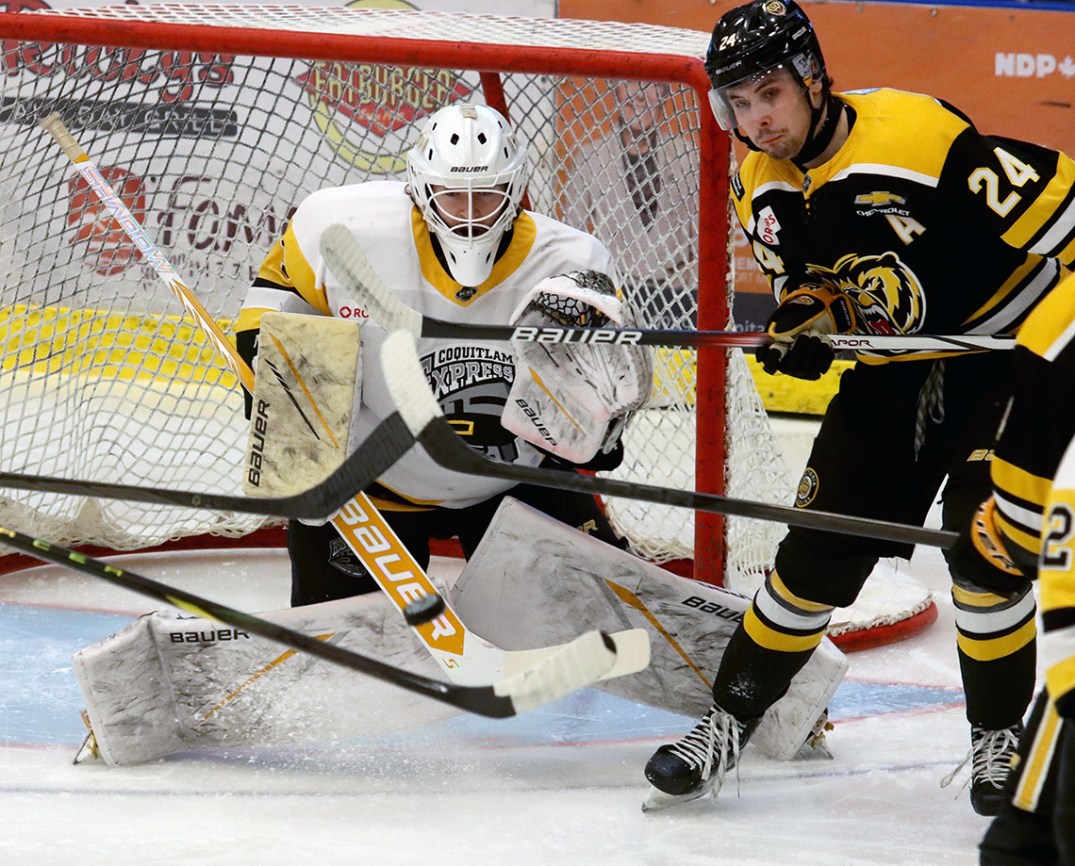
Despite exiting the first round of the BC Hockey League playoffs for the fourth consecutive season, there’s no time for Coquitlam Express general manager Tali Campbell to wallow in disappointment.

Even as players head home for the summer following Sunday’s 5-1 loss to the Victoria Grizzlies that eliminated the Express from the post season in six games, Campbell is putting together a busy schedule that includes further building out of the program’s development teams, attending spring evaluation camps, managing more renovations to its off-ice training and lounge facilities across from the Poirier Sport and Leisure Complex, meetings with scouts, as well as potential recruits and their families.

“The work never stops anymore,” Campbell said.

This summer, though, presents some new challenges.

A recent decision by the NCAA to accept players from the Canadian Hockey League into its Div. 1 programs beginning Aug. 1 has significantly altered the junior hockey landscape.

The allure of preparing players for lucrative scholarship opportunities at American universities to continue developing on the ice while getting an education was once the BCHL’s ace-in-the-hole over the Western, Ontario and Quebec Maritime Junior hockey leagues, which the NCAA had considered professional because of the stipend players get to help them cover expenses while living away from home.

Play to strengths

With that advantage now gone, Campbell said the Express and the rest of the BCHL teams must play to their strength of giving young men the time, space and tools to develop and mature as players and individuals ready to take the next step in their hockey journey, whether that’s college programs at U.S. or Canadian schools, or even turning pro or semi-pro.

“Our league has always been the long runway league,” Campbell said.

Already that approach has paid dividends with a commitment from potential 2026 NHL draft prospect Cole Bieksa, the son of beloved former Vancouver Canucks defensemen Kevin Bieksa.

“I think the reputation of our program just gets boosted by something like that,” Campbell said, adding the 18-year-old forward, whose Fairmont Prep Academy team in California just missed out winning the Chipotle-USA Hockey national 3A high school championship, will still have to earn his place on the Express come September.

Home-grown talent

Campbell said the increased competition for players also boosts the importance for BCHL teams to cultivate home-grown talent through their own developmental pathway.

“The feeder system is critical to the lifeline of our program,” said Campbell of the Coquitlam HC program that’s partnered with School District 43 to give local players as young as 13 a chance to hone their game in an intensive hockey environment while going to school at nearby Centennial and Port Moody secondary schools.

“We need to get families and kids into our programs at a young age, show them exactly what we offer over the course of three to four years.”

Still, Campbell said, with several players who were key to the Express’s run to the playoffs graduating out of the BCHL, including goaltender Andrew Ness, forwards James Shannon, Joseph Odyniec, Andrej Kovacivic and Mason Kesselring, along with defensemen David Brandes and Sam Frandina, uncertainty about what the team will look like come September abounds.

With more options available, players and their families are unlikely to make quick decisions about where to play until training camp is nigh.

Toughen up

“Every player is going to try their best option,” Campbell said, adding he’s targeting those who do choose the Express to be bigger and more willing to go to the wall for their teammates when the going gets tough.

We have to set the expectation that from Day One, you’re going to have to give a hit, you’re gonna have to get into a lane to block a shot,” Campbell said. “We owe more to our fans, we owe more to our corporate partners and the community.”

Express announce soccer partnership

The Expess is making tracks in soccer.

The BCHL team has announced a strategic partnership with Coquitlam Metro-Ford Soccer Club’s new Evolution FC program that competes in the semi-pro League1 BC.

The league positions itself as a bridge from high-performance youth soccer to the sport’s elite professional and amateur leagues like the Canadian Premier Soccer League and the new women’s Northern Super League.

Campbell said the arrangement will create opportunities for cross-promotion and marketing of the hockey and soccer teams while allowing Evolution FC to draw upon the expertise the Express already have in place for public relations, game day management and ticketing.

“This partnership is about more than just sports,” said Campbell in a news release. “It’s about united two organizations that are passionate about community, youth development, and creating unforgettable experiences.”

The Evolution FC team already has a win and a draw in its first two matches in the nine-team men’s league while the women’s side has a win and a loss. Both teams are based at Coquitlam’s Town Centre Stadium.

Requiem for a friend, and mentor

We all have mentors. They’re the people who show us the way, whether they know it or not.
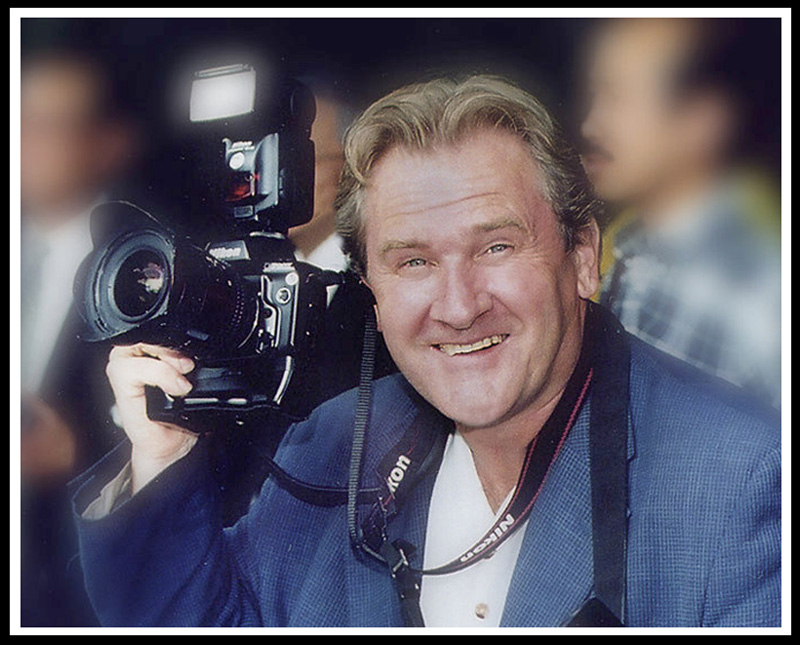
Mine was Ron Kuzyk. He was a steelworker and a hell of a photojournalist who worked the weekend shift we came to share for a stretch at the Burlington Post, where I started my career.
Ron passed away this week.

In 1984, I was just out of journalism school and determined to use a camera as my storytelling tool of choice. Circumstances that summer connected me to George Tansley, then the chief photographer at the Post. He said he could offer me some shifts to relieve his weekend guy who spent his weekdays working at Stelco and sometimes needed a break from the grind.

That guy was Ron.

We probably first met in the studio/darkroom one of those weekends; he was likely passing through to collect something, and I was probably trying to figure out how I too could get some of the great shots that were printed and hung on the walls of the studio and down the hall outside it. I particularly remember a colour wintry silhouette of a kid balancing on a fence, arms and leg splayed out; I loved that photo.

190427Ron2
My friend, and mentor, Ron Kuzyk, was the king of the silhouette. He loved shooting them, even as editors told him they needed to see faces in the newspaper. Of course, when Ron came back from an assignment with one of his beautiful silhouettes, it inevitably ran in the paper, usually on the front page.

Of course it, and many of the others, was shot by Ron.

Especially the sports.

I knew I wanted to be able to shoot sports like Ron.

He could capture peak action like nobody’s business, but he also had a keen eye for those quiet moments, like the kid stealing a glance back at his coach, the consoling hand on a player’s shoulder, the goofiness of 5 year-old t-ballers.

And, amazingly, he didn’t need big time pro athletes or glorious bright arena lighting to get his great sports photos. He made them in dark high school gyms, dusty sandlot baseball diamonds and pocked minor soccer pitches.

Over the course of that summer, as Ron and I crossed paths, we became buddies. He encouraged me, talked me through the frustrations of learning how to shoot with the Hasselblad because the big colour transparencies made for better front page colour reproduction. But mostly he showed me the way with his eye and his instincts.

Whenever I had the chance, I studied his contact sheets, checked out his prints, paid attention to his byline (although, by the second week I was already pretty good at spotting a Ron shot in the paper), and when my shooting shifts came, I distilled what I learned to get in the right position for a good baseball shot, look all around at a spot news scene to find that storytelling moment, seek out a fun juxtaposition at a community event.

When I happened to be in the darkroom and he popped by for a studio shot, I studied how he set up the lights and, more importantly, how he made his subjects feel at ease, joked with them, broke through their guard to find something that captured the story they were there to tell.

Ron was the most natural, instinctual photojournalist I ever met. More importantly, he was also the most fun. Because as much as we liked to bitch about shooting pet of the week or real estate features, as much as the repetitiveness of shooting the same cycle of community events year after year wore down your creativity, he really got a kick out of his job, and that joy came through in every one of his frames (well maybe not the photos of used cars for dealer ads).

The next summer, all the lessons I’d absorbed from Ron paid off when I landed a full-time gig at Oshawa This Week.

On the weekends I wasn’t working, I often came back to Burlington to visit my family and hang with Ron. Usually over beers, we kibitzed and kvetched as professional colleagues. We also complained, because that’s what journalists do when we get together (oh, if only we knew then what was coming for our industry, for our profession…)

But when Ron finally made the decision to cut his ties — and the big paycheque — to Stelco, he was over the moon with delight, thrilled to be working full-time at his passion even if it meant keeping his heap blue car that smelled like an ashtray on the road a little longer.

There were often adventures on those weekends, usually involving Post sports reporters Kevin Nagel, Dave Rashford and Tim Whitnell as well; road hockey in the back parking lot on New Street, some ice hockey games, the annual Metroland slo-pitch tournament, a concert or two.

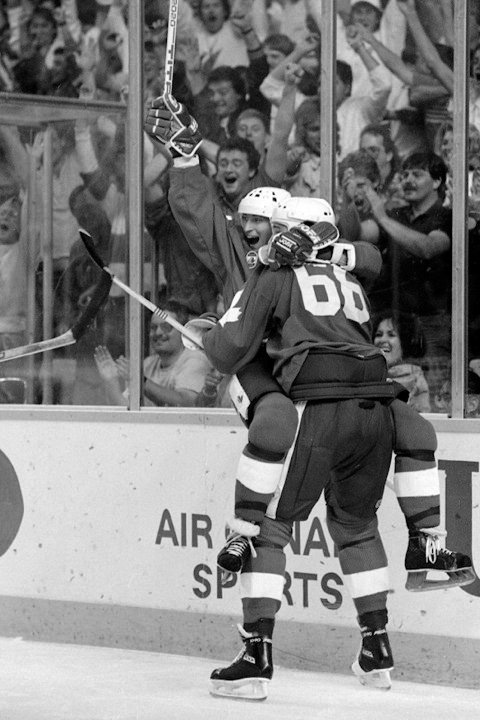
When a group of us bought a tournament package for the 1987 Canada Cup series, Ron somehow managed to get photo accreditation for the climactic final so when Mario Lemieux and Wayne Gretzky and the rest of that amazing Canadian team were celebrating their victory on the ice at Copp’s Coliseum, we were peering through our binoculars from the upper deck at Ron sliding around working the scrums. Oh yeah, he scored an amazing photo of the two superstars celebrating, jumping into each other’s arms behind the net in his corner. Like I said, Ron had great instincts for timing.

190427Ron3
Ron Kuzyk and a great love, and eye, for shooting sports. He also had that innate instinct for being in the right place at the right time with the right lens. Oh yeah, and also for securing accreditation for big-time events even though he worked for a community paper.

When I headed west in 1991, our contact became more sporadic.

He came out once, riding shotgun in his brother’s big rig. I drove him around, showing him my new turf, including a bar or two that may or may not have had a brass pole. I think the motel in Port Coquitlam where he stayed burned down shortly after his visit.

Again with the timing.

When I was home for a visit, we’d go for beers or lunch and shoot the shit about old times, compare notes about our current situations.

But I’ve always felt Ron’s guiding hand, tried to follow his eye, even as I forged my own path as a community photojournalist.

I know the changes to our industry weren’t easy for Ron. He was old-school, driven to get the shot and to hell with all the bullshit of the business.

After he left the Post, we caught up a few times on my visits back to Ontario. I think one of those times I managed to tell him how much impact he’d had on my own career, how those early exchanges in the Post studio set me on my path.

We also tried connecting on social media, but Ron was never one for the Facebook, unless he was trading/peddling his vinyl records. I think he Tweetered about 12 times.

But even as our contact waned, Ron was often in my thoughts. He’s the reason I park myself about three metres back of first base at a baseball game so I can reach second base for a steal or double play, but also can grab a close play at first. He’s the reason I sit instead of stand at the touchline of a soccer match because that means a cleaner background. He’s the reason I keep my eye on the bench near the end of a big game as much as on the playing arena. He’s the reason I’m still trying to emulate that great wintry silhouette of a kid balancing on a fence.

Thanks Ron, my friend. RIP