Representing Canada is Ultimate test for disc athletes

The story of the COVID-19 pandemic is still being written. While the immediate fear and uncertainty of the public health scare has faded into the background of our memories, its impact on our daily lives endures.
The first story, about a pair of local athletes preparing to represent Canada at the World Ultimate Championships, was actually ready to go into the Tri-City News when the pandemic hit. A quick rewrite of the lede accounted for the unknown we were all facing at that time while still sharing their journey.
Of course, the pandemic turned out to be more than just a minor speed bump, and three years later I was able to connect with the same athletes to reflect on how it had shaped their lives and aspirations and their own plans to move forward.

A pair of Ultimate players from the Tri-Cities will have to wait a little longer to get to know their teammates on Canada’s national U20 team.

A special four-day training camp that was scheduled to be held at Coquitlam’s Gleneagle secondary school March 19 to 22 has been postponed because of the COVID-19 pandemic.

Coquitlam’s Devon Bringeland and Port Coquitlam’s Ricky McLeod are among the 28 Ultimate athletes who will compete for Canada at the 2020 World Junior Ultimate Championships in Malmo, Sweden, July 18 to 25.

Bringeland, who turns 19 this week, said it was Ultimate’s supportive, nurturing spirit that attracted him to the sport when he was in Grade 6 at Stratford Hall, an independent school in Vancouver.

“In Ulitmate, we’re all in it together,” said Bringeland, who’s now studying kinesiology at the University of British Columbia.

McLeod, who’s also 19, said the community vibe of Ultimate is a marked contrast to the negativity he experienced when he was playing competitive soccer.

“Being nice to your opponent is part of this sport,” said McLeod, who finally made the national team after he failed to make in his first attempt a few years ago.
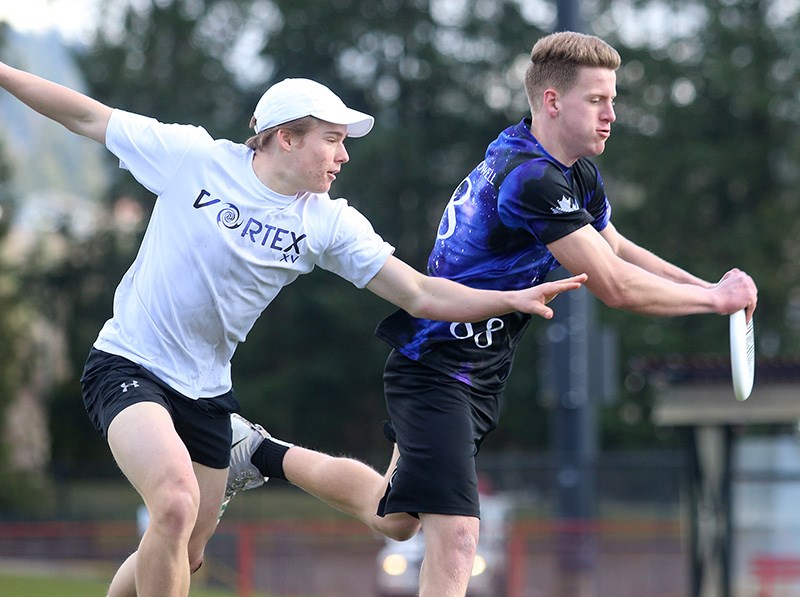
MARIO BARTEL/TRI-CITY NEWS Ricky McLeod and Devon Bringeland get ready to play for Canada at the World Ultimate Championships in Sweden in 2020.

Not that players’ competitive zeal is diminished by their collegial attitude, that’s been a touchstone of the sport since it was invented at a high school in New Jersey in 1968, said the national team’s head coach, Michael Fung.

To get named to Canada’s roster, athletes first had to catch the eye of coaches responsible for selection camps in each of the sport’s regional hubs in Canada — Vancouver, Winnipeg, Metro Toronto and the Ottawa-Gatineau area. Prospective players were tested for their fitness and then run through various drills and scrimmages to showcase their skills. Those who made the cut then attend two training camps prior to worlds to get to know each other and learn how to work together.

“Chemistry is huge in Ultimate,” Fung said, adding each part of the country approaches the sport and its strategies a little differently.

Turning disparate athletes into a cohesive unit when everyone is mostly apart, doing their own thing on club or school teams is an ongoing challenge, he said. Players stay in touch via a Facebook group, they review game recordings and strategy sessions together online, and they share fitness challenges.

“We have to create a platform for them to get to know each other,” Fung said, adding the training camps, that are often based out of someone’s home, can be especially beneficial to achieve that as players have to live, cook, and eat together in close quarters.

He said routine tasks like navigating meal times, cleaning up and sharing bathrooms, as well as planned bonding activities like ping pong and video game tournaments can help develop the synchronicity and communications skills that are vital to success in actual games. It also helps save money as, aside from some small sponsorship to pay for uniforms, everyone on the team pays their own way.

Bringeland said the sacrifices are worth it, especially as the sport’s popularity grows beyond its power base in the United States and Canada; 30 teams will compete in Sweden.

“It’s the next level,” he said of competing at the worlds, which are contested every two years. “It’s what everyone in the sport is driving for, to represent their country.”

Tri-City Ultimate athletes getting a second chance to represent Canada
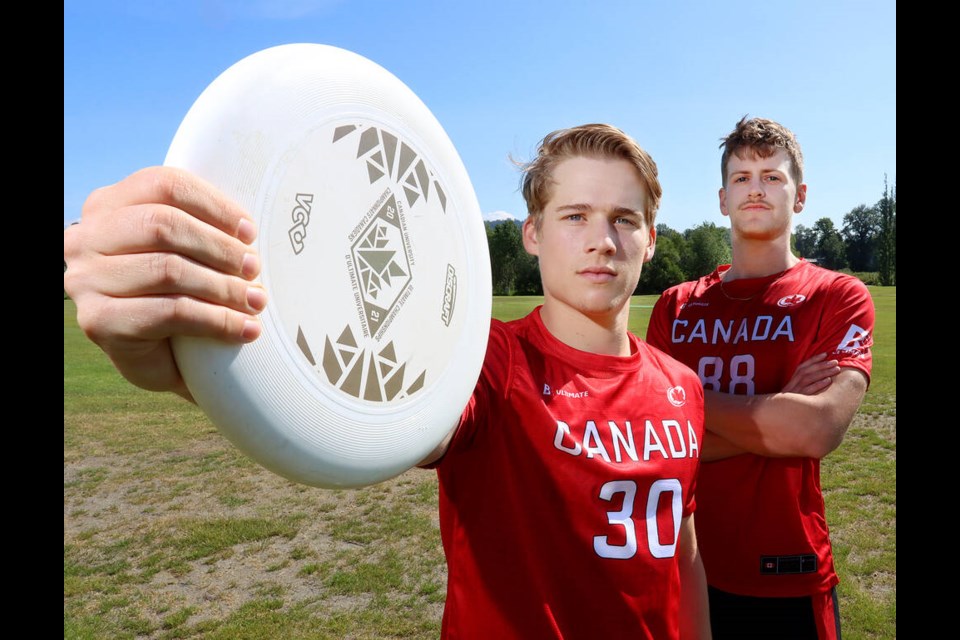
MARIO BARTEL/TRI-CITY NEWS Three years after they were denied their opportunity to compete for Canada at the World Ultimate Championship because of the COVID-19 pandemic, Ricky McLeod and Devon Bringeland are getting a second chance.

There’s nothing like having something snatched away to motivate you to want it even more.

Port Coquitlam’s Ricky McLeod and Coquitlam’s Devon Bringeland were about to participate in a special training camp for Canada’s national Ultimate team heading to the U20 world championships in Malmo, Sweden, three years ago when the global COVID-19 pandemic yanked away their dream.

This year, they’re back as members of the U24 national side that will be one of 15 teams competing in the open division at the 2024 championships in Nottingham, England, July 2–8.

In between, McLeod and Bringeland had to soothe the sting of missing their chance to compete at the 2020 worlds and embarked on busy studies at the University of Victoria and the University of British Columbia, respectively, recommitted to their training and stepped up their game playing for Canada’s top men’s club: the Vancouver Furious George.

All with their eyes firmly fixed on the prize of being the best in the world.
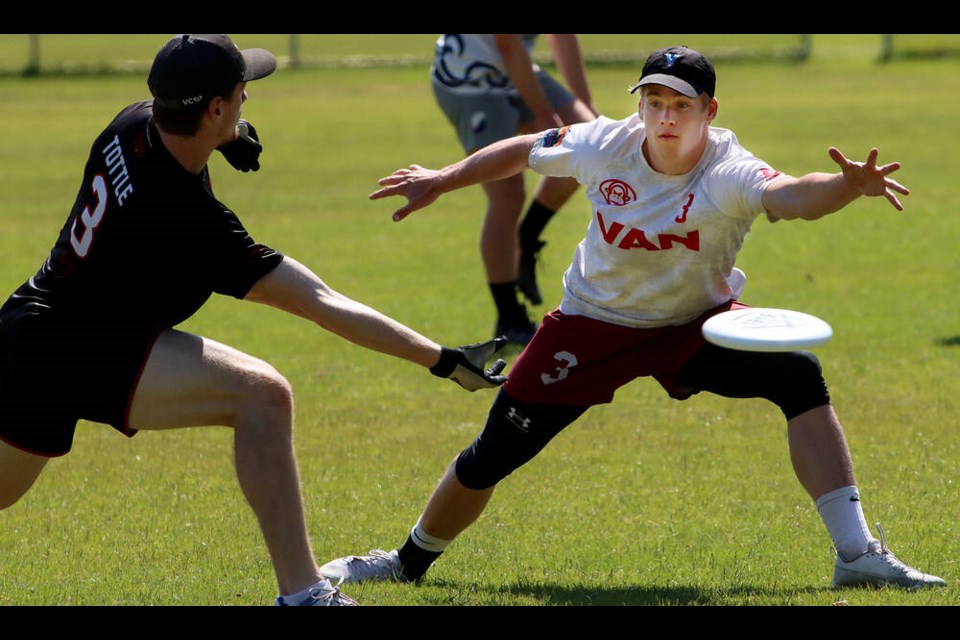
MARIO BARTEL/TRI-CITY NEWS Port Coquitlam’s Ricky McLeod stretches to make a defensive play during a recent training camp in Burnaby for Canada’s national U24 Ultimate team.

Bringeland said getting robbed of the worlds in 2020 was “an emotional roller coaster” that took him a while to ride out.

“It was heartbreaking,” he said. “Making Team Canada was something I’d dreamed about.”

McLeod said the COVID-19 shutdown in the spring and early summer of 2020 put his Ultimate aspirations at a crossroads.

“You could quit, or you could work even harder.”

By late summer, as public health restrictions eased and sporting activities resumed, the fire to compete had reignited in McLeod and Bringeland.

“I was missing it,” McLeod said. “As soon as I got a taste of it, I was hungry for the future.”

Bringeland said the competitive progression from U19 to U24 is significant. Speed, intensity, athleticism, skill and strategy are all kicked up a notch.

“It’s a huge step up from juniors,” added McLeod.

In anticipation of their next opportunity to play for Canada, McLeod and Bringeland hit the gym to develop their strength, power and explosiveness.

They ran 10 X 400 m laps around the track for endurance.

They honed their fitness to prevent injury and to sharpen their competitive instincts, they tried out — and made — the Furious George side that has won 11 Canadian championships.

They also play for their respective university teams that are part of U.S.-based leagues.

Bringeland said at its top level, Ultimate is no longer about the good-time vibes and tie-dye shirts that come from the sport’s hippie roots, although games are still self-refereed that commands a high level of respect and communication between opposing players.

“It’s a pure level of competition,” McLeod said. “But you don’t yell at people.”

Aside from the physical preparation to compete on the world stage, there’s also a playbook of set offensive and defensive strategies to learn — much like football — and money to be raised.

Canada’s national Ultimate program doesn’t receive government funding, so the athletes have to pay their own way to competitions — about $5,000 for the season. That means bunking down en masse at someone’s family home during training camps, carpooling to and from the fields and cooking communal meals.

It also obligates team members to launch personal GoFundMe campaigns and hit up corporate contacts for whatever support they can muster.

All while keeping up with their studies and part-time jobs.

“It’s a lot of late nights,” said Bringeland.

But the payoff will be worth the sacrifices, said McLeod.

“We take it very seriously,” he said. “Our goal is to dominate.”

Hockey helps Port Moody teen bounce back from fire tragedy

This story first appeared in the Tri-City News on Feb. 28, 2021

There may be no “I” in team, but a Port Moody teen is learning there’s a whole lot of support and love, especially when the chips are down.

Dec. 13, Hailey Kress and her family were displaced from their Glenayre home in the middle of the night by a fire that destroyed their garage and deck, heavily damaged an adjoining bedroom and inflicted lots of smoke and water on the rest of the structure including the basement.

That’s where Kress, 13, stored her hockey equipment.

Nobody — including the family dog — was hurt in the 3:15 a.m. blaze. But the emotional toll of that night has been especially difficult on Hailey, said her mom, Monica.

As the family moved in with relatives, then to an Airbnb, and finally to a rental home on the opposite side of Burrard Inlet, Hailey struggled in class at Banting middle school. She said she’d have panic attacks, feeling frozen and overwhelmed by the enormity of that night’s events and the impact it was having on her routines and sense of security.

“It was important to get back to normal,” said Monica. “We needed to somehow concentrate on something other than the fire, get her mind off the negative.”

Hockey is Hailey’s other.

The day after the fire, Monica received an email from Heather Fox, the president of the Tri-City Predators female hockey association where Hailey has been playing for three years, reassuring her that efforts were already in motion to ensure her daughter could keep playing.

Back on the ice

Two weeks later, Hailey was back on the ice. All of her equipment was brand new, courtesy of The Hockey Shop, in Surrey. Her new Predators bag, socks, pants and even hockey tape were donated by Rocket Rod’s at Planet Ice in Coquitlam.

n a season that’s been all about disruption because of public health restrictions to temper transmission of the coronavirus that causes COVID-19, Hailey said practising with her teammates made her feel normal, that everything was going to be OK.

“It was really fun to be with my friends again,” she said. “It made me forget about everything for an hour.”

Hailey, who’s also played baseball, jiu jitsu and acro-gymnastics, started playing hockey after a sleepover at a cousin’s house meant she also had to attend that cousin’s game the next day.

She said she liked what she saw.

“It looked super fun,” she said, adding she especially enjoyed hockey’s aggressive nature.

Monica said she was initially taken aback when Hailey expressed an interest in playing hockey herself. But the positive benefits of being part of a team and forming new relationships outweighed the downsides of the sport’s expense and sitting on cold arena benches.

“It makes for a really well-rounded kid,” she said.

Values camaraderie

Hailey said she enjoys the challenge and responsibility of playing defence, including learning how to skate backwards. But she most values the camaraderie of her teammates and coaches.

“It’s like always having people around you who care about you,” Hailey said.

That care was delivered even before Hailey returned to the ice, as her teammates put together a package for her family of food and personal items like blankets and skin care products.

Monica Kress said she’s been overwhelmed by the outpouring of support from Hailey’s team and the Predators’ hockey community.

“You always think you pay a lot of money for these sports, you think you’re just a number to them,” she said. “But it’s such a good group of kids and parents.”

Hailey said the experience has given her an appreciation for the importance of having sport and teammates in her life. It’s also made her more determined to keep getting better at her game.

“Everything that they’ve done makes me want to try harder to show I’m grateful.”

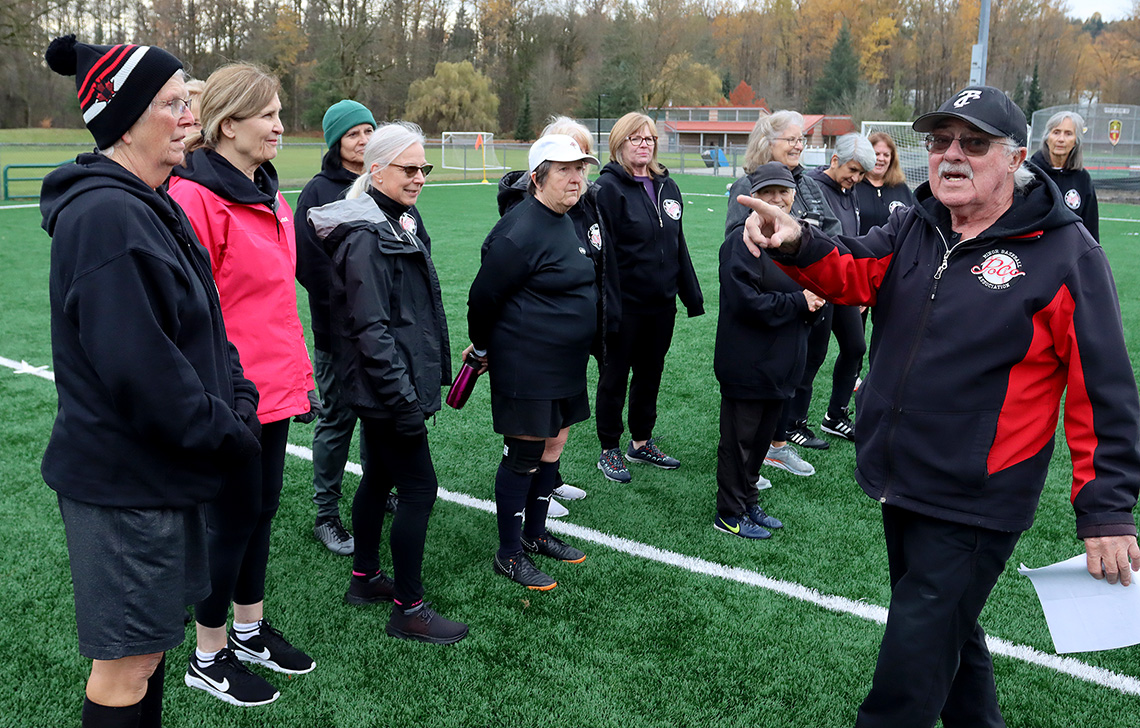
Even at a slower pace, these Tri-City soccer players still have a love for the game

This story first appeared in the Tri-City News on Nov. 23, 2023

The Tri-City Walking Soccer Club is proof in the pudding: you can take the players out of soccer, but you’ll never take the soccer out of the players.

The club started several years ago as an adjunct to the Dartmen, an affiliation of weekend warriors who’ve grown old together playing sports like traditional running soccer as well as baseball and hockey.

As members started to hit their mid-50s, many realized they were losing their stride. But instead of giving up sport altogether, they just decided to slow it down.

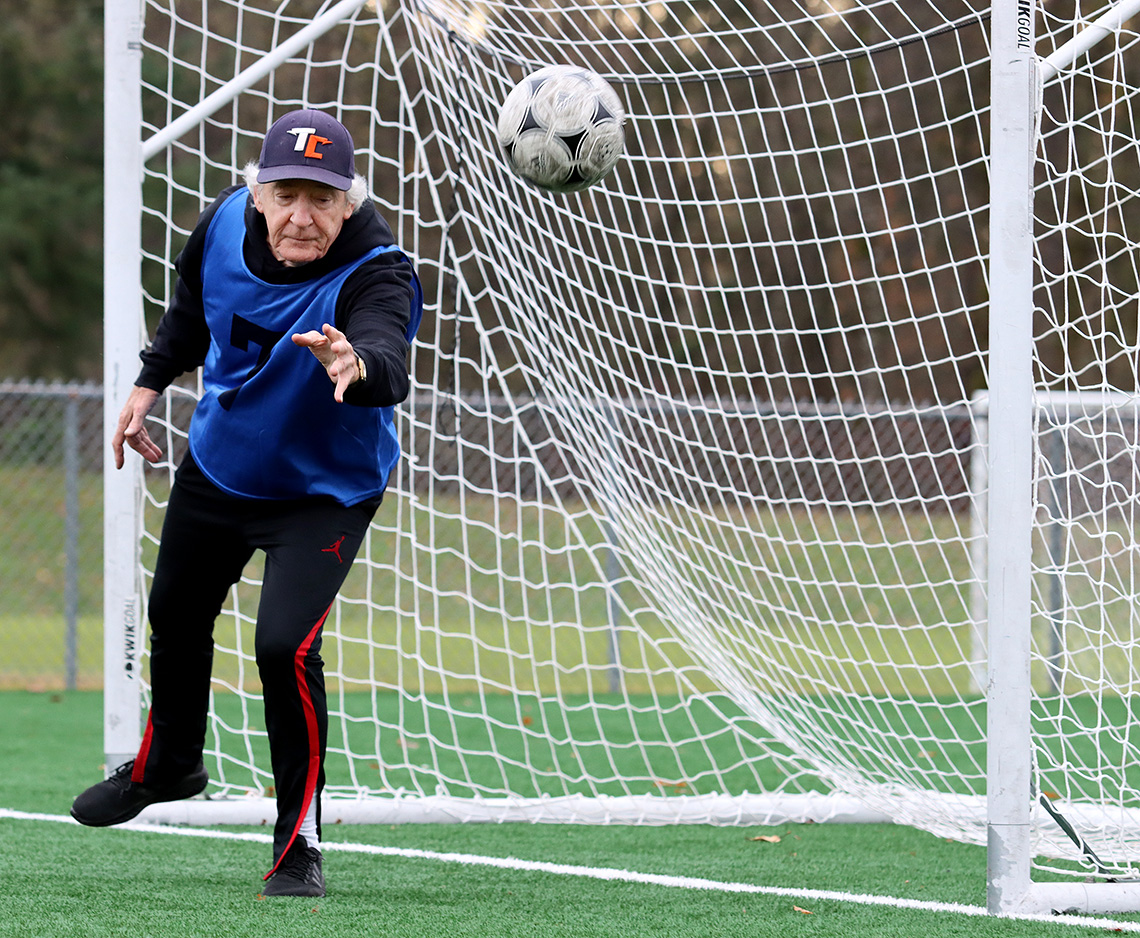
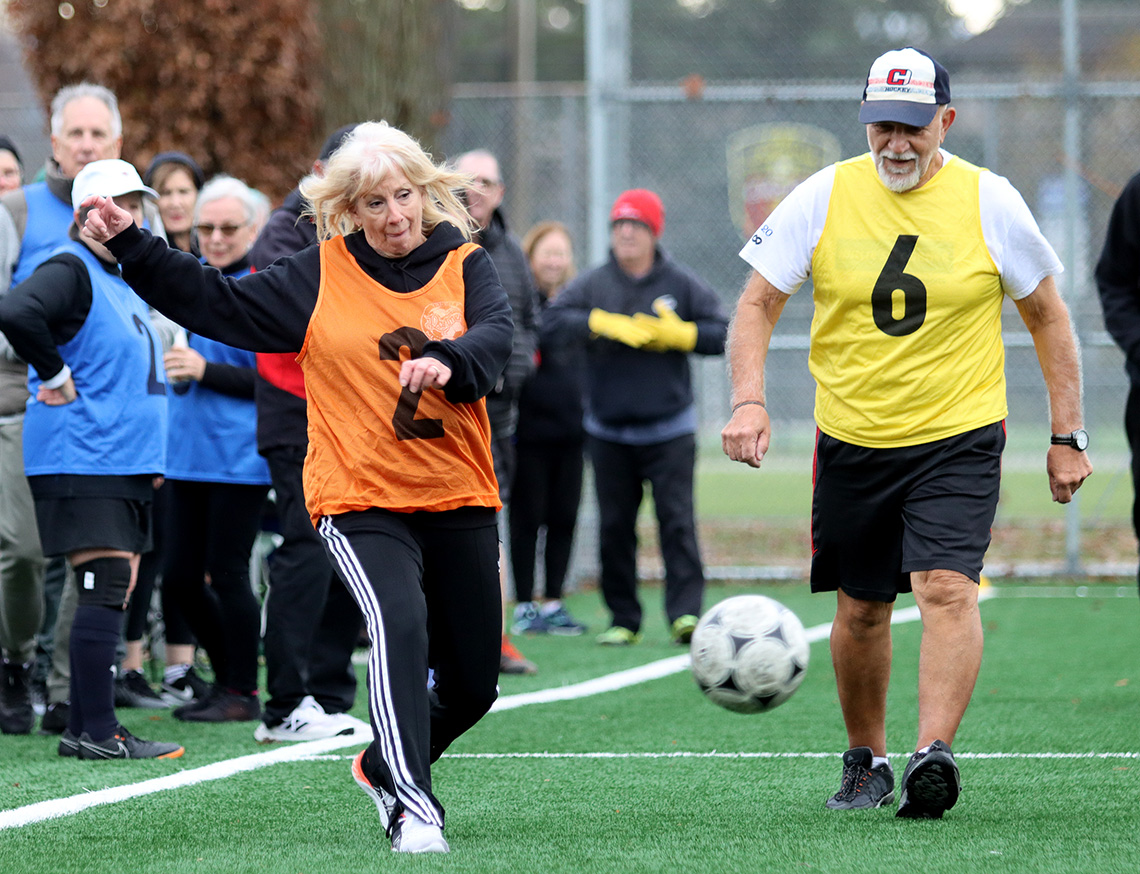
Walking soccer is just like it sounds, a modified version of “the beautiful game” without contact and played at a pace more comfortable for aging knees and joints.

It’s also played seven-aside on a smaller pitch — about half the size of a regular soccer field — at Port Coquitlam’s Gates Park.

Making new friends

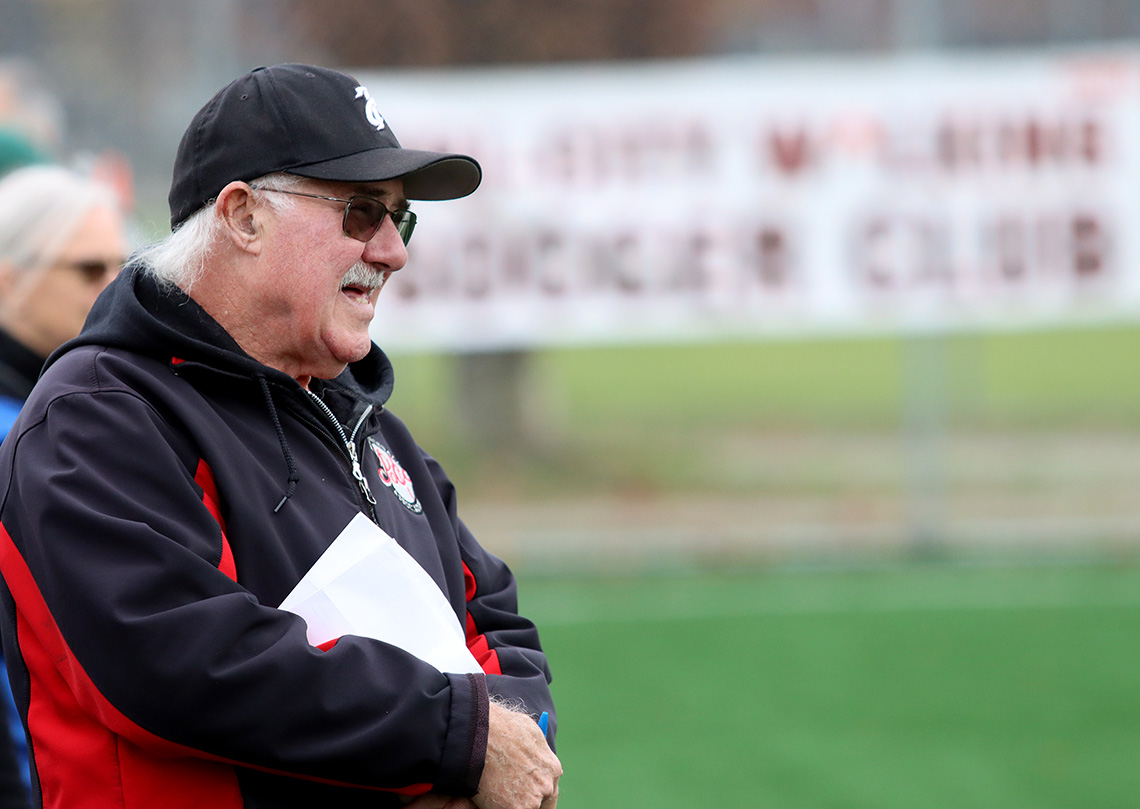
Jim Swelander, who started the Dartmen in Burnaby back in 1969, said as the group has embraced their golden years, the social aspect of their sporting endeavours has taken precedence over competition.

“It’s about making new friends and staying in contact with old ones,” he said.

When the group, which ranges in age from 55 to over 70, invited women to start playing in their soccer matches the camaraderie and post-game revelry kicked up a notch with organized get-togethers every week at the Cat & Fiddle pub and other social events.

Denise Spletzer, 68, said she first attended a walking soccer match as a spectator but quickly decided the club needed a female touch even though she’d never played soccer before.

“I like to get exercise,” she said.

Spletzer invited some of her friends from her fitness class and from an initial contingent of seven just a couple of years ago, there’s now 43 women participating in the club’s mixed division alongside its male membership of 93, some of whom stick around for the more competitive men’s division afterwards.

Swelander said not everyone in the club comes out at once, of course.

Players come and go for the regular Tuesday matches that run year round (the league heads indoors to a facility in New Westminster during December and January) and new teams of seven players are created every week from those who do show up to play in the 25-minute halves.

Stoke competitive fire

Sue McInnes said the soccer matches are a way to bring back some of the competitive fire she last felt when she used to play field hockey in her younger days. But it’s the new friendships she treasures most.

“It’s fun,” she said. “The social aspect is the best.”

Swelander, who leads all the players through various warm-up exercises and skill drills for about an hour before the matches begin and then coaches from the sidelines once the opening whistle blows, said it can be a bit of a challenge keeping everyone on the straight and narrow given the wide range of soccer experience and ability on the pitch.

“It’s okay, as long as you have patience,” he said. “You’ve just got to remember you’re here for fun.”

He’s one of the greatest villains in Canadian sports history. But this Coquitlam historian has a new take

This story first appeared in the Tri-City News on April 2, 2023

A Coquitlam historian is shining a new light on one of the greatest villains in Canadian sports lore.

Cedric Bolz, who graduated from Centennial Secondary School and is now the head of the history department at Douglas College, has published an alternate view of the famous 1972 Canada–Russia hockey Summit Series as it was seen through the eyes of Josef Kompalla, one of its referees.

Kompalla and fellow West German Franz Baader were among eight officials that also included four Americans, a Swede and a Czech, who were assigned to work the historic eight-game showdown between hockey’s two greatest superpowers at the time.

But Canadians old enough to remember the grainy live TV pictures from Moscow’s Luzhniki Ice Palace beamed into their living rooms and even classrooms that September 51 years ago likely recall Kompalla as Public Enemy No. 1.

Even those who’ve only experienced the series second hand through subsequent memoirs and documentary films have come to vilify Kompalla, said Bolz.

Authors and filmmakers have perpetuated the narrative that the amateur referee was out of his depth arbitrating games between hockey’s greatest professional players and the mighty Soviets.

Or worse, they surmised, he was a complicit East German.

Until now.

Historical oversight

Bolz’s book, The September He Remembers, flips Kompalla’s story and his role in the Summit Series on its head.

It is, Bolz said, “the first step in correcting a major historical oversight and adding a new chapter in the Summit Series’ growing, mutable legacy.”

Bolz said he first heard of Kompalla through his stepfather, who’d played professional hockey in Germany for several years before moving his family to Canada.

The veteran referee officiated more than 2,000 games including several world championships.

He was revered in Europe and even earned a place in the International Ice Hockey Federation’s (IIHF) Hall of Fame.

But in Canadian hockey lore, Kompalla is a reviled figure who seemed determined to derail the NHLers from affirming their superiority on the ice over the Soviet Union.

J.P. Parise physically attacked him after he’d been assessed a penalty.

He bore the wrath of a frustrated Alan Eagleson who threatened to pull the Canadian players from Game 8 when Kompalla drew the refereeing assignment for the decisive match and then threw chairs on the ice after Parise was penalized.

He was chased down hallways by players and team officials incensed by some of the calls he’d made.

Even after the series was decided, Kompalla was harassed by Canadian players on a flight to Prague for an exhibition game against the Czech national team.

A quiet life of retirement

When Bolz heard Kompalla was still alive and living a quiet life of retirement in Krefeld, Germany, he reached out, determined to reconcile the conflicting images of a pivotal character in hockey’s greatest drama who seemed to have been left behind by its history.

“I’m a historian,” Bolz said. “My job is to document voices and this was a voice.”

SUBMITTED PHOTO Douglas Collage history instructor Cedric Bolz (right) visits with German referee Josef Kompalla while working on a book about his role in the 1972 Summit Series. Behind them is a photo of Kompalla being attacked by Canada’s J.P. Parise after he was called for a penalty.

Over the course of three years of phone interviews and personal visits, Bolz constructed a picture of a modest man who still loves hockey but can’t understand how he’d become one of the sport’s most notorious characters.

“It was always baffling to him,” Bolz said.

Road blocks

Along the way, Bolz ran into road block after road block in his efforts to gain an understanding of how Kompalla had become so despised.

Players still alive like Red Berenson and Wayne Cashman wouldn’t talk to him.

Even Ken Dryden, the Hall of Fame goaltender renowned for his thoughtful ruminations about the sport and the author of two memoirs about the series, wouldn’t return his calls.

“A narrative had been crafted,” Bolz said. “Legend continues to trump the way things actually were.”

Bolz believes Kompalla was collateral damage, a convenient foil, in a hockey drama that was supposed to be a friendly cultural exchange in the spirit of detente that had started to warm the Cold War in the early 1970s, but quickly devolved into an athletic expression of the great divide that still existed between East and West when the Canadian NHLers realized their opponents wouldn’t be the pushovers as some observers had billed them.

Time is running out

Kompalla is now 87 and Bolz is all too aware time is running out to set the record straight and reform the referee’s legacy.

He hopes his book, academically annotated and cross-referenced through multiple sources, will help facilitate that.

Some who’ve helped shape the story of the Super Series over the past 51 years have taken notice and made overtures to correct the historical record, like the popular misconception that Kompalla was from East Germany when in fact he’d fled communist rule in Poland and settled in Germany’s democratic West.

As for the aging referee who continues to travel the German countryside to attend hockey games as a spectator, Bolz said he still holds out hope his contribution to the series will be recognized in a more positive light.

“He’s always wondered why he’s never been invited to any of the series’ anniversaries,” Bolz said of Kompalla. “It’s important to see him get some sort of closure.”

Toyota vs. Ferrari: A Coquitlam race engineer could soon be a part of motorsports history

This story first appeared in the Tri-City News on May 29, 2023

Deft thumbs at the video game controller has steered a Coquitlam man to one of the most storied car races in the world at one of the sport’s most famous tracks.

Ryan Dingle parlayed a childhood passion for the Gran Turismo video racing game to a career as a race engineer, first in Japan and now in Europe, where he’ll lead Toyota Gazoo Racing’s World Endurance Championship (WEC) Hypercar team at the 100th running of the 24-Hours of Le Mans, June 10–11.

It’s a daunting responsibility, said Dingle in an email interview. In addition to managing the team of engineers and technicians charged with preparing Toyota’s GR010 Hybrid Hypercar for race weekend and then keep it performing optimally for qualifying and 24 straight hours of racing at Le Mans, Toyota is the five-time defending champion at the event. And this year it will be up against an expanded grid that also includes new factory efforts from Porsche, Ferrari, Cadillac and Peugeot.

There’s “a lot of pressure now,” said Dingle, who’s in his first season in the WEC where most races are six to 24 hours long after cutting his teeth in the smaller Super Formula and Super GT race series in Japan.

“It is my first experience outside of Japan so most of the circuits are new to me,” Dingle said. “Working in a much larger team with more well-defined roles can also be challenging.”

PHOTO SUBMITTED Coquitlam’s Ryan Dingle started his career as a race engineer in Japan.

Dingle, a graduate of Dr. Charles Best Secondary School, headed to Japan after obtaining his engineering degree at the University of British Columbia and post-graduate studies in motorsport engineering at Oxford Brookes University in the UK.

Fuelled by his childhood love for Gran Turismo that evolved into an obsessive interest in Formula 1 and Endurance racing, Dingle identified Japan as his best opportunity to get work in the industry.

Trial by fire

With only one beginner class in Japanese at UBC, and the support of his family and his future wife — who happens to be from Japan — Dingle landed a gig in the all-Japan Formula 3 open wheel racing series.

It was, Dingle said, a bit of a trial by fire.

“The working style in Japan is quite different from the west, as is communication in general,” he said. “People often get frustrated and give up. I got frustrated too, but I guess I had the determination.”

Over the course of his nine-year career in Japan, Dingle managed to work for both Toyota and Honda, fierce competitors at the track and in consumer showrooms.

He said while such vacillation between Japan’s two car giants might be frowned upon in the country’s corporate world, it’s more accepted in motorsport.

“I think it’s been advantageous for me to see how both companies work,” Dingle said. “I like to approach each new place with an open mind and try to learn.”

Driven to succeed

No matter the badge on the car, though, the drive to succeed is universal.

“It’s not a career path where you feel at ease often,” Dingle said. “But when you get it right, you see the fruits of your labour rather quickly and it’s satisfying.”

Now that he’s based in Europe, Dingle said he’s excited to work at some of the race circuits, like Spa-Francochamps in Belgium and Monza in Italy, that he revered back in his video game racing days and when he was studying in England. But being able to compete at Le Mans is special.

“It means a lot to be a competitor in one of the most famous races in the world, and the 100th year,” he said.

“In a way, it’s a validation of the choices that got me to here. It’s a good feeling.”

‘I took a leap of faith’: From the Coquitlam Express to the Stanley Cup finals

This story originally appeared in the Tri-City News June 4, 2024

A former member of the Coquitlam Express will be part of the Florida Panthers’ effort to win the Stanley Cup when their final series against the Edmonton Oilers begins Saturday, June 8 — by making sure every seat in the team’s Amerant Bank Arena is filled.

But Taralynn Reburn won’t be electrifying the packed house with ice-length rushes or thundering hits on Oilers’ superstar Connor McDavid.

As the Panthers’ vice president of ticket sales and service, Reburn relies on good customer service and building relationships with new fans to help grow hockey culture in South Florida. It’s a tall order in a part of the world where most people’s connection to ice is to keep their margaritas cold.

Fickle market

“This market can be quite fickle,” Reburn said. “Fans traditionally go in the direction of the team who’s winning.”

Fortunately for the BCIT grad who started her career as the director of sales and marketing for the Express from 2009-12, the Panthers have been doing a lot of that; this is the team’s second straight appearance in the Stanley Cup finals and they follow a run of three straight by Florida’s other NHL team, the Tampa Bay Lightning.

“We’re proving to the NHL that this is a hockey state with competitive teams and we’re a destination franchise that players want to be with,” Reburn said.

Following her stint with the Express, Reburn spent almost two years in sales roles with the Vancouver Whitecaps soccer team and more than eight years with the Vancouver Canucks. She said connections she made within the industry led her to Florida in 2022 even though she’d never been there before.

“I took a leap of faith and it has been great ever since,” Reburn said.

It’s also been a lot of work.

Engaging fans

Reburn said engaging fans in Florida requires a constant commitment to make them feel like they’re a valued part of the team’s success with perks like access to the Panthers’ new practice facility in downtown Fort Lauderdale and the organization’s involvement in youth hockey.

“Once people get into the building and see a game for the first time, they’re hooked and love the speed of the game compared to other sports,” she said.

Two consecutive years of Stanley Cup finals has also energized the market, Reburn said.

Panthers’ flags are draped on condo balconies, signs are planted on front lawns, restaurants and bars are tuning in their TV’s to the games.

“There’s a visible increased interest in the team,” Reburn said. “I overhear more conversations in the grocery store now about the Panthers than I ever have before.”

Even though Florida’s opponent is from north of the border, the ex-pat Canadian said she’s all-in to see the Cup remain in America, where it’s been ensconced since 1994.

“I’m 100 per cent Panthers on this one and have even converted a few from the west coast to cheer us on, too,” Reburn said.

But what if the cards had fallen slightly differently and it was her former employer, the Vancouver Canucks, that prevailed in the seventh game of its quarter-final series against the Oilers and then defeated the Dallas Stars?

“I was hoping for a Florida-Vancouver final,” Reburn said. “It would have been an exciting and unique opportunity. It’s just the beginning for this new core of the Canucks and their time will come.”

Former Coquitlam soccer player signs pro contract — with the CFL’s Toronto Argonauts

This is an update of a story first published in the Tri-City News on Oct. 15, 2021

A former Terry Fox Ravens soccer player has signed his first pro contract — with the Toronto Argonauts of the Canadian Football League.

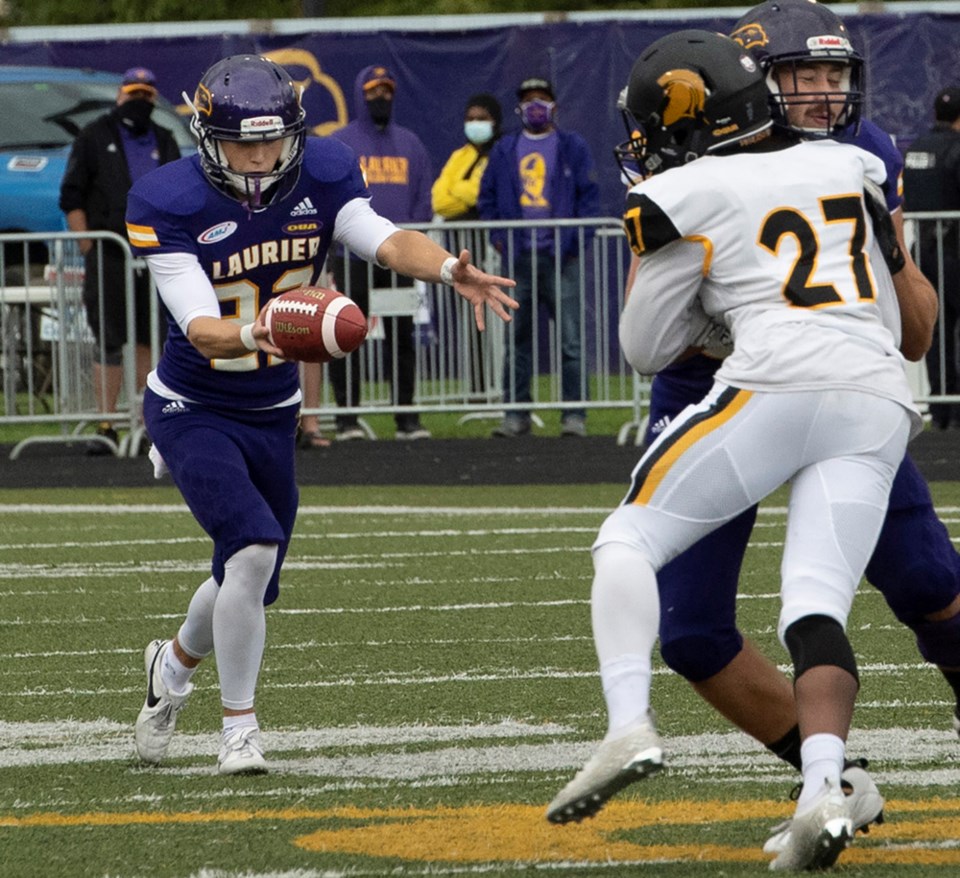
The Argonauts announced Monday, May 5, it’s signed kicker and punter Dawson Hodge, who recently completed a successful collegiate career with the Wilfrid Laurier Golden Hawks that culminated with the school’s appearance in the USports Vanier Cup national championship last December.

Hodge will report to the Argos’ spring rookie training camp on Tuesday.

Hodge didn’t put on a football helmet and shoulder pads until his senior year of high school. And then only after he was coaxed by his twin brother, Brandon.

But after a few good practice kicks Dawson tried out and made the Ravens football team, helping Terry Fox reach the semi-finals of the 2018 Subway Bowl provincial championships, where they were defeated by the New Westminster Hyacks, 33-0.

Sitting in the locker room at BC Place afterward, Hodge said he realized he didn’t want his brief dalliance with football to be over.

As it happens, former BC Lions kicker Lui Passaglia is a neighbour.

Hodge worked with him to find his form, then headed to a high performance kicking camp in the United States to refine it. He won the field goal competition there, and finished second in kick-offs among some of the best high school kickers in America.

“This motivated me to pursue football and master the craft of kicking,” Hodge said.

More experience

Looking to gain more experience before taking a run at possibly being recruited by a post-secondary program, Hodge enrolled in an additional year of high school at a football academy in Toronto that plays exclusively against top American teams.

“They were really good teams, full of college prospects, so the tough competition made us better,” Hodge said, adding the experience of playing under the lights on Friday nights in packed little stadiums south of the border was enthralling.

The seasoning of his game paid off. A half dozen Ontario universities plus Simon Fraser University in Burnaby enquired about joining their programs.

After touring each, Hodge said he was attracted to Wilfrid Laurier in Waterloo that’s produced kickers who’ve gone on to play in the Canadian Football League in the past, including Ronnie Pfeffer, who won Grey Cups with the Argonauts and Ottawa Redblacks and also played for the Calgary Stampeders.

“I knew the team would utilize the kicking game,” Hodge said. “If I could prove myself, I’d have a good chance to be a starter in my rookie year.”

Pandemic pause

Alas, the COVID-19 pandemic kicked that dream to the curb.

Instead of lifting punts into the crisp fall Ontario air, Hodge worked out in a gym his parents set up in the garage of their Coquitlam home and studied Geography on his computer. Twice a week he ventured over to Town Centre Stadium to boot balls through the uprights, recording his workouts for online reviews with his coach in Waterloo, Darcy Segin.

Still, Hodge said, staying sharp was a challenge.

“The best way to stay motivated was being optimistic,” he said. “Knowing that one day we will get back out on the field encouraged me to keep kicking and working out.”

Hodge’s dedication paid off.

In four seasons with the Golden Hawks, he was successful n 63 of his 68 field goal attempts and his 255 punts sailed an average 41.3 yards.

Hodge was also Laurier’s rookie of the year in 2021 and he was named an Ontario University Athletics all-star and second team All-Canadian in 2022.

Hodge said his soccer background helped his success on the football field.

“It gave me a good foundation to start with.”

Promising Port Coquitlam hockey player battles back from addiction, crime

According to Hockey Canada, only one in 4,000 kids playing hockey in this country will ever have a career in the National Hockey League.
That’s .025%.
Port Coquitlam’s Brady Leavold was on the cusp of beating those odds. But childhood demons and addiction snuffed his dream and sent him spiralling to the streets and petty crime.

Brady Leavold has been in the Tri-City News before.

But the gritty forward from Port Coquitlam wasn’t featured as he became a fan favourite with the Swift Current Broncos in the Western Hockey League, or in a front page story covering his hoped-for triumphant first NHL game.

In 2016 Leavold was in the court blotter, after he was sentenced in Vancouver to 21 months in jail for theft, possession of stolen property, resisting a peace officer and several other charges.

Four years later, he’s trying to atone for that, maybe even help others wrung out by a sport that values players more as a commodity than as human beings.

Now 33, Leavold is living in Morrisburg, Ont., and running a skate-sharpening business. He’s slowly putting his life back together again and launching a podcast to shine a light in some of hockey’s darkest corners.

He’s trying to come to terms with a system that recognized his talent and ambition but didn’t see the demons that drove him to excel on the ice. Or maybe didn’t want to see.

In love with hockey

Leavold grew up in Port Coquitlam’s south side, where he attended Kilmer Elementary and then Citadel Heights Middle schools. He played hockey in the PoCo Pirates minor system, often on teams with boys older than him because he was so good and played “with an edge.”

SUBMITTED PHOTO
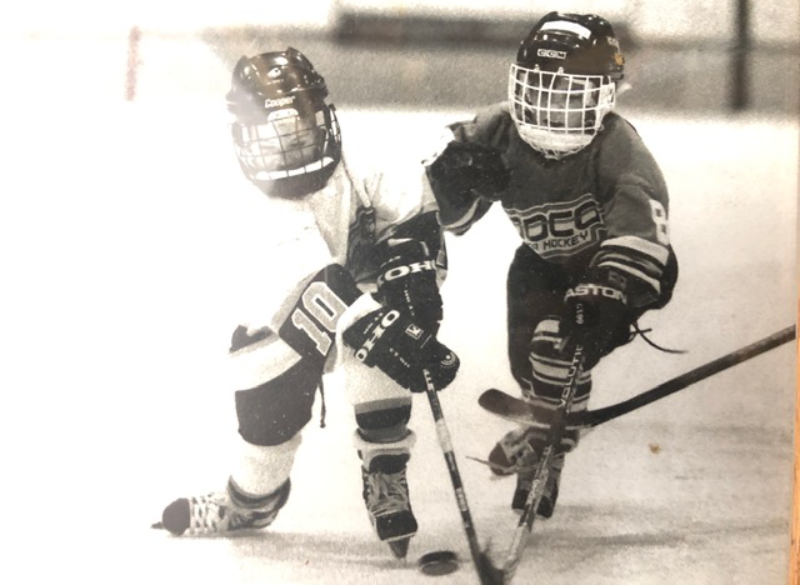
Brady Leavold, right, chases down an opponent in a minor hockey game in Port Coquitlam in 1993.

Leavold said he couldn’t get enough of the game. When his firefighter dad, Brian, was coaching other teams, he’d spend hours in the corner of the old Blue Rink at PoCo Rec — where the nets were stored — knocking a ball or puck around with his stick. He dreamed of someday playing in the Pirates’ annual spring bantam tournament.

After hockey season was over, Leavold and his buddies, including Zach Hamill who went on to a pro career in the NHL and Europe, would rollerblade down to Ikea in Coquitlam and play two-on-two ball hockey in the expansive parking lot until the wee hours of the morning.

“That was our life,” Leavold said. “We had such a good group of guys playing hockey.”

But his friends didn’t know Leavold had a secret.

He said his all-consuming love for hockey was an escape from childhood sexual abuse that filled him with anger and shame every waking moment.

“I just wanted to be accepted, I wanted to be sure of myself,” Leavold said. “Hockey did that for me.”

Sabotaging success

As good as Leavold was, though, every tryout was fraught with anxiety that he’d get cut, that he wasn’t good enough.

Once, when he had a chance to make an elite team, he attended a skating session then faked an illness. He said he wanted to control his own destiny.

“Every good thing in my life, I’ve sabotaged it,” Leavold said.

Still, coaches wanted him on their teams, his energy on the ice. So they’d give him a second or even third chance.

When Leavold was 16, he played a game for the Western Hockey League’s Broncos, then was the team’s rookie of the year the following season.

Off the ice, though, Leavold struggled. He experimented with drugs like ecstasy. Then, seven games into his sophomore season in Swift Current, he walked away from the Broncos and returned to Port Coquitlam to live with his dad and attend Riverside Secondary.

Quickly Leavold discovered his hockey pedigree — flaunted by wearing his Broncos jacket everywhere — shielded him from accountability. He said he didn’t have to work as hard in school as other students to get a passing grade. He’s convinced he passed his driver’s test because the examiner was a fan and talked more about hockey than noting his mistakes.

When the Broncos traded Leavold to the Everett Silvertips, he didn’t report.

Instead, he signed with the nearby Burnaby Express of the BC Hockey League, where he scored nine points in his first three games playing on a line with future NHLer Kyle Turris.

But away from Copeland Arena, Leavold continued to party. He showed up for games with little sleep, if he showed at all.

The team got him counselling, tested him for drugs.

For a time, it worked.

Then Leavold hurt his Achilles tendon and he stopped going to the rink.

Weary of his erratic behaviour, Leavold’s dad kicked him out of the house. His girlfriend’s family took him in, made him feel at home, afforded some stability.

Another chance

That summer, Leavold called his old coach in Swift Current, Dean Chynoweth, and asked for another chance.

He got it.

But his life away off the ice continued to be a mess. He got a local girl pregnant. He started missing practices. The Broncos wanted to suspend him, but teammates came to his support. They said they needed him for the playoffs.

When the team was eliminated by the Regina Pats, Leavold headed back to Port Coquitlam, leaving his pregnant girlfriend to figure things out for herself.

Leavold said that decision was a tipping point.

“I was scared,” he said. “Maybe it was just going to go away.”

Back home, Leavold reunited with his old girlfriend. But when he got her pregnant too, she gave him an ultimatum to choose who he wanted to be with. He stayed put.

“I knew it was wrong,” he said of turning his back on his girlfriend and unborn child in Saskatchewan. “I knew it was going to affect me.”

Traded away

Hoping to dodge a roiling scandal in the small Prairie city, the Broncos sent Leavold to the Kelowna Rockets early in the next season.

But the new environs didn’t offer much of an escape for the 20-year-old player. During the Rockets first visit to Swift Current, an angry friend of his Saskatchewan girlfriend chased him in the arena’s lobby and his teammates had to hustle him onto the team bus with no idea what was going on.

On the ice, though, things were going much better.

Paired with future NHLer Jamie Benn, Leavold was the Rockets’ second leading scorer with 70 points and led the team in fights and penalty minutes.

NHL scouts took notice.

Leavold was signed as a free agent to the farm team of the Tampa Bay Lightning and he was invited to the big team’s prospect camp later that summer. With some money in his pocket for the off-season and his future looking bright, he got his own place in PoCo. His NHL dream was tantalizingly close.

At the Lightning’s prospect camp in Traverse City, Mich., Leavold was pencilled in to skate on a line with the league’s first overall draft pick, Steve Stamkos.

But poor choices in roommates and friends in the summer of 2008 put Leavold back on a self-destructive path.

Instead of getting into shape for the camp, Leavold said he binged on cocaine. The night before his big chance, he smoked pot and snorted coke.

Having blown his NHL opportunity, Leavold tried to cobble together a career in the backwaters of minor pro hockey: He lasted four games with the Lightning’s top minor league team in Norfolk, Va., then was sent down a rung to the ECHL’s Victoria Salmon Kings. He signed a contract with a team in the Netherlands but lasted only two games there before returning to Victoria where he played two more games then fell off hockey’s map for more than two years.

Hooked on opioids

Adrift and dealing with pain from hockey injuries, Leavold got hooked on Oxycontin, a powerful painkiller.

“It felt like a hug from my mom,” he said of the opioid.

At one point, Leavold tried to get clean at a rehab facility in Maple Ridge. He signed a contract with a team in Wichita, KS, but didn’t show up, then got another chance in Texas, with the Rio Grande Valley Killer Bees in the Central Hockey League. He scored 18 points in 22 games, accumulated 91 minutes in penalties. It’s the last line on his pro hockey résumé.

Back home in the Lower Mainland for the off season, Leavold fell back into a familiar pattern. He started injecting heroin. To pay for his addiction he held up liquor stores. He even stole a cab that resulted in his face showing up on a Crime Stoppers notice.

Eventually Leavold ended up on the streets of Vancouver’s Downtown Eastside. That’s where the police caught up to him and he was sent to jail, including a stretch at the North Fraser Pre-Trial Centre in Port Coquitlam, just down the street from his childhood hockey haunt.

But again, Leavold’s hockey background got him favoured treatment.

“You get away with everything,” he said. “There was a time I couldn’t get it out of my mouth fast enough that I was a hockey player and the benefits would come my way.”

A fresh start in Ontario

Upon his release, Leavold headed to Ontario to gain distance from his past and get clean again. He landed in Orillia, got a job. But when he was caught trying to drive a stolen truck on his way out of town to Vancouver, he was returned to jail.

Leavold hit bottom, his options had run out.

Until he happened to answer a phone call meant for another inmate.

The voice on the other end eventually became his girlfriend and his reason to straighten out his life.

“I knew I needed something to drive me and keep me going,” said Leavold, who moved in with his new partner in the basement of her parents’ home when he was released.

A new adventure

With nothing but time on his hands as they rode out the early weeks of the COVID-19 shutdown last spring, Leavold decided to share his story.

He got a microphone, plugged it into a borrowed laptop computer and started talking. He invited his best friend growing up, Kevin Pedersen, who’s now a scout for the Arizona Coyotes, to join him for his first stab at creating a podcast.

Leavold said Pedersen’s support meant the world.

“I didn’t have a plan. When he agreed to do that, it was a huge reason my life turned around.”

Leavold’s now more than 60 episodes into his new adventure that he calls Hockey 2 Hell and Back . Some of his guests are from his own hockey past. Many have skirted the sport’s fringes, like himself. A few, like Theo Fleury, Brent Sopel and Sheldon Kennedy, overcame their own challenges to achieve success.

Leavold said the podcast has reconnected him with the hockey community that promised him much as a player but delivered him little as a young man. But for one or two exceptions, most adults he’d dealt with in his time in the sport opted to kick his problems down the road by trading him elsewhere or cutting him outright rather than facilitating he get the help he needed.

Leavold said he hopes the stories he shares might help affect change in hockey’s culture.

“There’s a lot that can be done off the ice that can make it better for the kids,” he said. “It can give them mental training, training for life, coaching them to be the best human beings they can be.”

SUBMITTED PHOTO
Former NHL prospect, Brady Leavold, began his journey back to hockey by working as a skate sharpener.

Supporting others

Recently, Leavold created Puck Support, a foundation to provide resources for players and coaches dealing with mental health and addiction issues. Several — from all levels of hockey — have been enlisted as ambassadors. They include former Detroit Red Wing Darren McCarty; Dody Wood, who played with the San Jose Sharks and New Jersey Devils; and Canadian national sledge hockey team player Paul Rosen.

“It’s given me purpose,” Leavold said of the new initiative.

Personally, Leavold said he’s in a much better place. He’s been clean for 11 months. His dad has been a guest on his podcast.

Though estranged from his child in Saskatchewan, he hopes to mend some fences so he can be in the lives of the two children he fathered with his Port Coquitlam girlfriend.

On Oct. 15, Leavold and his current partner became parents to little Vada.

Back on the ice

Leavold’s also back on the ice for the first time in eight years, playing on the fourth line of the Maxville Mustangs, a senior A men’s team in Eastern Ontario.

It’s not an achievement that’s likely to get noted by Leavold’s hometown paper, but, he said, he’s okay with that.

“I’m so out of shape, but I’m going to push through it,” Leavold said. “Everything bad happened for a reason to get me to this point.”

‘Everyone. knows Reid’: Meet the heart and soul of the Port Moody Panthers

This story first appeared in the Tri-City News Aug. 24, 2024

The “heart and soul” of the Port Moody Panthers doesn’t score game-winning goals or throw thundering checks that have opposing forwards looking over their shoulder.

But, says Panthers’ general manager Brian Wiebe, Reid Demelo’s tireless work ethic, enthusiasm and dedication to his teammates make him vital to the success of the junior “A” hockey team.

Demelo is the Panthers’ equipment manager.

Wiebe said the 23-year-old’s attention to detail laundering jerseys and socks then hanging them neatly in players’ stalls, collecting and sorting sticks, gathering pucks and water bottles, along with a multitude of other tasks, ensure the team’s focus is entirely on what they need to accomplish on the ice, whether in a game or even just at practice.

“He’s such an important part of the team,” Wiebe said.

So much so, the Panthers recently announced it had signed Demelo to a 10-year contract extension.

The move was more of a social media stunt, Wiebe said. But the almost 4,000 views the announcement has generated on the team’s X (formerly known as Twitter) and Instagram accounts is about eight times more than a routine post about a player signing or game result might generate.

“Everyone knows Reid,” Wiebe said.

Demelo lives for sports.

He’s an accomplished Special Olympian who competes in basketball, soccer, swimming, track and field, softball, golf, speed skating and fitness. He was active in athletics at Heritage Woods Secondary School, helping out with varsity programs like basketball. He said he probably spends more time at the Port Moody Recreation Centre, either working out in the gym or working with the Panthers, than he does at home.

“I just love being here,” Demelo said.

Demelo’s relationship with the Panthers began when the team’s head athletic trainer invited him to help out. Along with his duties in the dressing room, he works as a timekeeper during games and mans the gate at warmups to ensure players get off the ice promptly.

Demelo is also the Panthers’ biggest cheerleader — not always an easy task as the team routinely finishes at or near the bottom of the Pacific Junior Hockey League (PJHL) standings.

Demelo said he tries not to let the losses get him down, as the players need all the support they can get.

“It’s my hometown,” Demelo said, adding he’s become friends with several players over the years.

Wiebe said Demelo’s positivity is infectious.

“It rubs off on our players, parents and fans.”

More importantly, Demelo’s role with the Panthers teaches everyone in the organization lessons about acceptance, perseverance and the pay off that comes from working hard.

It’s hard to put a price on that, Wiebe said.

“They see how big a part of the team Reid is. He’s our heart and soul.”

‘She will never forget this’: How a mom went to a Coquitlam Express hockey game and ended up at a Taylor Swift concert

This story was originally published in the Tri-City News on Dec. 10, 2024. It proved to be one of the most read of the entire year, generating more then 20,000 page views.

Kylie Wright and her daughter went to a Coquitlam Express hockey game Sunday and ended up at the biggest event to hit Vancouver since the 2010 Winter Olympics.

Wright and eight-year-old Saoirse were the winners of a pair of tickets to Sunday’s final concert of Taylor Swift’s monster Eras tour at BC Place.

Their names were randomly drawn from the 1,450 ticket holders to the game between the Express and the Powell River Kings Sunday afternoon at the Poirier Sport and Leisure Complex.

As well, fans could earn extra opportunities to win by donating $20 to the KidSport Tri-Cities or by winning the Chuck-a-Puck contest that’s held between the second and third periods.

Shortly after the Wrights won, Kylie’s husband picked them up from the arena to get them into Vancouver in time for the concert.

Wright said the whole experience was a thrill, especially as it was the first-ever live concert for Saoirse.

“You made an eight-year-old’s dream come true and she will never forget last night,” she commented on the hockey team’s Facebook page on Monday.

Express general manager Tali Campbell said the promotion that was sponsored by Sussex Insurance was equally exciting for the team.

He said more than 87.5 per cent of the ticket holders to Sunday’s game were new customers and the buzz of fans dressed up, crafting signs and singing to the Taylor Swift music that played during breaks in the play carried all the way to Edmonton where he was with the U14 Coquitlam Hockey Club team for a tournament.

“It was the talk of the arena from teams all across BC and Alberta about the unique promotion we were running,” Campbell said, adding the event also brought in $2,160 for KidSport Tri-Cities.

“As a one-time campaign, this was probably our most successful.”

Swift’s show on Sunday was the last of three sold-out concerts at BC Place and capped the artist’s record-breaking tour that comprised 149 sold-out events spanning five continents over two years.

The Express also ended up winners, 2-1, over the Kings. It was the team’s second straight win after a 4-3 overtime victory over the Chilliwack Chiefs on Saturday