Coquitlam Express scrambling for a new training facility

The general manager of the Coquitlam Express is hoping some city councillors will reconsider their decision to deny the hockey club a temporary use permit to use a vacant warehouse space at 1750 Hartley Ave. as a gym facility.

Tali Campbell said the five councillors who voted against the team’s application to use the industrial space for up to three years may not have had a full understanding of its request.

Some of the councillors during Monday’s debate said allowing a gym in a building zoned for industrial use would set a bad precedent.

Coun. Robert Mazzarolo said the city needs to protect its dwindling industrial areas and the jobs they bring to the community.

“The activity can be accommodated in other places with appropriate zoning.”

Mayor Richard Stewart added, “If we approve a project like this, we would end up with the floodgates open.”

Couns. Asmundson and Trish Mandewo expressed concerns about limited parking at the location that had been formerly occupied by an electronics manufacturer.

Campbell said the Express organization, which now numbers 130 young players in various academy programs as well as the BC Hockey League junior team, has outgrown its current training facility in a warren of rooms in the basement of a city-owned building across the street from the Poirier Sport and Leisure Complex. He said organizations located on the second floor are also complaining about the noise.

“Everything is crammed,” Campbell said. “We make do, but we get complaints every day from our upstairs neighbours.”

Campbell said the Express spent more than eight months looking for a suitable location to move its gym facilities, and the warehouse space behind the Home Depot on United Boulevard fit the bill.

“The size was good, the price was good,” Campbell said, adding the location just down the hill from Poirier would just be a “stop-gap” until the Express can secure a permanent solution. He said the temporary gym would be used exclusively by the players, who would be bused in groups to and from their scheduled training sessions.

Coquitlam’s senior manager of economic development, Eric Kalnins, said commercial spaces suitable for a gym facility are “hard to find” in the city.

Coun., Craig Hodge, one of four councillors who supported the Express’ application, said the nature of industrial use is changing and the club does provide employment.

“It’s not industrial, but it does provide jobs and create growth,” Hodge said.

Coun. Dennis Marsden agreed.

“This is supporting a local business,” he said of the gym plan.

Campbell said changes in NCAA eligibility rules that now allow players from the Canadian Hockey League to attain scholarships to Div. 1 programs have increased competition to attract them to Junior A leagues like the BCHL. Giving players a good experience on and off the ice to continue their development is a prime consideration.

“You have to provide a state-of-the-art facility in junior hockey these days,” Campbell said. “It’s the fabric of our organization.”

In the meantime, the Express has dismantled its current training facility and players will be able to work out at a local commercial gym, OT Performance, for the next three weeks. Beyond that, though, remains uncertain, Campbell said.

“If council doesn’t reconsider, we’ll have to go back to the drawing board.”

‘It’s like winning the lottery;’ What a Mann Cup championship would mean for New Westminster, WLA

Paul Dal Monte was on the green wooden floor at New Westminster’s Queen’s Park Arena as a player the last time the Salmonbellies won the Mann Cup.

That was 34 years ago.

Now, as the commissioner of the Western Lacrosse Association, Dal Monte knows the importance of bringing the Canadian senior lacrosse national championship back to the old structure.

“From a league perspective, to have it played in Queen’s Park, where you’ve got 3,500 fans every night in a building with such tradition and history — you just have to look around at all the banners and retired jerseys to understand that this is something special,” said Dal Monte, who won three Mann Cups as a player but has yet to witness a WLA team win it during his tenure at the league’s helm that began in 2017.

Dal Monte said the success of the Salmonbellies is often the measuring stick against which the other WLA teams assess their own achievements.

After all, New West has won the Mann Cup 24 times.

And now, with the Bellies’ two appearances in the past three years, others are starting to pull up their bootstraps.

Dal Monte pointed to the Coquitlam Adanacs, which pushed the Salmonbellies to five games in the WLA final after years as the league’s doormat.

He said the Maple Ridge Burrards is another team on the rise again.

“It’s good for the league. There’s great awareness and passion,” Dal Monte said.

MARIO BARTEL PHOTO An honour guard from New Westminster Police Department stands watch with the Mann Cup.

It’s also good for the City of New Westminster, said Mayor Patrick Johnstone.

“Lacrosse is in its blood,” he said, equating the Salmonbellies and the team’s iconic logo of a salmon leaping through a giant W to hockey’s Montreal Canadiens and its distinctive CH symbol.

Johnstone said Queen’s Park Arena holds a special place in residents’ hearts, especially when it’s the centre of the lacrosse world.

“It’s the dusty old barn that rocks.”

Dal Monte said players feel that energy, especially if they’re part of a victorious home team.

“There’s that expectation and history that goes along with it because you are following in the footsteps of others,” he said. “It’s like winning the lottery.”

Mann Cup facts

  • The Mann Cup has been contested since 1910, after it was donated by Sir Donald Mann, an Ontario railroad baron and entrepreneur
  • There was no winner in 1916 and 1917 because of WWI, and the COVID-19 pandemic scuttled the 2020 and 2021 championships
  • For the first 22 years, the national senior lacrosse championship was played under traditional field rules
  • The first indoor championship was awarded in 1932 at Toronto’s Maple Leaf Gardens
  • The Mann Cup trophy to be awarded to the winner of the series between the New Westminster Salmonbellies and Six Nations Chiefs is actually its third incarnation: the original was retired in 1985; the replica that replaced it was destroyed when it was accidently dropped into a bonfire as the Peterborough Lakers were celebrating their championship in 2004
  • The last WLA team to win the Mann Cup was the Victoria Shamrocks, in 2015
  • This year’s best-of-seven series begins Friday, Sept. 5, with game two scheduled for Saturday, Sept. 6. Games three and four are scheduled for Monday, Sept. 8 and Tuesday, Sept. 9. If subsequent games are needed, game five will be played Wednesday, Sept. 10, game six on Friday, Sept. 12 and game seven set for Saturday, Sept. 13. All games begin at 7:30 p.m. except the seventh game, which would begin at 7 p.m.

From Iran to Anmore: A wrestling champion chases his dream of Olympic gold

A version of this story was first published in the Tri-City News on April 8, 2024

An Anmore wrestler is a step closer to realizing his Olympic dream.

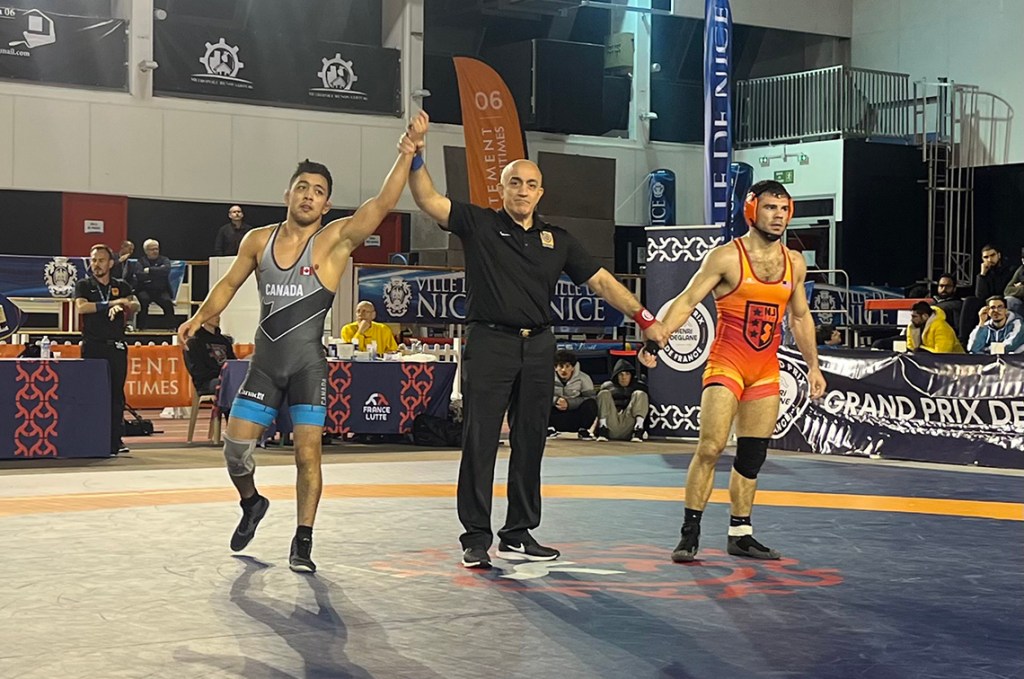
On Sept. 3, Peiman Biabani was named to Canada’s national wrestling team that will compete at the senior world championships in Zagred, Croatia, Sept. 13-21.

Biabani will wrestle in the 65 kg weight class. He’d previously won silver and bronze medals for Canada at the Pan-American championships and in 2016 he was the junior world champion in the 60 kg weight class when he was still living and training in Tehran, Iran.

There, Biabani was a superstar in that country’s national sport.

Prior to becoming world junior champion, Bianbani won the junior Asian championships in 2015, just three years after taking up wrestling.

SUBMITTED PHOTO
Anmore wrestler Pieman Biabani was a champion in Iran before coming to Canada to pursue better opportunties to realize his Olympic dream.

To continue his development, Biabani attended a special sports academy that allowed him to train full-time 15 days out of 20 while also getting an education. All his expenses were paid for, as was his travel to competitions in countries like Bulgaria, Ukraine, Russia and Georgia.

But when decisions within Iran’s wrestling federation got in the way of Biabani’s further advancement, he knew it was time to forge another path to glory.

A chance discussion at a meet in Siberia with Dave McKay, of the Burnaby Mountain Wrestling Club, pointed Biabani to Canada. He talked to his family, who gave their blessing. Wrestling’s governing body in Iran also agreed to the move.

Then the COVID pandemic hit.

Biabani was forced to stay put for another year, training, staying optimistic but rarely competing at important meets like the 2021 world championships.

“It was real hard for me,” Biabani said of his delayed dream.

Meanwhile, in Canada, McKay worked diligently to secure the paperwork that would allow the young Iranian to live, train and compete in his chosen destination. He reached out to the close-knit community of wrestlers across the country to help fund Biabani’s move, find him a place to live and get him settled when he arrived.

“There was a lot of things to set up,” McKay said, including the hiring of lawyers to help Biabani navigate the tricky and lengthy process of attaining the proper visas as well as an international transfer from Iran to Canada in his sport.

When Biabani arrived in Canada on a visitor’s visa in late 2021, he didn’t know any English, and without status to compete for his new country, he had no funding to support himself.

But, said McKay, he knew the common language of the wrestling community.

An old contact of the coach found Biabani a family in Anmore where he could live. He volunteered to help out with coaching between his training sessions at Burnaby Mountain, as well as at other wrestling clubs at Coquitlam’s Pinetree Community Centre and in the Fraser Valley. To support himself and pay his expenses to get to competitions he took on labour jobs like flooring and construction.

“I don’t have any choice but to push myself,” said Biabani of the juggling required to stay on course with his training while managing the day-to-day challenges of life in a new country.

Results started to happen, at meets like the SFU Open.

In October 2023, Biabani achieved permanent residency and in January, 2024, he finally secured the international transfer that allows him to compete for Canada.

Biabani promptly won a silver medal at the 2024 Pan Am championships but he was injured just prior to the final so couldn’t compete for gold.

But Biabani was denied his dream of competing at the 2024 Summer Olympics in Paris because he hadn’t yet attained Canadian citizenship.

Biabani said it was a tough pill to swallow, but it’s only reinforced his resolve to keep working hard so he can represent his new country at the 2028 Games in Los Angeles.

“Four more years is nothing,” Biabani said, adding the challenges of the past few years have given him the mental fortitude and patience to stick with his program.

“I moved here for my dream.”

McKay has every confidence his protégé will be successful.

“He didn’t have the chance, but now he has the chance,” he said, adding wrestlers usually reach the peak of their form when they’re in their early 30s; Biabani will be 31 in 2028.

“His time is now,” McKay said. “Every day counts to make it better for his wrestling.”

• Biabani is one of five athletes from the Burnaby Mountain Wrestling Club who will be competing for Canada in Zagreb. The other four are:

  • Karla Godinez, in the women’s 55 kg class
  • Ana Godinez, in the women’s 62 kg class
  • Patrik Leder, in the men’s 79 kg class
  • Nishan Randhawa, in the men’s 97 kg class

McKay will also be one of the team’s coaches.

This Coquitlam Express player is having a career season. You’d never know he has a chronic disease

This story first appeared in the Tri-City News on March 16, 2023

If you happen to spy Coquitlam Express forward Mateo Dixon checking his phone on the players bench during a game, he’s not calling his family back in Toronto about his latest goal, or texting his buddies.

He’s checking the level of his blood sugars.

Dixon has Type 1 diabetes.

Diagnosed when he was 13 years old, Dixon says he hasn’t let the autoimmune disease hold him back from attaining his athletic goals.

In fact, having Type 1 may have even accelerated his development as a hockey player.

Now 20 and in his final season of junior hockey, Dixon is having a career year, scoring 45 points in 49 games.

Not that his journey through the sport has been easy.

When your pancreas is working as it should, you don’t think about it.

Constant calculations

The elongated gland that sits in your upper abdomen tucked behind your stomach magically produces the enzymes that help you digest food and the hormones that keep the amount of sugars in your blood on an even keel.

But when your pancreas suddenly stops functioning, you can’t not think about it.

While the days of restrictive diets for people living with diabetes are long gone, every time Dixon eats or reaches for a bottle of energy drink after a shift on the ice, he has to make a mental calculation about the amount of carbohydrates he’s ingesting.

He also has to check his blood sugar levels with an app on his phone that’s connected to a sensor plugged into his body, then determine the dose of insulin a small pump he wears 24/7 injects into his body to offset that sugar boost.

It’s not always an exact science.

Exercise, stress, anxiety and excitement can throw even the most precise calculation out of whack.

Overshoot your insulin dose and your blood sugars can drop, sapping you of energy, depleting your ability to focus or make quick decisions.

Underestimate, and your soaring blood sugars can make you nauseous and tired, and bring on a pounding headache.

Neither outcome is ideal for a high-performance athlete who has to be at the top of their game and ready at any moment to jump on the ice.

Dixon said his disease has brought on no shortage of aggravations.

“It can be so random” he said. “So many micro things can affect it.”

‘A sense of responsibility’

But, Dixon added, living with Type 1 has also put him more in tune with his body.

He said he’s hyper-aware of everything he eats and drinks and the importance of maintaining a healthy lifestyle to better manage his blood sugars.

Dixon’s off-ice training regimen doesn’t just get him ready for the rigours of the hockey season, it also helps smooth out the effects of the highs and lows he’ll inevitably endure.

Express coach Patrick Sexton said Dixon’s maturity is beyond his years.

“He has a sense of responsibility,” he said. “He knows exactly how he’s feeling and how to address the situation.”

Sexton said he’d played with teammates who have Type 1, like Luke Kunin, now a defenceman for the NHL’s San Jose Sharks.

But this is his first experience coaching a young athlete with the disease.

He said it’s important to maintain open lines of communication so he can understand why Dixon might not be able to immediately take a shift because he’s dealing with a low, or why he’s looking at his phone and wolfing down a candy bar on the bench instead of manning the power play on the ice.

“My job is to support him,” Sexton said.

Invisible disease

Dixon said one of biggest challenges of diabetes is its invisibility.

The advent of technology, like the small insulin pump that plugs directly into his abdomen or thigh and the digital glucose monitor that connects by Bluetooth to his smartphone, has eliminated the very public displays of pricking his finger to draw a drop of blood to dab on a test strip plugged into a handheld meter or injecting a dose of insulin with a hypodermic needle.

That can make it hard for his teammates and coaches to immediately recognize why he might be a little off his game, or why he has to cut short a workout.

So, he takes care to bring them into his world as best he can to build an understanding of his disease and the challenges it can present.

“I look at it as a growth opportunity,” Dixon said of living and competing with Type 1. “It’s not limiting at all. It can literally be the opposite.”

PoCo trainer making tracks with standardbreds

This story first appeared in the Tri-City News on Jan. 30, 2019

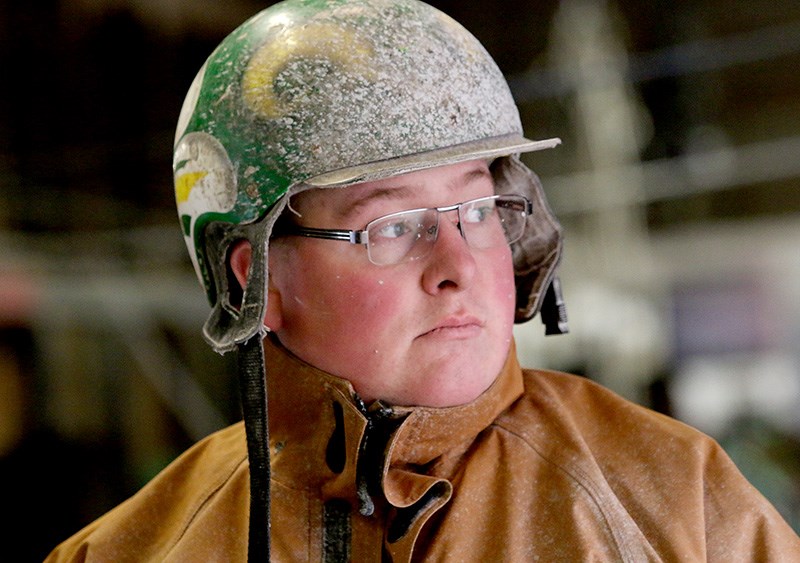
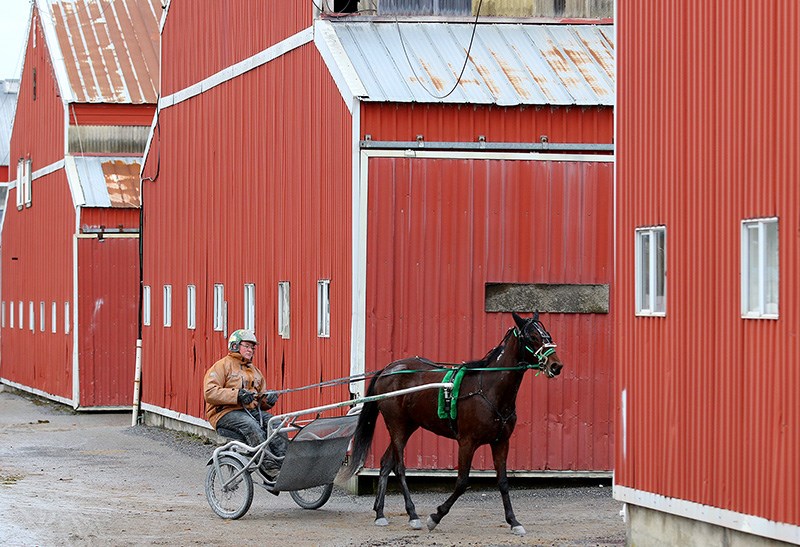
Port Coquitlam’s Christopher Lancaster is riding the family business to success.

The 28-year-old graduate of Riverside secondary school is a finalist as a future star of the O’Brien Awards, the top honours for standardbred horse racing in Canada, that will be presented in Mississauga, Ont., on Saturday.

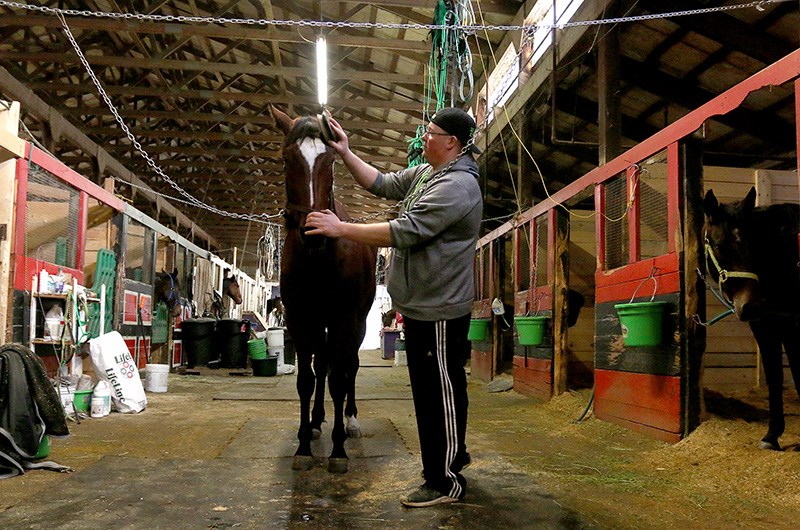
The recognition is a reward for the long days Lancaster puts in at the barns at two harness racing tracks in Alberta — Century Downs in Calgary and Century Mile in Leduc — and at Fraser Downs in Cloverdale. More importantly, it’s affirmation he made the right decision to turn his back on a potential career painting cars and, instead, follow the footsteps of his grandfather and father to the track, trading, training and racing horses.

Not that Lancaster was unfamiliar with life and toil in the paddocks. He pretty much grew up there, as his dad, Ron, trained horses then started shoeing them at tracks in Ontario before working his way west to eventually settle in British Columbia.

“It’s the life of a gypsy,” said Lancaster, who divides his year equally between the three tracks as the standardbred racing season progresses.

In fact, Lancaster spent so much time with his dad behind the backstretch, he earned the nickname “Cub,” to Ron’s “Bear.”

At 12, Lancaster climbed into a sulky for the first time. He was enthralled.

“It was exciting,” Lancaster said.

So much so, when Lancaster graduated from Riverside in 2009, he decided his chosen path to study automotive paint in college wasn’t for him, and headed to Alberta to begin his apprenticeship as a standardbred trainer. He hooked up with one of the best in the province, Kelly Hoerdt, who’s won more than 3,000 races as a driver and trainer.

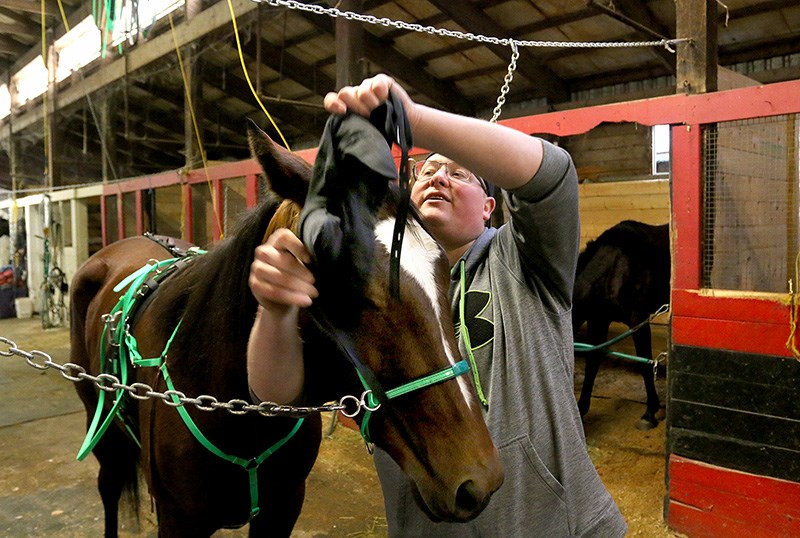
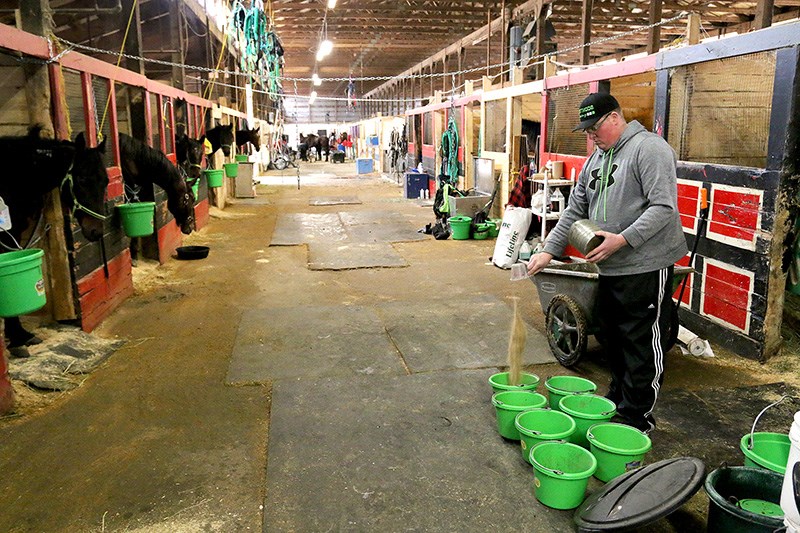
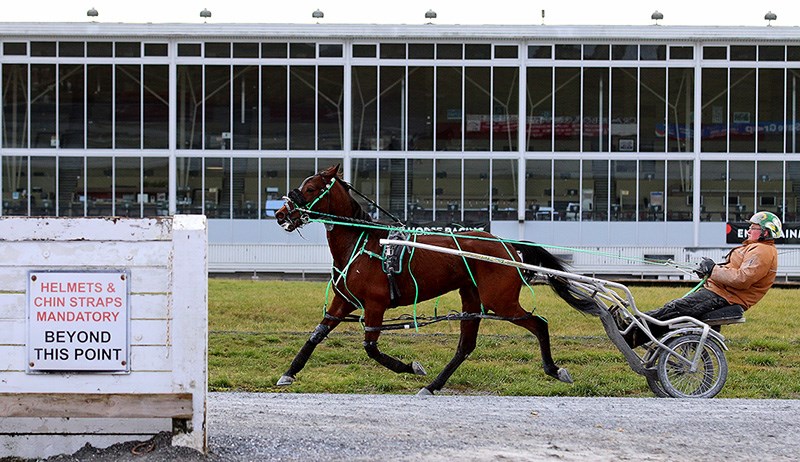
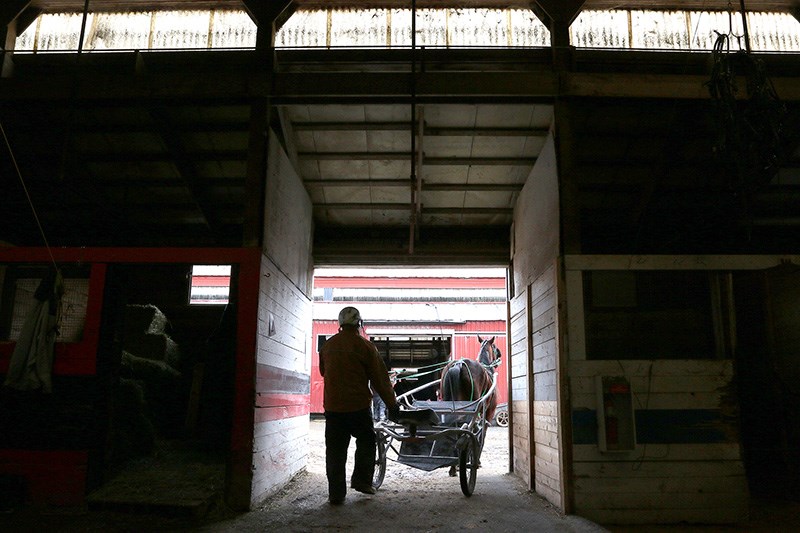
Lancaster learned the drudgery of cleaning out stalls and feeding horses beginning at 5:30 in the morning, grooming them, caring for their aches and pains, then harnessing them up to the two-wheeled cart for runs around the track to prepare them for the evening’s racing card.

He also gained insight into the wheeling and dealing of horses that pays the bills, how to spot a horse with potential in a claims race and then turn it into a winner that can then be sold at a profit.

Lancaster, who’s spending the winter season at Fraser Downs, said while the days with his stable of eight horses are long, they don’t feel like work.

“It’s a lifestyle,” he said.

Unique program gives Tri-Cities kids a chance to play basketball for their schools

This story first appeared in the Tri-City News on June 24, 2023

Austin Chassie is known as “Captain Hustle” on the basketball court and he couldn’t be prouder of the nickname.

Chassie is one of dozens of neuro-diverse students from six high schools across School District 43 who participated in a unique three-on-three basketball program that could become a template for inclusion in other school sports like soccer.

Mike Viveiros, the athletic director at Heritage Woods Secondary School in Port Moody, said the idea for the unified program that brings together neuro-diverse and neuro-typical students to develop their athletic skills, learn about things like teamwork and perseverance and give them a chance to represent their schools grew from a similar adaptive program he ran for track and field prior to the COVID-19 pandemic. He said basketball seemed a natural progression because many of the kids are already passionate about the sport and it provides them a unique opportunity to be part of a team.

“It ends up being a neglected population,” Viveiros said of the exceptional students who had the chance to participate. “We need to strive for a future where these inclusive opportunities are the norm.”

Last February Viveiros put the word out to his fellow athletic directors and got positive responses from five other secondary schools: Port Moody, Terry Fox, Pinetree, Riverside and Gleneagle.

With some funding and resources from Special Olympics BC and support from the school district they were quickly able to put together a six-week season of jamboree-style games culminating in a championship tournament that was won by the Port Moody Blues.

MARIO BARTEL/TRI-CITY NEWS
Players from the unified 3-on-3 basketball programs at Heritage Woods and Port Moody secondary schools gather at an outdoor court to celebrate the success of their first season.

Saoirse Borden coached the Blues. She’s a Grade 11 student who plays on the school’s varsity girls basketball team. She said working with the players from the inclusion program at PMSS gave her a new perspective on her sport as she broke down the skills and strategies she takes for granted so they could be learned and understood by her charges.

Borden said it was most exciting to see the rest of the students embrace the players and vice versa.

“It opened up our school community,” she said. “There was a lot of support from the student body.”

Ava Taylor said she had a similar experience with her Heritage Woods Kodiaks team. Also in Grade 11 and playing for her school’s varsity side, she was challenged to find a common ground for such a diverse group with different abilities and ways of learning.

“Everyone had a different starting point,” she said.

Alicia Waet said she’d never really participated in sports prior to joining the Kodiaks’ unified team. But with a season now behind her, she said it was “great to make a lot of different connections with people I didn’t know before.”

Teammate Ramtin Rouhi said being on the team “made me feel awesome” and helped develop his skills in shooting and defending.

Viveiros said the players’ enthusiasm is infectious.

For the championship tournament, the gym at Heritage Woods was packed. Terry Fox Secondary had the support of its own cheerleading squad.

And when the Blues returned to Port Moody Secondary with the first place trophy, the team was greeted by the school’s marching band.

Viveiros said the success of unified basketball’s first season is the kind of breakthrough that could increase inclusionary sporting opportunities at schools in the Tri-Cities and beyond.

Already there’s been inquiries from other school districts like Surrey and Delta.

“Why aren’t we celebrating these kids like this?” he asked. “It really gets me emotional every week watching the successes of these students playing alongside their peers in the student population.”

But for Captain Hustle, aka Austin Chassie, the reward is more fundamental.

“I like making opportunities for my guys, help them be better at everything,” he said.

A Coquitlam hockey player is about to take his career in an unexpected direction

This story first appeared in the Tri-City News on March, 8, 2023

Mark Ledlin has spent a lifetime getting ready for the biggest opportunity to advance his musical aspirations by banging and crashing opponents on the ice.

The 25-year-old graduate of Dr. Charles Best Secondary School in Coquitlam just wrapped his eighth season of playing professional hockey in Germany — the past two with the Rostock Piranhas in the second division German Oberliga.

But without a contract for next season, Ledlin is focusing his attention on developing a music career that received a big boost three years ago when he appeared on the German version of the reality show, The Voice.

And he could be poised for a breakout with the release of his first EP this summer and an opportunity to compete as one of eight semi-finalists in SiriusXM radio’s fifth annual Top of the Country competition.

On March 30, Ledlin will head into a studio to record an acoustic version of an original song he’s written and composed.

The songs and videos of all eight semi-finalists from across Canada are then posted online for fans to vote for their favourite.

The winner receives $25,000, as well as industry mentorship and a song writing trip to Nashville.

Ledlin said playing hockey in front of thousands of fans has steeled him for the pressure of being on top of his singing game in the recording studio.

It’s also given him the confidence and self-awareness to find his voice.

“I’ve had moments on the ice where I’ve screwed up and there’s 4,000 people watching,” Ledlin said. “I can be myself on the ice and on stage, but nobody tries to fight you on stage.”

ROSTOCK PIRANHAS
Mark Ledlin, of the Rostock Piranhas, pursues an opponent in a recent game against EG Diez-Limburg in the second division German Oberliga.

Ledlin said music has always been a part of his life: His dad, Fred, who also played pro hockey for 13 seasons in Germany, is an accomplished guitarist himself.

Mark Ledlin said he learned to play watching YouTube videos then started posting videos of his own music from his apartment during the early months of the COVID-19 pandemic as he awaited hockey to resume.

That led to Ledlin’s appearance on The Voice. And while he didn’t advance, he impressed the judges enough to earn an invitation to the show’s “Comeback Stage.”

Ledlin said until now, music has mostly been a way to fill the time between practices and games. As the end of his hockey career comes within sight, he’s drawing from his experiences as a professional athlete to fuel his creativity.

Ledlin said his blue-collar existence toiling year to year for contracts in hockey’s outskirts, far from the bright lights and big arenas of the NHL or even the German first division, brought him to country music’s soulful sounds.

“I’ve had to learn how to do everything myself since I was 17,” he said. “I put that into the music. Every song I write comes from the heart.”

Ledlin said his teammates have been supportive of his musical journey.

“Some of my biggest fans are the guys I play with,” he said. “They’re always asking me to play songs for them.”

But as Ledlin prepares to pull off his skates and elbow pads and put on a flannel shirt and cowboy boots, he’s feeling like an underdog all over again.

And that’s not necessarily a bad place for an athlete to be.

“I’ve been a pro since I was 17,” he said. “I’m going to make some noise in the music world. That’s my destiny, that’s my drive. If it’s hockey or music, I find a way to get to the end.”

Port Moody cycling studio helps cyclists go Zwifter

This story first appeared in the Tri-City News on April 12, 2019

At 70 years-old, Frank Quigg’s dreams of racing his bike in the peloton at the Tour de France are long behind him.

But, Quigg discovered, he can get a flavour of that experience by plugging his indoor trainer into one of several virtual training apps that can plant a cyclist in the midst of a group ride through French countryside, up and down the Dolomite mountains in Italy or around the roads of Central Park in New York City.

And now the retired auto importer has turned his winter training regime into the Lower Mainland’s first virtual cycling studio in a loft area above a fitness gym on Port Moody’s Spring Street.

Quigg’s endeavour, Zwift Cycling Club, features four Tacx Neo 2 smart trainers that are each paired with a virtual training app by Zwift and connected to individual 40-inch monitors. Each station even has a remote-controlled fan that simulates a cooling breeze out on the road.

Cyclists can bring their own bike to mount on the trainer, or use one of the Specialized bikes Quigg has available.

A leap ahead

Quigg took up cycling when he was 59 to improve his health and fitness and now logs more than 8,000 kms on the road a year. He said the virtual riding experience is a leap ahead from the mental drudgery of grinding out hours of spinning parked in front of a TV watching Vancouver Canucks’ hockey games or binging on episodes of House of Cards on Netflix.

Instead, the app can plop Quigg on one of several fictional courses in a mystical land called Watopia, where the roads are always closed to car traffic, or other routes modelled after the 2012 Olympic circuit in London, England, the 2015 world championship course in Richmond, West Virginia, or even the weekend warrior mayhem of New York’s Central Park.

Other apps like Sufferfest incorporate workouts into licensed footage from famous cycling stage races like the Tour de France, Giro d’Italia and one-day events like Milan-San Remo or Paris-Roubaix.

Like a video game

Quigg said Zwift’s virtual world is like bringing his bike into a computerized video game where he can just ride to explore the course and scenery, or elevate his heart rate by racing for personal training goals or against other cyclists hooked into the program from all over the world. The trainer alters the pedalling resistance according to the terrain on the screen, so it gets harder to climb hills and easier to glide down the other side, while the monitor tracks his effort and gives him an idea of how he’s doing compared to the other virtual cyclists on the course.

Quigg, who suffered a bad crash two years ago while riding in a pack along Marine Drive in Vancouver, said virtual training apps also offer a safe environment for riding in a group without the fear of touching wheels with a neighbouring cyclist or crashing into obstacles like barriers and signs that can be hard to spot when in the midst of a fast-moving peloton. Even the social aspect of group rides is preserved, as cyclists signed into the app can communicate with others on the digital road, set up challenges like sprints or organize events like races with their friends.

About the only thing missing is the traditional mid-ride coffee stop, although Port Moody’s Brewery Row is only a short coast away.

Busy year ’round

Quigg said while indoor riding is usually a winter activity cyclists use to maintain their conditioning, he anticipates his stations will be kept busy during the summer months by riders following a structured training regime to prepare for a specific event like a race, gran fondo or triathlon. Groups of friends can also challenge each other in a social setting.

And while it’s possible to get a virtual cycling experience at home, a proper station can cost more than $3,000 — not including the bike — plus the space to leave it set up.

“You get to live out some of your Walter Mitty fantasies,” Quigg said, adding several European and North American pros like Roman Bardet, Mark Cavendish, Michael Woods and Evelyn Stevens have been known to sign in to a Zwift ride.

Coquitlam climbs set the stage for Tour de France glory

This story first appeared in the Tri-City News on June 19, 2018

Alex Stieda owes everything he achieved in bike racing to Coquitlam. Or rather, the city’s hills.

So it’s only appropriate on Thursday he’ll be inducted into the Coquitlam Sports Hall of Fame at the Poirier Sport and Leisure Centre, located about midway between two of the climbs he regularly ascended on his 10-speed he’d acquired from a high school buddy to improve his fitness in advance of the Juvenile hockey season.

It was an unlikely beginning to a career that would make him the first North American cyclist to wear the Yellow Jersey as the leader of the Tour de France as well as compete for Canada at international events like the 1982 Commonwealth Games, 1983 Summer Universiade and the 1984 Summer Olympics.

Stieda’s grinds up Blue Mountain Street and Mariner Way caught the attention of a neighbour two doors down from his parents’ home on Gatensbury, near Como Lake. Harold Bridge was a dedicated randonneur, an eclectic breed of cyclists that enjoy rides of 200 km or more in a day; his wife, Joan, happened to be the president of Cycling BC at the time.

Bridge took Stieda under his wing, showed him how to ride in a group and draft behind other riders to save energy. And when the long, languid rambles of the randonneurs didn’t seem challenging enough for his young protégé, he passed Stieda on to Larry Ruble, who led a group of faster cyclists out of his Maple Ridge bike shop for rides to Mission or Fort Langley, and back.

More often than not, it was Stieda who took the lead and did the most work of their small peloton of 10 or 12 more experienced cyclists.

So Ruble suggested Stieda head to the roads around the University of British Columbia, where veteran racers competed to be the fastest in time trial races against the clock every Thursday evening.

Of course, Stieda cycled there, making the long ride out along 41st Avenue to UBC after school, post his time on the five-mile time trial course, then ride all the way home, pounding his way back up Blue Mountain in the fading twilight.

“When you’re at the end of your rope after riding 100 km, you just do everything to get home,” Stieda recalled from Edmonton, where he’s an account executive for an IT company. “Living in Coquitlam made me stronger.”

Strong enough that he started winning races at the old China Creek velodrome in Vancouver, then eventually a victory in the Canadian track cycling championships that earned him a trip to the junior worlds in Buenos Aries, Argentina.

‘I wanted to do more’

“This is super cool,” Stieda said. “I was smitten. I wanted to do more.”

Stieda started honing his road racing skills with local teams like Gunners and Carleton. Eventually he hooked up with a crew sponsored by a local Rotorooter franchise; they’d train and race through the summer, then unclog drains in the winter.

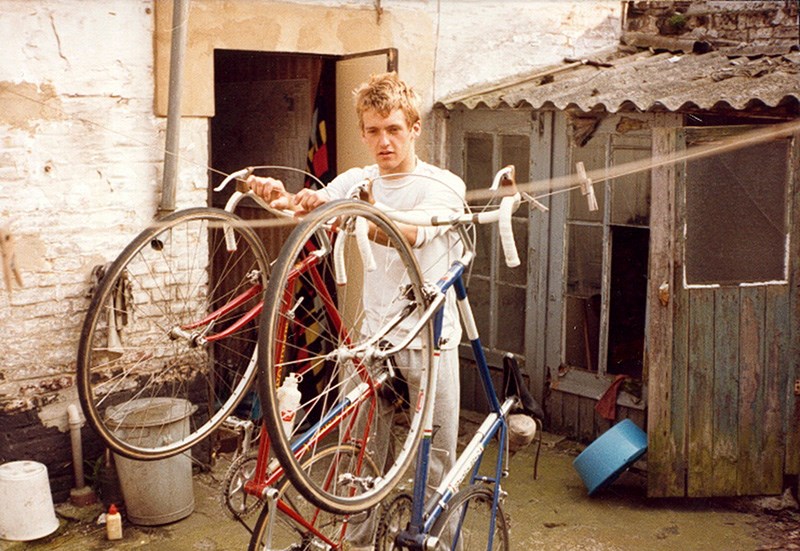
In 1981, Stieda realized to take his cycling to the next level, he’d have to travel to the sport’s spiritual home in Belgium where hardened European neopros banged handlebars, cut deals and maybe got noticed by bigtime pro teams, in kermesse races that could be found almost every afternoon or evening in small towns or villages across the country.

Stieda’s dad secured a $500 grant that paid for a flight to Ottawa, where he dragged along a home-built Fibreglas case holding his steel Marinoni racing bike to a military base in Trenton, Ont., to catch a Royal Canadian Forces flight to Lahr, West Germany and then on to Frankfurt, Germany and Ghent, Belgium, by train.

Stieda, 20 at the time, had no idea what he was getting himself into.

“The guys at the base probably got a kick out of me,” he said.

Midnight arrival

Deposited at Ghent’s train station at midnight, Stieda bounced his bike box over the dark, cobbled streets to find Staf Boone, a sort of Godfather of the local cycling scene who managed a number of  apartments in the area that he let out to visiting foreign cyclists pursuing their dreams.

Stieda roomed with an Australian cyclist. Their “cold-water flat” had no hot water, a propane hotplate for a stove, and they went to the bathroom in a shack out back.

“It was definitely a hard life,” Stieda said. “But I was just living in the moment.” 

Out on the road, Stieda learned some hard lessons as well. Semi-professional bike racing in Northern Europe has its own culture, its own code of rules and ways of breaking them in the name of survival.

“I didn’t have an opportunity to get intimidated,” Stieda said. “If you weren’t tough mentally, it was over.”

Stieda’s trial by cobblestone got noticed by the newly-formed American team, 7-Eleven, that was built around famed Olympic speedskater Eric Heiden who raced bikes as part of his off-season training, and included another Canadian cyclist, Ron Hayman. 

The team invited Stieda to enter some races in North America in the fall when he returned from Europe, and in 1982 he was offered a contract.

No illusions

Stieda said he had no illusions of glory. He didn’t have the lean build of a Grand Tour rider who could rack up big kilometres and recover to do it again the next day for the three weeks of a race like the Tour de France or Giro d’Italia, nor did he have the explosive power to win sprints. He was a domestique, a worker who could sacrifice himself for the team’s leader, haul water bottles, be there if a wheel needed to be swapped out.

That was to be Stieda’s role when 7-Eleven, now a big league professional team on a mission to popularize bike racing in the New World, was invited to the 1986 Tour de France, after two of its members stunningly won stages at the Giro d’Italia the year before. 

But somehow, the early stages of the 21-day race around France played to Stieda’s strength of being able to ride away from opponents for 80 or 100 km, just like those rides out to Mission and back home up Mariner Way. Add in some time bonuses he earned along the way, and midway through the Tour’s second day, after an 85-km road stage in the morning  that would be followed by a team time trial he barely survived in the afternoon, Stieda climbed atop the podium, got kisses on his cheeks from the podium girls and pulled on cycling’s most famous prize.

“It was really more of a strategic play rather than being the strongest rider,” Stieda said. “I had to figure out how to use my energy in the right way.”

Learning lessons

But Stieda couldn’t bask in his glory, as there were more lessons to be learned the next day. That’s when a veteran Dutch cyclist from another team told him on the road it wasn’t enough to wear the Yellow Jersey, he had to honour it by actually finishing the Tour.

“That hit me like a ton of bricks,” Stieda said. “So I just followed him around every day.”

Stieda did finish the race, in 120th position. But what amounted to his lunch hour in Yellow set the table for an era of North American glory in cycling’s biggest race, including overall victory in the ’86 Tour by American Greg Lemond — his first of three Tour wins — and more Yellow Jerseys worn by fellow Canadian Steve Bauer in 1988.

“It was just an amazing time, we were breaking new ground,” Stieda said, adding the old 7-Eleven teammates still gather for a reunion every five years or so.

• Stieda will not be able to attend the induction ceremonies on June 21. But he is sending a replica of his Yellow Jersey that will be mounted in a display in the lobby of the Poirier Sports and Leisure Complex.


Climate change challenges Tri-Cities’ mountain bike community

This story first appeared in the Tri-City News on Nov. 17, 2022

Extended droughts that dry out trails, atmospheric rivers that wash them away and intense windstorms that blow down trees are among the climate change challenges facing the local mountain biking community.

So members of the Tri-Cities Off Road Cycling Association (TORCA) are adapting the way they build and maintain trails, as well as how they ride them.

Karaleen Gioia, a director of the group that comprises more than 750 members, said a typical trail on Burke Mountain that 10 years ago was little more than a dirt path — snaking through the towering trees — must now be armoured with logs and rocks, bridged with hand-built wooden spans to allow for drainage in heavy rains, and contoured with little rolling hills to slow riders who could otherwise speed erosion.

“It’s not just getting out and shredding the trails anymore,” Gioia said. “Climate change is another factor to consider.”

Drought followed by big rainstorms can be especially damaging to trails.

Gioia said the former strips all the moisture from the ground that binds the trail beds, threatening their structural integrity, while the latter results in washouts as rainfall in unprecedented volumes is forced to travel in unfamiliar places.

Having both in quick succession can be disastrous.

“The result is that more work is required to make trails sustainable,” Gioia said. “More labour up front means less work in the long run.”

Most of that labour is supplied by a corps of dedicated volunteers over the course of several organized “trail days” throughout the year, as well as individual privateer efforts to stay on top of repairs.

“We’re pretty proactive.”

Gioia said most local mountain bikers are tuned into the privileged position they enjoy with so many trails so close to home. Many file trail reports to document any problems or areas of concern they identify as they roll up or down the mountains.

Gioia said keeping the trails in good shape benefits all users, including hikers, dog walkers and trail runners. That’s been especially important since the advent of the COVID-19 pandemic that sent more people outdoors for their recreational pursuits as activity helped reduce their stress and kept them healthier.

Gioia said education of proper trail use etiquette and trail building technique is an ongoing process. TORCA liaises frequently with other user groups, as well as land managers, to devise solutions to problems as they arise.

“We’re learning as we go,” she said.

In fact, a report conducted for Parks Canada by the Calgary-based Miistakis Institute that looked at the ecological impacts of mountain biking said that’s the case for most user groups, as there’s been very little empirical research.

“Specific effects associated with mountain biking activity and infrastructure characteristic of the other types of use have emerged as a considerable gap in the research literature,” concluded the review.

Gioia said land managers and user groups are gaining a greater appreciation that bolstering trails will help keep mountain biking viable even as weather extremes intensify.

“It makes it enjoyable for all the users,” she said.