Port Moody council rejects call to designate old sawmill site for a waterfront park

A 31-acre site on Port Moody’s waterfront won’t be set aside for a park.

But the city will look at implementing a requirement any future development of the property immediately west of Rocky Point Park include “a large, contiguous” park space.

Port Moody Mayor Meghan Lahti said including such a requirement in the city’s new official community plan (OCP) will send a message to potential developers of the property that building “a bunch of small pocket parks” won’t pass muster.

“I do think we should be articulating what we want to see down there in terms of park,” Lahti said during a special meeting of council Tuesday, Oct. 7, that passed first reading of the draft OCP.

The document maps Port Moody’s growth and aspirations by guiding its planning and land use decisions and policies for the next 25 years.

Coun. Diana Dilworth said a motion to designate as a “special study area” the waterfront property where the Flavelle cedar sawmill formerly operated for more than 100 years would essentially re-litigate a decision made by council on 2018 allowing its redevelopment into a high-density, mixed-use neighbourhood for more than 7,000 residents.

“I don’t see the value in rehashing this now,” Dilworth said of the former industrial property that had been a special study area prior to its 2018 redesignation. “We have the opportunity to negotiate with the owner, and I do believe that’s a better option than downzoning the property to park.”

Redevelopment plans since 2015

Flavelle’s owner, Surrey-based AP Group, had championed redevelopment of the mill site since 2015 but has yet to act on any of its plan that includes 11 towers ranging from 16 to 38 storeys, a low-rise rental building, retail, office and light industrial spaces as well as the future possibility of a hotel and congregate care facility. The company also pledged to dedicate almost a quarter of the site to public park space, including a boardwalk along the shore linked to Rocky Point Park.

AP Group closed the sawmill in 2020 and quickly dismantled its industrial structures. Since then the vacant property has been used for various film and TV productions, including the acclaimed Shogun limited series that won several Emmy Awards in 2024.

Coun. Haven Lurbiecki, who introduced the motion, said rather than laying fallow, the old sawmill property should become an extension of the 9.5-acre Rocky Point Park, especially as Port Moody’s population grows.

“Let us go back to the community to come up with a plan that better meets the needs of the community,” Lurbiecki said.

But Coun. Kyla Kowles said such a strategy is already in the works after council approved a new master plan for the city’s iconic waterfront park last November that makes its expansion a priority.

“This council has stated clearly over and over again that expansion of Rocky Point Park is a major priority and that has not changed,” she said.

Coun. Amy Lubik said the park’s expansion to the west is a work in progress.

“We haven’t seen a development application yet and I think we’ll see lots of changes,” she said. “Expanding Rocky Point Park will be a part of the site’s redevelopment.”

Tower heights stay maxed at 39 storeys

MARIO BARTEL PHOTO A draft of Port Moody’s new official community plan formalizes a framework to allow towers up to 39 storeys in the neighbourhood immediately around the Moody Centre SkyTrain station.

Meanwhile, another motion introduced by Lurbiecki to scale back development plans in the draft OCP for the neighbourhood immediately surrounding the Moody Centre SkyTrain station also failed to gain traction.

Lurbiecki said formalizing a maximum tower height of 39 storeys for the neighbourhood in the document “invites land speculation” and restricts the city’s ability to negotiate with developers for enhanced amenities like daycare spaces in exchange for allowing higher density.

Lurbiecki said a maximum of up to 20 storeys as outlined in provincial housing legislation mandating the construction of high-density development around mass transit stations should suffice.

“These heights exceed provincial legislation requirements,” she said. “No-one is buying these condos. We’re sitting in a market where thousands of these are sitting empty.”

But Port Moody’s manager of policy planning, Mary De Paoli, said council has already set the bar at 39 storeys with the development framework it had previously adopted to help create a true city core and reducing it to 20 storeys would limit the city’s ability to achieve any amenities in the neighbourhood. Recently, Vancouver-based PCI Development started site preparation for two 39-storey rental towers next to the SkyTrain station that were approved by council in April.

Dilworth said ultimately the market will decide appropriate density.

“If condos aren’t going to sell, buildings won’t get built,” she said.

Podiums to be studied

An additional motion to remove a requirement towers in the Moody Centre neighbourhood be constructed atop podiums of three to six storeys did, however, find mixed favour amongst councillors. While such podiums won’t be required in the new OCP, staff will study the implications of mandating their height requirements.

De Paoli cautioned removing the podium requirement presents “a significant shift” that would likely result in taller towers.

“There will be pressure to put density somewhere,” she said, adding podiums are also an attractive landing spot for amenities like retail and commercial spaces.

Knowles said the decision to build atop a podium should be left to the developer.

“Wouldn’t we want to remain open to a developer coming forward with a new design?” she said.

Dilworth agreed.

“This provides some flexibility,” she said.

Other tweaks to be integrated into the draft OCP prior to second reading later this fall include:

  • removing several aging townhomes on the south side of Dewdney Trunk Road between St. Johns Street and Viewmount Drive from a special study area that covers the entirety of St. Johns’ south side from Clarke Road to the Coquitlam border
  • designating the site currently occupied by Port Moody Elementary school to be parkland when construction of the new elementary school further east on St. Johns Street is completed

OCP process started in 2020

The process to craft Port Moody’s new OCP began in 2020 but had to be paused in 2024 to allow staff to integrate elements of new provincial housing requirements. A revised first draft was presented to council in July.

One said it’s imperative recreation facilities like ice rinks keep pace with anticipated growth while another feared Port Moody would become “a city of towers, from one end of St. Johns to the other, tower after tower and tower.”

A third speaker cautioned council its decisions around the OCP will “define the identity of Port Moody for generations to come.”

Once the draft document passes second reading, it will be referred to external agencies like Metro Vancouver for further comment prior to a public hearing expected some time in December.

Final adoption could occur by March, 2026, said De Paoli.

Housing prices squeezing families, seniors and immigrants: study

This story first appeared in the Tri-City News on Sept. 21, 2021

Port Moody has plenty of housing getting built or in the process of being approved to meet projected regional growth targets.

But the city needs more diversity of housing options to keep it affordable for families, single people, low income earners, immigrants and people with disabilities, says a study by community planning and development consultant, CitySpaces Consulting.

According to the study, which is to be presented to council Sept. 21, the gap between what households can afford to pay for housing in Port Moody and the housing that is available is growing.

Since 2013, the median sales prices of single-detached homes and townhouses have nearly doubled. Rents have also skyrocketed at a similar pace, and the vacancy rate for units with three or more bedrooms is currently 0 per cent. As a result, one in five residents are spending more than 30 per cent of their income on housing costs, a level that is considered a standard measure of affordability.

“Housing is becoming more expensive and fewer residents are able to enter the home ownership market,” said the report, adding Port Moody’s housing situation isn’t about a lack of dwellings to be built, or land where they can be located. Rather, there isn’t enough diversity of housing, including more affordable housing options, as well as accessible and family-friendly units.

Renters, who comprise one-quarter of city residents, are also struggling with higher costs and less availability, said the report. The median rent in Port Moody is now more than $1,000 per month while the vacancy rate for all units is between 0.5 per cent and 1.9 per cent — a healthy vacancy rate is between one and three per cent.

“Some households may be able to find a rental unit for less than $1,000 a month, but this typically comes with trade-offs such as being in poorer quality condition, further away from public transit and amenities and may not be suitable to meet their needs,” said the report.

But as Port Moody strains under the same market forces that afflict the entire Tri-Cities area, there are still ways to turn the tide.

“For Port Moody, the number of units being developed is keeping pace with demand,” said the report. “However, consideration to adjust the mix and secure rental housing and affordable units is a key area of opportunity.”

According to CitySpaces, zoning bylaws in Port Moody often don’t mesh with land designations, creating challenges to build viable developments without expensive lot consolidations, and some areas of the city are falling short of their potential to accommodate new, more diverse housing. Developers, the consultant said, require certainty and standardized policy in development expectations and incentives, as well as expedited processes to move approvals along.

And that could require more staff, said the report.

“It appears that the local government may need to scale-up staffing levels to match the scale of development to not only move projects through the process in a timely manner, but to also ensure that opportunities to capture units for affordability is not missed.”

The study was commissioned by Port Moody in 2020 to fulfill new regulations under the provincial Local Government Act for municipalities to complete housing needs reports by 2022, and then subsequent reports every five years after that. The consulting company used data from various sources including Statistics Canada, BC Assessment and BC Housing, as well as an online survey, virtual workshops, interviews and a workshop with city staff.

Port Moody rent-to-own project fails to help first-time buyers

This story first appeared in the Tri-City News on Feb. 13 2025

A rent-to-own program meant to help first-time buyers afford a home in a new Port Moody condo project proved to do just the opposite.

But the developer is hoping it can revive the plan with new parameters.

Tim Schmitt, the director of development for Langley-based Marcon Development, said only one possible purchaser of 190 applicants was able to take advantage of the company’s program, that allows eligible purchasers to rent their unit for a period of time with the money going towards their down payment. Purchasers must also agree to occupy their new home as their primary residence.

In a letter to Port Moody council, Schmitt said the maximum household income threshold of $150,000 as set by the Canada Mortgage and Housing Corporation’s First Time Home Buyer Incentive (FTHBI) program that the company was using to qualify potential purchasers proved too low to allow them to get a mortgage for even the most affordable one-bedroom apartment in the Hue, a 222-unit condo building nearing completion on the site of the old Barnet Hotel.

Further, CMHC’s incentive program that provided first-time home buyers with a loan of five or 10 per cent of a home’s purchase price to help increase the size of a down payment was discontinued in 2024.

Schmitt said that means the threshold is no longer being updated to account for higher housing prices.

Schmitt said it’s created a kind of Catch-22 situation; buyers who could qualify for a mortgage under rules that set a maximum loan-to-income ratio of 4.5 times have to earn at least $160,000 to afford a $630,000 one-bedroom apartment at Hue, beyond the threshold to be able to participate in the rent-to-own program.

“The purchase price of homes in the current market is out of sync with the FTHBI program that was created over five years ago,” Schmitt said, adding the company still wants to proceed with some sort of rent-to-own program for the remaining nine homes it had originally set aside.

Tuesday, Port Moody councillors agreed to amend the city’s housing agreement with the developer to allow that to happen.

The developer will convene a second round of applicants for the program but their maximum household income cannot exceed $190,000 if they’re purchasing a one-bedroom apartment or $270,000 for a two-bedroom unit. As well, they’ll be tiered, with first consideration going to first-time homebuyers who are either Port Moody residents who have lived in city for at least a year or they’re front line workers like firefighters or police officers. The second tier will comprise all other first-time homebuyers followed by any other qualified applicants.

If any of the rent-to-own units remain unpurchased after going through all the qualified applicants, they’ll be released for general sale.

Port Moody Mayor Meghan Lahti said Marcon’s rent-to-own conundrum is “unfortunate,” as it was a major component of the company’s pitch to get the project approved.

“It was one of the most positive aspects of that application.”

Coun. Kyla Knowles said the dilemma is a symptom of communities’ ongoing struggle to secure affordable housing for their residents.

“We need senior levels of government to step up,” she said.

Port Moody senior planner Doug Allan said the new rules make the best of an unfortunate situation.

“They address Marcon’s challenges in selling the 10 RTO strata lots, reduce the barriers to program participation, and support moderate income households by updating income thresholds,” he said.

New Coquitlam complex honours staunch advocate for affordable housing

This story first appeared in the Tri-City News on March 8, 2024

Lelainia Lloyd says she finally feels a sense of belonging.

Scooting around the rain-drenched courtyard at Robert Nicklin Place in her motorized wheelchair, Lloyd said living in one of 35 fully-accessible apartments in a new 164-unit rental complex in Coquitlam has given her the time and energy to help build a community around her.

“You don’t realize the energy it takes to live in inaccessible buildings,” Lloyd said. “It’s a game-changer.”

The six-storey wood-frame building, located at 3100 Ozada Ave., was officially opened Friday, March 8. It’s named for the longtime CEO of the Affordable Housing Society (AHS) who died in 2016.

Fittingly then, 74 of the units are affordable, of which 16 are deeply subsidized for households with very low incomes, and 36 have their rent geared to income.

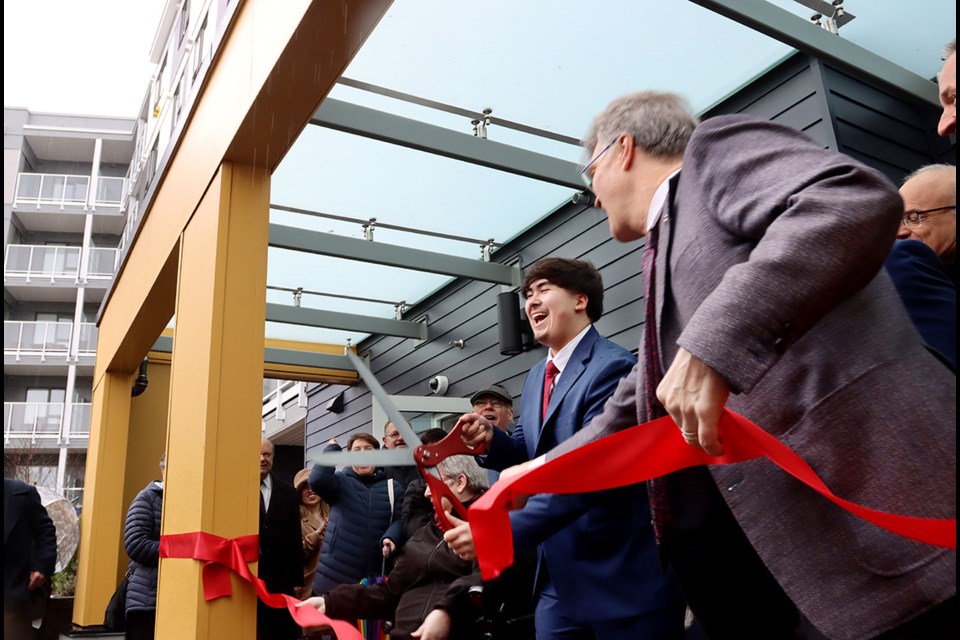
Kevin Nicklin officially opens a new 164-unit rental complex in Coquitlam that features 74 affordable apartments. The building is named for Kevin’s father, Robert Nicklin, who was CEO of the Affordable Housing Society for 27 years until he died in 2016. MARIO BARTEL/TRI-CITY NEWS

Nicklin’s oldest son, Kevin, said seeing his father’s name above the building’s entrance and on a special plaque in its lobby makes his family “extremely proud” of the 27 years he worked to help build and secure affordable housing throughout the Lower Mainland.

“This is an important step in the right direction,” he said of the complex that welcomed its first residents in January, adding his father’s effort to increase affordable housing options will be felt “for years to come.”

It’s also a testimony to what can be achieved when several levels of government work together, said Stephen Bennett, the current CEO of AHS.

Six years in the making, Robert Nicklin Place was built with an $8.1-million contribution from BC Housing’s Community Housing Fund which will also provide $110,000 in annual operation funds, as well as a forgivable loan of $1.9 million along with a $44.2-million low-interest, repayable loan, from the Canada Mortgage and Housing Corporation, $3.3 million from the City of Coquitlam and the waiver of $869,000 in development cost charges from Metro Vancouver, TransLink and School District 43.

Ravi Kahlon, B.C.’s Minister of Housing, said the new homes are “designed to be the kind of sustainable homes that give people stable, affordable housing in a housing crisis.”

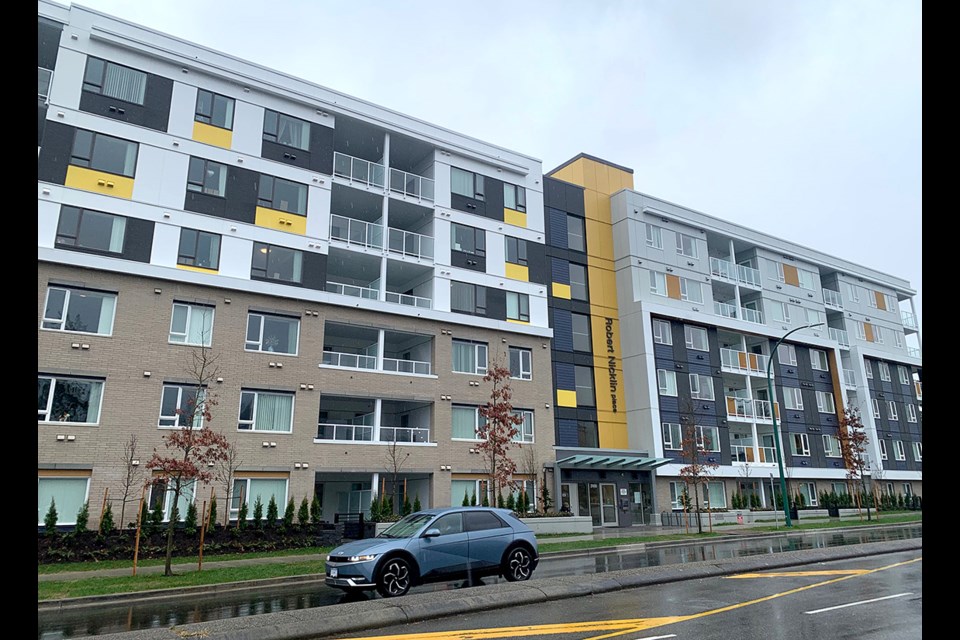
The new Robert Nicklin Place apartment complex in Coquitlam is named after Robert Nicklin, who was the CEO of the Affordable Housing Society for 27 years until he died in 2016. MARIO BARTEL/TRI-CITY NEWS

Representing the federal government, Ken Hardie, the MP for Fleetwood–Port Kells, said the “new living environment will allow residents to remain in their community, close to their loved ones.”

Coquitlam Mayor Richard Stewart said one of Nicklin’s driving forces was his dedication and love for family and the importance stable, affordable housing can play in keeping families together.

“It’s vital to the success of communities and families,” he said.

And more affordable housing is in the pipeline.

On Feb. 9, Stewart announced $25 million from the federal government’s Housing Accelerator Fund will fast-track the construction of 650 new housing units over the next three years.