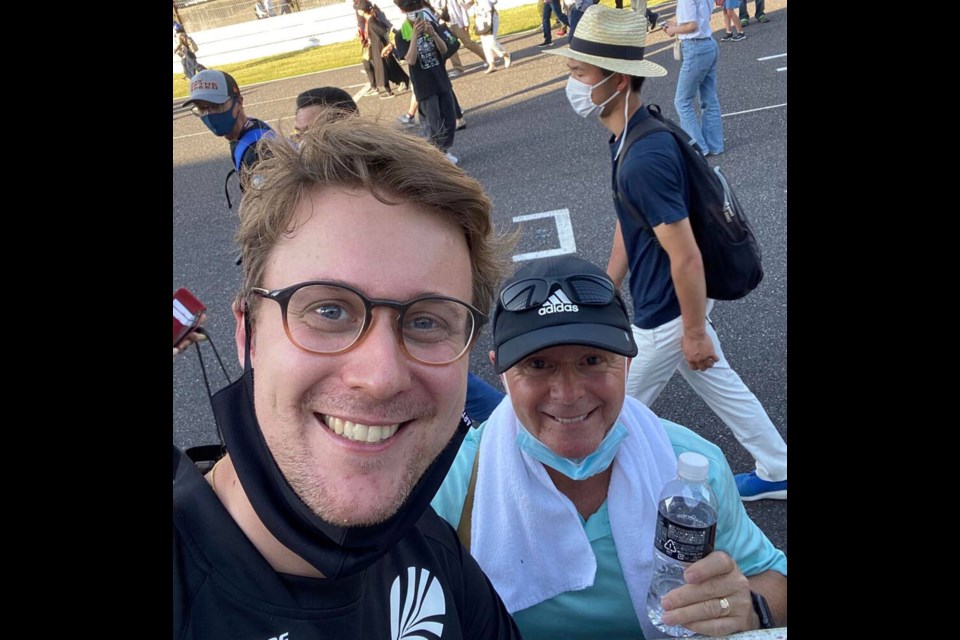
Beloved Westwood track lives on in racers’ hearts

This story first appeared in the Tri-City News in Feb., 2019

Al Ores helped build the sport of car racing in British Columbia. So much so, his efforts are being honoured by the Burnaby Sports Hall of Fame when he’s inducted as a builder on Feb. 28.

But the 85-year-old mechanic and racer can’t bring himself to visit the site where most of that building took place.

Almost 30 years after it was closed to make way for a golf course and luxury homes, the loss of the Westwood Motorsport Park on Coquitlam’s Westwood Plateau still cuts deeply into the heart of the province’s racing community.

“It was something very special,” Ores said of the 2.9 km track that sliced through the woods on the southern flank of Eagle Mountain.

Westwood was the first purpose-built permanent road racing course in Canada. It was constructed and operated by the Sports Car Club of British Columbia (SCCBC) to support grass roots racing and help develop young racers who were looking to step up from the go-kart track nestled inside Turn One of the eight-turn circuit. One of its most famous graduates was the late Greg Moore, who worked his way up from the karts at 10-years-old to Formula 1600 and 2000, Indy Lights and then won five races in four seasons in the Champ Car World Series before he was killed in a racing accident in California in 1999.

Ray Stec, who served as the president of the SCCBC three times, said while Westwood was geared toward the amateur racing crowd of local hobbyists and weekend warriors, the track’s unique challenges attracted some of the sport’s biggest names, like former Formula 1 world champion Keke Rosberg, Indy 500 winners Bobby Rahal and Danny Sullivan, Daytona 500 champion Bill Elliott, as well as Gilles Villeneuve and Michael Andretti in the formative years of their illustrious careers. Even the legendary Stirling Moss visited.

“The setting of the track was very technical and quick,” Stec said, recalling the often rainy conditions that made navigating the 15-degree banking of the first corner or the hump halfway along the long backstretch that was known as Deer’s Leap especially precarious and teeth-clenching. “The luminaries were all impressed with the facility. Nobody had negative comments about it.”
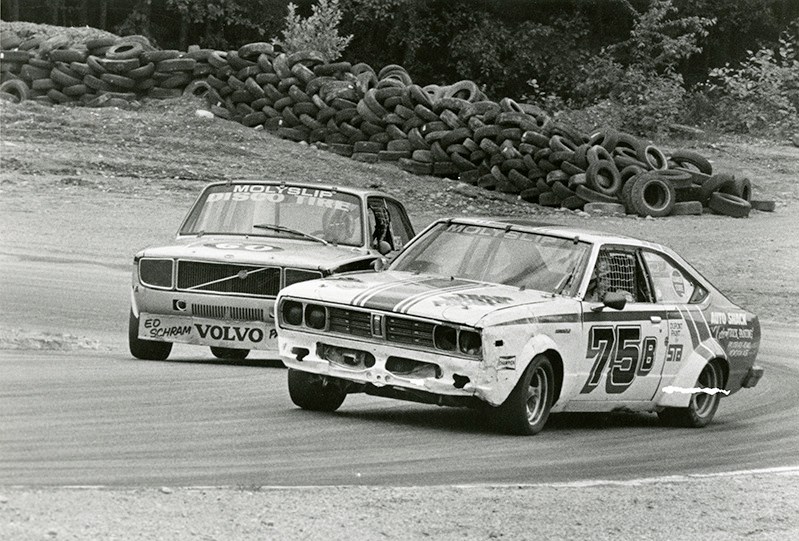
COQUITLAM ARCHIVES
Racers clash in one of the famous turns at the old Westwood Motorsport Park that was closed in 1990, but not before it attracted a star-studded lineup of amateur racers from across North America, and top professionals from around the world, including Formula ! champions like Mario Andretti and Gilles Villeneuve.

Ores said the ability for amateurs to rub shoulders — and paint — with top professional racers was part of Westwood’s magic.

“You were just the average guy talking to these big time racers,” Ores said.

The hobbyist nature of the track also made it a family place, where the racers tried to keep their costs down by enlisting family members and friends to work in the pits, count laps, and keep time.

Ores said his four kids grew up at the track, helping out by bleeding brakes, or keeping time from the bleachers. All of them went on to take driver’s training at the track and his late son, Mike, raced for a stretch. Some of his grandchildren remain active in the sport.

“We were involved so much,” he said. “We lived up there the whole time in the summer.”

Westwood’s first official race was held on July 29, 1959. It attracted more than 20,000 spectators. Open-wheel Formula Atlantic cars raced there regularly from 1971 until it closed, as did sedans from the Sports Car Club of America Trans-Am series, the Players GM Challenge series and even high-powered Porsche 911s. Motorbikes, including ones with sidecars attached, held races there, and modified mud buggies churned around before the track was paved.

Ores recalled ploughing his way through two-foot snowdrifts to open the gates to the track so the Canadian military could conduct winter maneouvers there.

But as Vancouver’s urban sprawl began extending eastward towards Coquitlam, Ores said the racing community sensed the end of Westwood was nigh.

“We knew we were going to have to move,” he said, adding efforts to establish a new facility in the Fraser Valley inevitably ran into resistance.

“Even to the last year or two, we were still hopeful that the winds of politics would change and people would realize the value of the track being there,” Stec said.

When the checkered flag fell for the last time in August, 1990, it was a tough moment, said Ores, who was among the crew of volunteers who helped dismantle the track after it closed.

“We got so hooked being up there, it was like an addiction,” he said.

Stec said membership in the SCCBC plummeted from about 350 to 80 in the aftermath of Westwood’s closure. And while the club is back to around 350 members now as racers rent track time at Mission Raceway, it’s not the same.

“Racing has fallen out of the top of mind of people,” Stec said, adding the demise of high-profile events like the Vancouver Molson Indy, along with the declining interest in driving amongst young people hasn’t helped.

The Westwood track is memorialized in some of the Plateau’s street names, like Paddock Drive, Carousel Court and Deer’s Leap Place, that wind amidst the multi-million dollar homes and exclusive townhomes. But, Stec said, aside from a delivery he once made to the area, he’s had no inclination to revisit past glories on those streets.

“I just can’t bring myself to go up there,” he said. “Once the door closes, you can’t.”

Ores said he’s only visited once, to attend a friend’s memorial at the golf club.

“I went on the balcony and saw part of the pits, the way it was, and turn one, and that’s it, I don’t want to go back there anymore,” he said.
Coquitlam climbs set the stage for Tour de France glory

This story first appeared in the Tri-City News on June 19, 2018

Alex Stieda owes everything he achieved in bike racing to Coquitlam. Or rather, the city’s hills.

So it’s only appropriate on Thursday he’ll be inducted into the Coquitlam Sports Hall of Fame at the Poirier Sport and Leisure Centre, located about midway between two of the climbs he regularly ascended on his 10-speed he’d acquired from a high school buddy to improve his fitness in advance of the Juvenile hockey season.

It was an unlikely beginning to a career that would make him the first North American cyclist to wear the Yellow Jersey as the leader of the Tour de France as well as compete for Canada at international events like the 1982 Commonwealth Games, 1983 Summer Universiade and the 1984 Summer Olympics.

Stieda’s grinds up Blue Mountain Street and Mariner Way caught the attention of a neighbour two doors down from his parents’ home on Gatensbury, near Como Lake. Harold Bridge was a dedicated randonneur, an eclectic breed of cyclists that enjoy rides of 200 km or more in a day; his wife, Joan, happened to be the president of Cycling BC at the time.

Bridge took Stieda under his wing, showed him how to ride in a group and draft behind other riders to save energy. And when the long, languid rambles of the randonneurs didn’t seem challenging enough for his young protégé, he passed Stieda on to Larry Ruble, who led a group of faster cyclists out of his Maple Ridge bike shop for rides to Mission or Fort Langley, and back.

More often than not, it was Stieda who took the lead and did the most work of their small peloton of 10 or 12 more experienced cyclists.

So Ruble suggested Stieda head to the roads around the University of British Columbia, where veteran racers competed to be the fastest in time trial races against the clock every Thursday evening.

Of course, Stieda cycled there, making the long ride out along 41st Avenue to UBC after school, post his time on the five-mile time trial course, then ride all the way home, pounding his way back up Blue Mountain in the fading twilight.

“When you’re at the end of your rope after riding 100 km, you just do everything to get home,” Stieda recalled from Edmonton, where he’s an account executive for an IT company. “Living in Coquitlam made me stronger.”

Strong enough that he started winning races at the old China Creek velodrome in Vancouver, then eventually a victory in the Canadian track cycling championships that earned him a trip to the junior worlds in Buenos Aries, Argentina.

‘I wanted to do more’

“This is super cool,” Stieda said. “I was smitten. I wanted to do more.”

Stieda started honing his road racing skills with local teams like Gunners and Carleton. Eventually he hooked up with a crew sponsored by a local Rotorooter franchise; they’d train and race through the summer, then unclog drains in the winter.

In 1981, Stieda realized to take his cycling to the next level, he’d have to travel to the sport’s spiritual home in Belgium where hardened European neopros banged handlebars, cut deals and maybe got noticed by bigtime pro teams, in kermesse races that could be found almost every afternoon or evening in small towns or villages across the country.

Stieda’s dad secured a $500 grant that paid for a flight to Ottawa, where he dragged along a home-built Fibreglas case holding his steel Marinoni racing bike to a military base in Trenton, Ont., to catch a Royal Canadian Forces flight to Lahr, West Germany and then on to Frankfurt, Germany and Ghent, Belgium, by train.

Stieda, 20 at the time, had no idea what he was getting himself into.

“The guys at the base probably got a kick out of me,” he said.

Midnight arrival

Deposited at Ghent’s train station at midnight, Stieda bounced his bike box over the dark, cobbled streets to find Staf Boone, a sort of Godfather of the local cycling scene who managed a number of  apartments in the area that he let out to visiting foreign cyclists pursuing their dreams.

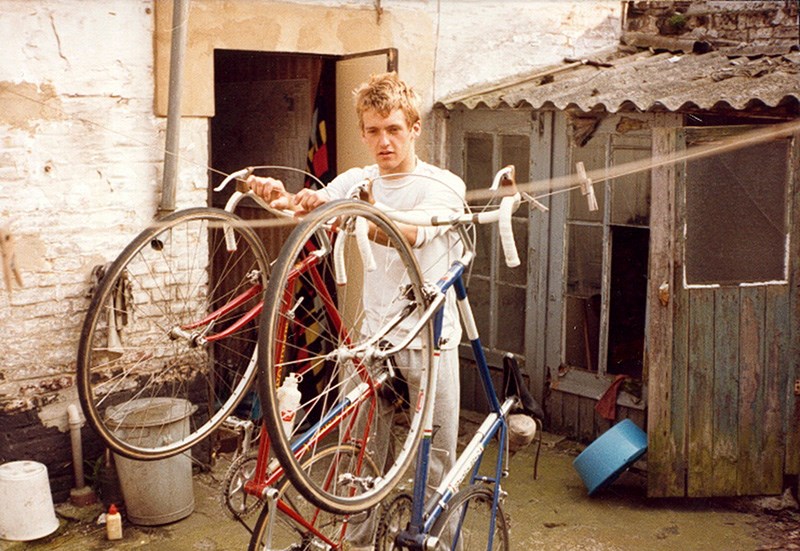
Stieda roomed with an Australian cyclist. Their “cold-water flat” had no hot water, a propane hotplate for a stove, and they went to the bathroom in a shack out back.

“It was definitely a hard life,” Stieda said. “But I was just living in the moment.” 

Out on the road, Stieda learned some hard lessons as well. Semi-professional bike racing in Northern Europe has its own culture, its own code of rules and ways of breaking them in the name of survival.

“I didn’t have an opportunity to get intimidated,” Stieda said. “If you weren’t tough mentally, it was over.”

Stieda’s trial by cobblestone got noticed by the newly-formed American team, 7-Eleven, that was built around famed Olympic speedskater Eric Heiden who raced bikes as part of his off-season training, and included another Canadian cyclist, Ron Hayman. 

The team invited Stieda to enter some races in North America in the fall when he returned from Europe, and in 1982 he was offered a contract.

No illusions

Stieda said he had no illusions of glory. He didn’t have the lean build of a Grand Tour rider who could rack up big kilometres and recover to do it again the next day for the three weeks of a race like the Tour de France or Giro d’Italia, nor did he have the explosive power to win sprints. He was a domestique, a worker who could sacrifice himself for the team’s leader, haul water bottles, be there if a wheel needed to be swapped out.

That was to be Stieda’s role when 7-Eleven, now a big league professional team on a mission to popularize bike racing in the New World, was invited to the 1986 Tour de France, after two of its members stunningly won stages at the Giro d’Italia the year before. 

But somehow, the early stages of the 21-day race around France played to Stieda’s strength of being able to ride away from opponents for 80 or 100 km, just like those rides out to Mission and back home up Mariner Way. Add in some time bonuses he earned along the way, and midway through the Tour’s second day, after an 85-km road stage in the morning  that would be followed by a team time trial he barely survived in the afternoon, Stieda climbed atop the podium, got kisses on his cheeks from the podium girls and pulled on cycling’s most famous prize.

“It was really more of a strategic play rather than being the strongest rider,” Stieda said. “I had to figure out how to use my energy in the right way.”

Learning lessons

But Stieda couldn’t bask in his glory, as there were more lessons to be learned the next day. That’s when a veteran Dutch cyclist from another team told him on the road it wasn’t enough to wear the Yellow Jersey, he had to honour it by actually finishing the Tour.

“That hit me like a ton of bricks,” Stieda said. “So I just followed him around every day.”

Stieda did finish the race, in 120th position. But what amounted to his lunch hour in Yellow set the table for an era of North American glory in cycling’s biggest race, including overall victory in the ’86 Tour by American Greg Lemond — his first of three Tour wins — and more Yellow Jerseys worn by fellow Canadian Steve Bauer in 1988.

“It was just an amazing time, we were breaking new ground,” Stieda said, adding the old 7-Eleven teammates still gather for a reunion every five years or so.

• Stieda will not be able to attend the induction ceremonies on June 21. But he is sending a replica of his Yellow Jersey that will be mounted in a display in the lobby of the Poirier Sports and Leisure Complex.


Toyota vs. Ferrari: A Coquitlam race engineer could soon be a part of motorsports history

This story first appeared in the Tri-City News on May 29, 2023

Deft thumbs at the video game controller has steered a Coquitlam man to one of the most storied car races in the world at one of the sport’s most famous tracks.

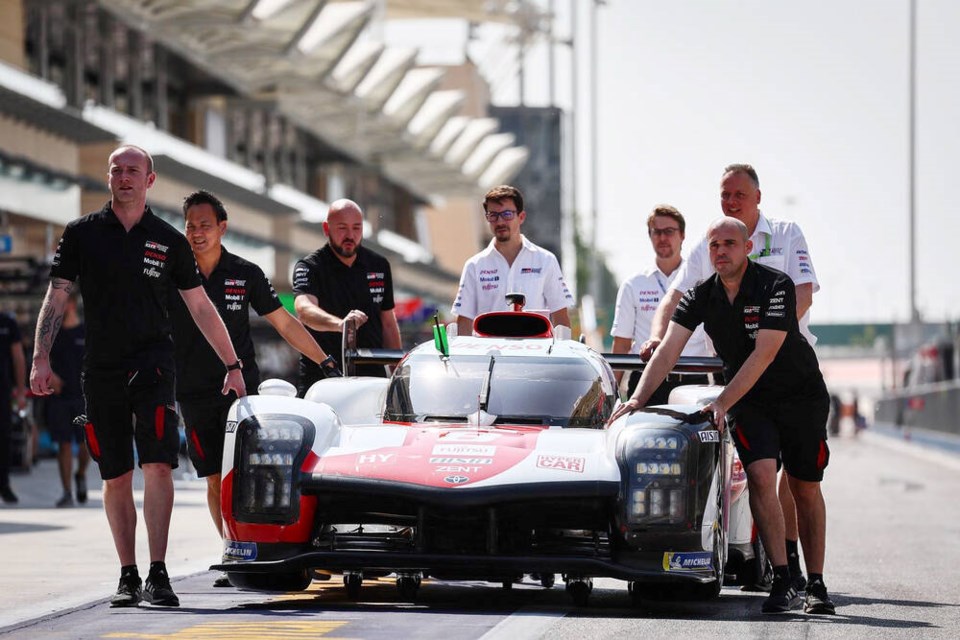
Ryan Dingle parlayed a childhood passion for the Gran Turismo video racing game to a career as a race engineer, first in Japan and now in Europe, where he’ll lead Toyota Gazoo Racing’s World Endurance Championship (WEC) Hypercar team at the 100th running of the 24-Hours of Le Mans, June 10–11.

It’s a daunting responsibility, said Dingle in an email interview. In addition to managing the team of engineers and technicians charged with preparing Toyota’s GR010 Hybrid Hypercar for race weekend and then keep it performing optimally for qualifying and 24 straight hours of racing at Le Mans, Toyota is the five-time defending champion at the event. And this year it will be up against an expanded grid that also includes new factory efforts from Porsche, Ferrari, Cadillac and Peugeot.

There’s “a lot of pressure now,” said Dingle, who’s in his first season in the WEC where most races are six to 24 hours long after cutting his teeth in the smaller Super Formula and Super GT race series in Japan.

“It is my first experience outside of Japan so most of the circuits are new to me,” Dingle said. “Working in a much larger team with more well-defined roles can also be challenging.”

PHOTO SUBMITTED Coquitlam’s Ryan Dingle started his career as a race engineer in Japan.

Dingle, a graduate of Dr. Charles Best Secondary School, headed to Japan after obtaining his engineering degree at the University of British Columbia and post-graduate studies in motorsport engineering at Oxford Brookes University in the UK.

Fuelled by his childhood love for Gran Turismo that evolved into an obsessive interest in Formula 1 and Endurance racing, Dingle identified Japan as his best opportunity to get work in the industry.

Trial by fire

With only one beginner class in Japanese at UBC, and the support of his family and his future wife — who happens to be from Japan — Dingle landed a gig in the all-Japan Formula 3 open wheel racing series.

It was, Dingle said, a bit of a trial by fire.

“The working style in Japan is quite different from the west, as is communication in general,” he said. “People often get frustrated and give up. I got frustrated too, but I guess I had the determination.”

Over the course of his nine-year career in Japan, Dingle managed to work for both Toyota and Honda, fierce competitors at the track and in consumer showrooms.

He said while such vacillation between Japan’s two car giants might be frowned upon in the country’s corporate world, it’s more accepted in motorsport.

“I think it’s been advantageous for me to see how both companies work,” Dingle said. “I like to approach each new place with an open mind and try to learn.”

Driven to succeed

No matter the badge on the car, though, the drive to succeed is universal.

“It’s not a career path where you feel at ease often,” Dingle said. “But when you get it right, you see the fruits of your labour rather quickly and it’s satisfying.”

Now that he’s based in Europe, Dingle said he’s excited to work at some of the race circuits, like Spa-Francochamps in Belgium and Monza in Italy, that he revered back in his video game racing days and when he was studying in England. But being able to compete at Le Mans is special.

“It means a lot to be a competitor in one of the most famous races in the world, and the 100th year,” he said.

“In a way, it’s a validation of the choices that got me to here. It’s a good feeling.”