PoCo trainer making tracks with standardbreds

This story first appeared in the Tri-City News on Jan. 30, 2019

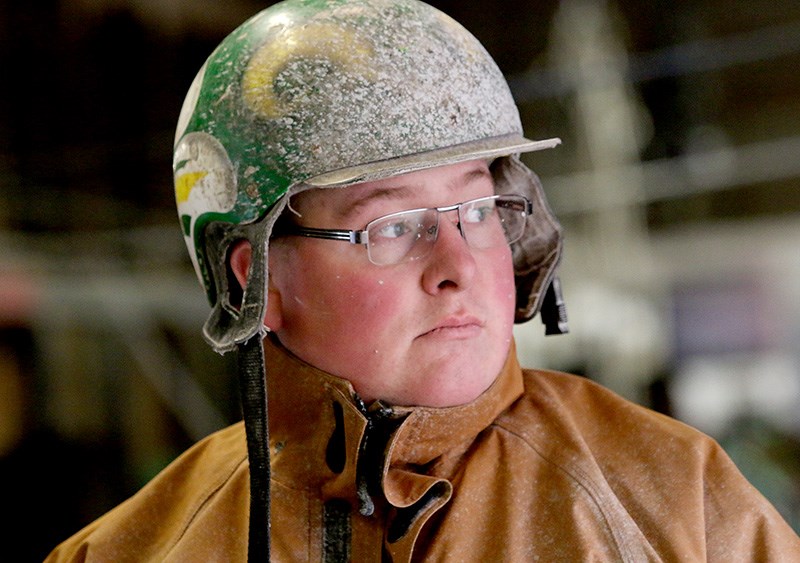
Port Coquitlam’s Christopher Lancaster is riding the family business to success.

The 28-year-old graduate of Riverside secondary school is a finalist as a future star of the O’Brien Awards, the top honours for standardbred horse racing in Canada, that will be presented in Mississauga, Ont., on Saturday.

The recognition is a reward for the long days Lancaster puts in at the barns at two harness racing tracks in Alberta — Century Downs in Calgary and Century Mile in Leduc — and at Fraser Downs in Cloverdale. More importantly, it’s affirmation he made the right decision to turn his back on a potential career painting cars and, instead, follow the footsteps of his grandfather and father to the track, trading, training and racing horses.

Not that Lancaster was unfamiliar with life and toil in the paddocks. He pretty much grew up there, as his dad, Ron, trained horses then started shoeing them at tracks in Ontario before working his way west to eventually settle in British Columbia.

“It’s the life of a gypsy,” said Lancaster, who divides his year equally between the three tracks as the standardbred racing season progresses.

In fact, Lancaster spent so much time with his dad behind the backstretch, he earned the nickname “Cub,” to Ron’s “Bear.”

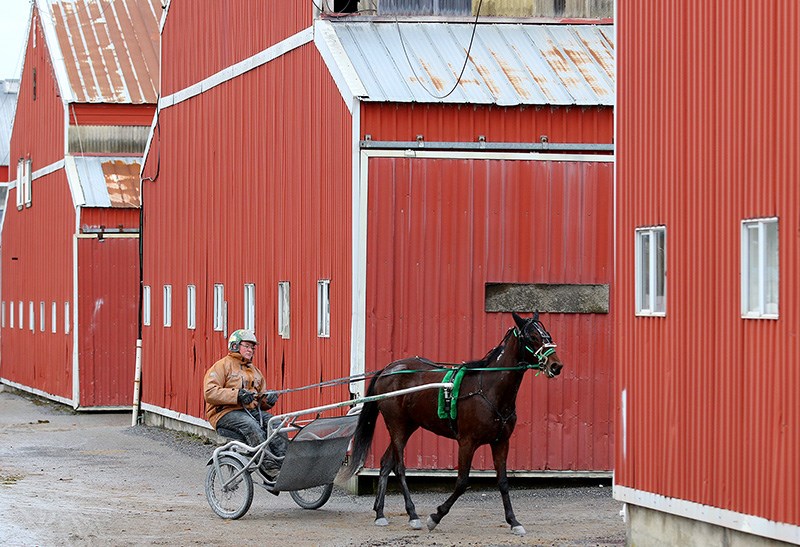
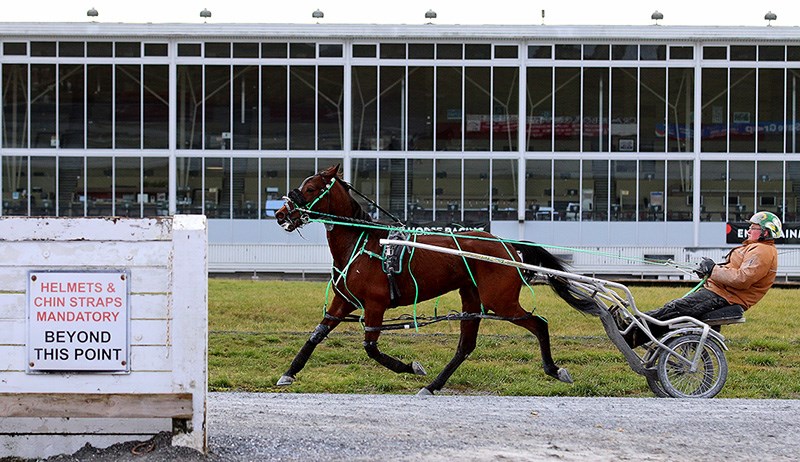
At 12, Lancaster climbed into a sulky for the first time. He was enthralled.

“It was exciting,” Lancaster said.

So much so, when Lancaster graduated from Riverside in 2009, he decided his chosen path to study automotive paint in college wasn’t for him, and headed to Alberta to begin his apprenticeship as a standardbred trainer. He hooked up with one of the best in the province, Kelly Hoerdt, who’s won more than 3,000 races as a driver and trainer.

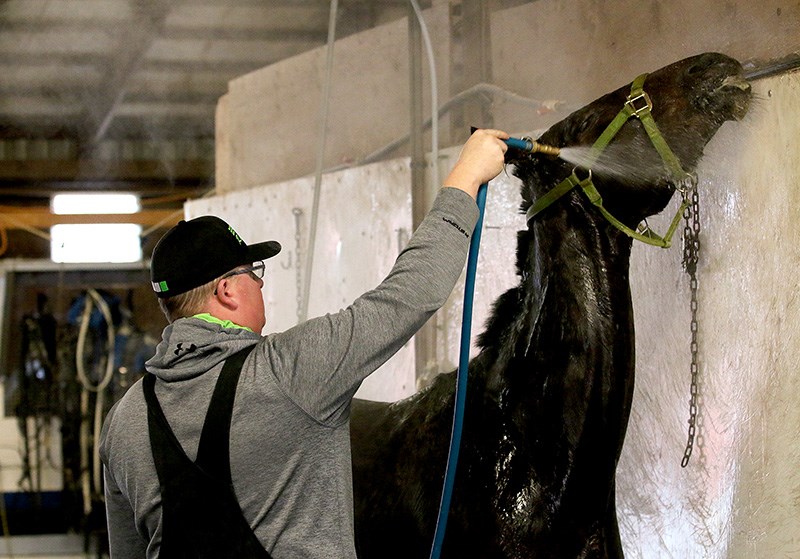
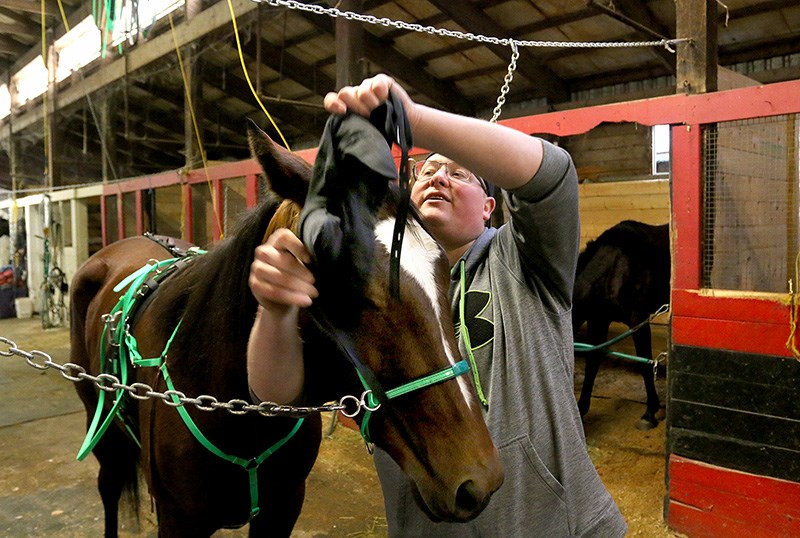
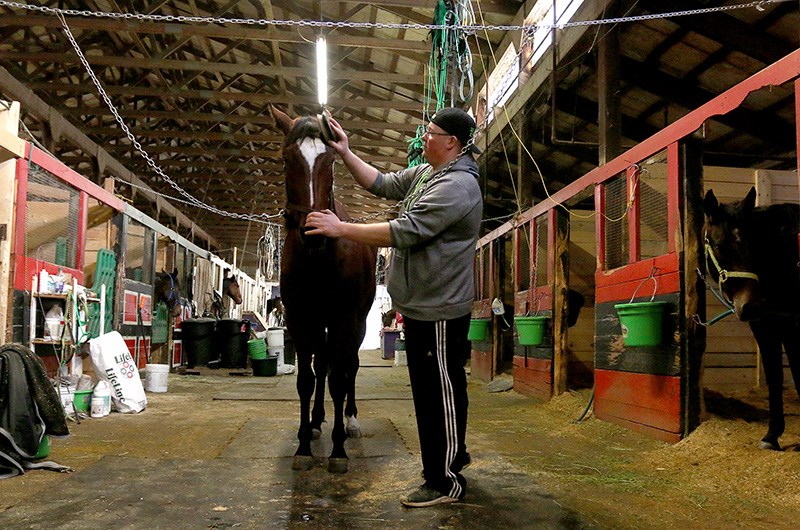
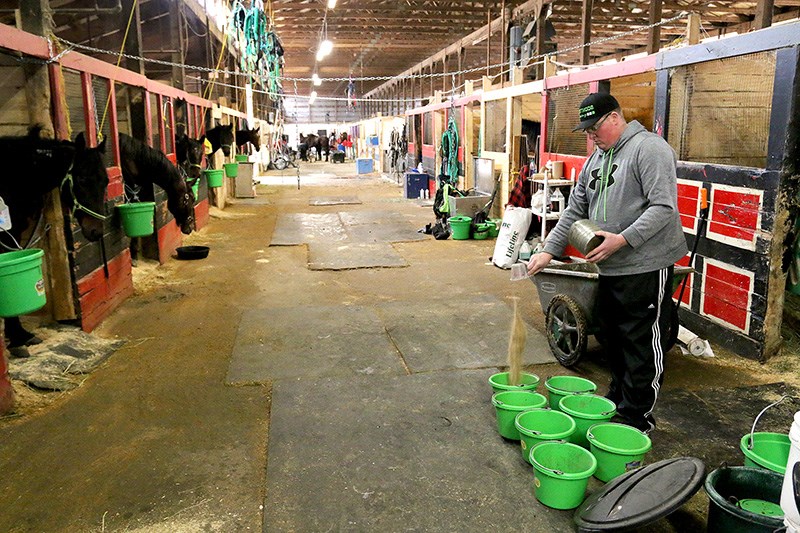
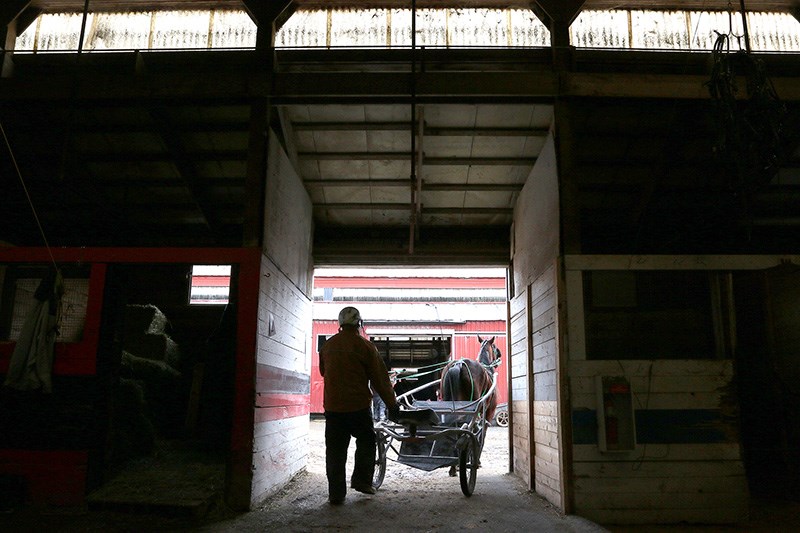
Lancaster learned the drudgery of cleaning out stalls and feeding horses beginning at 5:30 in the morning, grooming them, caring for their aches and pains, then harnessing them up to the two-wheeled cart for runs around the track to prepare them for the evening’s racing card.

He also gained insight into the wheeling and dealing of horses that pays the bills, how to spot a horse with potential in a claims race and then turn it into a winner that can then be sold at a profit.

Lancaster, who’s spending the winter season at Fraser Downs, said while the days with his stable of eight horses are long, they don’t feel like work.

“It’s a lifestyle,” he said.
Unique program gives Tri-Cities kids a chance to play basketball for their schools

This story first appeared in the Tri-City News on June 24, 2023

Austin Chassie is known as “Captain Hustle” on the basketball court and he couldn’t be prouder of the nickname.

Chassie is one of dozens of neuro-diverse students from six high schools across School District 43 who participated in a unique three-on-three basketball program that could become a template for inclusion in other school sports like soccer.

Mike Viveiros, the athletic director at Heritage Woods Secondary School in Port Moody, said the idea for the unified program that brings together neuro-diverse and neuro-typical students to develop their athletic skills, learn about things like teamwork and perseverance and give them a chance to represent their schools grew from a similar adaptive program he ran for track and field prior to the COVID-19 pandemic. He said basketball seemed a natural progression because many of the kids are already passionate about the sport and it provides them a unique opportunity to be part of a team.

“It ends up being a neglected population,” Viveiros said of the exceptional students who had the chance to participate. “We need to strive for a future where these inclusive opportunities are the norm.”

Last February Viveiros put the word out to his fellow athletic directors and got positive responses from five other secondary schools: Port Moody, Terry Fox, Pinetree, Riverside and Gleneagle.

With some funding and resources from Special Olympics BC and support from the school district they were quickly able to put together a six-week season of jamboree-style games culminating in a championship tournament that was won by the Port Moody Blues.

MARIO BARTEL/TRI-CITY NEWS
Players from the unified 3-on-3 basketball programs at Heritage Woods and Port Moody secondary schools gather at an outdoor court to celebrate the success of their first season.

Saoirse Borden coached the Blues. She’s a Grade 11 student who plays on the school’s varsity girls basketball team. She said working with the players from the inclusion program at PMSS gave her a new perspective on her sport as she broke down the skills and strategies she takes for granted so they could be learned and understood by her charges.

Borden said it was most exciting to see the rest of the students embrace the players and vice versa.

“It opened up our school community,” she said. “There was a lot of support from the student body.”

Ava Taylor said she had a similar experience with her Heritage Woods Kodiaks team. Also in Grade 11 and playing for her school’s varsity side, she was challenged to find a common ground for such a diverse group with different abilities and ways of learning.

“Everyone had a different starting point,” she said.

Alicia Waet said she’d never really participated in sports prior to joining the Kodiaks’ unified team. But with a season now behind her, she said it was “great to make a lot of different connections with people I didn’t know before.”

Teammate Ramtin Rouhi said being on the team “made me feel awesome” and helped develop his skills in shooting and defending.

Viveiros said the players’ enthusiasm is infectious.

For the championship tournament, the gym at Heritage Woods was packed. Terry Fox Secondary had the support of its own cheerleading squad.

And when the Blues returned to Port Moody Secondary with the first place trophy, the team was greeted by the school’s marching band.

Viveiros said the success of unified basketball’s first season is the kind of breakthrough that could increase inclusionary sporting opportunities at schools in the Tri-Cities and beyond.

Already there’s been inquiries from other school districts like Surrey and Delta.

“Why aren’t we celebrating these kids like this?” he asked. “It really gets me emotional every week watching the successes of these students playing alongside their peers in the student population.”

But for Captain Hustle, aka Austin Chassie, the reward is more fundamental.

“I like making opportunities for my guys, help them be better at everything,” he said.

Like cycling? Like beer? A Port Coquitlam enthusiast of both has created a community for cyclists and beer lovers to get together

This story first appeared in the Tri-City News on April 10, 2022

A Port Coquitlam cyclist is creating a community of like-minded individuals who share his passions for exploring the Tri-Cities and beyond by bike, followed by a refreshing beer at one of the local craft breweries.

He’s finding no shortage of takers.

Since starting Tri-City Bikes and Brews on Facebook last fall, Bill Jones has registered more than 320 members.

He said they’re in all shapes, sizes, ages and levels of cycling experience, from neophytes who’ve just acquired an e-bike to help them get active to enthusiasts on hybrid or gravel bikes looking for new routes and beers to sample.

All are united in their belief that there’s no greater reward for an afternoon of spinning the pedals than a stein of stout or a thistle of ale.

Jones said in his native Manchester, England, a stop at the pub is a common goal of any exercise, whether it’s a ride, run or walk.

“Earners and burners,” he said it’s called.

But since moving to Port Coquitlam two years ago, Jones said it’s been difficult to connect with other cyclists to learn the safe routes around the Tri-Cities, as the established road groups are a little too hardcore for his recreational aspirations.

Then, while enjoying a refreshing beverage at Coquitlam’s Mariner Brewing, an idea popped into Jones’ head.

“It’s a pretty easy sell,” he said of the bikes and beer combination.

It’s made all the easier with the preponderance of craft breweries in the Tri-Cities, many of them located right along or nearby established cycling routes.

Most of them also have bike racks.

Jones said the group is focused more on social interaction than Strava segments.

Apart from sharing beer news and riding routes online, there’s a regular group ride on Thursdays that he’s rechristened “Thirstday.”

Routes range from 10 to 30 km, always along designated cycleways or trails to help bolster the confidence of cyclists who might be nervous navigating roads busy with traffic.

“I want it to be accessible,” Jones said, adding future plans include longer rides to breweries further afield, like Burnaby and maybe even Langley, as well as monthly challenges to help boost everyone’s fitness.

As for the perfect post-pedalling pint, Jones said a “good wheat ale is my go-to.”

But with so many varieties of beer on offer from Moody Ales in the west to Tinhouse in the east that could easily change with a serendipitous discovery.

“You’re never short on options,” Jones said.

Port Moody inventor makes it easy to get your beer home by bike

This story first appeared in the Tri-City News on Nov. 21, 2021

For Nathan Thomson, necessity was indeed the mother of invention.

Along with a thirst for craft beer.

The 26-year-old criminology graduate who works in government said he’s never designed or built anything, nor had any entrepreneurial inclinations.

But riding his Kona bike two blocks from his Port Moody home to the city’s renowned Brewers Row to meet friends and enjoy the latest offerings at its five craft breweries changed that.

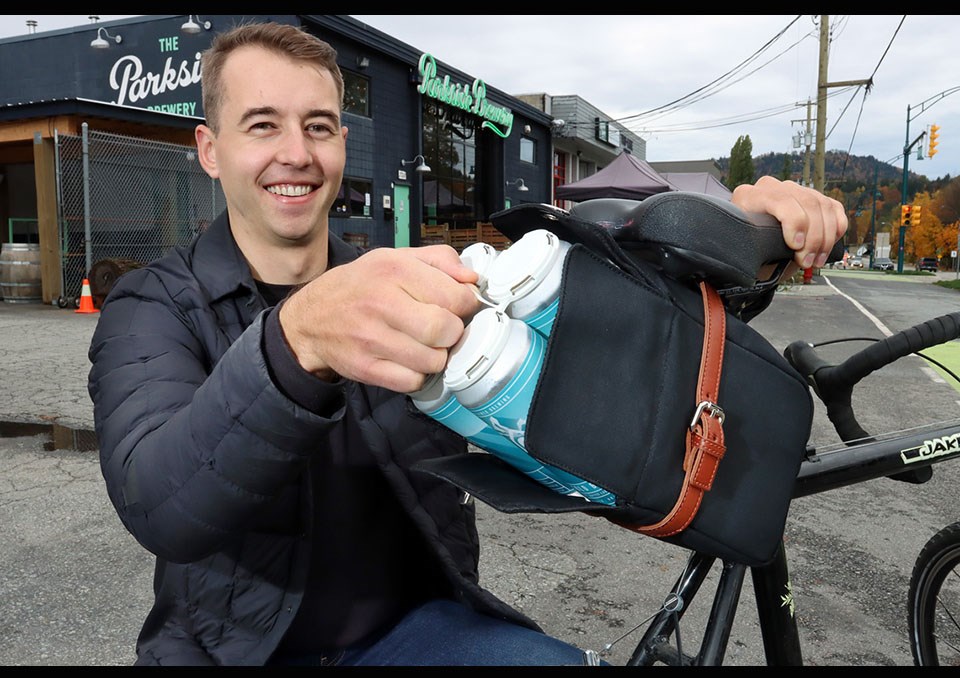
Frustrated by the challenge and inconvenience of toting a pack of a newly discovered beer he really liked home on his bike, Thomson developed the To Go bag. It’s a canvas cube-shaped sack that tucks underneath the saddle of his Jake the Snake bike and is large enough to accommodate four tall cans.

It sounds like an obvious idea, but after Thomson had his light-bulb moment last spring, he discovered no such saddle bag existed.

So he started sketching out ideas and sampling materials to build a prototype.

Creating a beer conveyance for cyclists, it turns out, isn’t as easy as it sounds at first blush.

Thomson said the bag had to be large enough to hold the four cans, but not too bulky to be an annoyance on the bike. It had to be strong, but not overly heavy.

And it had to be easy to use, without complicated flaps or straps, but still secure.

“I didn’t want it to throw you off balance,” he said.

Using mock-ups Thomson created out of cardboard, friends were enlisted to try his designs and provide feedback.

Angle proved to be the key factor.

Thomson said by finding the right pitch to suspend the bag, it wouldn’t sway from side-to-side or interfere with the cyclist’s pedalling motion.

Material was another challenge. Nylon was too flimsy, leather too heavy and expensive.

Instead, a canvas exterior with nylon lining offered the optimal combination of strength, durability, weight and insulation. The straps that secure the bag to the seat rails and seat post are made of synthetic leather.

Thomson said the development process took several months, but by July, he’d enlisted a manufacturer and was ready to go to market.

Online sales have placed Thomson’s bags under bums across Canada and into New York State and Minnesota. They’re also on the swag shelves of a couple of Metro Vancouver craft breweries: Container in East Vancouver and Five Roads in Langley.

He said he’s had discussions with others, even explored co-branding opportunities.

Thomson said he’s continuing work on more refinements, like adding side pockets and more colours.

He said there seems to be a natural connection between cycling and beer that makes his ToGo bag the right product at the right time.

And considering its genesis on Port Moody’s Brewers Row, the right place as well.

Port Moody cycling studio helps cyclists go Zwifter

This story first appeared in the Tri-City News on April 12, 2019

At 70 years-old, Frank Quigg’s dreams of racing his bike in the peloton at the Tour de France are long behind him.

But, Quigg discovered, he can get a flavour of that experience by plugging his indoor trainer into one of several virtual training apps that can plant a cyclist in the midst of a group ride through French countryside, up and down the Dolomite mountains in Italy or around the roads of Central Park in New York City.

And now the retired auto importer has turned his winter training regime into the Lower Mainland’s first virtual cycling studio in a loft area above a fitness gym on Port Moody’s Spring Street.

Quigg’s endeavour, Zwift Cycling Club, features four Tacx Neo 2 smart trainers that are each paired with a virtual training app by Zwift and connected to individual 40-inch monitors. Each station even has a remote-controlled fan that simulates a cooling breeze out on the road.

Cyclists can bring their own bike to mount on the trainer, or use one of the Specialized bikes Quigg has available.

A leap ahead

Quigg took up cycling when he was 59 to improve his health and fitness and now logs more than 8,000 kms on the road a year. He said the virtual riding experience is a leap ahead from the mental drudgery of grinding out hours of spinning parked in front of a TV watching Vancouver Canucks’ hockey games or binging on episodes of House of Cards on Netflix.

Instead, the app can plop Quigg on one of several fictional courses in a mystical land called Watopia, where the roads are always closed to car traffic, or other routes modelled after the 2012 Olympic circuit in London, England, the 2015 world championship course in Richmond, West Virginia, or even the weekend warrior mayhem of New York’s Central Park.

Other apps like Sufferfest incorporate workouts into licensed footage from famous cycling stage races like the Tour de France, Giro d’Italia and one-day events like Milan-San Remo or Paris-Roubaix.

Like a video game

Quigg said Zwift’s virtual world is like bringing his bike into a computerized video game where he can just ride to explore the course and scenery, or elevate his heart rate by racing for personal training goals or against other cyclists hooked into the program from all over the world. The trainer alters the pedalling resistance according to the terrain on the screen, so it gets harder to climb hills and easier to glide down the other side, while the monitor tracks his effort and gives him an idea of how he’s doing compared to the other virtual cyclists on the course.

Quigg, who suffered a bad crash two years ago while riding in a pack along Marine Drive in Vancouver, said virtual training apps also offer a safe environment for riding in a group without the fear of touching wheels with a neighbouring cyclist or crashing into obstacles like barriers and signs that can be hard to spot when in the midst of a fast-moving peloton. Even the social aspect of group rides is preserved, as cyclists signed into the app can communicate with others on the digital road, set up challenges like sprints or organize events like races with their friends.

About the only thing missing is the traditional mid-ride coffee stop, although Port Moody’s Brewery Row is only a short coast away.

Busy year ’round

Quigg said while indoor riding is usually a winter activity cyclists use to maintain their conditioning, he anticipates his stations will be kept busy during the summer months by riders following a structured training regime to prepare for a specific event like a race, gran fondo or triathlon. Groups of friends can also challenge each other in a social setting.

And while it’s possible to get a virtual cycling experience at home, a proper station can cost more than $3,000 — not including the bike — plus the space to leave it set up.

“You get to live out some of your Walter Mitty fantasies,” Quigg said, adding several European and North American pros like Roman Bardet, Mark Cavendish, Michael Woods and Evelyn Stevens have been known to sign in to a Zwift ride.

Climate change challenges Tri-Cities’ mountain bike community

This story first appeared in the Tri-City News on Nov. 17, 2022

Extended droughts that dry out trails, atmospheric rivers that wash them away and intense windstorms that blow down trees are among the climate change challenges facing the local mountain biking community.

So members of the Tri-Cities Off Road Cycling Association (TORCA) are adapting the way they build and maintain trails, as well as how they ride them.

Karaleen Gioia, a director of the group that comprises more than 750 members, said a typical trail on Burke Mountain that 10 years ago was little more than a dirt path — snaking through the towering trees — must now be armoured with logs and rocks, bridged with hand-built wooden spans to allow for drainage in heavy rains, and contoured with little rolling hills to slow riders who could otherwise speed erosion.

“It’s not just getting out and shredding the trails anymore,” Gioia said. “Climate change is another factor to consider.”

Drought followed by big rainstorms can be especially damaging to trails.

Gioia said the former strips all the moisture from the ground that binds the trail beds, threatening their structural integrity, while the latter results in washouts as rainfall in unprecedented volumes is forced to travel in unfamiliar places.

Having both in quick succession can be disastrous.

“The result is that more work is required to make trails sustainable,” Gioia said. “More labour up front means less work in the long run.”

Most of that labour is supplied by a corps of dedicated volunteers over the course of several organized “trail days” throughout the year, as well as individual privateer efforts to stay on top of repairs.

“We’re pretty proactive.”

Gioia said most local mountain bikers are tuned into the privileged position they enjoy with so many trails so close to home. Many file trail reports to document any problems or areas of concern they identify as they roll up or down the mountains.

Gioia said keeping the trails in good shape benefits all users, including hikers, dog walkers and trail runners. That’s been especially important since the advent of the COVID-19 pandemic that sent more people outdoors for their recreational pursuits as activity helped reduce their stress and kept them healthier.

Gioia said education of proper trail use etiquette and trail building technique is an ongoing process. TORCA liaises frequently with other user groups, as well as land managers, to devise solutions to problems as they arise.

“We’re learning as we go,” she said.
In fact, a report conducted for Parks Canada by the Calgary-based Miistakis Institute that looked at the ecological impacts of mountain biking said that’s the case for most user groups, as there’s been very little empirical research.

“Specific effects associated with mountain biking activity and infrastructure characteristic of the other types of use have emerged as a considerable gap in the research literature,” concluded the review.

Gioia said land managers and user groups are gaining a greater appreciation that bolstering trails will help keep mountain biking viable even as weather extremes intensify.

“It makes it enjoyable for all the users,” she said.


Saving local news

The closure of the Tri-City News, Burnaby Now and New Westminster Record has left a hole in our communities.

In April, I joined forces with some colleagues who had also been displaced by the closure of our publications to form a co-operative effort to bring local news coverage back to the communities corporate ownership had just abandoned.

Over the past several months we’ve been learning about co-operative governance, sketched out a vision for community-based non-profit local news coverage and launched a campaign to help us raise funds to make it happen.

The latter has been supported by a social media campaign that asks community leaders how local news is important to them. As well as building awareness and support for our campaign, the question challenges the community to think about the implications of this sudden loss of local news, building engagement.

Here are a few:

Port Moody woman primed for Canada’s debut at butcher Olympics

This story first appeared in the Tri-City News on July 17, 2022

A Port Moody woman is primed to show Canada’s butchers are a cut above the rest of the world.

Taryn Barker, of The Little Butcher in NewPort Village, is part of Butchery Canada, a team of six butchers set to represent the country at the World Butcher Challenge, Sept. 2 and 3 in Sacramento, Calif.

The competition — a kind of Olympics for some of the best butchers in the world — was supposed to happen two years ago, but it was put on ice by the COVID-19 pandemic.

That’s given Barker and her teammates more time to sharpen their skills and carve their creativity that will be required to transform sides of beef and pork, a whole lamb and five chickens into about 70 different flavourful and visually-enticing value-added cuts and products.

This is the first time Canada is sending a team to the international event, held every two years.

On the floor of the Golden One Centre, home to the Sacramento Kings of the National Basketball Association (NBA), 16 teams will have three hours and 15 minutes to carve, concoct and present elaborate drool-worthy displays that include garnishes, pastries, produce and dishes, all of which have to be acquired locally or shipped beforehand.

Among other elements, their efforts will be judged on how well they represent the unique characteristics of their country’s cuisine.

Barker will be one of two “finishers” on Canada’s team, responsible for making the handiwork of the carvers look its absolute best for the judges and spectators in the stands or watching online.

She said she’s been able to use the extra prep time to mine the internet for new ideas, experiment with ingredients and presentation and forge a stronger connection with her teammates, who come from Ontario, Alberta and one other from B.C.

The team was only able to meet virtually because of travel restrictions during the early stages of the pandemic, but as those have eased, they’ve been gathering in person every month.

They brainstorm products, practice their responsibilities and refine their efficiency as any cut of meat that’s left behind means a deduction of points.

Barker said as a newcomer to the competition, Canada will be up against countries where butchery techniques and presentation have evolved decades longer. But what they may lack in experience, they hope to make up with innovation.

“Teams that have been together for a long time will have the efficiency, but I don’t know how creative they’ll be,” said Barker, who’s previously competed at individual events in Australia, New Zealand and Brazil.

With the weeks counting down to the competition, Barker said Canada’s practices have been getting more intense.

And just like sports teams, each is followed by a thorough debrief to determine better ways members can work together so not a moment is wasted and everyone is able to operate at the top of their game.

“It’s down to the crunch,” Barker said, adding the team has even invited observers to its most recent practices to simulate the kind of scrutiny under pressure they’ll be facing in the arena.

In the days leading up to the competition, the team will ship a pallet of implements and accoutrements to Sacramento — many of them contributed by sponsors like Carmello Vadacchino of Cook Up — and, once they’re on site, they’ll be heading to local shops and farmers markets for the produce and other products that will be integrated into their final displays.

Barker said while the nerves and excitement are starting to build, she’s looking forward to waving Canada’s culinary flag and hopefully inspire young people to take up the trade.

“There’s cool things you can do as a butcher.”

Giant First Nations canoe completes a special healing journey

This story first appeared in the Tri-City News on May 24, 2024

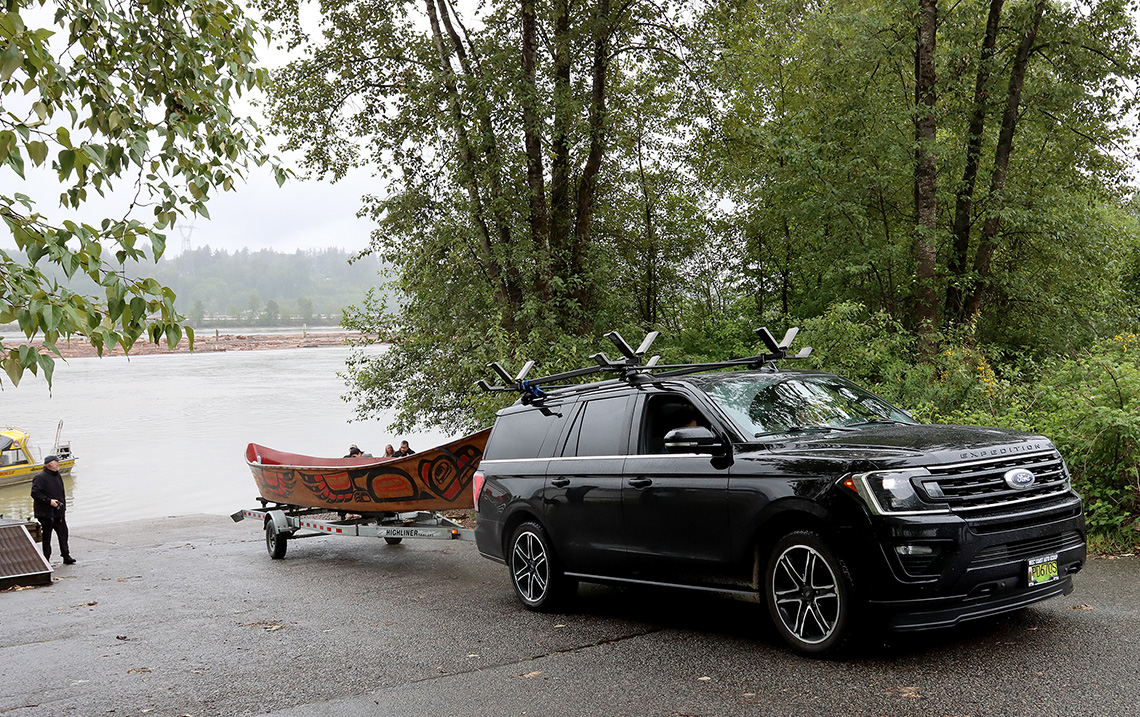
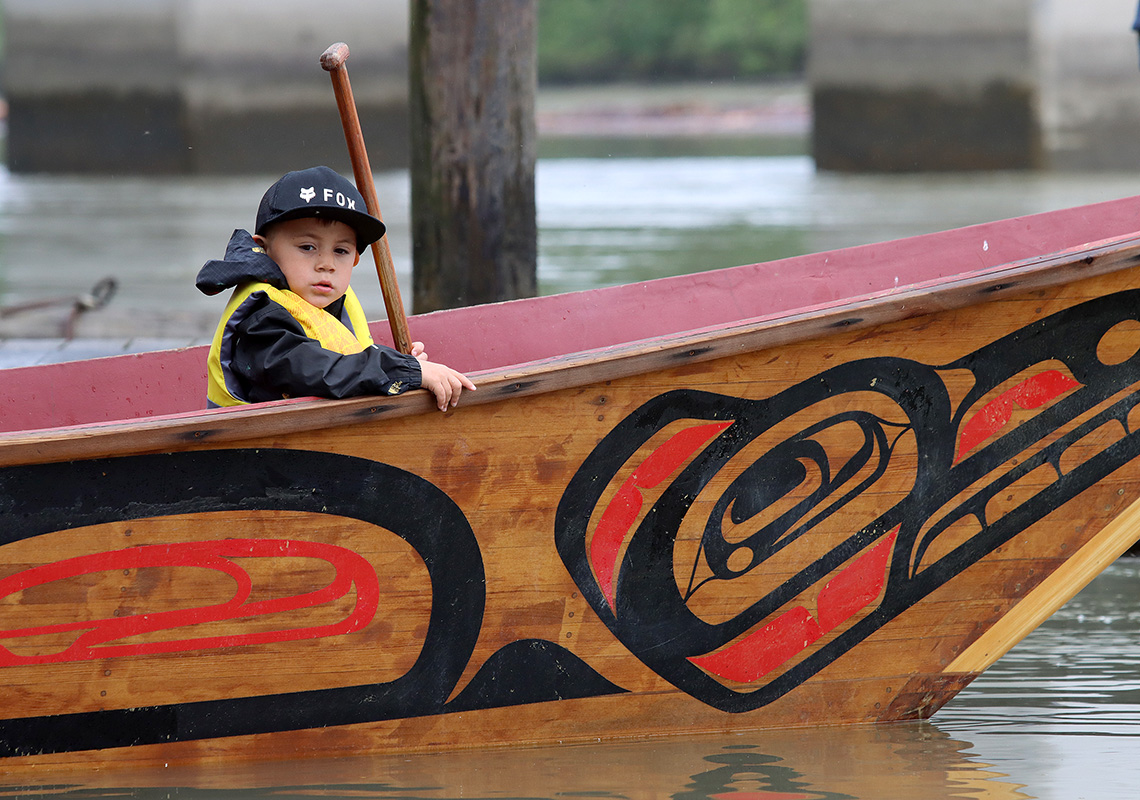
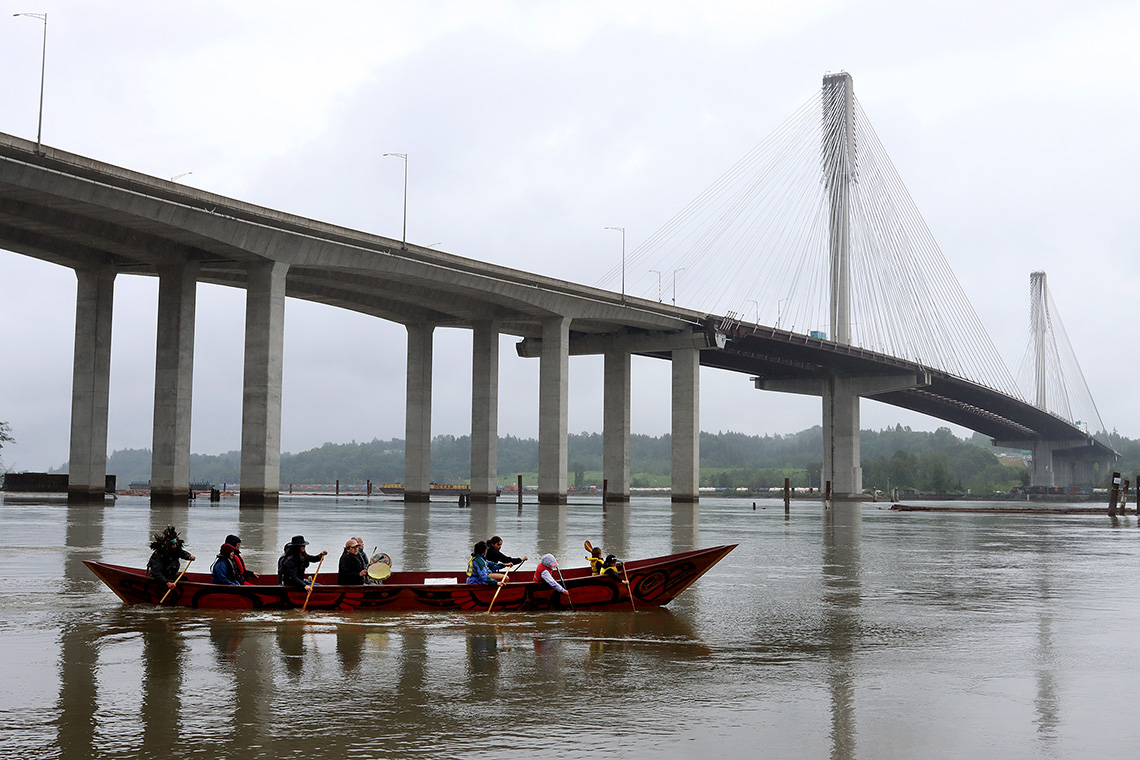
A giant Haida canoe departed Coquitlam’s Maquabeak Park early Friday afternoon, May 24, to complete the final leg of its years-long journey down the Fraser River from Spences Bridge to Sapperton Landing in New Westminster.

Aboard the Grandmothers Healing Journey were three generations of paddlers representing First Nations communities from across British Columbia.

Their mission: to deliver a special community elements chest filled with artwork, stories and poems contributed 17 artists that will be on display at the New Westminster Museum and Archives in the Anvil Centre (777 Columbia St.) until Dec. 15.

The canoe’s journey replicates the migration of salmon with stops at various First Nations along the way to collect more letters, tokens, messages and reminiscences of healing and reconnection with ancestral lands.

In four years, it will head back up the river, just as the fish return to their birthplace to spawn.

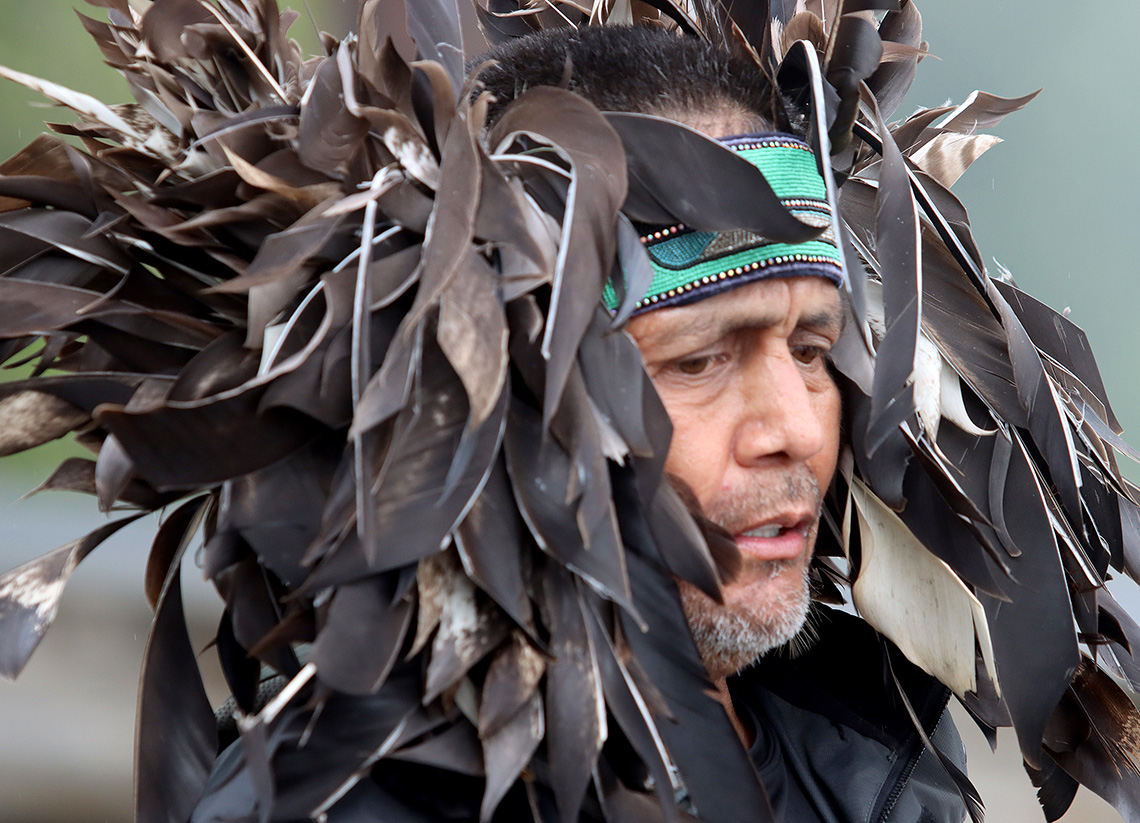
One of the project’s artists, Rita Wong, said it was an honour to have her poems included in the wooden chest that is carried in a place of honour at the centre of the canoe.

She said the project bolsters the connection between First Nations communities and their ancestors, much of which has undermined by centuries of colonialism.

“There’s been an incredible cultural resurgence,” Wong said. “There’s so many stories.”
‘Like a hug from a mother’: Port Moody museum exhibit swaddles visitors with sounds of First Nations’ languages

This story first appeared in the Tri-City News on May 30, 2022

British Columbia’s 203 First Nations speak 34 distinct languages.

Several exist only orally and as elders who know them pass away, they’re at risk of disappearing entirely.

A few already have.

The effort to ensure Indigenous languages survive and even flourish is the subject of a travelling exhibit from the Royal BC Museum that’s being featured at Port Moody Station Museum from June 1 to Sept. 10.

The exhibit, entitled Our Living Languages First Peoples’ Voices in BC, is comprised of information panels and interactive stations that tell the history of those languages, the threats to their continued existence and the work that’s being done to document them so they can be passed on to future generations.

Language is a vital component of First Nations’ culture, said Kate Kerr, coordinator of the travelling exhibit.

“Language is unifying,” she said. “It gives you a sense of history and a sense of place.”

But colonial pressures like assimilation, residential schools and even diseases such as smallpox and measles that were introduced to Indigenous communities by white settlers have diminished many First Nations’ languages, undermining their culture.

Bringing those languages back to life has been a bit of a hodgepodge effort over the years, championed by dedicated researchers making audio and video recordings of conversations with elders. Digitizing the tapes has been an ongoing project at Royal BC, Kerr said.

The work is also important to reconciliation, she added.

Language can help build bridges to empathy and awareness, Kerr said. Witness recent initiatives to resurrect Indigenous names for places like Belcarra Regional Park, now təmtəmíxʷtən in the language of the Tsleil-Waututh, or səmiq̓wəʔelə, the Kwikwetlem title for the Riverview lands in Coquitlam.

Brianne Egeto, the manager/curator at Station Museum, said she reached out to learn about the language program that the Tsleil-Waututh community is doing.

“The Port Moody Heritage Society is committed to taking steps towards reconciliation,” she said. “We hope this exhibit will get people wanting to learn more about all the other initiatives taking place within the communities.”

Kerr said the display has the potential to open the ears and hearts of visitors, especially when they take a seat in the specially-constructed “cradleboard theatre” that envelopes listeners in recordings of conversations in Indigenous languages, many of them with children.

The effect is intentional, she said, as a cradleboard is a portable carrier woven or built of wood that is used by many First Nations to transport infants in their first few months of life.

“It swaddles the listener,” Kerr said. “We want it to feel like a hug from a mother.”