Filmmaker’s opportunity comes with a price

Mario Bartel storyteller communicator multimedia
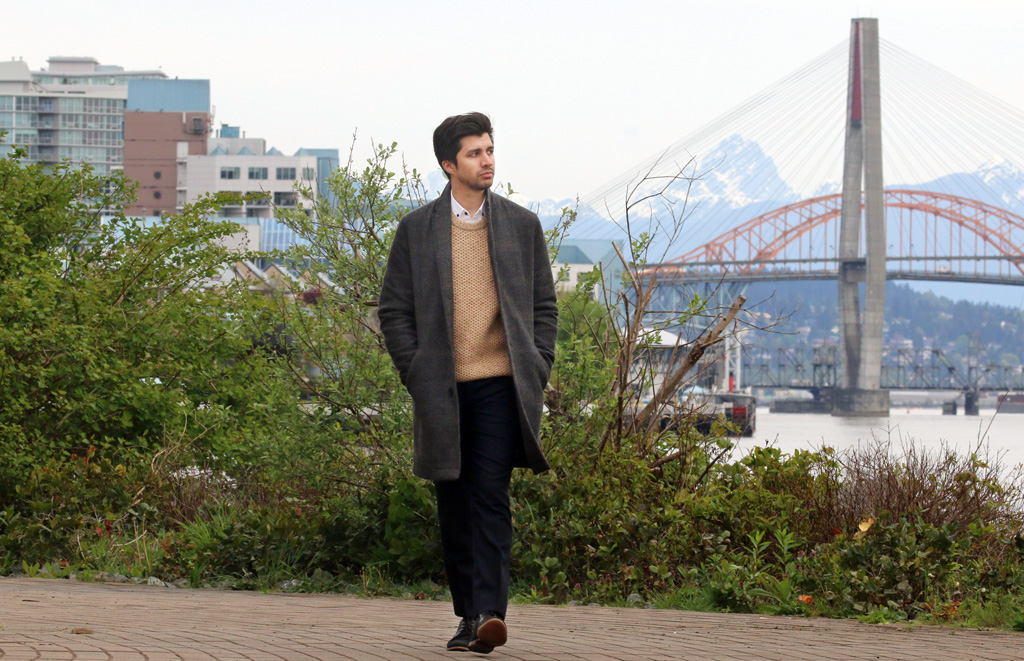
Photo by Mario Bartel The short film Alex Farah made as his graduation thesis at Emily Carr was nominated for five Leo Awards. Now he’s hoping to take his filmmaking aspirations to the next level by attending the American Film Institute in Hollywood.

This story was done for Tenth to the Fraser, a community news blog in New Westminster.

Alex Farah knows the transformative power of film.

Now the Queensborough resident is hoping a financial challenge won’t trip up his transformation into a filmmaker on the cusp of a breakthrough.

Farah, 24, has been accepted into the Director’s Conservatory at the prestigious American Film Institute in Hollywood. It’s a huge step forward in the budding career of the Emily Carr grad whose student thesis short film, Sahar, was nominated last year for five Leo Awards, the top honour for films produced in British Columbia.

Sahar سحر from Alexander Farah on Vimeo.

But it comes with a cost; more than $200,000 calculates Farah. That’s to cover tuition, living expenses and incidentals through the course of the two-year program that’s produced notable alumni like David Lynch, Darren Aronofsky and Terrence Malick.

Farah’s path to filmmaking started while he was studying sciences at UBC; he took a couple of film courses out of interest and discovered a medium that could allow him to explore some of the cultural challenges of being an Afghan immigrant. He shifted gears and enrolled at Emily Carr, where he learned every aspect of his new passion, from writing to cinematography to editing.

Farah also ran headlong into the expense of becoming a filmmaker.

His student short, which was based on the real-life Shafia honour killings in 2009 of three teenage sisters and their step mother whose bodies were found in a car in the Rideau Canal in Kingston, cost $5,000. He assembled the money from six years of making lattes at Starbucks. It debuted at the Toronto International Film Festival.

Getting a film seen on the festival circuit also costs money, for submission fees, shipping, promotion, even travel to the festival if filmmakers want to take full advantage of its networking opportunities.

“You’re never really making back the money you put into your film,” said Farah.

So many young filmmakers take advantage of the internet, submitting their projects to websites like Short of the Week. That’s what Farah did, which led to greater exposure as a Staff Pick on the streaming video portal Vimeo as well as a number of film blogs.

“Online status is turning into a thing, which website will host your film first,” said Farah. “It’s huge for North American filmmakers.”

Earlier this month Sahar was presented at the Moov film festival in Brugge, Belgium.

But that achievement pales in comparison to the effort Farah put into his application to AFI, which involved an interview, writing four essays as well as scripting, producing and directing a five-minute short on the theme of surprise.

The process took about a month, including two weeks dedicated to the film, which he shot in an audition studio at a Vancouver talent agency where he’s currently interning.

Farah said the opportunity to attend AFI is a chance to make connections in the film industry and develop his filmmaking skills with some of the brightest young talent from around the world; only about 100 students are accepted into the school every year, which also has academies for scriptwriting and cinematography.

“You have top-of-the-line crews. The films are watched by members of the Directors’ Guild,” said Farah. “It’s like a fast track to Hollywood.”

Shortly after Farah learned he was accepted earlier this month, the financial reality hit him.

“It’s super overwhelming,” said Farah.

Since then he’s reached out to his connections from Emily Carr and the local film community, explored student financial aid, arts grants, even met with loan officers from banks and credit unions. But all those sources still leave him short of his needs.

Farah said he’s thought about crowdfunding, but he’d rather save that step for when he’s prepared to make his next film.

Which he’s hoping he’ll be able to do.

“It’s hard to find Afghan-Canadian filmmakers, there’s a diaspora I can tap into,” said Farah. “I feel like I have something to offer the world.”

Winners wear down overmatched opponents

Mario Bartel storyteller photographer multimedia content writing road hockey
Lak Attack looks the worse for wear after he was clipped by a stick early in Sunday’s Stanley Stick opener.

For 24 years I’ve journeyed back to the carefree days of my youth by playing road hockey every Sunday morning from October to May. The stories and photos of those games are chronicled in my weekly blog roadhockey.net

The only thing gorier than the bloody cut suffered by Lak Attack in Sunday’s Stanley Stick opener was the final score.

The versatile veteran shook off the high stick that clipped his left eyebrow to lead his team to a dominating 20-6 win in the first game of the two-game championship finale.

After a tight first half in which the underdogs got to within three goals, 8-5, fatigue and heat took their toll and the winners outscored their beleaguered opponents 10-1 after the break.

Having an extra player to sub off tired legs certainly worked to their advantage in the balmy conditions, said Colonel.

“it was a warm day and any time a team doesn’t have a sub at all, it just allows the team with a sub to stay fresh and go hard every shift.”

But to take full advantage, the winners had to strike quickly. Which is exactly what they did despite being outplayed in the early going, said Doo.

“They were generating chances,” said the speedy centerman. “But that was classic offence from defence for us from the beginning of the game.”

Joker also stood tall in the net, rebuffing Bam Bam and Cleveland in close.

Mario Bartel storyteller photography multimedia blog content writer road hockey
Joker wipes the sweat from his brow as Sunday’s Stanley Stick opener was also the warmest game of the season.

“He did well to be there when we needed him,” said Colonel of his veteran goalie. “It’s a big boost because you know you can take a few more chances offensively.”

They executed their game plan perfectly.

“They got a couple of quick goals and the momentum was always on their side,” said Bam Bam.

A brief flurry and some fortuitous bounces got the underdogs close early in the second period. But Doo said his side kept its cool.

“We had a lot of veteran presence on our team… so we didn’t panic.”

Which is what the underdogs will have to remember if they’re to win Sunday’s second game to force a deciding sudden death mini game.

“All you need is one win to send it to the mini game,” said Bam Bam. “We’ve got to create more offense, take more shots, keep it simple.”

Despite Sunday’s lopsided score, the leaders aren’t taking anything for granted.

“I don’t think we got the other team’s best game this week,” said Colonel. “Next week they’re going to come out hard, feel rejuvenated. It’s going to be a whole other game.”

Doo said his side’s experience will serve them well to maintain an even keel.

“When you’ve been around enough Stanley Sticks, you know each game is completely different. We’ll have to rely on our veteran experience and patience next week.”

Five years into our affair, Lapierre still moves me

This anniversary ode to my bike was originally published on my cycling blog, The Big Ring

Mario Bartel storyteller writer multimedia communicator blog cycling cyclist bike
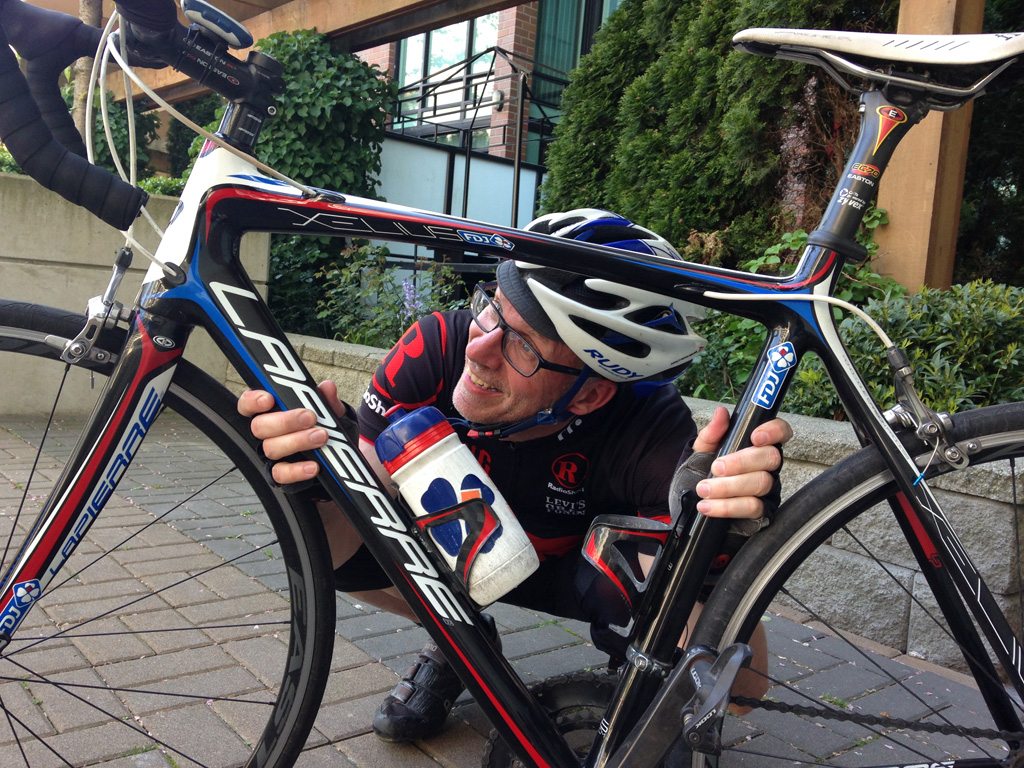
Five years after my first ride on my Lapierre road bike, we are still in love!

Five years ago, Lapierre and I consummated our affair.

Ours had been a whirlwind courtship conducted from afar, loving glances at images of her in action.

Her supple curves and quiet confidence set her apart from the others, like the wispy, colourful Italians, the brash Americans, the functional yet unattainable Germans, the socially conscious Spanish. She had surprises, unexpected touches of endearing and exciting flare; the thumbprint of her creator, the racing rooster tattooed on one of her lithe limbs.

When finally we were in each other’s company, we knew ours was a relationship of destiny. Our first forays into the world as a couple were greeted with sideways glances, probing questions: Who is this Lapierre? How did you meet? What are your plans?

It’s funny to think back on the innocence of those early days when being together was all that mattered. Five years, and more than 20,000 kms on, we are still inseparable, still bonded.

Lapierre moves me when I’m mired in inertia. She challenges me when the road ahead rises up, protects me and wraps me in comforting confidence when it pitches down.

When we are together I want to travel as quickly as she will allow me, yet slow to enjoy our every moment.

I glow with pride when others give an approving nod, make a passing compliment.

While others succumb to fashion’s fickle trends, Lapierre’s beauty is timeless; there is no fluo in her wardrobe.

Some have questioned the future of our passion; will we stay together? They point to other seductive temptresses with their electronic baubles and more advanced bangles. They say just as Lapierre usurped my ardour for Orbea, a new love will catch my eye, tickle my desire, grip my heart.

Perhaps that will happen. You know what they say at the bike shop; once a wanderer, always a wanderer.

But in the warm spring sunshine, as Lapierre and I move as one, it’s hard to imagine…

Closing newspapers means losing community connections

BNWN101231_A

This article originally appeared in Tenth to the Fraser, a community blog in New Westminster where I am a contributing writer and photographer

My first connection to New Westminster was the local newspaper.

I worked for it.

When the 1990 recession punted me from my job in Ontario, I headed west where, I was assured, there was plenty of opportunity in the burgeoning community newspapers around the Lower Mainland.

I’d been to Vancouver, for Expo 86, and I knew of the senior lacrosse teams from New Westminster and Coquitlam, who perennially battled for the Mann Cup against the Brooklin Redmen, one of the teams I covered while working at a paper in nearby Oshawa.
But I really had no concept of what a New Westminster, or a Burnaby or a Richmond or a Port Moody was.

So when one of my first assignments with the Metrovalley group of papers sent me to New West to shoot a story about backyard trampolining, I spent a little time exploring. I was immediately enchanted by the old homes and leafy streets of Queen’s Park, the bustling uptown where a giant hole would become a new urban mall, the waterfront. I had a good feeling about this burgh.

Between subsequent assignments in New West, I drove around looking for vacancy signs in front of apartment buildings. I scanned the classifieds for rentals.

To learn a little more about what made New West tick, what the community offered, I read the stories written by my colleagues. And, of course, I covered some of them myself. I quickly learned about the good parts of town, the areas to avoid.

A couple weeks later, I paid a deposit on a one-bedroom apartment in a little walk-up on the edge of Queen’s Park. I stayed there 18 years before moving to the Quay.

160211Connection2
Raymond Marsolais reminisces about 42 years running his own barber shop in Sapperton.

The local newspaper introduces readers to characters who give a community character, like Ray Marsolais, who cut hair in Sapperton for 42 years.

In October, the New West NewsLeader closed, another casualty in the malaise that is gutting newsrooms and shuttering papers across North America. In fact about 30 newspapers have closed in British Columbia since 2010, according to a running count being kept by a web producer at Global News. More are likely imminent.

The media landscape is shifting.

The consolidation and closure of newspapers used to be the subject for government commissions. Now they’re greeted by shrugged shoulders. And then everyone turns back to their Facebook feed on their smartphone.

Much of the newspaper industry’s current pain is self-inflicted. Ownership got complacent on fat profit margins, on being the only game in town. They didn’t want to, or were incapable of, coming to terms with the digital revolution, with Google and Craigslist and eBay.

Nobody’s holding tag days for closed newspapers. (Although in Guelph loyal subscribers of the city’s daily, The Mercury, did gather to hug the paper’s building when its closure was announced) Some say our demise is just part of the evolution of how we consume information; nobody wants to read yesterday’s news printed on dead trees anymore when the instant gratification of a Twitter feed is a few finger taps away.
But we should worry.

160211Connection3
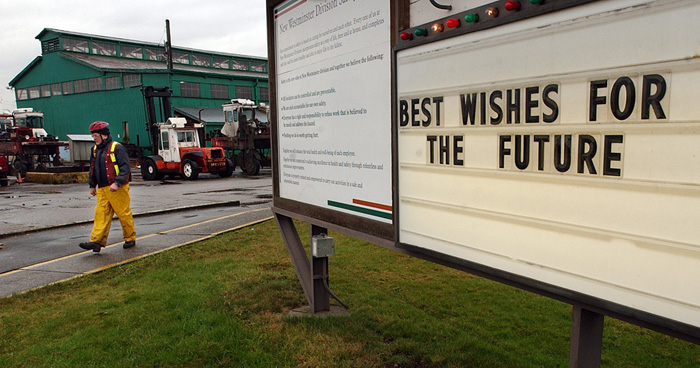
Western Forest Products’ final message to workers at its Queensborough mill, as they leave the mill for the last time.

The local newspaper is a living archive that chronicles a community’s evolution as its happening, like the closure of lumber mills and the loss of industrial employers in Queensborough.

Newspapers, for all their diminished resources and cumbersome delivery model are still the primary source for much of the information we consume about our community. Day in, day out, week in, week out, they do the grunt work of covering local government and calling the cop shop. They’re our eyes and ears when we can’t be everywhere. A good newspaper not only tells the community it covers what is going on but also provides context; why should we care? who will be affected? Its pages are a barometer of what’s important to a community.

A newspaper reflects the elements of community we value, the events that bring us together, how we respond when the going gets tough. It celebrates a community’s heroes and everyday champions. It introduces us to the characters who give character to a community. It gives voice to those who might not otherwise be heard.

160211Connection4
In 24.5 years, I covered virtually every community event in New Westminster. Many of them multiple times.

The local newspaper takes readers into places in their own community they might not otherwise know about, like a private train collection that is housed in a Braid Street warehouse and includes the restored locomotive of a passenger train that was involved in a tragic collision in Hinton, Alberta.

A newspaper can bring us into parts of the community we might not see. Its stories connect us to our neighbours down the street or on the other side of town.
An illuminating quote, a lovely photo can make us smile. A provocative editorial can spark conversation.

Even the ads are a snapshot of a community’s economic vitality. Or lack of it.

A community’s newspaper is its organic, real-time story. Who prints out and saves articles from a website? But clippings of stories and photos from the newspaper are likely taped and pinned to refrigerators and bulletin boards. They’re pasted into scrapbooks. Sometimes they’re sent to grandma.

To read a newspaper regularly is to experience a community’s evolution as it’s happening, its changing landscape, economy, identity.

A newspaper is our connection to the community in which we live, work, play. It gives the community a dimension beyond just the people we interact with, the places we frequent. It’s one we can count on, moreso than a fickle Twitter hashtag or gossipy Facebook group.
So next time we yawn at the news another community has lost its newspaper, we must consider what else is being lost beyond jobs and one less bundle to carry out for recycling.

This is my story

I am a storyteller.

My storytelling is rooted in community journalism.

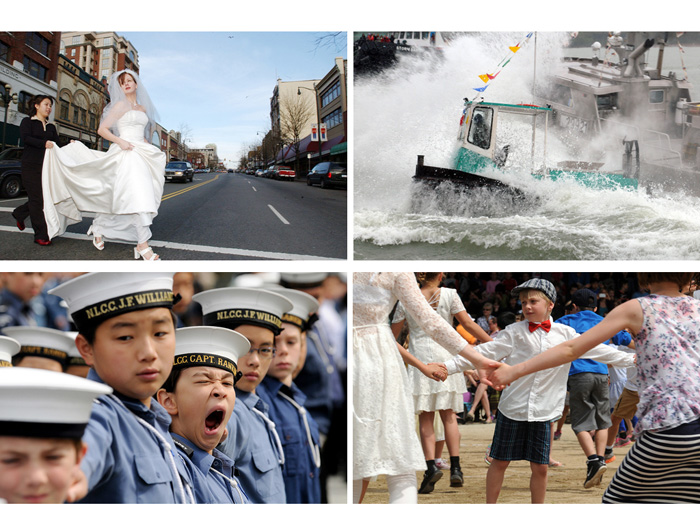
On any given day I could be interviewing a scientist trying to create fusion in a suburban warehouse, deciphering a report to city council on transportation issues, photographing a portrait of a local author, shooting video at an annual festival.

Every day I’m challenged to wrap my head around complex issues, personal passions, new ideas; I turn them into compelling narrative that engages a wide audience.

I’m driven by curiosity and creativity. I’m an independent self-starter who thrives in a team environment. I rise to the challenges presented and then push beyond them. I roll with technology but I’m firmly grounded in the most important asset of storytelling, connecting with the audience.