Climate change challenges Tri-Cities’ mountain bike community

This story first appeared in the Tri-City News on Nov. 17, 2022

Extended droughts that dry out trails, atmospheric rivers that wash them away and intense windstorms that blow down trees are among the climate change challenges facing the local mountain biking community.

So members of the Tri-Cities Off Road Cycling Association (TORCA) are adapting the way they build and maintain trails, as well as how they ride them.

Karaleen Gioia, a director of the group that comprises more than 750 members, said a typical trail on Burke Mountain that 10 years ago was little more than a dirt path — snaking through the towering trees — must now be armoured with logs and rocks, bridged with hand-built wooden spans to allow for drainage in heavy rains, and contoured with little rolling hills to slow riders who could otherwise speed erosion.

“It’s not just getting out and shredding the trails anymore,” Gioia said. “Climate change is another factor to consider.”

Drought followed by big rainstorms can be especially damaging to trails.

Gioia said the former strips all the moisture from the ground that binds the trail beds, threatening their structural integrity, while the latter results in washouts as rainfall in unprecedented volumes is forced to travel in unfamiliar places.

Having both in quick succession can be disastrous.

“The result is that more work is required to make trails sustainable,” Gioia said. “More labour up front means less work in the long run.”

Most of that labour is supplied by a corps of dedicated volunteers over the course of several organized “trail days” throughout the year, as well as individual privateer efforts to stay on top of repairs.

“We’re pretty proactive.”

Gioia said most local mountain bikers are tuned into the privileged position they enjoy with so many trails so close to home. Many file trail reports to document any problems or areas of concern they identify as they roll up or down the mountains.

Gioia said keeping the trails in good shape benefits all users, including hikers, dog walkers and trail runners. That’s been especially important since the advent of the COVID-19 pandemic that sent more people outdoors for their recreational pursuits as activity helped reduce their stress and kept them healthier.

Gioia said education of proper trail use etiquette and trail building technique is an ongoing process. TORCA liaises frequently with other user groups, as well as land managers, to devise solutions to problems as they arise.

“We’re learning as we go,” she said.

In fact, a report conducted for Parks Canada by the Calgary-based Miistakis Institute that looked at the ecological impacts of mountain biking said that’s the case for most user groups, as there’s been very little empirical research.

“Specific effects associated with mountain biking activity and infrastructure characteristic of the other types of use have emerged as a considerable gap in the research literature,” concluded the review.

Gioia said land managers and user groups are gaining a greater appreciation that bolstering trails will help keep mountain biking viable even as weather extremes intensify.

“It makes it enjoyable for all the users,” she said.

Flow device will make beavers feel at home

This story first appeared in the Tri-City News on Nov. 28, 2018

As the city of Port Moody works to create a strategy to manage beavers that take up residence in its waterways, a group of advocates for the industrious rodents is helping make one furry family feel right at home.

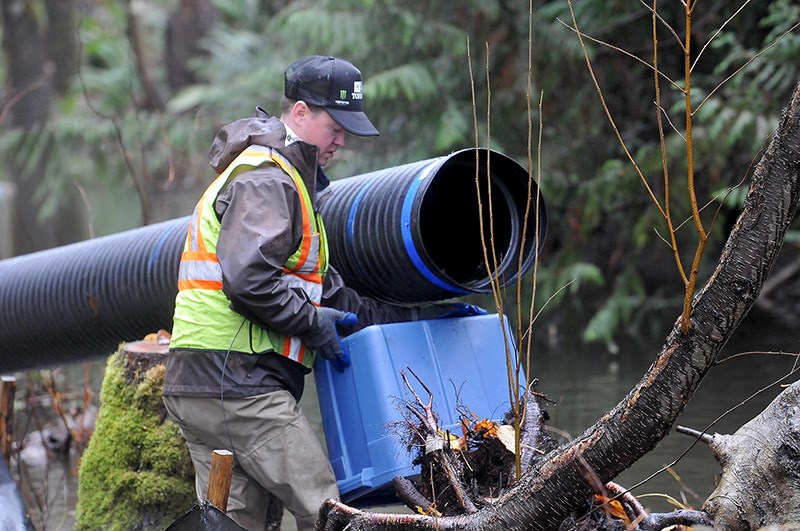
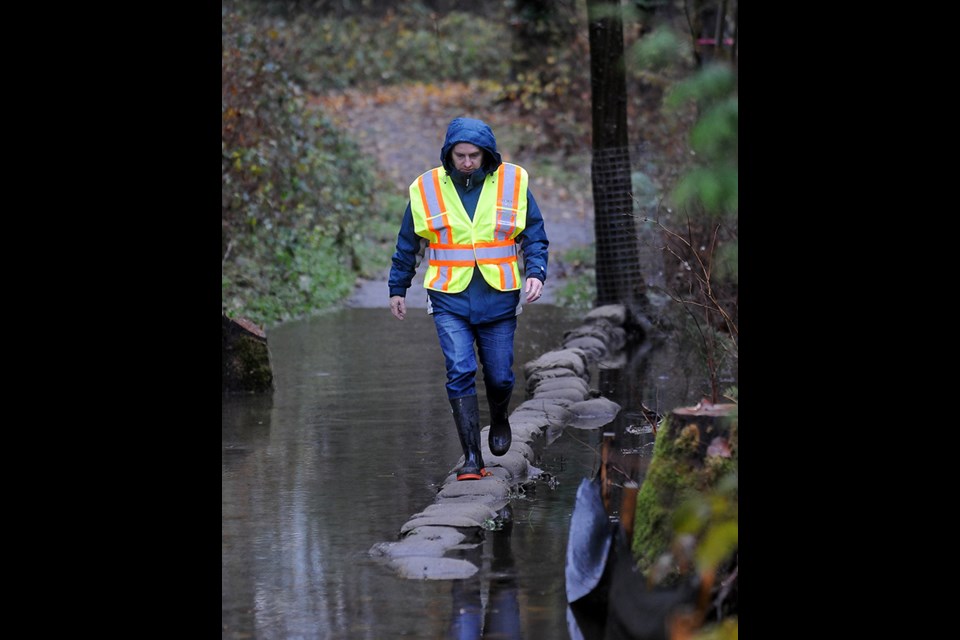
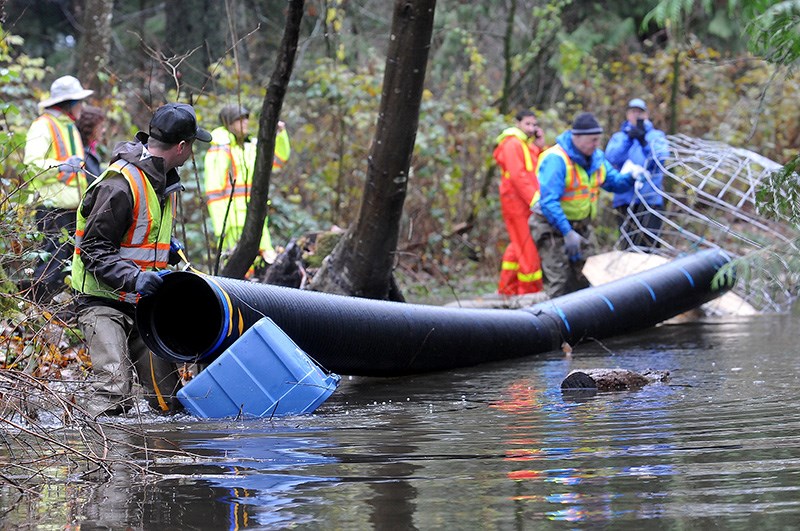
Volunteers from The Fur-Bearers along with local supporters like Jim Atkinson and his partner, Judy Taylor-Atkinson, were immersed in Suter Brook Creek last Friday, installing a device that regulates the level of water in the pond that has been created by a family of beavers between city hall and the public works yard.

The beavers moved there after they were displaced from their previous home in nearby Pigeon Creek when an attempt by the city to evict them from a drainage pipe went awry and a young kit was drowned.

Taylor-Atkinson said the flow device will drain water from the pond — formed when the beavers built a dam — to ease flooding while still maintaining a level high enough for the animals to feel safe.

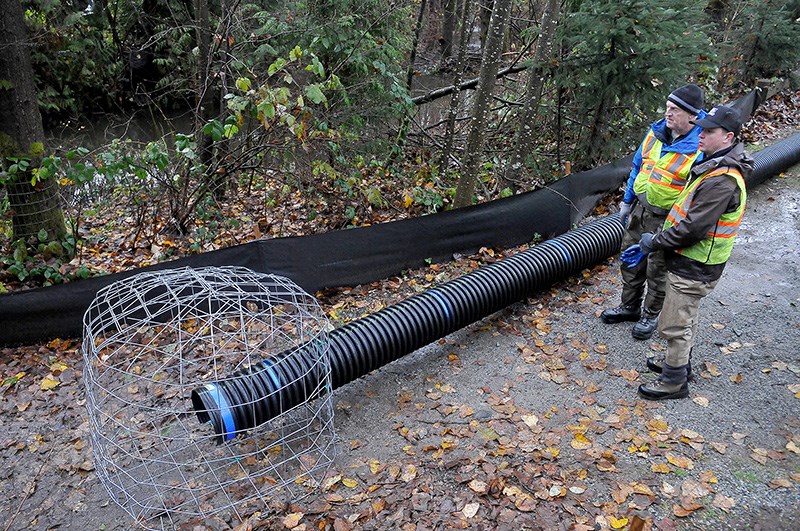
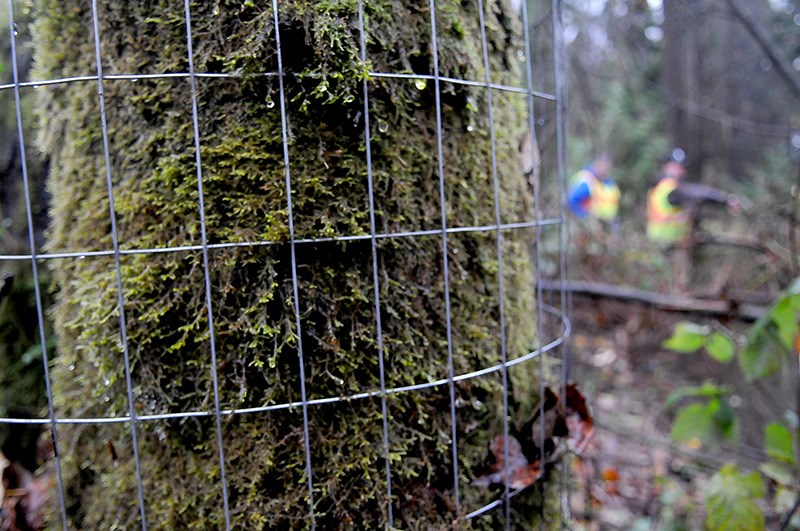
The device consists of a 40-foot length of double-wall, 12-inch culvert pipe with holes drilled into it so it can be sunk to the bottom of the pond. One end of the pipe is protected by a galvanized steel cage so the beavers can’t get in while the other end is inserted through the dam.

Taylor-Atkinson explained the effect is like punching a hole through the dam but the beavers can’t rebuild the structure or plug the pipe. She said after some initial curiosity, they will get used to the pipe and carry on with their lives.

“They need to have the water at a certain level to protect their home and family,” she said. “They’ll do whatever they have to do.”

The device was installed with the city’s blessing and several employees, including city manager Tim Savoie, stopped by to observe the work.

“This is a big step in the city’s beaver management plan,” Taylor-Atkinson said, adding she hopes interpretive signage can be installed to explain to visitors walking along the path that runs along the creek about what is happening. “I think the beavers will be fine.”

Centuries-old cedar stump a symbol of Burke Mountain’s past

This story first appeared in the Tri-City News on Dec. 1, 2017

It may not have the girth and renown of Stanley Park’s Hollow Tree but Dave Menzies and his wife, Nola, think a centuries-old cedar stump on Burke Mountain is worth saving as development encroaches ever closer.

Menzies, 77, found the stump when he was exploring the woods near the couple’s Burke Mountain home, where they’ve lived since the 1970s. The retired firefighter and fire inspector makes frequent forest forays with his metal detector to root out artifacts from the mountain’s logging past, hiking along old, grown-over trails that were once used by shake-splitters for transporting cedar logs.

It was along just such a trail he encountered the big old hollow stump, its interior charred likely decades ago from — Menzies surmises — a forest fire that swept across the mountain in 1914. The trunk of the tree fell over and was absorbed into the forest floor years ago, possibly weakened by the fire, as he can find no evidence that it had been logged.

Menzies recalled his first impression of the stump, which is big enough that up to 10 people could stand in its hollowed interior: “I was in awe.”

Over the years, he and Nola have brought their children and grandchild to visit the stump and marvel at its history.

Menzies estimates the stump could be 500 years old — maybe as old as 1,000 years — and it probably soared 200 or 300 feet into the air at the peak of its health.

“You don’t get to see them this close anymore,” he said. “I can sense it has the history.”

But its days may be numbered.

Developers are moving into the area. Roads have been built, trees have been tagged. The wild mountain is being tamed by subdivisions of expansive homes.

“Everything is just turning into progress,” said Nola Menzies, 75.

She’d like to see the stump saved, protected from the march of bulldozers through the woods or maybe even uprooted and moved to where it can become an educational monument to what the mountain once was.

“It’s real, it’s natural,” she said.

But first, people have to know about it, which is why the Menzies have pulled on their gumboots and stomped across the loamy, rain-saturated forest floor to show it to a reporter.

Said Dave Menzies, peering up through the hollowed stump towards the sky: “This is amazing.”