Could Port Moody’s biggest-ever development project get even bigger?

The company building Port Moody’s largest-ever development project wants to make it even bigger.

Dean Johnson, the vice-president of development for Vancouver-based Wesgroup Properties, told council’s city initiatives and planning committee Tuesday, May 20, that it will need to add a seventh residential tower to the six already approved as part of its expansive 14.8-acre Inlet District project in the former Coronation Park neighbourhood.

Johnson said the additional density is required to offset recent changes to rules about development cost charges (DCCs) levied by Metro Vancouver that help pay for regional infrastructure like water, sewers and drainage.

He said those changes will cost the company an additional $30 million for its Inlet District development that currently comprises more than 2,500 new homes in six residential towers up to 31 storeys along with three low-rise buildings, a four-storey office building, as well as a grocery store and daycare facility, all built around a 2.5-acre central park.

“This cost is something we have to deal with in this project,” Johnson said, adding it was unforeseen last July, when Wesgroup achieved final approval from council for the zoning amendments required for the development’s first phase to proceed.

Johnson said if the company can’t build an additional tower, it may have to cut back on some of the project’s amenities to help offset its increased costs. Those include:

  • $6 million towards construction of a new pedestrian overpass across Ioco Road to the Inlet Centre SkyTrain station
  • a 186 sq. m. civic facility for community use
  • $4.8 million of public art
  • more than $8 million in community amenity contributions

Johnson said the seventh tower would be part of a future phase of the project’s construction, which is already underway and is expected to take about 25 years to complete.

Johnson’s preliminary pitch rankled at least one Port Moody councillor.

Haven Lurbiecki said it’s “irresponsible” and accused the developer of “moving the goalposts now.”

At one point during the project’s protracted journey through council’s approval process that commenced when Wesgroup finished acquiring the last of 59 mid-century single-family homes that formerly occupied the site in 2019, the company had hurled a similar charge.

In 2022, Wesgroup’s senior development manager, Evan French, expressed frustration at Port Moody’s implementation of a new inclusionary zoning policy that requires at least 15 per cent of units in dense new developments be affordable rentals shortly after it had received approvals for changes to the city’s official community plan so the project could proceed and just as it was preparing to apply for necessary zoning amendments.

And while those zoning amendments were ultimately passed by council in Dec., 2023, without a requirement for affordable housing units, Wesgroup did provide a letter of intent that it would continue working to secure such a component.

Tuesday, Johnson said those efforts have borne some fruit.

He said a program through the Canada Mortgage and Housing Corporation that provides low-cost financing for the construction of affordable apartments could mean all 288 units in the project’s second tower could become rental apartments, with 20 per cent of them available at below-market rates.

Johnson said Wesgroup had previously tapped into the program for projects it built in other communities like Burnaby and New Westminster.

“We are very familiar with this framework and we’re really excited about bringing this to Port Moody.”

But, Johnson added, time is running short and an endorsement letter from the city would speed the process, a request councillors readily granted.

Popular Port Moody concert series gets a financial boost

A popular series of live music concerts at Port Moody’s Inlet Theatre will receive a $5,000 boost from the city.

The art, culture and heritage grant allows promoters Bill Sample and Darlene Cooper to continue booking top touring and local musicians like Shari Ulrich, Roy Forbes and The Paperboys while maintaining affordable ticket prices.

It’s one of $40,000 worth of grants approved by council’s finance committee Tuesday, May 20, for distribution to several local organizations.

Cooper said the concerts have put the city “on the map as a bit of a cultural hub.”

She and Sample, who are both accomplished musicians themselves, launched the series in 2022 after moving to Port Moody from Vancouver and finding the local live music scene somewhat lacking, especially after the demise of Bistro Gallery that burned down in 2019.

Sample said the little bistro on Clarke Street had become a popular performance venue for local and guest musicians, poets, writers and visual artists. But with no place to play, many were bypassing Port Moody while on tour.

“We need music in our lives,” Sample said, of the series that presents up to eight concerts during the fall, winter and spring months in the venue that can seat as many as 208 patrons.

In March, 2024, Port Moody council voted to extend an agreement with Sample and Cooper to waive rental fees at the theatre for two more years to help keep concert costs down.

Devin Jain, who was then the city’s manager of cultural services but recently retired, said the promoters have “brought a consistent and professional music series to the community” which has “filled a gap within the cultural landscape of Port Moody.”

Other organizations awarded grants include:

  • Big Sisters of BC Lower Mainland and Big Brothers of Greater Vancouver will each receive $2,608 community grants to enhance their mentoring and youth leadership programs
  • Crossroads Hospice Society will get a $3,000 community grant to bolster its activities that enhance the quality of care for it patients
  • PoCoMo Meals on Wheels Society will get $3,000 to help keep the price of meals affordable
  • SHARE Family and Community Services also gets a $3,000 community grant to offset the cost of emergency hampers for vulnerable community members
  • The Crisis Intervention and Suicide Prevention Centre also gets $3,000 to boost its operational support for mental health care
  • Port Moody Men’s Shed society’s $1,404 community grant will help its members build community bird houses
  • Port Moody Heritage Society will receive a $5,000 arts, culture and heritage grant to help fund a new exhibit
  • POMO Players will use its $4,500 arts, culture and heritage grant to fund booking of a venue, creative costs and insurance for its production of “A Christmas Carol”
  • The Port Moody Art Association will get $3,000 for room rental, permits and insurance costs
  • Arts Connect gets a $2,500 grant to help it attract top musical acts to Port Moody

As well, five artists will share a total of $4,717 in grants to help them put on exhibitions, open a studio, produce a short film or acquire materials and equipment. They are:

  • Crystal Koskinen
  • Amy Narky
  • Ramin Mohseni
  • Husein Kamrudin
  • Samira Messchian Moghadam

Port Moody Mayor Meghan Lahti said she was pleased by the quality of the recipients.

“They all look like very good applicants,” she said.

According to a staff report, Port Moody received 47 applications for its three grant programs. Each was evaluated by staff and the city’s citizens advisory group based on criteria like:

  • the extent to which the grant will help address a need in the community
  • how the grant will promote the well-being and quality of life of Port Moody residents
  • how much of the money will be spent in the city and benefit the community as a whole
  • the needs of the organization or group requesting the funding
  • how the funds will be directed to support equity, diversity, inclusions and reconciliation initiatives
  • the involvement of volunteers and promotion of community spirit
  • accessibility

Hockey helps Port Moody teen bounce back from fire tragedy

This story first appeared in the Tri-City News on Feb. 28, 2021

There may be no “I” in team, but a Port Moody teen is learning there’s a whole lot of support and love, especially when the chips are down.

Dec. 13, Hailey Kress and her family were displaced from their Glenayre home in the middle of the night by a fire that destroyed their garage and deck, heavily damaged an adjoining bedroom and inflicted lots of smoke and water on the rest of the structure including the basement.

That’s where Kress, 13, stored her hockey equipment.

Nobody — including the family dog — was hurt in the 3:15 a.m. blaze. But the emotional toll of that night has been especially difficult on Hailey, said her mom, Monica.

As the family moved in with relatives, then to an Airbnb, and finally to a rental home on the opposite side of Burrard Inlet, Hailey struggled in class at Banting middle school. She said she’d have panic attacks, feeling frozen and overwhelmed by the enormity of that night’s events and the impact it was having on her routines and sense of security.

“It was important to get back to normal,” said Monica. “We needed to somehow concentrate on something other than the fire, get her mind off the negative.”

Hockey is Hailey’s other.

The day after the fire, Monica received an email from Heather Fox, the president of the Tri-City Predators female hockey association where Hailey has been playing for three years, reassuring her that efforts were already in motion to ensure her daughter could keep playing.

Back on the ice

Two weeks later, Hailey was back on the ice. All of her equipment was brand new, courtesy of The Hockey Shop, in Surrey. Her new Predators bag, socks, pants and even hockey tape were donated by Rocket Rod’s at Planet Ice in Coquitlam.

n a season that’s been all about disruption because of public health restrictions to temper transmission of the coronavirus that causes COVID-19, Hailey said practising with her teammates made her feel normal, that everything was going to be OK.

“It was really fun to be with my friends again,” she said. “It made me forget about everything for an hour.”

Hailey, who’s also played baseball, jiu jitsu and acro-gymnastics, started playing hockey after a sleepover at a cousin’s house meant she also had to attend that cousin’s game the next day.

She said she liked what she saw.

“It looked super fun,” she said, adding she especially enjoyed hockey’s aggressive nature.

Monica said she was initially taken aback when Hailey expressed an interest in playing hockey herself. But the positive benefits of being part of a team and forming new relationships outweighed the downsides of the sport’s expense and sitting on cold arena benches.

“It makes for a really well-rounded kid,” she said.

Values camaraderie

Hailey said she enjoys the challenge and responsibility of playing defence, including learning how to skate backwards. But she most values the camaraderie of her teammates and coaches.

“It’s like always having people around you who care about you,” Hailey said.

That care was delivered even before Hailey returned to the ice, as her teammates put together a package for her family of food and personal items like blankets and skin care products.

Monica Kress said she’s been overwhelmed by the outpouring of support from Hailey’s team and the Predators’ hockey community.

“You always think you pay a lot of money for these sports, you think you’re just a number to them,” she said. “But it’s such a good group of kids and parents.”

Hailey said the experience has given her an appreciation for the importance of having sport and teammates in her life. It’s also made her more determined to keep getting better at her game.

“Everything that they’ve done makes me want to try harder to show I’m grateful.”

Port Moody phone booth lets you talk with loved ones who’ve passed on

This story first appeared in the Tri-City News on Sept. 12, 2021

You can’t call an Uber from the new phone booth installed at Port Moody’s Pioneer Park, but you may be able to chat with your favourite Nana who passed away in 2015.

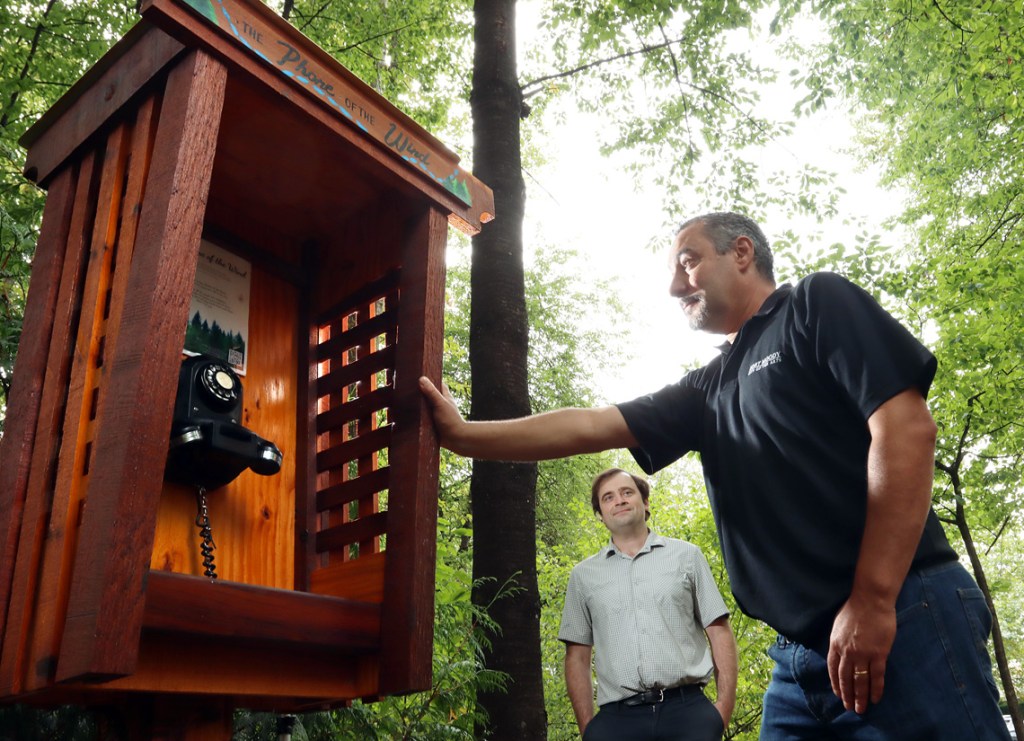
The Phone of the Wind is an initiative of the Crossroads Hospice Society that gives visitors to the park an opportunity to work through some of their grief at losing a loved one by placing a call to them from the vintage rotary-dial wall phone mounted in a wonderfully stained and lacquered wooden booth.

And while the phone doesn’t have a special line to the afterlife, the act of picking up the handset and talking into the mouthpiece can be comforting in a time of loss and sorrow, said Amelie Lambert, the adult bereavement coordinator at Crossroads’ nearby hospice facility on Noons Creek Drive.

“It helps people not feel crazy all the time when they’re grieving,” she said.

“It helps to normalize grief,” added Brittany Borean, the bereavement service coordinator who helped bring the phone project to life after a volunteer let her know about a similar effort in Washington.

The first Phone of the Wind was erected in 2010 in Otsuchi, Japan when a landscape designer named Itaru Sasaki installed an old phone booth in his garden shortly after a beloved cousin died of cancer. In a 2017 article in Bloomberg, he said the phone offered him a way to maintain a relationship with his departed cousin.

In 2011, Sasaki’s private installation became a kind of public shrine after an earthquake and tsunami destroyed dozens of coastal communities including Otsuchi and people who lost loved ones in the disaster made their way to his garden to seek comfort by placing calls from his booth.

Since then, wind phones have been built in places like: Oakland, Calif., to commemorate the 36 people who perished in a warehouse fire; Dublin, Ireland; Marshall, North Carolina; and Aspen, Colorado.

The concept has also caught the imagination of novelists and filmmakers who’ve incorporated it into stories of love and loss.

To realize Port Moody’s Phone of the Wind, Borean enlisted the help of the city’s superintendent of parks, Robbie Nall, and carpenter Roy Balbino, who took his inspiration to craft the booth from an old-style phone booth he happened to spy one day while driving along St. John’s Street.

MARIO BARTEL/THE TRI-CITY NEWS Port Moody’s superintendent of parks, Robbie Nall, and carpenter Roy Balbino helped bring the Crossroads Hospice Society’s vision for a phone of the wind to life in Pioneer Park.

Some of the wood is reclaimed from old memorial benches in the adjacent labyrinth healing garden, while the vintage black wall phone was discovered on Facebook Marketplace.

Lambert said having the Phone of the Wind in a public setting helps bring the grieving process out from the shadows where western society has tended to lock it away as a very private process.

“We don’t acknowledge grief,” she said. “We don’t have to hide it.”

In fact, Borean added, accepting grief can help ease some of the pain that comes from losing a loved one.

“It sends a message that it’s okay to grieve,” she said. “It’s not about ‘time will heal all wounds.’”

The phone can also provide a way for families to bridge generations.

Lambert said since the phone was installed in August, families have brought their kids to talk with members who may have passed before they were born or were too young to remember.

“It drives connections,” Borean said. “It creates a sense of community that you’re not alone.”

Coquitlam councillor gets to know her community — one Strava segment at a time

This story first appeared in the Tri-City News on Dec. 10, 2021

A Coquitlam city councillor is taking the phrase “boots-on-the-ground politician” to heart.

Except she’s wearing sneakers.

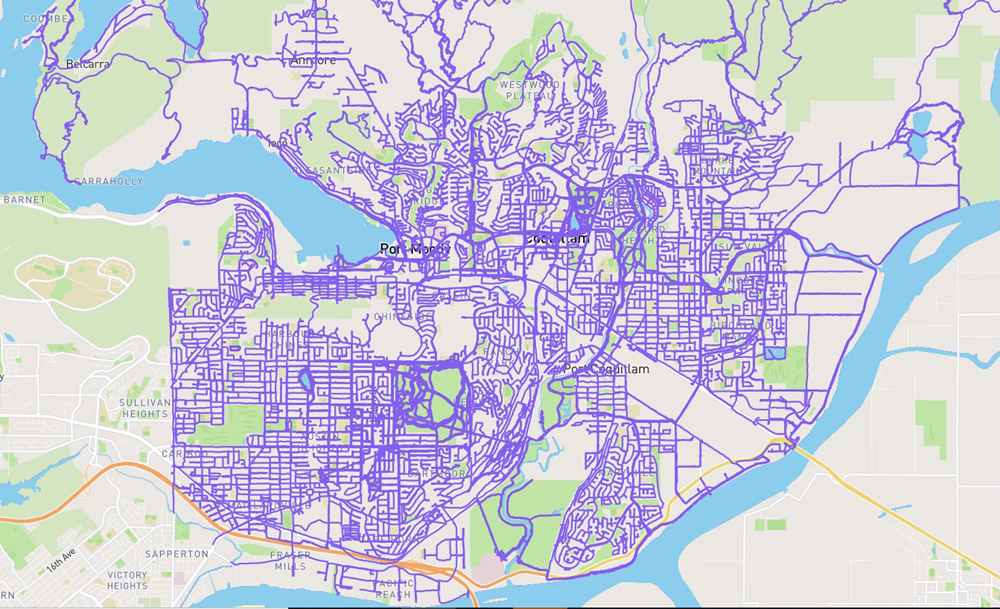
Teri Towner recently finished running every street in the Tri-Cities — including Anmore and Belcarra. The quest took her more than 12 months. She ran on 1,943 streets, covering about 2,000 km. She wore out four pairs of shoes.

The quest started when Towner read an article in the Tri-City News about Pamela Clarke’s conquest of every street in Port Coquitlam last year when the onset of the COVID-19 pandemic cancelled a marathon she’d planned to run in Berlin.

Towner, an avid runner since she was a teen, set out to run every street in Coquitlam.

But when she finished that, she said she was having so much fun she just kept going.

SUBMITTED A map of all the streets Coquitlam councillor Teri Towner ran in her year-long quest to run all the streets in the Tri-Cities.

Her last street was Marpole Avenue in Port Coquitlam, where a congratulatory reception and beverage reward awaited at Patina Brewing.

Along the way, Towner said she learned things about her community and the rest of the Tri-Cities she knew at an abstract level but had never experienced in a real, visceral way.

Like the diversity of the region’s neighbourhoods that took her from trailer parks to high-rises, from mansions up on Westwood Plateau to blueberry farms out in Minnekhada.

She saw llamas and horses.

“It energized me,” Towner said. “I always felt like I learned something or found something I didn’t know existed.”

It also increased her awareness of issues like illegal dumping, pedestrian accessibility and safety, street lighting, signage and parking.

SUBMITTED During her runs of all 1,943 streets in the Tri-Cities, Anmore and Belcarra, Coquitlam councillor Teri Towner came across all kinds of unusual finds, like a large spring on Winter Crescent.

Towner said she must have driven Coquitlam’s engineering department nuts with all her calls and messages about trash, missing signs and burnt out street lamps.

But overall, she said, the city is very clean.

Planning her routes on the social activity app Strava to link streets as efficiently as possible, Towner became acutely aware of which neighbourhoods were designed with pedestrians in mind, and which prioritized cars.

City planning has evolved over the years, but planners still have work to do to create truly walkable communities, she said.

Most importantly, Towner said, she came to appreciate the communities’ spirit.

As the pandemic’s second wave rolled through last fall, she noted the colourful rocks in gardens painted with messages of hope, the signs thanking essential workers in windows.

During the holiday season, she timed her runs for the evening hours so she could enjoy the twinkle lights and decorated trees.

SUBMITTED Coquitlam councillor Teri Towner said she especially like running at night during the Christmas season so she could enjoy all the lights and decorations.

“There’s a lot of positivity,” Towner said.

Her running journey wasn’t always smooth sailing, though.

Shortly after Towner embarked on her mission, she was knocked off course for about a month when she was concussed by a low-flying drone while riding her bike through Mundy Park.

And she had to take more time off last September to recover from a month-long Coquitlam Crunch challenge.

Of course, some runs were easier than others.

Among the more difficult legs, Towner made room in her pain cave for the hills of Anmore and Westwood Plateau that she’d both ascend and descend.

She gained a new affection for the flatlands of Port Coquitlam.

Her conquest of hometown streets and sites complete, Towner said her next running challenges will be further afield — a half marathon in Las Vegas next February and the full 42 km pull at the 50th BMO Vancouver Marathon in May.

“It frees my mind,” she said of her love for the sport.

Port Moody road rage incident leaves car window smashed

An Acura has a smashed rear window and Port Moody police are looking for a suspect after a road rage incident Thursday afternoon.

Port Moody Police Department spokesperson, Cst. Sam Zacharias, said the confrontation occurred at around 4 p.m. in the westbound lanes of St. Johns Street at Moray Street.

He said it’s believed to have started as a verbal exchange several blocks to the east, near the Coquitlam border, then escalated when the suspect allegedly got out of his car and smashed the window with some sort of object.

“We aren’t exactly sure what sparked it,” Zacharias said.

He said the suspect also allegedly pointed a weapon at the Acura’s driver, who wasn’t injured in the altercation.

The suspect is described as a heavier-set Middle Eastern male, in his late-20’s or early-30’s, with black hair and a beard. He fled the scene in a grey Honda sedan.

“We are looking to speak with any witnesses who observed the rush hour altercation,” Zacharias said, adding anyone with further information or even dashcam footage can contact PMPD at 604-461-3456.

Moray Street traffic calming gets changes, more expensive

The plastic lane delineators creating chicanes to slow traffic on Port Moody’s Moray Street could soon be gone.

In their place, new curb bulges will be built at Pinda Drive and Brookmount Avenue, along with new lane markings and crosswalks. But a planned bike lane on the east side of Moray Street will have to wait.

Tuesday, May 20, Port Moody council’s initiatives and planning committee will consider spending an additional $353,000 to construct the new, permanent elements. That’s on top of the previous budget of $795,000 that had been approved in 2022.

Since then, though, construction costs have risen, additional design work was required and $187,000 will be allocated to a new multi-use path on the west side of Moray, resulting in a total budget of $1.248 million, said a staff report; $100,000 of that will be covered by the city’s street lighting relocation program, and another $155,000 will come from a TransLink grant.

A pilot project to slow traffic using Moray Street that was implemented in the summer of 2022 resulted in a 5-6 km/h reduction of speeds on the busy connector route to Coquitlam, according to the report.

But some residents said the temporary measures, that included the plastic lane delineators, new markings on the pavement to configure curb bulges at intersections and a temporary sidewalk on Moray’s west side, actually made the situation worse.

“It may have calmed traffic on the east side, but they’re going faster on the west side,” said one resident prior to a meeting last June when council decided the traffic calming measures should be made permanent.

Subsequent feedback from residents following a public information session earlier this year revealed further concerns like the loss of several on-street parking spots, worries about pedestrian safety from cyclists speeding down a northbound bike lane and turns lanes at the St. Johns Street intersection too short to accommodate the volume of vehicles.

As a result, said the report, further refinements have been made to the permanent calming plan, including:

  • the addition of eight new on-street parking spots on the east side of Moray, between Brookmount Avenue and Portview Place
  • the removal of the northbound cycling lane on the east side of Moray; instead, cyclists heading down the hill will be directed to use Brookmount Avenue and Clearview Drive while staff consider further options
  • additional curb bulges to be built at the intersection of Moray and Brookmount, as well as a new marked crosswalk on the north leg
  • adjustments to the lane geometry at Moray and St. Johns to extend the turning lanes so they can accommodate more vehicles

The report said the permanent changes should be in place by the end of the year.

In the glory days of radio, this woman helped start a massive Port Moody electronics company

This story first appeared in the Tri-City News on April 10, 2021

The matriarch of a family that put Port Moody on the leading edge of electronics manufacturing for a decade in the 1950s and 60s has died.

Isabelle Chisholm passed away recently, at the age of 98. She was the widow of Edward Chisholm, who built a state-of-the-art manufacturing plant for radios and televisions sets in Port Moody in 1954. She was also the keeper of some of the company’s secrets.

As the chief purchasing agent for Vancouver Radio Laboratories Ltd., Isabelle Chisholm’s tasks included travelling to Ottawa to clear secret components for radio receiver sets used by the Canadian armed forces during WWII that were invented by Edward, and manufactured in his first plant, on Vancouver’s Main Street.

When the war ended, the company’s name was changed to Chisholm Industries Ltd., and it shifted production to table-top radios and phonographs as well as a fancy new technology — black-and-white televisions.

Edward Chisholm’s factory was the only such manufacturer west of Toronto, and Isabelle became the first female electronics salesperson.

“She was a dynamo of energy and conviviality who knew how to make a sale,” said Isabelle Chisholm’s obituary. “She was widely known for her ability to successfully connect with the public through telephone calls.”

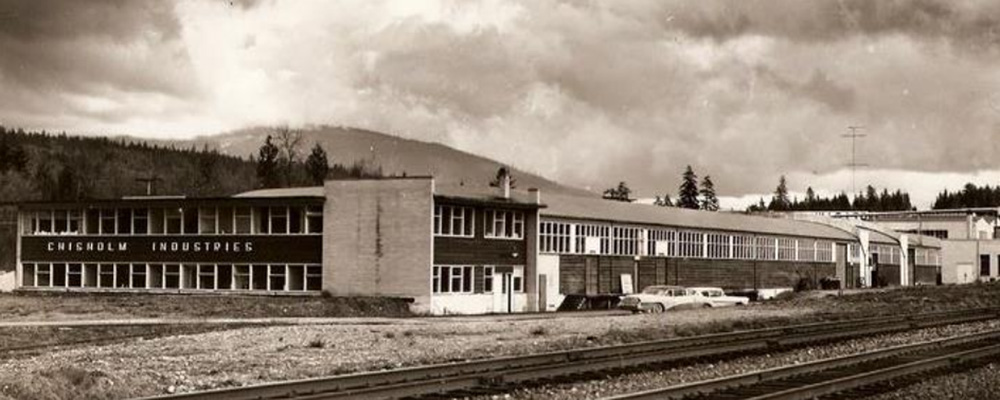
In 1947, the 12,000 sq. ft. plant in Vancouver was damaged by fire, and the Chisholm’s began casting about for space to build a larger facility. They found it in Port Moody, purchasing 23 acres along Murray Street, and construction began in 1954 on a new 56,000 sq. ft. state-of-the-art factory that also contained offices, a warehouse as well as sheet metal and tool and die shops.

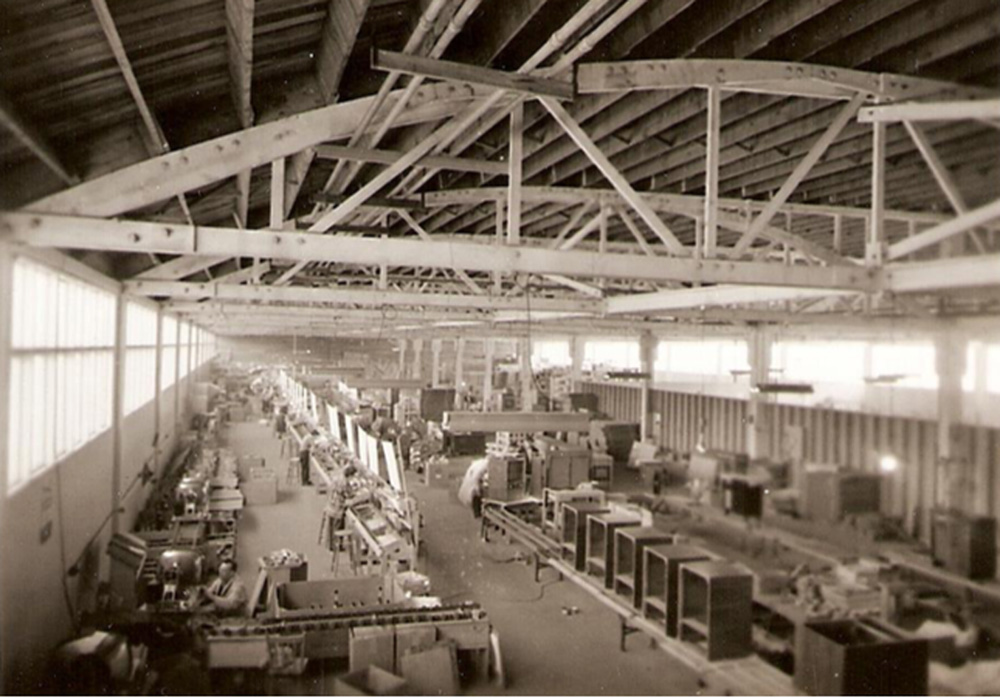
CANADIAN VINTAGE RADIO The factory floor at the old Chisholm Industries plant on Murray Street in Port Moody.

The new home for Chisholm Industries Ltd. opened the next year.

The sprawling main plant was 100 ft. wide and 14 ft. high. The assembly line for radios and TVs was 400 ft. long. There was a large baking oven to fuse paint to the metal surfaces and a cabinetry section to manufacture and finish the high-quality wood boxes that held the radios and TVs. All the engineering and design for products was done in-house.

At peak capacity, the plant could produce 200 units a day.

Chisholm’s products were renowned for their quality. They were sold at furniture stores like Wosks and department stores like Eatons, Woodwards, Sears and Hudson’s Bay.

But the advent of colour television changed the industry. The cost of retooling the plant for the new technology was too high, and more and more electronic goods were being engineered and constructed offshore, in countries like Japan.

By 1963, the factory floor at Chisholm Industries was mostly manufacturing wooden cabinets for other electronics companies like Bell and Packard. The following year, Edward Chisholm closed the plant, with much of its machinery going to his son, James, so he could start Glenayre Electronics in Burnaby.

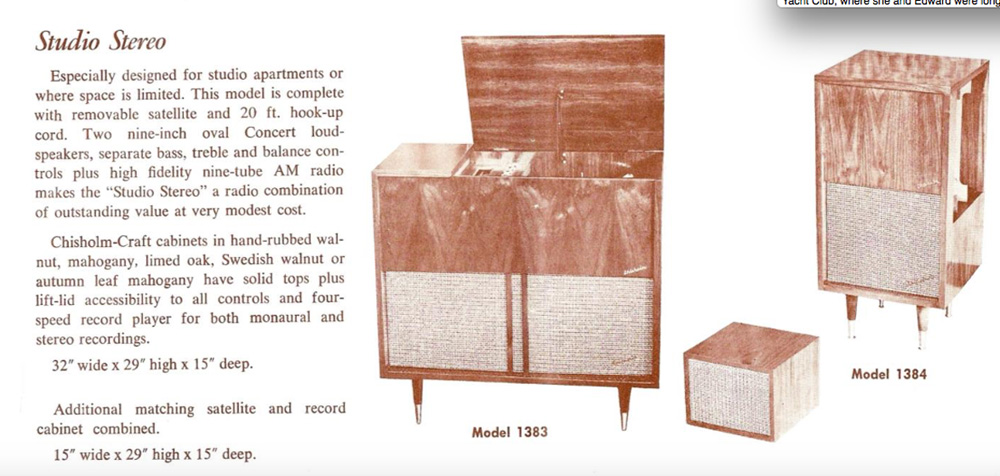
CANADIAN VINTAGE RADIO A catalogue listing for one of the home hifi systems built by Chisholm Industries in Port Moody.

The sprawling plant in Port Moody was rented to various industrial and commercial tenants, as well as artists, until it was demolished in 2010.

In 1967, Isabelle and Edward Chisholm retired to Victoria and began growing hydroponic tomatoes on an acreage they’d purchased, selling much of their produce to the Empress Hotel and Woodwards.

After Edward died in 1968, Isabelle became a successful realtor and joined boards of directors for several organizations like the PNE, ICBC, the Boys and Girls Club and the C.H.I.L.D. Foundation. She was also politically active with the Social Credit party in B.C., as well as the federal Reform, Canadian Alliance and Conservative parties.

According to her obituary, Isabelle Chisholm’s ashes will be scattered near the Royal Vancouver Yacht Club, where she and Edward were longtime members, and his ashes were also distributed.

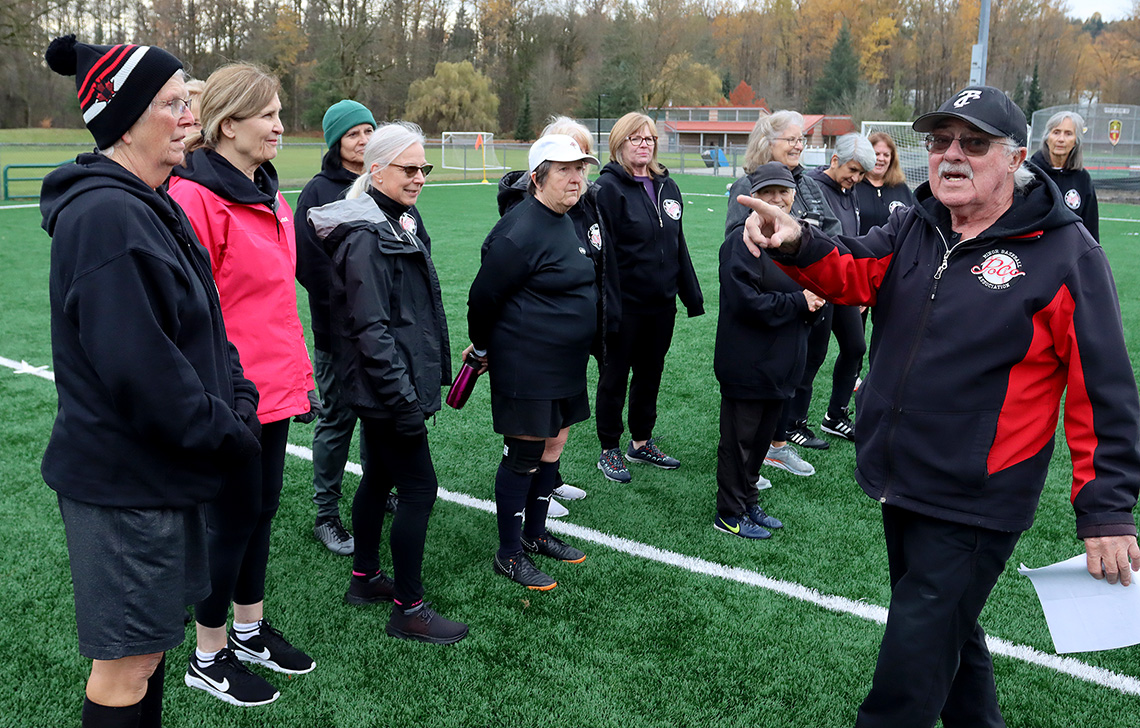
Even at a slower pace, these Tri-City soccer players still have a love for the game

This story first appeared in the Tri-City News on Nov. 23, 2023

The Tri-City Walking Soccer Club is proof in the pudding: you can take the players out of soccer, but you’ll never take the soccer out of the players.

The club started several years ago as an adjunct to the Dartmen, an affiliation of weekend warriors who’ve grown old together playing sports like traditional running soccer as well as baseball and hockey.

As members started to hit their mid-50s, many realized they were losing their stride. But instead of giving up sport altogether, they just decided to slow it down.

Walking soccer is just like it sounds, a modified version of “the beautiful game” without contact and played at a pace more comfortable for aging knees and joints.

It’s also played seven-aside on a smaller pitch — about half the size of a regular soccer field — at Port Coquitlam’s Gates Park.

Making new friends

Jim Swelander, who started the Dartmen in Burnaby back in 1969, said as the group has embraced their golden years, the social aspect of their sporting endeavours has taken precedence over competition.

“It’s about making new friends and staying in contact with old ones,” he said.

When the group, which ranges in age from 55 to over 70, invited women to start playing in their soccer matches the camaraderie and post-game revelry kicked up a notch with organized get-togethers every week at the Cat & Fiddle pub and other social events.

Denise Spletzer, 68, said she first attended a walking soccer match as a spectator but quickly decided the club needed a female touch even though she’d never played soccer before.

“I like to get exercise,” she said.

Spletzer invited some of her friends from her fitness class and from an initial contingent of seven just a couple of years ago, there’s now 43 women participating in the club’s mixed division alongside its male membership of 93, some of whom stick around for the more competitive men’s division afterwards.

Swelander said not everyone in the club comes out at once, of course.

Players come and go for the regular Tuesday matches that run year round (the league heads indoors to a facility in New Westminster during December and January) and new teams of seven players are created every week from those who do show up to play in the 25-minute halves.

Stoke competitive fire

Sue McInnes said the soccer matches are a way to bring back some of the competitive fire she last felt when she used to play field hockey in her younger days. But it’s the new friendships she treasures most.

“It’s fun,” she said. “The social aspect is the best.”

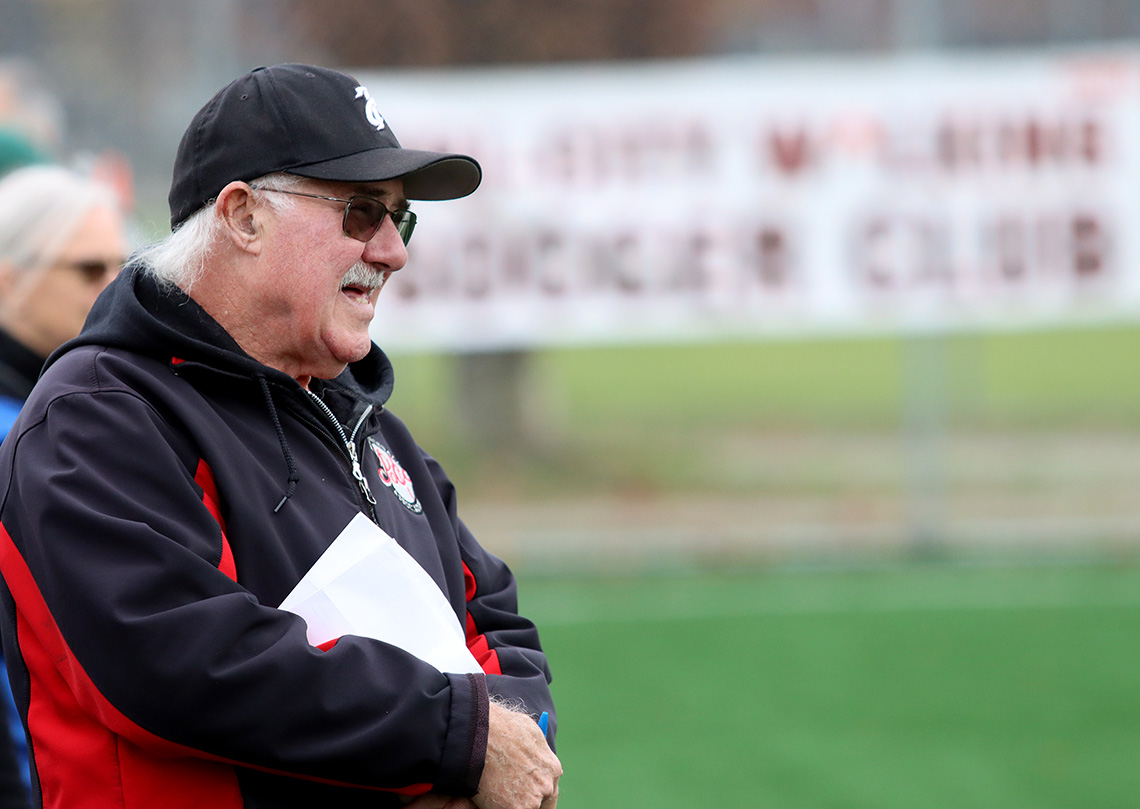
Swelander, who leads all the players through various warm-up exercises and skill drills for about an hour before the matches begin and then coaches from the sidelines once the opening whistle blows, said it can be a bit of a challenge keeping everyone on the straight and narrow given the wide range of soccer experience and ability on the pitch.

“It’s okay, as long as you have patience,” he said. “You’ve just got to remember you’re here for fun.”

Port Moody home relocation means more memories can be built

This story first appeared in the Tri-City News on April 2, 2024

Wendy Kinloch’s realtor questioned her sanity 34 years ago when she and her husband purchased the run-down rancher at 120 Windsor Dr. In Port Moody’s Coronation Park neighbourhood.

The single-storey home with a round fireplace in the middle of the living room had seen better days. But it offered more space to raise a family than their cramped townhouse in North Vancouver

“We knew it needed a lot of love,” said Kinloch.

Over the years, it got just that.

Almost every interior wall was rebuilt. The sundeck out back was replaced. The kitchen and bathrooms were renovated.

The house with green wood siding returned that love.

The Kinlochs raised two children there, and the myriad of their friends and visitors, who climbed the growing trees in the neighbourhood, ran through the sprinkler in the yard, drew with chalk on the street out front. They made connections with their neighbours, got involved in the community at Coronation Park School nearby.

“We looked out for each other,” Kinloch said. “It was just the greatest neighbourhood.”

So when Kinloch attended a special ceremony Tuesday, April 2, in front of her old home, which will be one of 10 from Coronation Park being sent by truck and barge to a second life for families in the shishalh Nation near Sechelt, she was sure to pack plenty of tissues.

MARIO BARTEL/TRI-CITY NEWS Wendy Kinloch gets emotional as she talks to councillors from the shishalh Nation near Sechelt that will be the new home for 10 homes from the old Coronation Park neighbourhood in Port Moody, including hers.

The homes are in the way of a new development project by Vancouver-based Wesgroup Properties that will transform the 14.8-acre neighbourhood into a dense, urban community with six residential high-rises up to 31 stories, three six-storey buildings and a four-storey office building.

While 49 homes will be demolished, a deal to save some of the homes was brokered by a company called Renewal Development in conjunction with Wesgroup and Maple Ridge-based Nickel Bros. that has more than 50 years experience moving buildings.

Kinloch, who relocated to a new home in Anmore last October, said knowing her home has received a second lease on life made it easier to return to her former neighbourhood where several houses have already been cleared and many trees removed.

She said it’s like a circle of life. “I didn’t want to come back to this neighbourhood to see it demolished.”

Renewal Development’s Glyn Lewis, said the transportation of the first two homes scheduled to take place overnight tonight is the closure of one chapter and the opening of the next.

“It’s a beautiful story.”

Lewis has been working on his plan to reclaim and repurpose homes in the way of redevelopment for about seven years. He said with the increasing cost of new construction and the environmental toll of demolition, it makes sense to recycle structurally sound buildings.

After a couple of successful projects moving a home from Coquitlam to Upper Gibsons and an old single-room schoolhouse from Vancouver’s Kitsilano neighbourhood to the Squamish Nation where it’s been converted into a children’s education centre, it was time to scale up and put the lessons learned through those two ventures into practice. He said he’s hopeful the project will help change the fate of the approximately 2,700 homes that are demolished in Metro Vancouver every year.

“Intention and thoughtfulness can shape the direction of change,” Lewis said.

Lenora Joe, the chief of the shishalh Nation, said her community is excited to be at the leading edge of that change.

MARIO BARTEL/TRI-CITY NEWS Members of the shishalh Nation near Sechelt give their thanks for 10 homes that are being moved to their community from Port Moody’s old Coronation Park neighbourhood.

Almost half the 1,600 people that comprise the shishalh aren’t able to live in the community because of its dearth of suitable and affordable housing; 200 families are on a waiting list to get new homes.

Reclaiming and moving homes is 30 to 70 per cent cheaper than constructing them new. And robust mid-century construction materials and techniques ensure the homes the shishalh are getting will last for generations to come, Joe said.

That continuity is important, she added.

“For us, it’s a new place,” Joe said. “But we’re also able to honour the history of the homes and respect that process.”

Darlene Hadden, whose home at 109 Windsor is another on the move to the shishalh Nation, said being able to see it welcomed elsewhere helps ease the emotional sting of leaving it behind.

Hadden said the house her family called home for almost 40 years was the epicentre for Christmas, birthday and wedding celebrations. Its walls contain memories of her two kids stealthily jumping out their windows so they could play in the expansive yard and forbidden skateboard adventures up and down the street.

“A house we loved, someone else will be able to love,” she said. “It means everything.”