New faces fuel optimism for Coquitlam Express anniversary season

A few more fans might have been inclined to pick up lineup sheets for the Coquitlam Express prior to the team’s BC Hockey League home opener on Saturday, Sept. 20.

Only a handful of players from the squad that finished fifth in the Coastal West division last season and then lost its first round playoff series in six games to the fourth-place Victoria Grizzlies remain.

But Express head coach Jeff Wagner said the addition of several veterans who feel they still have something to prove makes for an enthusiastic, motivated group.

“The guys that we’ve added, they kind of have a fire in their belly,” said Wagner, who’s entering his second full season as bench boss of the Express. “There’s a lot of guys in that room that really want to win.”

The lineup revamp also meant a busy training camp for captain Cooper Wilson, who’s been charged with integrating the newcomers into the Express’ systems on the ice and culture off it.

“We play a style that some of these guys have never played before,” Wagner said. “So we just talk about the details and habits they need to do in order to be successful.”

The results through the preseason were encouraging, as Coquitlam won three of its four games.

Wagner said second-year defenseman Liam Loughery appears ready to elevate his game after his promising rookie season with the Express was cut short by an injury.

“He’s mature beyond his years,” Wagner said of Loughery, who’s from Pitt Meadows. “He’ll be a guy that we’re leaning on heavily.”

Newcomers bolster defense

Bolstering the blue line corps will be BCHL newcomers Tyler Russell, who played 27 games with the Wenatchee Wild in the Western Hockey League last season, and 18-year-old James Odyniec, the younger brother of former Express forward Joseph Odyniec.

As well, Wagner said he expects Will Distad, who scored 23 points in 27 games in his final season at White Bear Lake High School in Minnesota, to have an immediate impact in his first season of junior hockey.

“Despite our veteran presence, we really like our young guys as well,” Wagner said. “It’s a really nice blend.”

Veterans lead offense

Up front, familiar names include Nate Crema, who’s back for his third season with the Express after scoring 28 points in 45 games last year, and Carson McGinley, who contributed 17 points in 25 games after starting the season with the Vernon Vipers and then the Sherwood Park Crusaders.

They’ll be supported by veteran acquisitions like Cole Bishop, who joins the Express after two seasons with the Alberni Valley Bulldogs, and Port Moody’s Luke Pfoh, who’s played for the Langley Rivermen, Cranbrook Buck and Merritt Centennials.

Christian Maro spent the previous two season with the Powell River Kings, where he scored 54 points in 80 games, while Justin Ivanusic spent time with the WHL’s Vancouver Giants and Calgary Hitmen before playing last season with Camrose and Drayton Valley in the Alberta Junior Hockey League.

One rookie forward who’s likely to attract a lot of attention is Cole Bieksa.

The 18-year-old son of beloved Vancouver Canucks’ defenseman and current Hockey Night in Canada broadcaster, Kevin Bieksa, signed with the Express last February but spent much of training camp with the WHL’s Giants. He helped lead his Fairmont Prep program in Southern California to the national final last season, scoring 73 points in 55 games.

Goalie position wide open

The departure of starting goaltender Andrew Ness for Wilfred Laurier University has left that position wide open.

Ness blossomed in the Express net after he was acquired last November from the Penticton Vees, where he’d been playing a secondary role.

Wagner said he’s hoping former Trail Smoke Eaters’ backup Ryan Parker will follow a similar developmental trajectory.

Parker won 12 of the 20 games he played last season, including one shutout, and posted a .910 save percentage.

“He was part of probably one of the best goalie tandems in the league,” said Wagner of Parker. “He’s calm and he plays the puck really well so that helps our transition game.”

Also seeking time in the crease are returnees Logan Kennedy and Mitch Pearce.

Kennedy played in three games for Coquitlam last season, losing twice and allowing 11 goals, while Pearce allowed seven goals in his two appearances.

Wagner said he’s confident both will continue to progress under Parker’s mentorship.

Wagner said despite the high turnover of players, he’s setting high expectations for this milestone season.

“We’ve created a non-negotiable standard for our players to abide by,” he said. “The guys who are willing to compete and do what it takes to win are the guys you’ll see here at the end of the year.”

Express tame Grizzlies

Three goals in the third period powered the Express past the Victoria Grizzlies, 4-3, in Saturday’s season opener for both teams.

Trailing 3-1 midway through the final frame, a power play goal by Christian Maro at 12:42 sparked the late comeback.

Nolan Dupont tied it 3:09 later, then Nolan Flynn scored the game-winner with 2:45 remaining in regulation time.

Maro added an assist to lead all Coquitlam scorers.

Justin Ivanusec scored the other goal for the Express, 4:21 into the first period.

Ryan Parker stopped 27 of the 30 shots he faced in the Express net, one of them a penalty shot by Victoria’s Max Silver.

Coquitlam fired 42 shots at Grizzlies’ goalie Carter Capton.

The Express host the Chilliwack Chiefs on Friday, Sept. 26. Game time is 7 p.m. at the Poirier Sport and Leisure Complex.

Express honours quarter-century team

As part of Coquitlam’s 25th anniversary season, the team unveiled its Quarter Century Team of distinguished alumni as voted by fans.

Forward:

  • Kyle Turris
  • Mark Soares
  • Tyler McNeely
  • Alex Kerfoot
  • Corey Mackin
  • David Jones
  • Tyler Kopf
  • Brett Hemingway
  • Massimo Rizzo
  • Brandon Yip
  • Andrew Ladd
  • Ryan Tattle

Defense:

  • Brad Hunt
  • Keith Seabrook
  • Matthew Campbell
  • Marc Biega
  • Noah De la Durantaye
  • Alan Mazur

Goal:

  • Clay Stevenson
  • Mark Dekanich

‘He was our warrior’: Port Moody hockey player loses cancer battle

A Port Moody hockey player has lost his battle with brain cancer.

Wade MacLeod died Sunday, Sept. 13. He was 38 years old.

In a post on social media, Karly MacLeod said her husband died “in a room filled with love, surrounded by family.”

Wade MacLeod first fell ill in 2013 after collapsing while playing his second pro season for the Springfield Falcons in the American Hockey League.

Golf ball sized tumour

Doctors subsequently removed a non-cancerous tumour the size of a golf ball from the left side of his brain.

After months of extensive physical and speech therapy, MacLeod was able to resume his playing career with the AHL’s Toronto Marlies and several ECHL teams.

MacLeod, who played his minor hockey in Port Moody as well as the Coquitlam U18 Chiefs and Port Coquitlam Buckaroos before scoring 146 points in 101 games for the Merritt Centennials in the BC Hockey League, then headed to Germany.

Coming off a 61-point season for the second division Rosenheim Star Bulls, MacLeod collapsed again while preparing to return for another season in Germany.

This time doctors diagnosed a cancerous glioblastoma.

MacLeod worked to get back on the ice. In the spring of 2016 he signed with the Allen Americans. He scored 13 points in 13 games, good enough to secure a contract for the following season with Lowen Frankfurt.

MacLeod played 49 games plus another seven in the playoffs for the Lions. He scored 49 points.

Another setback

But in September, 2018, MacLeod was felled again.

Doctors removed a Grade 3 glioblastoma tumour and prescribed several rounds of chemotherapy.

The setback cost MacLeod three seasons of hockey. But it didn’t diminish his desire to play again.

“I said from the very beginning that cancer wasn’t going to be the reason I retire from professional hockey,” MacLeod said.

Working out with trainer Kai Heinonen and skating at Coquitlam’s Planet Ice with veteran NHLer Brad Hunt helped MacLeod get back into what he called the best shape of his life. In September, 2021, he and his family — that now included two young daughters — packed up for Manchester, England to play for the Storm of Great Britain’s Elite Ice Hockey League.

MARIO BARTEL PHOTO
Port Moody’s Wade MacLeod worked his way back into shape after a third setback from brain cancer.

‘Never give up on your dreams’

“The biggest thing is never give up on your dreams and always stay positive,” MacLeod said.

But after scoring just one point in seven games in Manchester, MacLeod signed with Narvik Eagles in Norway.

In June, 2023, MacLeod announced his hockey career had come to an end.

“I gave all my life to hockey and now it is time to turn the page,” he wrote on Facebook.

Months later, MacLeod underwent a fifth brain surgery. Doctors upgraded his glioblastoma to Grade 4 — the most serious and aggressive form of the disease.

Working with a medical team at Port Moody Integrated Health, MacLeod pursued alternate treatments like hyperthermia, drug and dietary therapy, as well as radiation.

“He was our warrior,” Karly MacLeod said. “Despite any obstacle he had to overcome, he faced it head-on with so much determination and never stopped smiling along the way.”

Indelible mark

MacLeod also left an indelible mark along his hockey journey.

The Manchester Storm posted a message about MacLeod’s passing on social media, “He was a true warrior, and his spirit will forever be a part of the Storm family.”

“We are heartbroken,” said Loewen Frankfurt.

In a statement on its website, the ECHL said, “its member teams mourn the loss and express their condolences to the family and friends of former ECHL player Wade MacLeod.”

The Northeastern University Huskies, where MacLeod scored 137 points in four seasons, said he “left a lasting mark on the program both on and off the ice.”

For this Port Moody teen, basketball is the quiet game

This story first appeared in the Tri-City News on June 13, 2021

Playing a game in front of a gym full of raucous, cheering fans is a highlight for most high school basketball players.

For Olivia Pero, it’s kryptonite.

The Heritage Woods secondary school senior is deaf, and though she has cochlear implants that allow her to have normal, verbal conversations, a loud gymnasium with sounds and vibrations reverberating off the walls, hardwood floor and ceiling can be overwhelming.

That hasn’t held Pero back, though. In fact, she said, it’s made her more resilient, competitive and prepared to advocate for her disability.

Pero’s deafness was diagnosed when she was just six months old. She received her first cochlear implant — a small electronic device that delivers sound signals directly into a person’s auditory nerve — shortly thereafter.

As the only deaf person in her family, Pero said it was important everyone have the ability to communicate normally, although she also knows American Sign Language (ASL).

But, she explained, the implants don’t deliver a perfect experience. Ambient noise fuzzes up the system so she has to be in close proximity and she also supplements the electronic signals that create a sense of sound by reading lips.

Achieving both of those in the frantic action up and down the basketball court, with teammates all around calling for the ball and the coach shouting plays and positioning from the bench can be a challenge, she said.

“I really can’t hear on the basketball court.”

So Pero’s adopted various coping mechanisms and worked to educate her teammates and coaches on how they can adjust to her unique needs. Some of those include getting them to enunciate very clearly and look directly her way when speaking to her. Her coach at Heritage Woods, Ross Tomlinson, uses cue cards and colour-codes plays on his iPad so she can process them visually rather than aurally.

“Yelling out plays was not an option,” said Tomlinson, who’s coached Pero since she was in Grade Five — a year after she picked up the sport at a Steve Nash camp.

“Your visual response and body language when communicating with a player is just as important as what you are saying verbally.”

Pero said her hearing disability has been both a blessing and a curse, on and off the court. The focus she’s had to learn to be able to follow conversations or absorb lessons in the classroom can serve her well in the chaos of moving bodies and waving arms during a basketball game.

But all that concentration can be wearying. By the end of a busy day at school, she’s ready to remove her implants and just settle in silence to read a book.

Pero said not being able to finish out her high school basketball career because of the COVID-19 pandemic that put the brakes on all school sports since March, 2020, has been difficult. The team continued to practice through the winter, but, she admitted, motivation sometimes flagged.

Instead, Pero said she channelled her competitive energy into her studies and she started a support group for other deaf and hard of hearing students called CoCo.

Invisible disability

She said because deafness is an invisible disability, it can be hard to get the hearing world to understand and empathize with the challenges deaf people face daily.

Connecting with other students in the school district and providing a sounding board for them to share their experiences has been an important outlet.

Pero said one challenge that’s been unique to the past year is the face-masks everyone is required to wear in school and out and about in the community because of the pandemic. They may help keep everyone safe by limiting airborne spread of the virus, but they also hide lips and facial expressions that are vital components of communication for the deaf.

Another was online learning where teachers giving lessons to a mix of live students and those watching from home still wore masks and sounds echoed around the classrooms so Pero sometimes couldn’t tell who was talking.

Starting anew

In the fall, Pero heads to Trinity Western University in Langley to study biology, play basketball and begin anew the process of educating her classmates, teachers, teammates and coaches about how best they can communicate with her.

She said the school’s reputation for small classes and inclusivity should smooth the process.

“My motto is ‘nothing is going to stop me, I’ll just find a way to make it work,’” Pero said.

“It’s my way of living in the world.”

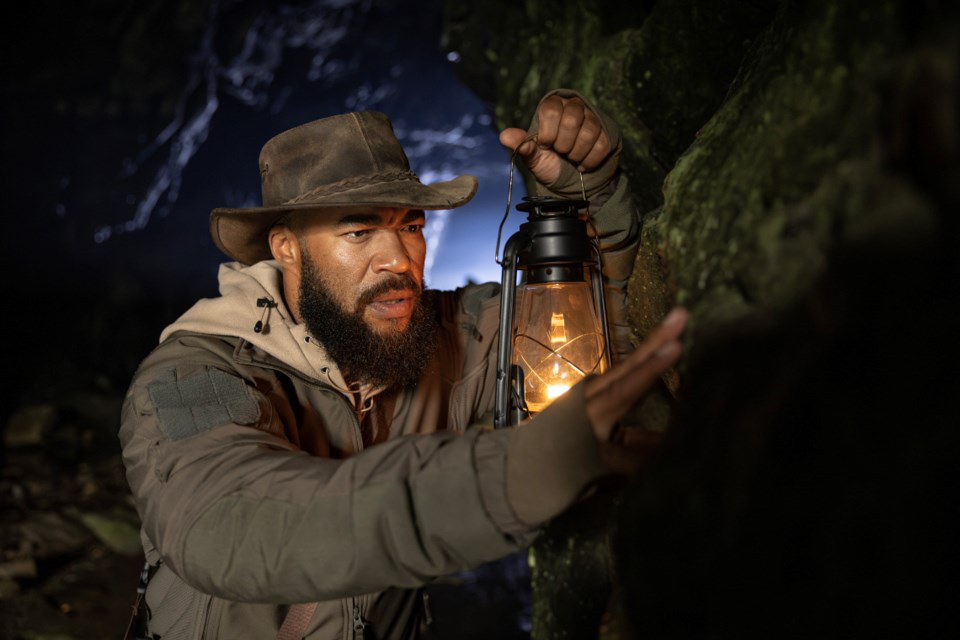
Is there a vast treasure hidden near this Coquitlam mountain?

This story first appeared in the Tri-City News on Sept. 10, 2024

The rugged rainforest environs of Coquitlam’s Burke Mountain where it tumbles down to the west shore of Pitt Lake could hold the key to unlocking a mystery that involves a lost treasure of gold, prospectors mysteriously dying after trying to sleuth it out and an elderly First Nations’ man hanged for murder.

A contemporary attempt to solve the mystery — and maybe get impossibly rich along the way — is about to launch its second season as the reality series, Deadman’s Curse, on the History channel.

Former Port Moody MMA fighter Kru Williams along with mountaineer and wilderness expert Adam Palmer first embarked on their quest to unearth the legendary cache of gold squirrelled away somewhere in the mountains around Pitt Lake in 2022.

Mountaineer Adam Palmer (left) and former Port Moody MMA fighter Kru Williams continue their quest for a lost treasure of gold somewhere near Pitt Lake in the second season of the History channel TV series, “Deadman’s Curse.” GREAT PACIFIC MEDIA

Palmer, a history buff who teaches outdoor education at a First Nations high school, said he had long been intrigued by the tales of treasure somewhere near Pitt Lake, and the Katzie prospector known as Slumach who was allegedly the only person with knowledge of its whereabouts until he was accused of murdering a rival and hanged in New Westminster in 1891.

“It started with curiosity,” he said in a recent phone interview. “Then you find yourself on top of a mountain and you want to know what happened that brought you there.”

The first reports of a lost treasure came to light in 1858 when a series of maps promoting the gold fields of British Columbia were published in San Francisco.

The notations of “gold” and “Indian diggings,” as well as “much gold bearing quartz rock” in the maps’ margins lured prospectors to head north, joining the already swelling ranks of gold diggers funnelling through New Westminster to the backcountry beyond the Fraser River.

Several died, stricken by mysterious illnesses from which they never recovered.

The mystery deepened early in the 20th century when a story in a Wisconsin newspaper linked the lost gold to Slumach, who allegedly uttered a curse on anyone seeking the treasure before he went to the gallows.

Williams said it was a more pragmatic consideration that lured him into the treasure hunt.

“To think you can put your hand into the dirt and pull out generational wealth, that’s what brought me in,” he said.

Neither foresaw the gruelling nature of heir quest, though.

Along with Indigenous explorer Taylor Starr — a distant relative of Slumach — and her father, Don Froese, Williams and Palmer embarked on a physical journey through dense rainforest, up slippery creek beds and over jagged boulder fields looking for clues that might lead them to the treasure while unravelling its mysteries.

More importantly, said Williams, their quest gave them an insight into the lives and challenges of British Columbia’s earliest residents.

“When you’re out here with a sacred Elder walking his land, it changed my entire viewpoint of the history of the First Nations,” he said.

Palmer said the series takes viewers along as they peel away layers of the lost treasure’s secrets and even leads them down some unexpected paths, not all of them necessarily fruitful to their quest.

“It’s a lot of information and disinformation and we have to sort through that to get to the heart of the legend,” he said.

And unlike reconstructing the history through artefacts, documents, clippings and maps preserved in libraries and archives, Palmer and Williams’ quest came with life-threatening dangers like torrential rainstorms that lasted for days on end, fragile snow bridges and fast-moving rivers. Not to mention encounters with bears and mountain lions as well as a series of eerie ancient pictographs etched into the rocks above Pitt Lake.

“You don’t know what it’s like in the bush until you do it yourself,” Williams said.

Coquitlam Express scrambling for a new training facility

The general manager of the Coquitlam Express is hoping some city councillors will reconsider their decision to deny the hockey club a temporary use permit to use a vacant warehouse space at 1750 Hartley Ave. as a gym facility.

Tali Campbell said the five councillors who voted against the team’s application to use the industrial space for up to three years may not have had a full understanding of its request.

Some of the councillors during Monday’s debate said allowing a gym in a building zoned for industrial use would set a bad precedent.

Coun. Robert Mazzarolo said the city needs to protect its dwindling industrial areas and the jobs they bring to the community.

“The activity can be accommodated in other places with appropriate zoning.”

Mayor Richard Stewart added, “If we approve a project like this, we would end up with the floodgates open.”

Couns. Asmundson and Trish Mandewo expressed concerns about limited parking at the location that had been formerly occupied by an electronics manufacturer.

Campbell said the Express organization, which now numbers 130 young players in various academy programs as well as the BC Hockey League junior team, has outgrown its current training facility in a warren of rooms in the basement of a city-owned building across the street from the Poirier Sport and Leisure Complex. He said organizations located on the second floor are also complaining about the noise.

“Everything is crammed,” Campbell said. “We make do, but we get complaints every day from our upstairs neighbours.”

Campbell said the Express spent more than eight months looking for a suitable location to move its gym facilities, and the warehouse space behind the Home Depot on United Boulevard fit the bill.

“The size was good, the price was good,” Campbell said, adding the location just down the hill from Poirier would just be a “stop-gap” until the Express can secure a permanent solution. He said the temporary gym would be used exclusively by the players, who would be bused in groups to and from their scheduled training sessions.

Coquitlam’s senior manager of economic development, Eric Kalnins, said commercial spaces suitable for a gym facility are “hard to find” in the city.

Coun., Craig Hodge, one of four councillors who supported the Express’ application, said the nature of industrial use is changing and the club does provide employment.

“It’s not industrial, but it does provide jobs and create growth,” Hodge said.

Coun. Dennis Marsden agreed.

“This is supporting a local business,” he said of the gym plan.

Campbell said changes in NCAA eligibility rules that now allow players from the Canadian Hockey League to attain scholarships to Div. 1 programs have increased competition to attract them to Junior A leagues like the BCHL. Giving players a good experience on and off the ice to continue their development is a prime consideration.

“You have to provide a state-of-the-art facility in junior hockey these days,” Campbell said. “It’s the fabric of our organization.”

In the meantime, the Express has dismantled its current training facility and players will be able to work out at a local commercial gym, OT Performance, for the next three weeks. Beyond that, though, remains uncertain, Campbell said.

“If council doesn’t reconsider, we’ll have to go back to the drawing board.”

Port Moody will study feasibility of new day care at city hall

Port Moody will study the cost and feasibility of constructing a new childcare facility in a modular building behind city hall.

The facility will offer 37 spaces for the children of city staff, although unclaimed spaces would be available to the general public as well.

Project coordinator Linda Santos told council’s strategic priorities committee on Tuesday, Sept. 9, using a modular building for the daycare is the cheapest, quickest to construct and least intrusive of several options considered.

Those include construction of a brand new building next to the amphitheatre behind city hall, placing a modular structure on Knowles Street which would be permanently closed and building a new childcare space on the roof of the recreation centre’s physio office and skate shop.

Staff also looked at adding a second floor to the library or repurposing the recreation centre’s wellness room.

Santos said all of those had considerable downsides, including expense, loss of public access to some existing amenities like the amphitheatre or a playground in front of the ice arena, and the inconvenience of closing Knowles Street.

Santos added even the preferred modular structure would mean the loss of some staff parking spaces.

CITY OF BURNABY
An example of a daycare in a modular building in Burnaby.

But city manager Anna Mathewson said alternatives could be arranged, like opening up surplus parking spaces at the Inlet Centre fire hall.

Mayor Meghan Lahti said a childcare facility would “be a positive addition to the city hall precinct,” while Coun. Diana Dilworth said a modular structure would address an immediate need.

“A temporary modular facility gets us that needed daycare in the very short term for the very lowest expense.”

Coun. Kyla Knowles said though a temporary structure “makes the most sense,” she cautioned the city also has to keep its eye on the long term picture so childcare spaces are considered as part of upgrades to existing civic facilities and the construction of new ones.

Port Moody butcher to lead Olympian effort

A Port Moody butcher is leading Canada’s team looking to win gold at the “Olympics of Meat.”

Taryn Barker, of The Little Butcher in NewPort Village, will captain six butchers and two alternates competing at the 2028 World Butchers’ Challenge.

Barker was co-captain of Butchery Team Canada that finished fifth at this year’s challenge held in Paris in March. But the placing was just 1.5 points shy of France’s gold-medal effort.

Barker said preparation for the 2028 competition is already underway, with the five members committed to the team so far heading to a chefs’ camp in Pemberton next week to process an entire cow.

“I want to start building the team relationships, getting to know each other and how we work,” Barker said.

The World Butchers’ Challenge is held every three years. It pits teams of top meat cutters from around the world to transform sides of beef and pork, as well as whole lamb and several chickens, into about 70 different value-added products. Their efforts are judged for presentation and flavour.

Barker, who participated in her first Challenge in 2022, said each competition is a learning experience.

“We’ve learned it’s a very serious competition. The teams practise with intent and they compete with intent.”

To raise their own game, Barker plans to bring her team of butchers, who come from across Canada, together several times over the next few years to determine the roles each will play on competition day, plan their cuts and presentation, and hone their communication skills.

“We have to walk as a team and talk as a team,” Barker said, adding the butchers will also work with coaches who can provide feedback and help decipher what the judges might want to see.

And now as the team’s captain, ensuring all those elements come together falls on Barker.

It’s a weighty responsibility, she said.

“There’s more pressure to make sure everyone is participating in practices and preparing at home.”

But with two stabs at the competition already under her apron, Barker said she’s up for the challenge.

“I think the more you do it, the more confident you get,” Barker said. “But you know the other teams feel the same way.”

Fundraising garden party

Barker has organized a special Butcher’s Garden Party fundraiser to support Butchery Team Canada’s preparation for 2028.

The party, to be held Sept. 14, from 7 to 10 p.m., at OpenRoad Toyota (3166 St. Johns St., Port Moody), features canapés, desserts and beverages prepared by top chefs and bakers from across British Columbia and as far away as Ontario. There will also be goody bags, a silent auction and a cornhole tournament.

Tickets are $110 and can be purchased here.


Port Moody developers can score points for bike racks, EV charging

Port Moody wants builders of future developments to pay more heed to accommodating alternate transportation options.

On Sept. 9, council’s city initiatives and planning committee will consider a new mandatory points system that rewards infrastructure and incentives designed to change travel behaviour away from single-occupied vehicles.

A staff report said measures proposed by developers — like providing bicycle parking or a car share service, as part of their rezoning application — are currently negotiated on a case-by-case basis.

But new provincial housing legislation, which gives municipalities more authority to require plans for managing transportation demand, has opened the door for the implementation of more rigorous and standardized requirements.

“These changes to the legislative context created an opportunity to improve the city’s approach to TDM [transportation demand management],” said the report.

If council endorses the new plan put together by Urban Systems, a community consulting firm, developers will be able to choose their approach to managing traffic demand from a list of 38 options, including measures to encourage active transportation, transit use and parking management.

They will then be given a score based on the impact the measures have on shifting transportation away from single-occupant vehicles, reducing the number of vehicle kilometres travelled and greenhouse gas emissions.

And measures that can work together to change behaviours can achieve a higher score.

Some of the measures to be scored include:

  • enhanced bike parking that is sheltered from the elements
  • additional parking spaces with EV charging facilities
  • on-site daycare spaces

The report said the points system can be refined further based on feedback from developers.

“This approach will help ensure the requirements meaningfully promote sustainable transportation without placing an undue burden on applicants.”

‘It’s like winning the lottery;’ What a Mann Cup championship would mean for New Westminster, WLA

Paul Dal Monte was on the green wooden floor at New Westminster’s Queen’s Park Arena as a player the last time the Salmonbellies won the Mann Cup.

That was 34 years ago.

Now, as the commissioner of the Western Lacrosse Association, Dal Monte knows the importance of bringing the Canadian senior lacrosse national championship back to the old structure.

“From a league perspective, to have it played in Queen’s Park, where you’ve got 3,500 fans every night in a building with such tradition and history — you just have to look around at all the banners and retired jerseys to understand that this is something special,” said Dal Monte, who won three Mann Cups as a player but has yet to witness a WLA team win it during his tenure at the league’s helm that began in 2017.

Dal Monte said the success of the Salmonbellies is often the measuring stick against which the other WLA teams assess their own achievements.

After all, New West has won the Mann Cup 24 times.

And now, with the Bellies’ two appearances in the past three years, others are starting to pull up their bootstraps.

Dal Monte pointed to the Coquitlam Adanacs, which pushed the Salmonbellies to five games in the WLA final after years as the league’s doormat.

He said the Maple Ridge Burrards is another team on the rise again.

“It’s good for the league. There’s great awareness and passion,” Dal Monte said.

MARIO BARTEL PHOTO An honour guard from New Westminster Police Department stands watch with the Mann Cup.

It’s also good for the City of New Westminster, said Mayor Patrick Johnstone.

“Lacrosse is in its blood,” he said, equating the Salmonbellies and the team’s iconic logo of a salmon leaping through a giant W to hockey’s Montreal Canadiens and its distinctive CH symbol.

Johnstone said Queen’s Park Arena holds a special place in residents’ hearts, especially when it’s the centre of the lacrosse world.

“It’s the dusty old barn that rocks.”

Dal Monte said players feel that energy, especially if they’re part of a victorious home team.

“There’s that expectation and history that goes along with it because you are following in the footsteps of others,” he said. “It’s like winning the lottery.”

Mann Cup facts

  • The Mann Cup has been contested since 1910, after it was donated by Sir Donald Mann, an Ontario railroad baron and entrepreneur
  • There was no winner in 1916 and 1917 because of WWI, and the COVID-19 pandemic scuttled the 2020 and 2021 championships
  • For the first 22 years, the national senior lacrosse championship was played under traditional field rules
  • The first indoor championship was awarded in 1932 at Toronto’s Maple Leaf Gardens
  • The Mann Cup trophy to be awarded to the winner of the series between the New Westminster Salmonbellies and Six Nations Chiefs is actually its third incarnation: the original was retired in 1985; the replica that replaced it was destroyed when it was accidently dropped into a bonfire as the Peterborough Lakers were celebrating their championship in 2004
  • The last WLA team to win the Mann Cup was the Victoria Shamrocks, in 2015
  • This year’s best-of-seven series begins Friday, Sept. 5, with game two scheduled for Saturday, Sept. 6. Games three and four are scheduled for Monday, Sept. 8 and Tuesday, Sept. 9. If subsequent games are needed, game five will be played Wednesday, Sept. 10, game six on Friday, Sept. 12 and game seven set for Saturday, Sept. 13. All games begin at 7:30 p.m. except the seventh game, which would begin at 7 p.m.

Is a fried chicken restaurant at this Port Moody gas station a finger-lickin’ good idea?

Port Moody’s land use committee will recommend whether a proposal to add a fast food fried chicken restaurant to a gas station is a finger-lickin’ good idea.

The owner of the Petro-Canada station at 3102 St. Johns Street wants to add a KFC restaurant on the 32,098 sq. ft. lot between Buller Street and Electronic Avenue.

The application requires the property be rezoned for comprehensive development because its current C4 designation prohibits retail food services.

In a report, development planner Sarah Bercu said the proponent also wants to expand the gas station’s existing convenience store by about 300 sq. ft. and relocate it to the southeast corner of the lot, as well as increase the number of parking spots from 18 to 23 — eight of those are at the gas pumps.

The changes would require the removal of eight trees and two hedges and the existing westbound bus stop in front of the station would have to be relocated slightly east.

Bercu said while the property is within the Moody Centre transit-oriented-development area that recommends greater height and density for residential development, “the proposal to renew the commercial building is seen as an interim development until the property owner is prepared to fully develop the site to the highest and best use.”

Bercu said the proposal will also require a review by Port Moody’s architect and landscape architect consultants. She added modernizing the gas station and expanding its commercial component “is a positive advancement for the site.”

The land use committee next meets on Sept. 8. It is comprised of representatives from Port Moody’s various neighbourhoods who are able to review development applications to comment and offer advice on whether they’re an appropriate use of land prior to council’s consideration.