Two years ago, the provincial girls’ high school basketball championship was the last major varsity sporting event to play to its conclusion before the COVID-19 pandemic hit and shut competition down for more than an entire school year.
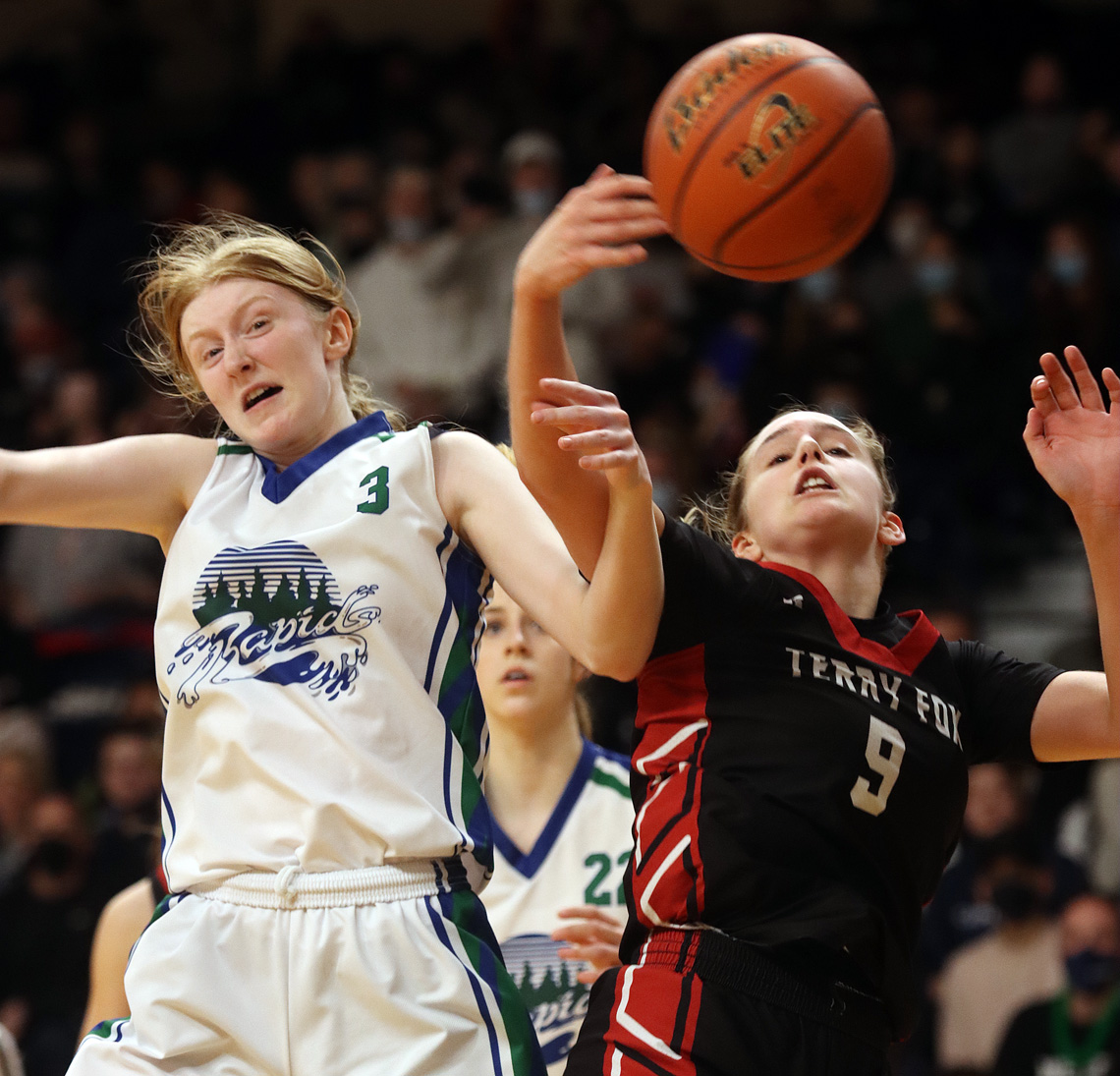
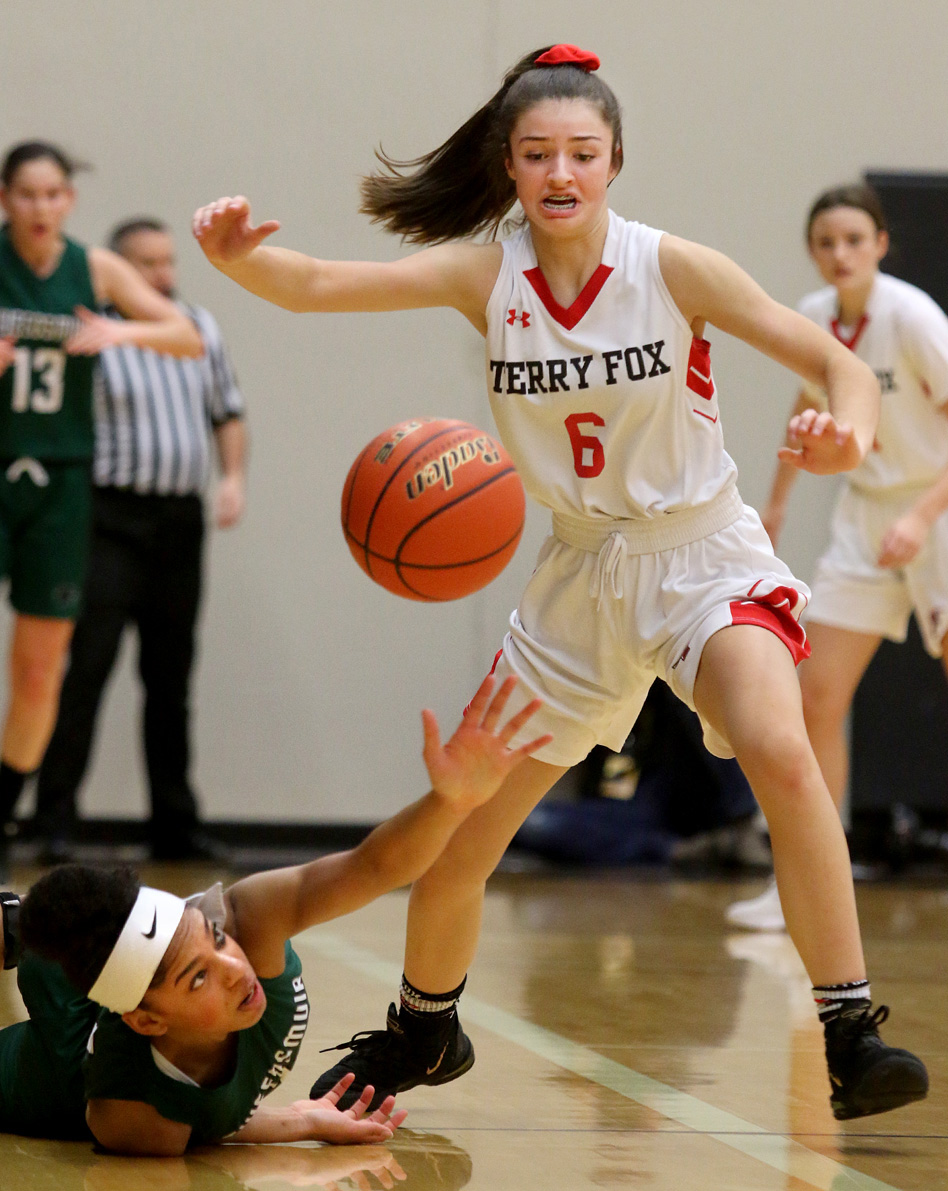
The Terry Fox Ravens, from Port Coquitlam reached the final. But the team was young and inexperienced, comprised mostly of Grade 10s riding the emotions of playing for a teammate who’d been felled by cancer. They were blown out by an older, bigger, tougher opponent.
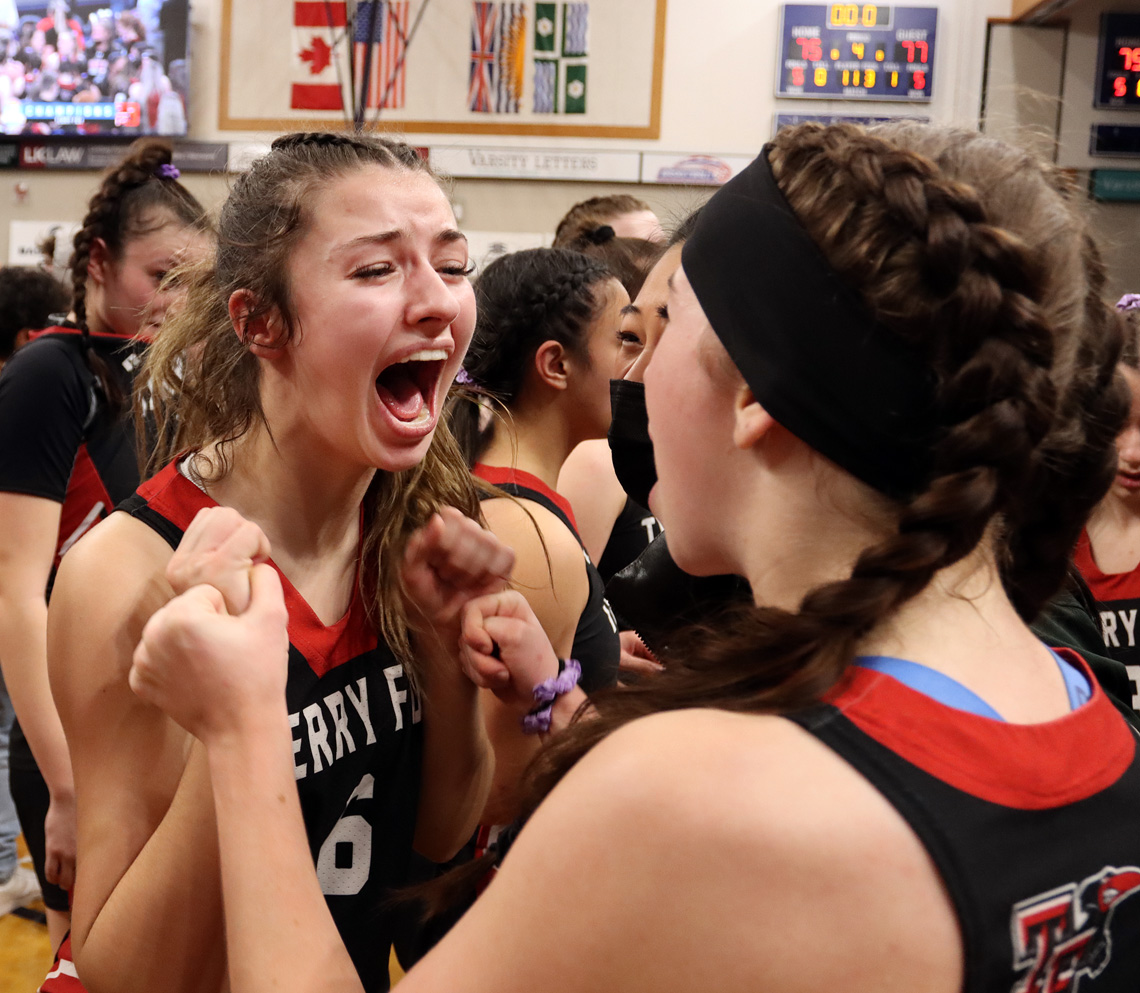
It was a tough game to shoot. My heart ached for the players as I focused my lens on the bench for some sort of photo that would show the emotion of their struggle.
Fast forward two years — and one lost season; those sophomores are now seniors and they have the strength and athleticism to carry the memory of their teammate onto the basketball court with conviction. They play their way to the number three ranking in the province, but their ascent is largely lost on me.
Ongoing COVID restrictions cancelled tournament play that is the bread and butter of getting out to shoot some high school hoops during my regular work schedule this winter, as well as a ban on spectators at indoor events at schools made it difficult to follow the season.
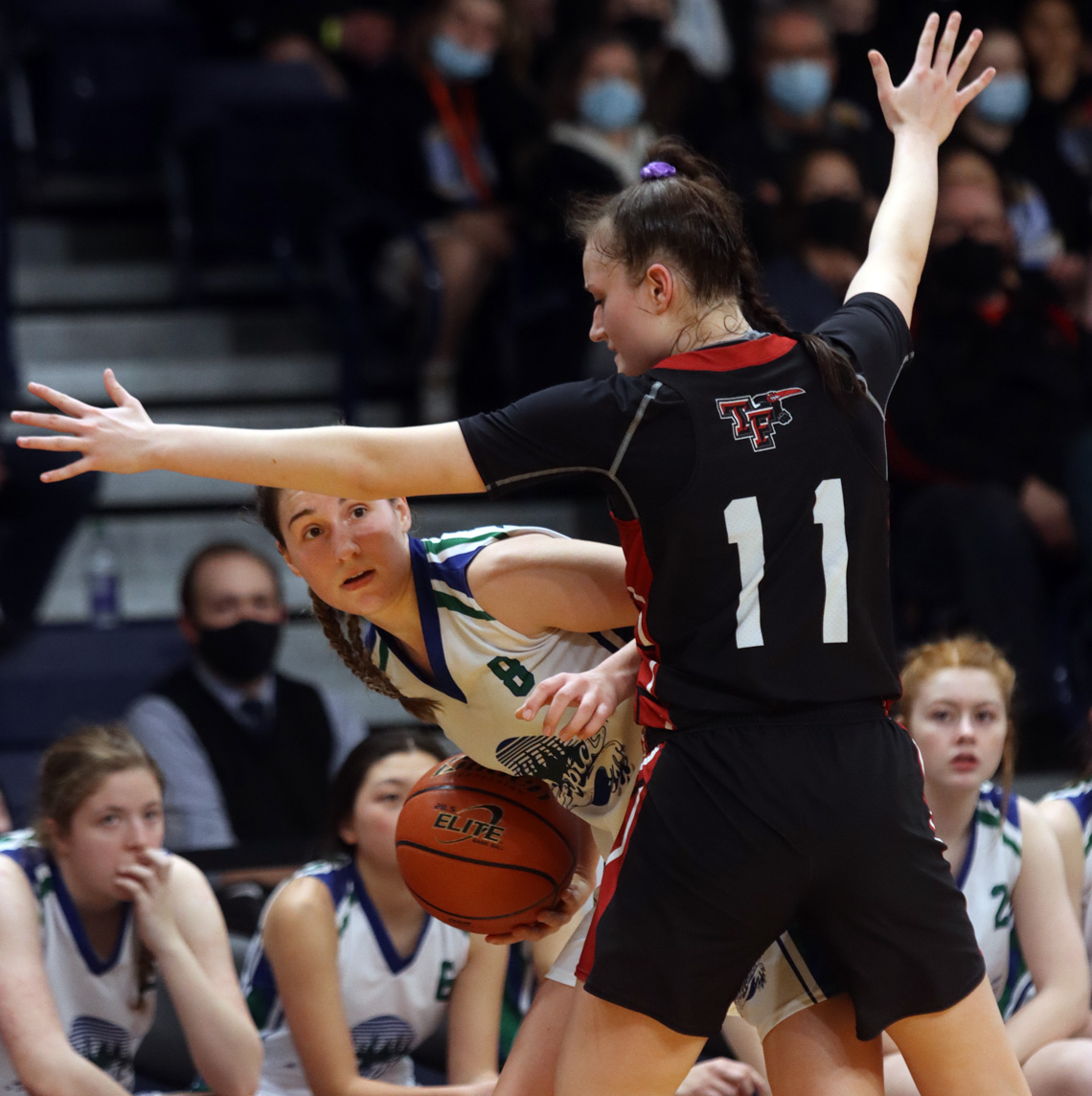
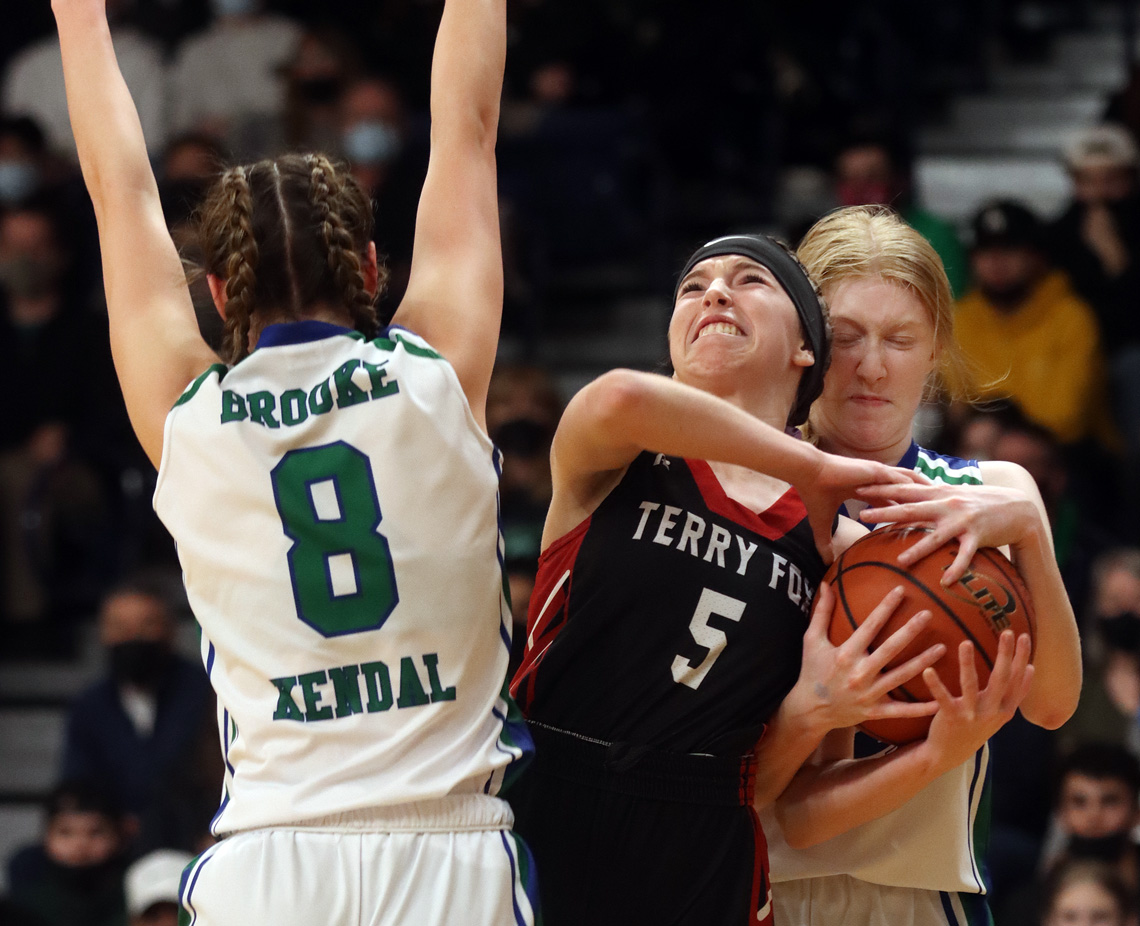
So my first encounter with the team since their miserable championship loss was the semifinal of this year’s provincial tournament. The players, so overmatched and humbled two years ago, now played with resolve and tenacity that pulsed off the court. It’s like they were on a mission.
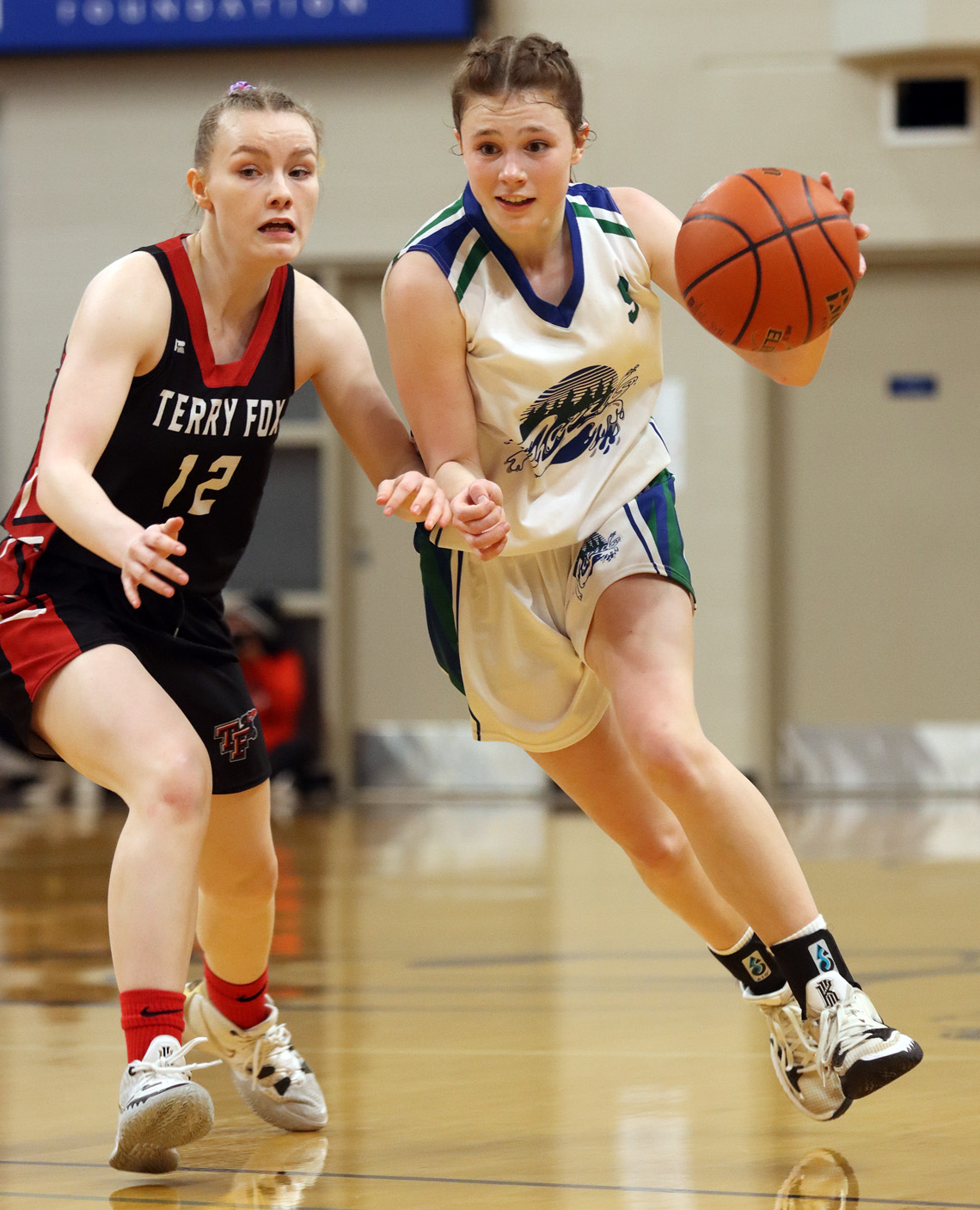
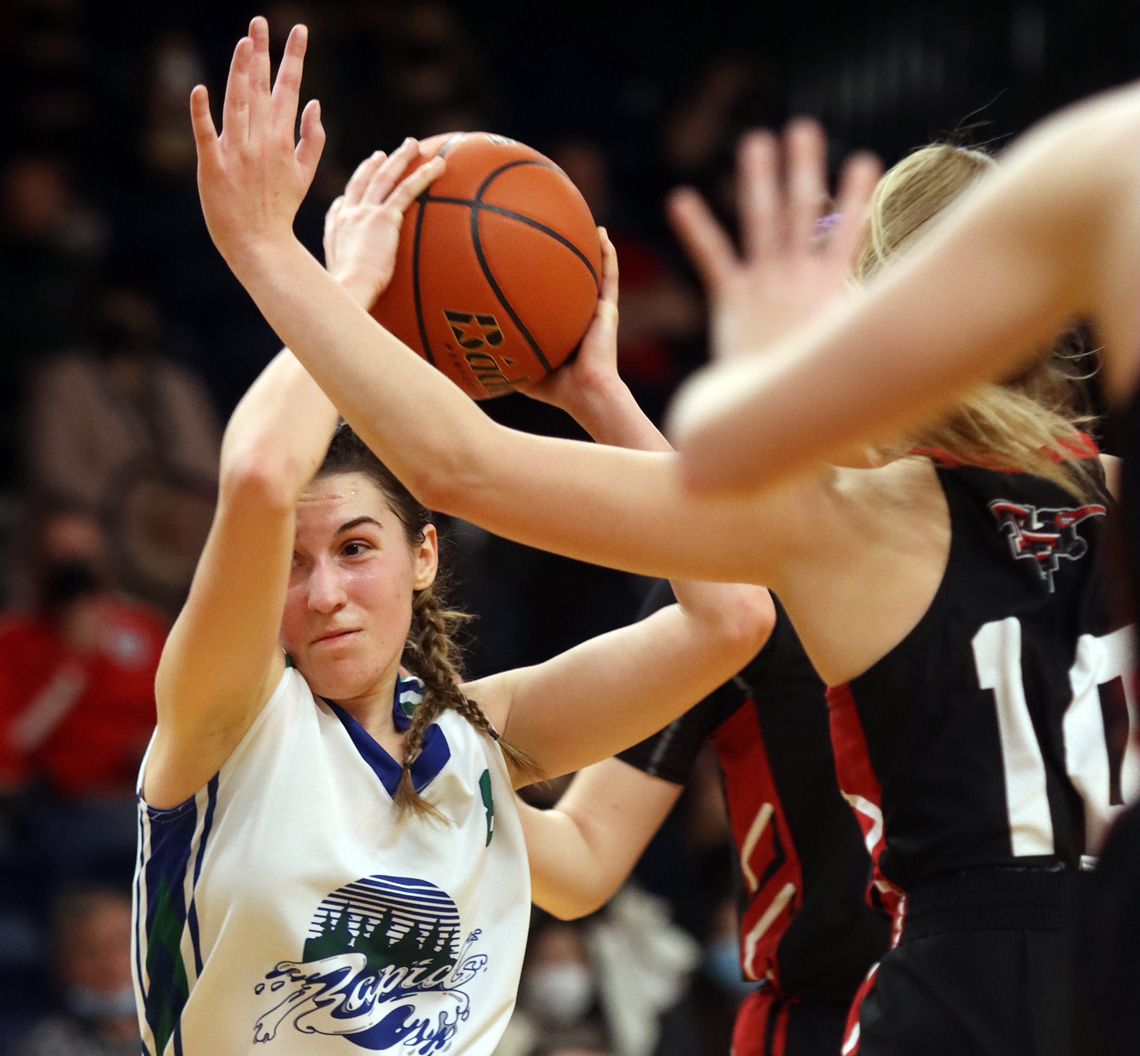
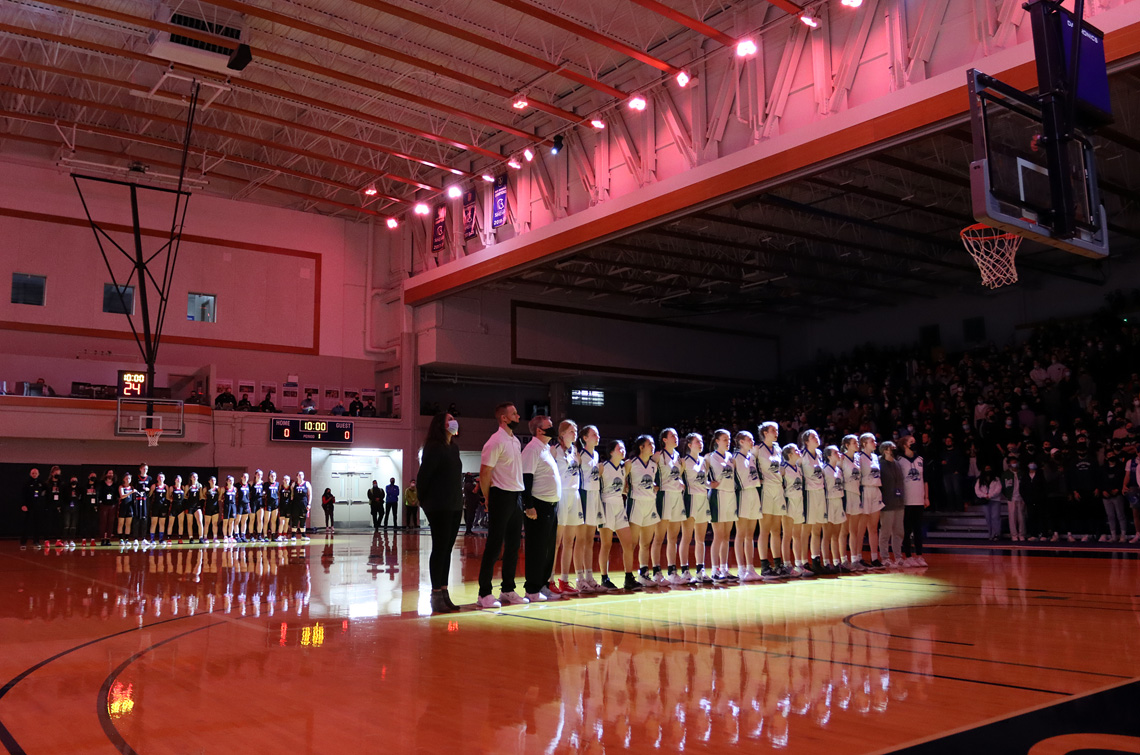
That the only thing standing between the fulfillment of their task would be the top-ranked team in the province all season that happens to be from the other side of town, the Riverside Rapids, added a whole other layer of drama and intrigue to what was to unfold at centre court at the Langley Events Centre.
The showdown didn’t disappoint.
The championship game may have been one of the most intense high school basketball games I’ve ever covered.
While the lead on the scoreboard changed only twice, the ebbs and flows of momentum were epic. The fire in the belly of both teams to prevail burned hot: Terry Fox playing for a beloved teammate seared into their hearts; Riverside playing for a longtime coach who’d been to the final before but never won.
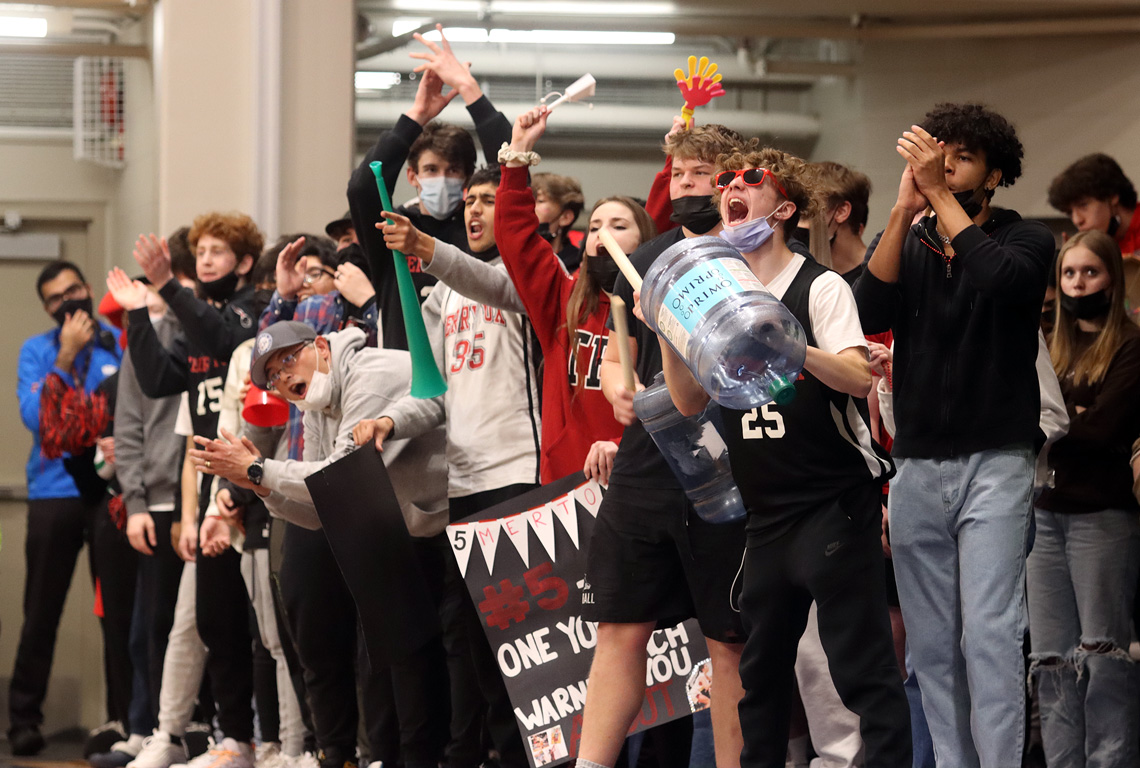
The atmosphere in the gym was electric; it’s rare for two teams from the same city to meet for the provincial championship.
In the end, Fox held on, upsetting the Rapids by two points. It’s the school’s first senior girls provincial basketball championship.
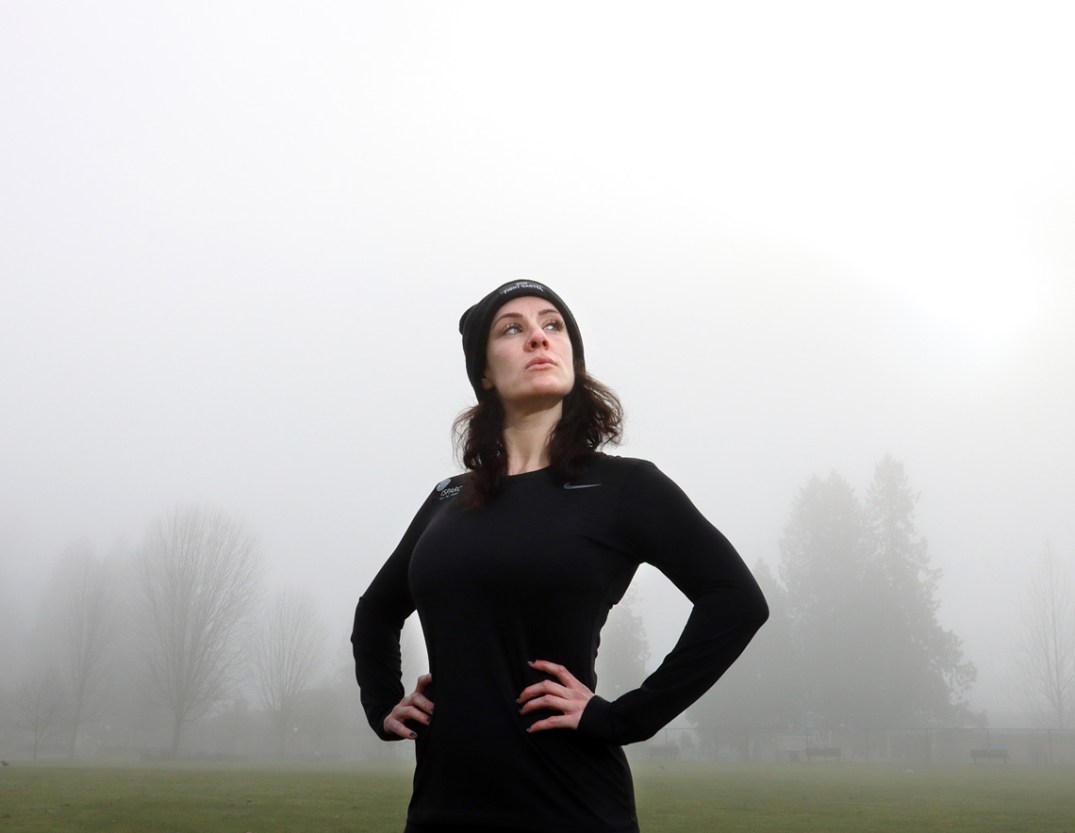
Alana Cook weighs 144 pounds. But when the Port Moody resident steps into the combat octagon, she carries the weight of a nation.
Cook recently won her debut as a professional mixed martial arts fighter. She’s also Métis — on her mother’s side — and works at organizing sports opportunities for Indigenous youth as the Fraser Regional coordinator at I-SPARC, an initiative of three founding First Nations organizations to promote sport and physical activity in their communities.
So when Cook defeated Max Turcotte-Novosedlik by technical knockout 4:23 into the first round of their bout in Calgary Jan. 15, the win was more than just a notch in her fight record.
It was also affirmation of her heritage, her belief in her role as a “female warrior,” and the example she can set for young Indigenous people.
“It’s important to say this is where I come from,” Cook said. “I don’t want to be taken as a ‘token Indian.’”
Growing up in Maple Ridge, Cook played team sports like soccer and volleyball, but when she aged out of the youth leagues, she decided to explore a long-held fascination with martial arts.
Cook said she loved reading comic books and training and sparring in a gym tapped into her inner female superhero.
“I mostly trained for fun,” she said.
But when a job opportunity took Cook to Thailand for a year where Muay Thai kickboxing events are a weekly occurrence in neighbourhoods across the country, she decided for the first time to test herself against an opponent. The ring was set up in a parking lot in Ko Pha Ngan – an island in the southeastern part of the country that’s known for its monthly celebrations of the full moon.
“It was super chaotic,” said Cook, recalling the loud music and boisterous crowd of locals, most of them smoking cigarettes.
The butterflies and adrenaline rush were like nothing she’d ever experienced, Cook said.
She was hooked.
Cook won her first regulation amateur MMA match in 2018 at an All Martial Arts championship card in Vancouver but she then had to take some time off to recover from an injury. The COVID-19 pandemic extended her hiatus.
Cook’s fight in Calgary was part of an all-female card at the Grey Eagle Events Centre promoted by the Pallas Athena Women’s Fighting Championship. She said it was empowering to compete and commune with other women.
“Everyone had hands like me, with short nails and bruised knuckles. I felt among my people.”
Cook, who’s based out of Ascension Martial Arts in Port Coquitlam and Universal MMA in North Vancouver, said much of her preparation for the fight was done out in nature — running on the streets and trails near her Heritage Mountain home, and icy swims in Buntzen Lake.
It’s a regimen she’s intimately familiar with, having earned her Master’s degree in Indigenous land-based education at the University of Saskatchewan after presenting her thesis on using natural environs to promote health and fitness amongst First Nations.
Cook said her success is already having in impact among the young people she works with.
After her win in Calgary, her email Inbox received a steady stream of congratulatory messages from participants in the I-SPARC programs she organizes. She hopes the glow stays with them, teaches them to fight for their dreams as well.
“It means a lot to me to give them someone to look up to,” Cook said.
When Hollywood comedian Kevin Hart or Phoenix Suns basketball player Devin Booker want to secure a special pair of Air Jordan sneakers, it’s a Port Moody man who hooks them up.
Tye Engmann has been buying and selling collectible kicks for the past five or six years. In fact, he’s become so good at it, he bailed out of his second year at Simon Fraser University’s Beedie School of Business for the school of hard walks.
Engmann, 20, specializes in vintage Nike Air Jordans. The iconic basketball shoes were first produced for NBA superstar Michael Jordan in 1984 then released to the public in April, 1985. They were an immediate sensation.
Fans who wanted to feel a bit of their hero’s magic wrapped around their toes lined up for hours to get the latest shipments. Muggings, assaults and even a murder to get the shoes became the fodder of media crime blotters.
Some schools banned them outright to curtail the potential for violence.
New Air Jordans have been released yearly since, along with several special editions commemorating milestones in Jordan’s career, historic occasions like the Running of the Bulls in Spain, the player’s relationship with filmmaker Spike Lee who once served as a pitchman for the brand as well as collaborations with various designers.
But Engmann said it’s the original old-school Jordans that elevate his heart rate and boost his bank account.
He said they’re the most collectible not only because so many have disappeared into waste bins over the years, but they were also the best quality.
Engmann said a pair of Jordan 1 Chicago sneakers from 1985 can be worth up to $25,000 if they’re in brand new condition. Other variations like a limited run of that shoe with a black sole when the manufacturer ran out of red rubber, or an iteration with a special strap that was added when Michael Jordan was recovering from an ankle injury are even more rare.
Engmann discovered his passion for sneakers when he was young. He said he coveted a pair of white and black Adidas NMD low-tops that featured some Japanese writing on the sides.
“I just wore them because I liked them,” Engmann said of the shoes that he eventually bought off a reseller because all the usual retailers were sold out. “They were actually really comfortable.”
The unique look of the footwear sparked his interest in sneaker design, the little touches like the colour of the midsole that distinguished one model from another. He started playing with dyes to put his own flair on the shoes, learning about the materials to use and techniques to follow from watching videos on YouTube.
Friends noticed, asked him if he could dye their sneakers too.
Sensing a business opportunity that could earn him the money to further his own sneaker collection without always going to his parents for a handout, Engmann started charging for his dye jobs and scouring online for unique finds. He targeted Jordans because Michael Jordan is his favourite player. He mined websites and blogs to learn all he could about the shoes.
“You have to understand the history of the shoes to appreciate them,” he said.
When Engmann scored his first pair of vintage Jordans, he posted a photo on his Instagram account. His In box filled with notifications, some with offers to buy them for much more than he paid.
Engmann said he held onto those sneakers for two or three years. In the interim, he connected with other collectors to buy and sell other pairs. It was, he said, a pretty “niche” market.
Then, in 2020, Netflix debuted The Last Dance, its 10-part documentary series about Michael Jordan’s career.
The show introduced the superstar to a whole new generation who’d never seen him play and reminded those who had of the impact he made on basketball. It also reignited interest in the shoes that bear Jordan’s name.
“There was a real surge in people becoming interested in vintage shoes,” said Engmann, who decided to dive into the growing marketplace with both feet.
Most of Engmann’s days are spent on the computer, scouring blogs and various online marketplaces around the world like Grailed for footwear treasures that may have been squirrelled away in closets or attics for years. Japan was a hotbed of sneaker culture for a time, but has since cooled.
Engmann has set up a small studio to take photos of sneakers he’s putting up for sale on his website or posting to his social media accounts and he’s started dabbling in making YouTube videos to grow his audience even more.
He’s also preparing to go to Sneaker Con events like one that’s scheduled to take place in Vancouver in March after several such shows were cancelled by COVID-19 public health restrictions.
Engmann’s growing expertise and ability to secure rare finds has caught the attention of celebrity collectors like Hart, Booker and another pro basketballer, Shai Gilgeous-Alexander of the Oklahoma Thunder.
“They’re really cool, they’re respectful,” said Engmann of his high-profile clients.
But finding a pair of vintage Jordans that will fit a pro basketball player’s giant size 14 — or more — feet can be particularly challenging.
“The hunt is so much fun,” Engmann said.
MARIO BARTEL/THE TRI-CITY NEWS
Port Moody’s Tye Engmann counts celebrity collectors like Hollywood comedian Kevin Hart and pro basketball players among his clients for vintage Air Jordan sneakers that he collects and resells.
In the grand scheme of things, sports may not save lives, cure disease or reduce climate change. But its absence for many months then gradual return highlighted its importance to our mental health.
Even when denied the opportunity for competition, athletes and weekend warriors found ways to stay active, overcome challenges and strive for goals.
And when the games returned they were more than ready to play with renewed enthusiasm and dedication.
The fabric of our lives and community are richer when the fields, pitches, diamonds, pools and gyms are alive with the sounds and sights of sports. Because in the end, it’s not about winners and losers, it’s about just being able to play. Again.
Here’s some of my favourite sports photos from 2021, when the games came back. It’s great to be back on the sideline. (Be sure to click on the “i” icon when you go into the photo gallery to learn a little about how the photo was made)
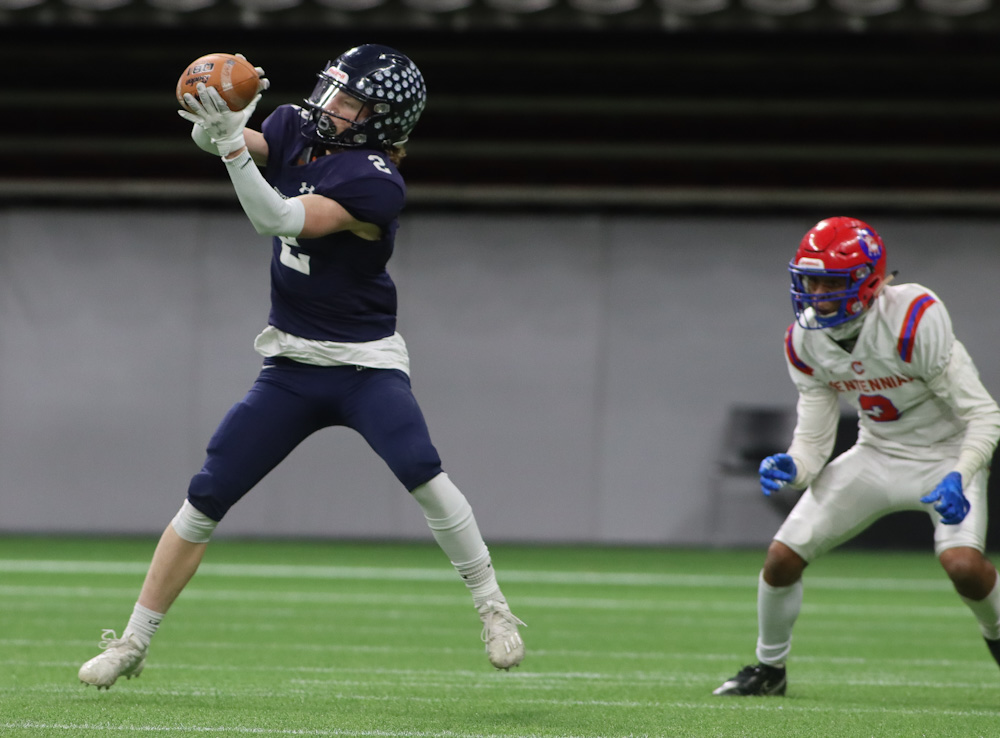
Saturday, we had two local teams playing in the two varsity semifinal games at BC Place Stadium to determine the opponents for next week’s Subway Bowl provincial high school football championships.
This is typically a pretty big deal.
The kids get to play in the grand environs of a big-time stadium. A couple or few thousands fans fill a section of the expansive grandstand. The local TV stations usually send a crew or cameraman to put together a highlight package (in fact, in days of yore I think they even showed the final game live on one of the stations), the daily papers assign at least a reporter and photographer. Also on the sidelines would be the reporters and photographers from the various community papers if one of their local teams was participating.
It’s always been a lot of fun. We’d get to shoot some dedicated young athletes in relatively decent light, catch up with our colleagues and compete for the best coverage.
But local news resources are now so depleted, the sideline media contingent last night consisted pretty much of myself, a former newspaper journalist who now blogs about high school sports and a reporter from one of the dailies who spent a good chunk of time trying to figure out how he could get a hot dog (can’t say I blame him; don’t even get me started on the demise of the food buffets that used to be provided at big time sporting events to ease the hunger pangs of journalists working at their event).
As we had two teams from our coverage area playing for the possibility of an all-Tri-City final for the first time, I pitched my editor this was an opportunity for us to go big.
With my colleague @KyleBalzer up in the press box handling the writing and live posts to social media, I was able to concentrate on shooting.
At halftime of each game, I headed up to download a couple of photos for the quick hit he’d post to our website and social media channels immediately after each game. Following the final whistle, I edited a more complete take while he gathered quotes and produced a more fulsome account.
Within an hour of the end of each game, visitors to tricitynews.com were able to read a complete game story with accompanying photo gallery and even a few video clips Kyle shot with his phone from the press box.
The daily has yet to post its story (maybe the photos they were going to get from one of the organizers weren’t any good).
The morning news show on TV didn’t even mention the scores.
The blogger is probably sleeping in.
The hits we get on our website may not come close to the traffic generated by a story about a local crime wave or a reader’s screed about a parking ticket, but I’d like to think each one we get will go away from our site appreciative of our commitment to cover the community and then return to us again when they want to find out what’s going on in their neighbourhood or across town.
And for Kyle and I, the evening was a chance for each of us to do what we do best so we could provide our readers the best coverage — even if we were really hungry…
MARIO BARTEL/THE TRI-CITY NEWS
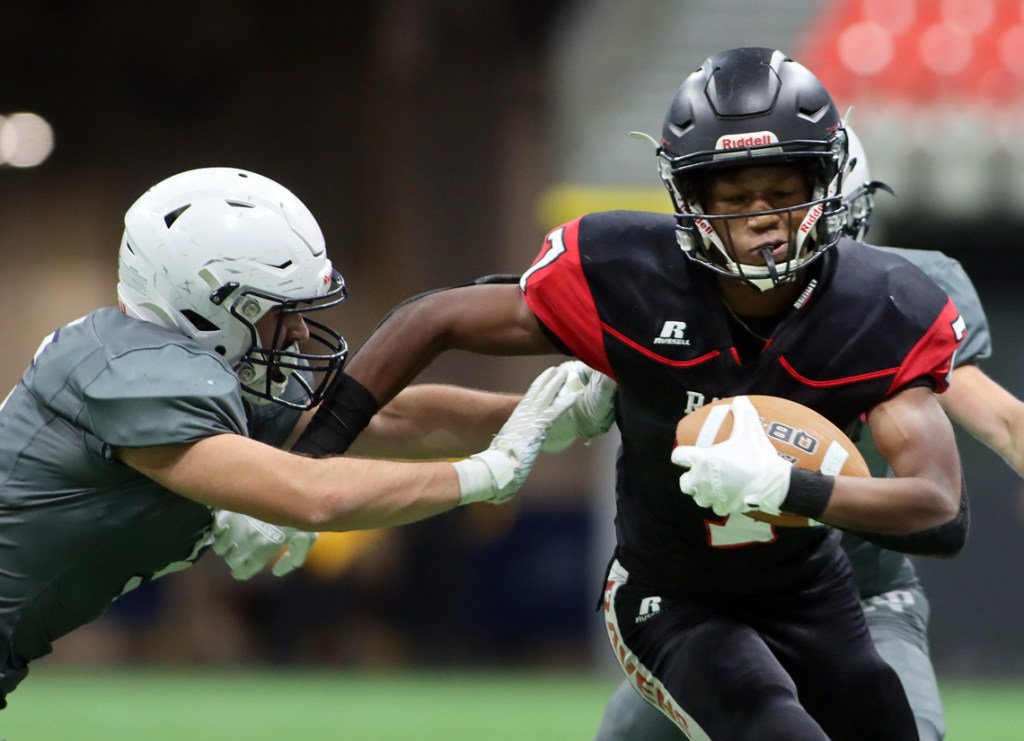
Terry Fox Ravens running back Gavin Whittingham loses the ball at the Notre Dame Jugglers goal line but it was subsequently recovered by receiver Renzel Arinaza in the end zone for a touchdown in the first half of their BC Secondary Schools Football Association Subway Bowl semifinal, Saturday at BC Place Stadium. Fox won the game, 27-12.MARIO BARTEL/THE TRI-CITY NEWS
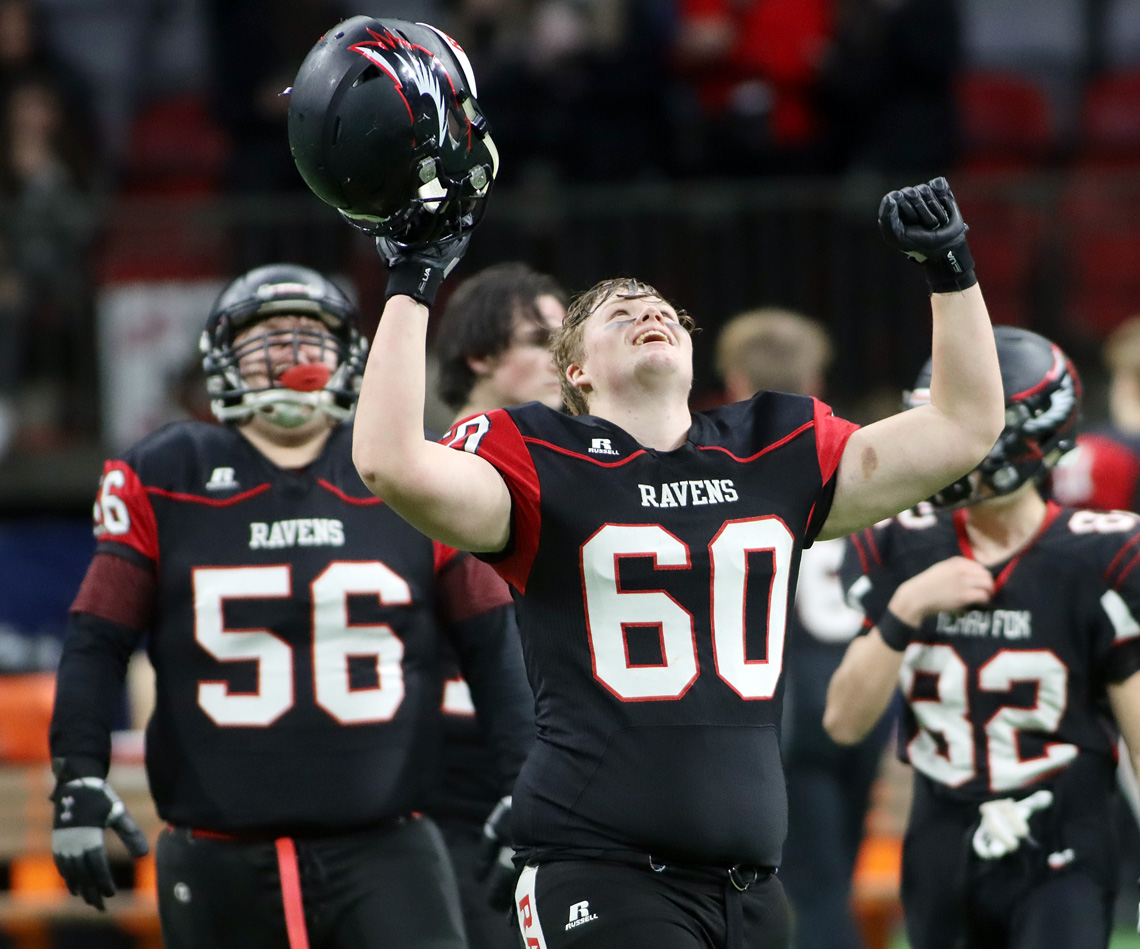
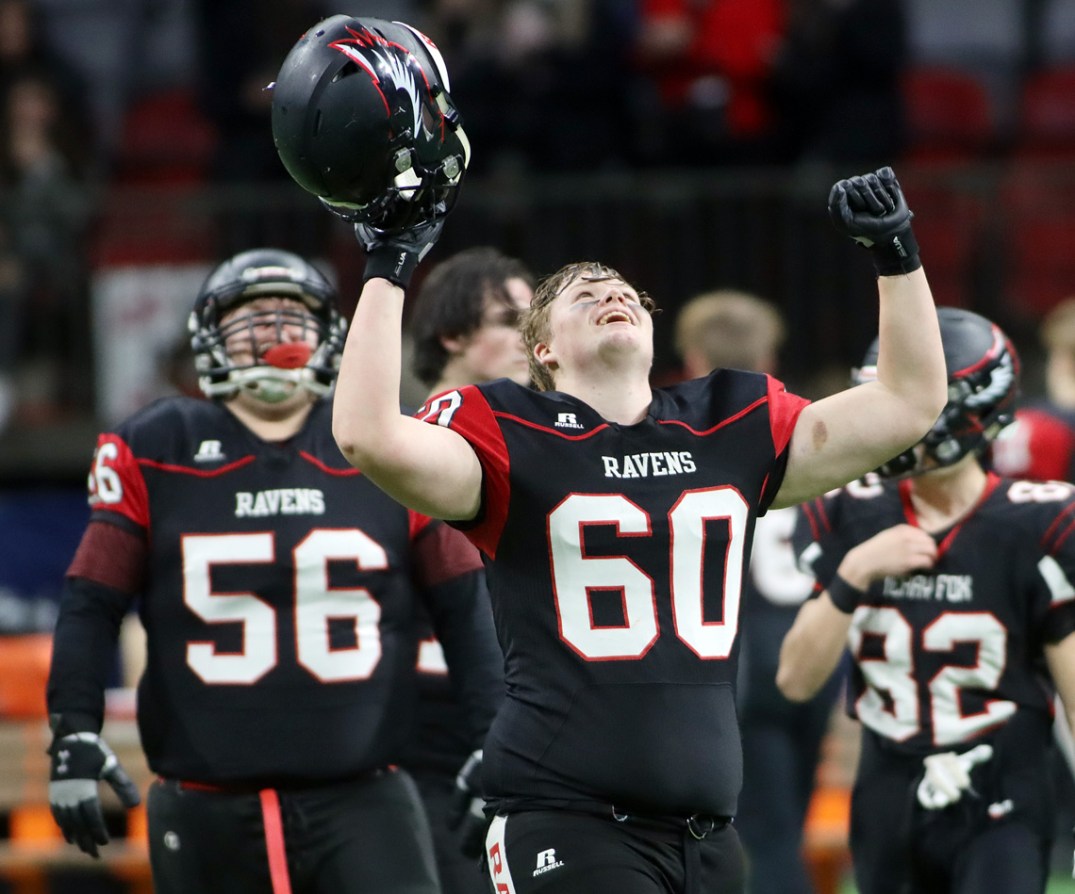
Terry Fox Ravens defensive lineman Kaiden Exner celebrates his team’s 27-12 victory over the Notre Dame Jugglers Saturday at BC Place Stadium to advance to the BC Secondary Schools Football Association’s Subway Bowl championship next week against the G.W. Graham Grizzlies from Chilliwack.MARIO BARTEL/THE TRI-CITY NEWS
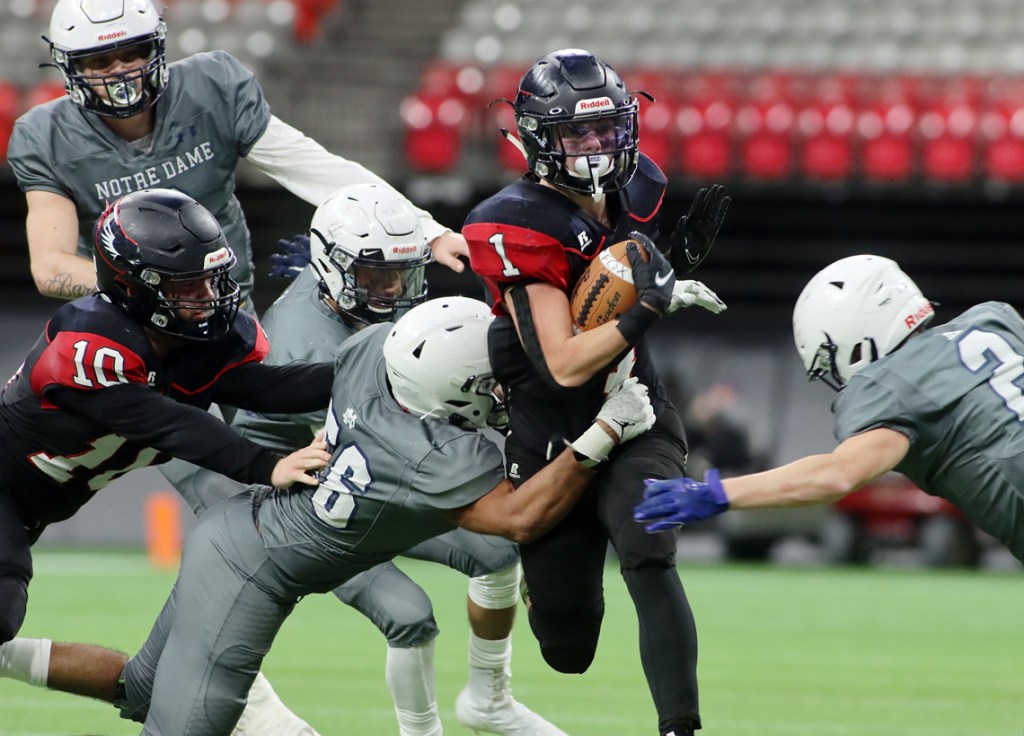
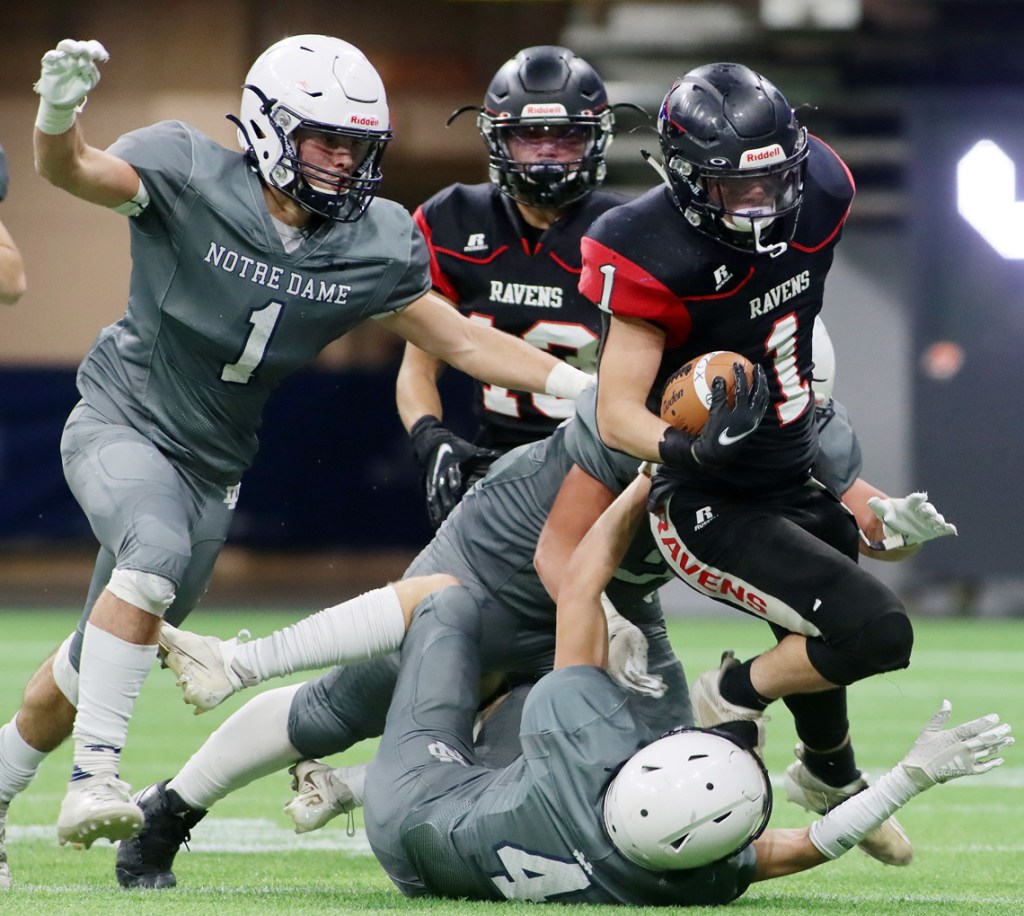
Terry Fox Ravens running back Gavin Whittingham threads his way through four Notre Dame Jugglers tacklers in the second half of their BC Secondary Schools Football Association Subway Bowl semifinal, Saturday at BC Place Stadium. Fox won the game, 27-12, to advance to next Saturday’s championship against Chilliwack’s CW Graham Grizzlies.MARIOI BARTEL/THE TRI-CITY NEWS
Terry Fox Ravens ball carrier Devon Crenshaw tries to slip a Notre Dame Jugglers tackler in the second half of their BC Secondary Schools Football Association Subway Bowl semifinal, Saturday at BC Place Stadium. Fox won the game, 27-12, to advance to next Saturday’s championship against Chilliwack’s CW Graham Grizzlies.MARIO BARTEL/THE TRI-CITY NEWS
Terry Fox Ravens running back Gavin Whittingham powers past a trio of Notre Dame Jugglers tacklers in the first half of their BC Secondary Schools Football Association Subway Bowl semifinal, Saturday at BC Place Stadium. Fox won the game, 27-12, to advance to next Saturday’s championship against Chilliwack’s CW Graham Grizzlies.MARIO BARTEL/THE TRI-CITY NEWS
Terry Fox Ravens tight end Isaiah Cooper and Notre Dame Jugglers Antonia Conte scramble to recover a fumble in the second half of their BC Secondary Schools Football Association Subway Bowl semifinal, Saturday at BC Place Stadium. Fox won the game, 27-12, to advance to next Saturday’s championship against Chilliwack’s CW Graham Grizzlies.MARIO BARTEL/THE TRI-CITY NEWS
Terry Fox Ravens receiver Devon Crenshaw heads downfield past a Notre Dame Jugglers tackler in the second half of their BC Secondary Schools Football Association Subway Bowl semifinal, Saturday at BC Place Stadium. Fox won the game, 27-12, to advance to next Saturday’s championship against Chilliwack’s CW Graham Grizzlies.MARIO BARTEL/THE TRI-CITY NEWS
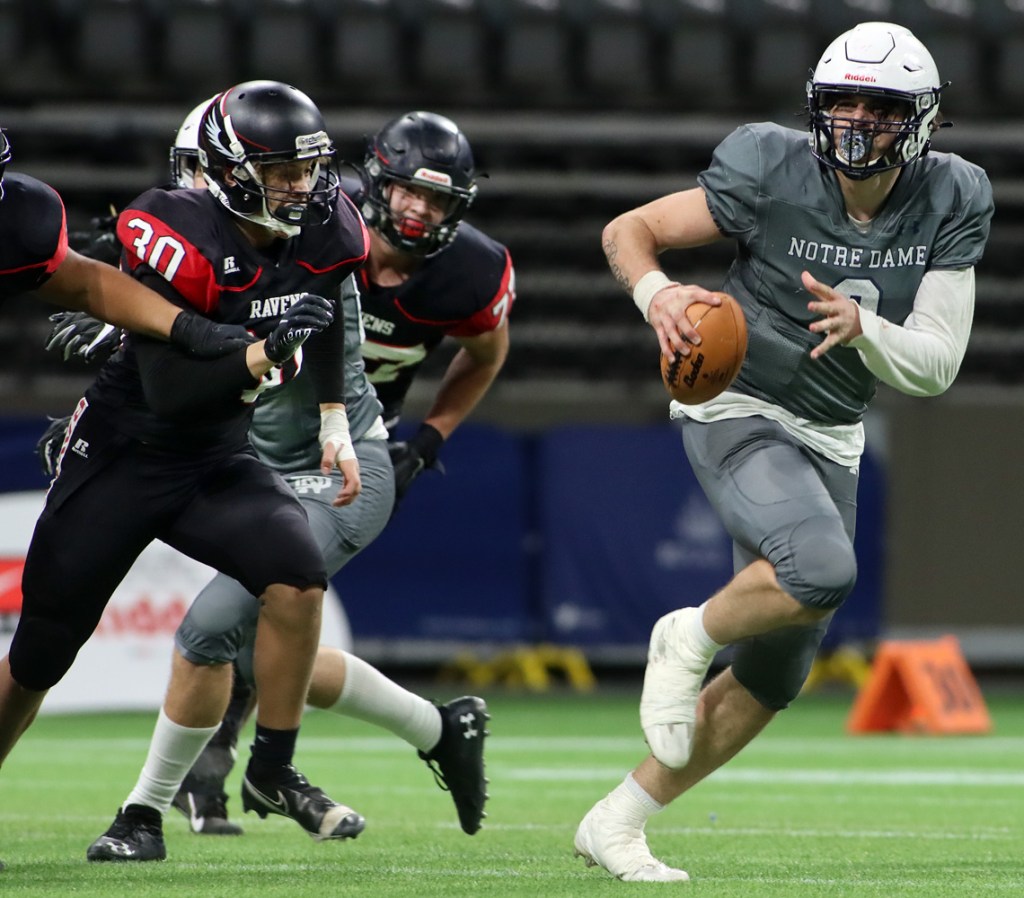
Notre Dame Jugglers quarterback Aiden Domino scrambles away for Terry Fox Ravens defensive linemen Ayden Barrett and Axel Statton in the second half of their BC Secondary Schools Football Association Subway Bowl semifinal, Saturday at BC Place Stadium. Fox won the game, 27-12, to advance to next Saturday’s championship against Chilliwack’s CW Graham Grizzlies.MARIO BARTEL/THE TRI-CITY NEWS
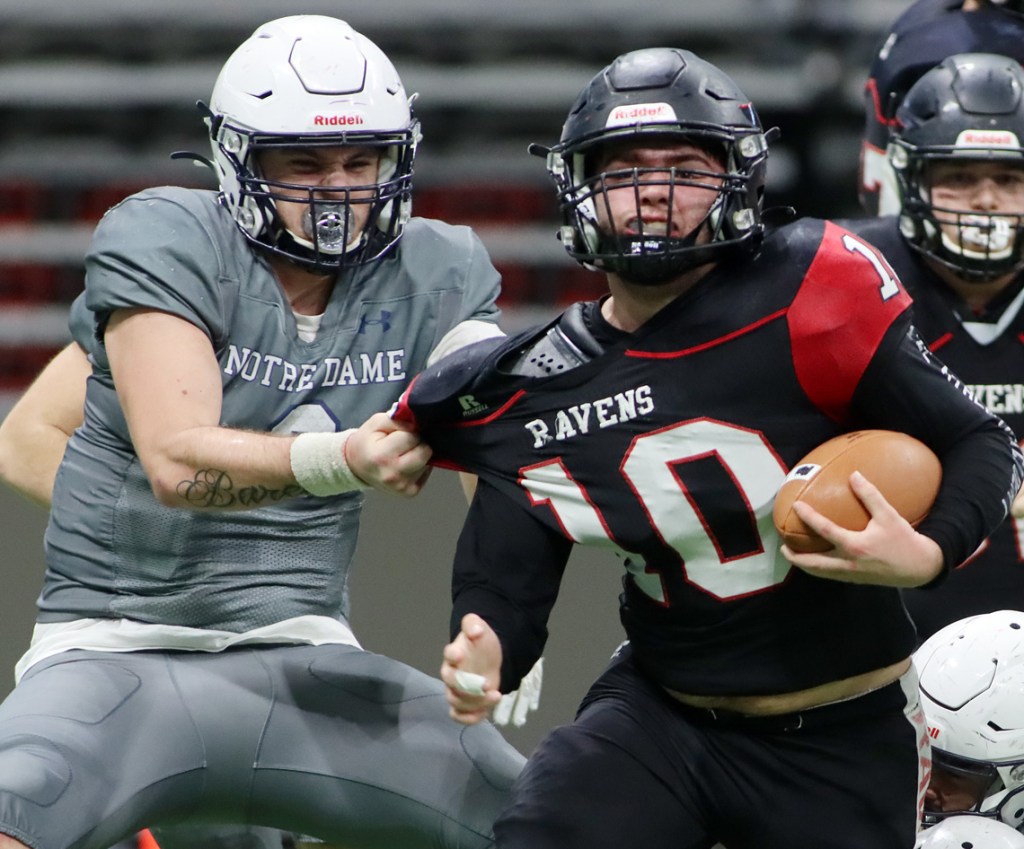
Terry Fox Ravens ball carrier Alex Gagnon is grabbed by Notre Dame Jugglers defensive end Aiden Domino in the second half of their BC Secondary Schools Football Association Subway Bowl semifinal, Saturday at BC Place Stadium. Fox won the game, 27-12, to advance to next Saturday’s championship against Chilliwack’s CW Graham Grizzlies.MARIO BARTEL/THE TRI-CITY NEWS
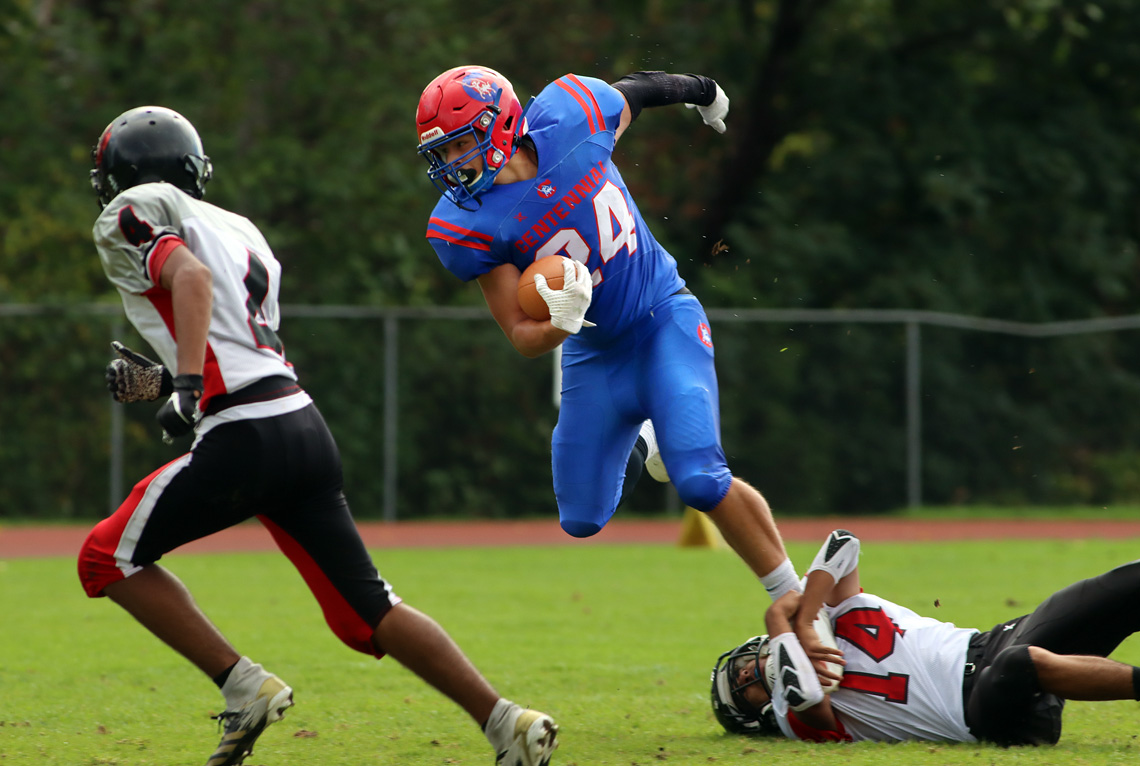
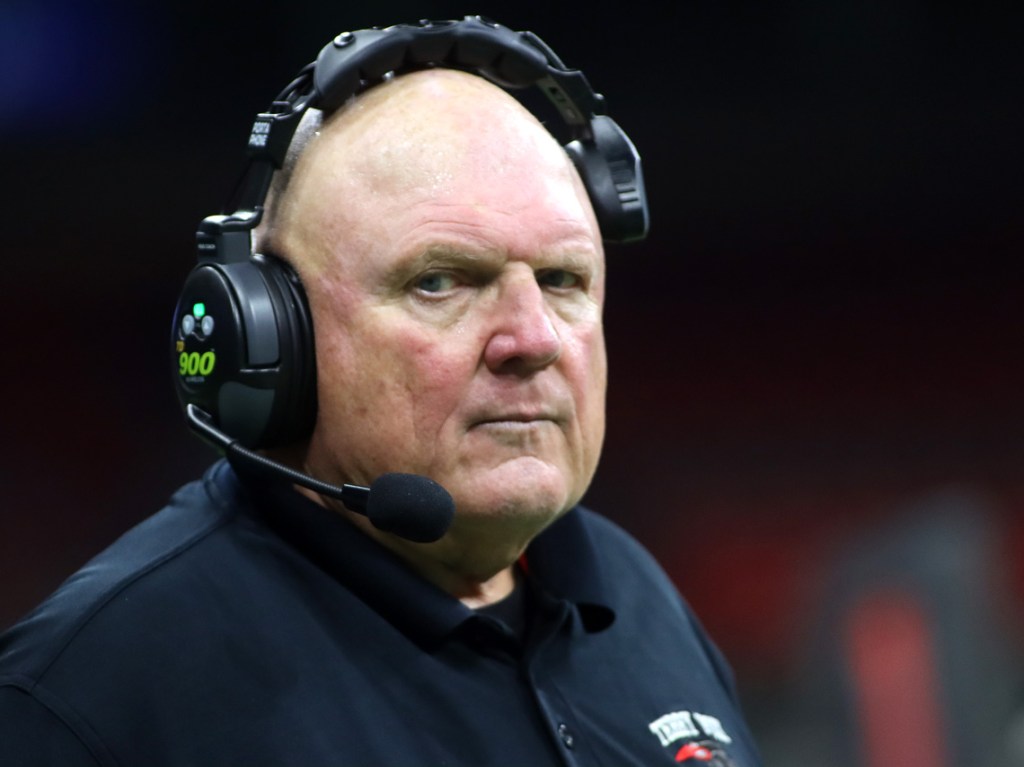
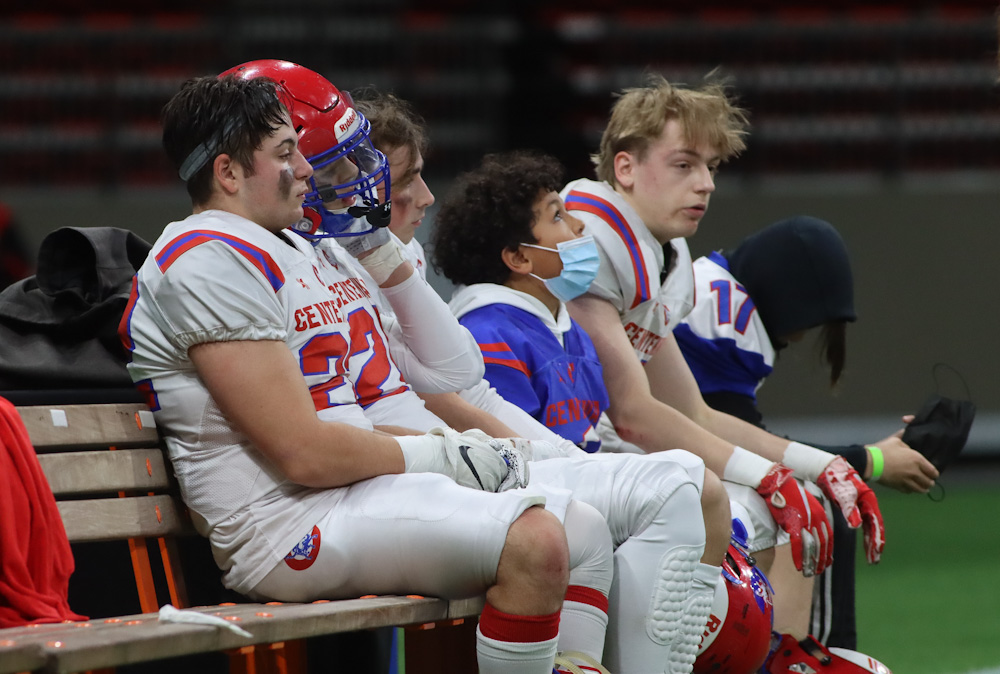
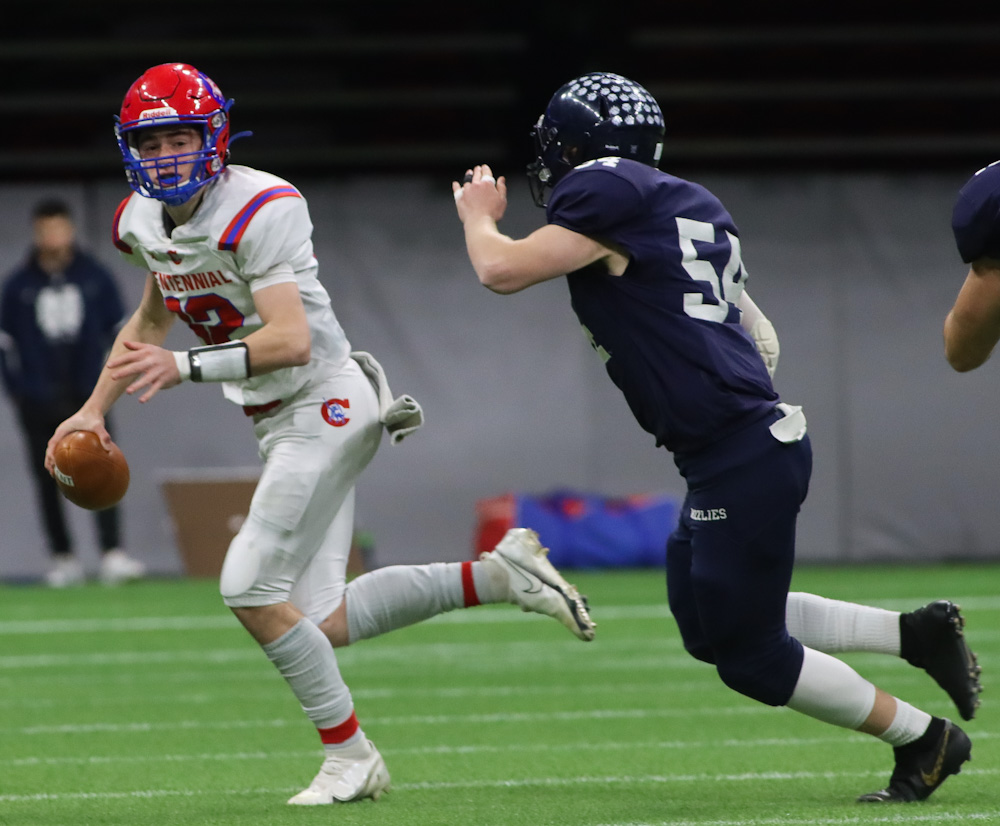
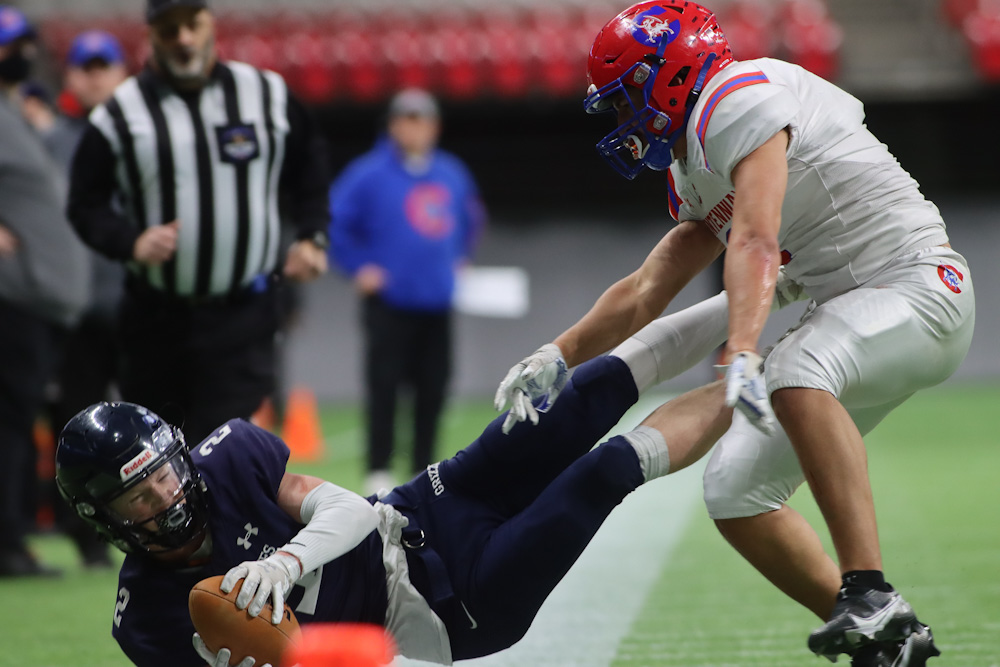
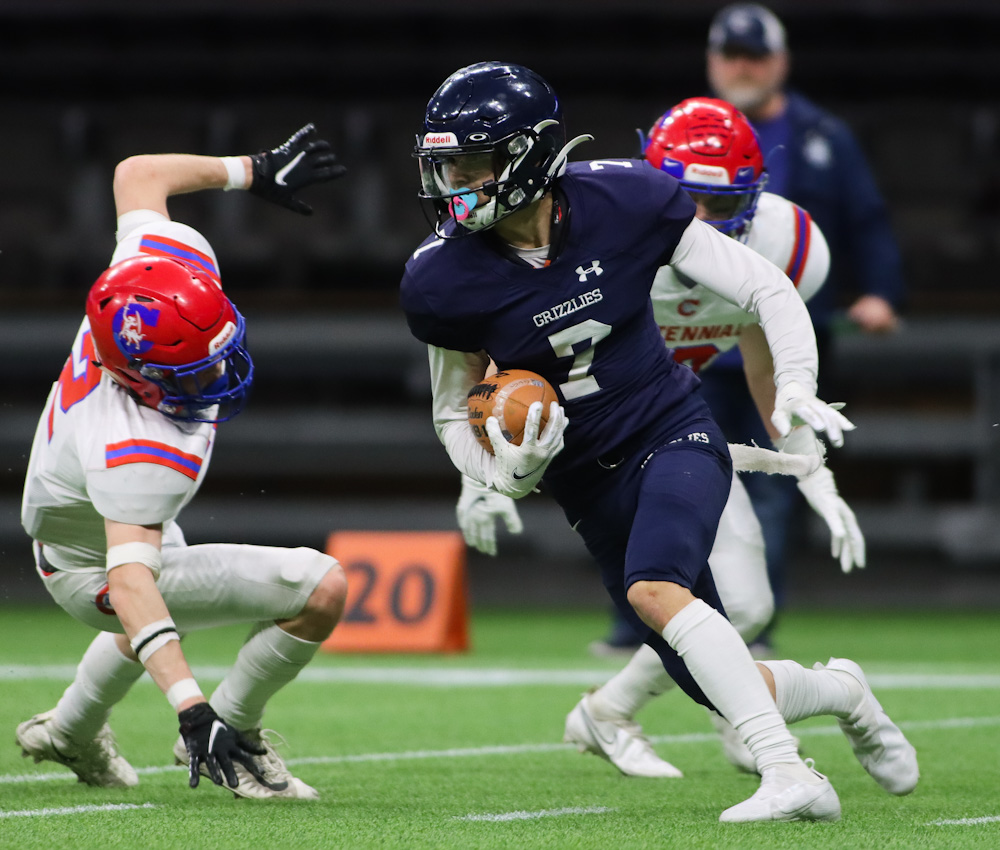
Terry Fox Ravens head coach Tom Kudaba is all business along the team’s sideline. Centennial Centaurs ball carrier Tamani Duncan heads up field to elude the tackle of GW Graham Grizzlies defensive Raiden Mastin in the first half of their BC Secondary Schools Football Association Subway Bowl semifinal game Saturday at BC Place Stadium. The Grizzlies won the game 19-0.Members of the Centennial Centaurs show their disappointment at the team’s 19-0 loss to the GW Graham Grizzlies in Saturday’s BC Secondary Schools Football Association Subway Bowl semifinal game at BC Place Stadium.Centennial Centaurs quarterback Malcolm Cameron scrambles to avoid the pursuit of a GW Graham Grizzlies tackler in their BC Secondary Schools Football Association Subway Bowl semifinal game, Saturday at BC Place Stadium. The Grizzlies won, 19-0.GW Graham Grizzlies wide receiver Theo Smith is knocked out of bounds Subway Bowl by a Centennial Centaurs defender after pulling down a pass in the second half of their BC Secondary Schools Football Association semifinal game, Saturday at BC Place Stadium. The Grizzlies won, 19-0.Centennial Centaurs running back Ziad Sabry eludes GW Graham Grizzlies tacklers in the first half of their BC Secondary Schools Football Association Subway Bowl semifinal game, Saturday at BC Place Stadium. The Grizzlies won, 19-0.GW Graham Grizzlies wide receiver Tyson Orregaard steps around Centennial Centaurs tacklers in the first half of their BC Secondary Schools Football Association Subway Bowl semifinal, Saturday at BC Place Stadium. GW Graham won, 19-0.GW Graham Grizzlies wide receiver Theo Smith pulls down a pass in front of a Centennial Centaurs defender in the first half of their BC Secondary Schools Football Association Subway Bowl semifinal, Saturday at BC Place Stadium. The Grizzlies won, 19-0.
As the end of 2021 draws nigh, we continue to struggle for normalcy.
The COVID-19 pandemic is still all around us, changing the way we work and how we interact. Our newsroom continues to work mostly from our homes, meeting occasionally over Zoom, daily on Slack. Who’d ever even heard of those apps before all of this started?
But compared to last year at this time, we’ve come a long way.
Not every story we tell now has a pandemic context. Events are starting to happen again. Sports is happening again.
That’s been huge.
While most of the sports I’ve covered over the past several years — first at the papers in Burnaby and New Westminster, then the past four years in the Tri-Cities — has been off the side of my desk, it’s still my passion for shooting and writing. So much so, that even when the pandemic shut down pretty much all sports at every level, the only times I wasn’t able to get some sort of sports coverage into the paper was when ads took my space.
I’ve always been a proponent of a feature-based approach to sports coverage. Partly as a survival strategy because it allows me to stockpile stories to be parsed out when other duties are more demanding. Partly because blow-by-blow game reports filed in a weekly paper seem so futile in this age of social media and live streaming.
Mostly, I love covering sports because it’s such fertile ground for interesting and compelling features. They’re stories of triumph and adversity, hopes and dreams. They offer drama, pathos and even humour.
Sports is a microcosm of life, played out on the ice, the pitch, the diamond, the hardwood. In the past year, I told stories about:
Yet, sports continues to struggle for respect from editors.
After photographers, sports reporters have paid a heavy price for our industry’s woes. I know several who were punted to the bench because their beat was deemed more expendable than say covering city council or school board, their work not as important, well read or generating as many hits.
But sports coverage is a huge community builder, a point of entry for readers — especially younger ones — who might not otherwise get engaged by the latest drama unfolding at school board meetings. And in the newspaper industry’s rush to stanch the bleeding, those roles have largely been neglected, further distancing us from our lifeblood.
A feature story about a young athlete heading to university to play a sport they only took up in Grade 12 won’t affect your taxes or property values, or alert you to alter your commute to work, but it will give you a glimpse into your community and the diversity of the people who populate it. And it might even make you smile, feel a bit better about where you live, more connected to your community.
To be successful — heck, even relevant is an achievement these days — newspapers must be all those things. We must inform, but we also need to entertain, evoke emotion, broaden your understanding of the world around you, even if that world is just down your street or across town.
MARIO BARTEL/THE TRI-CITY NEWS
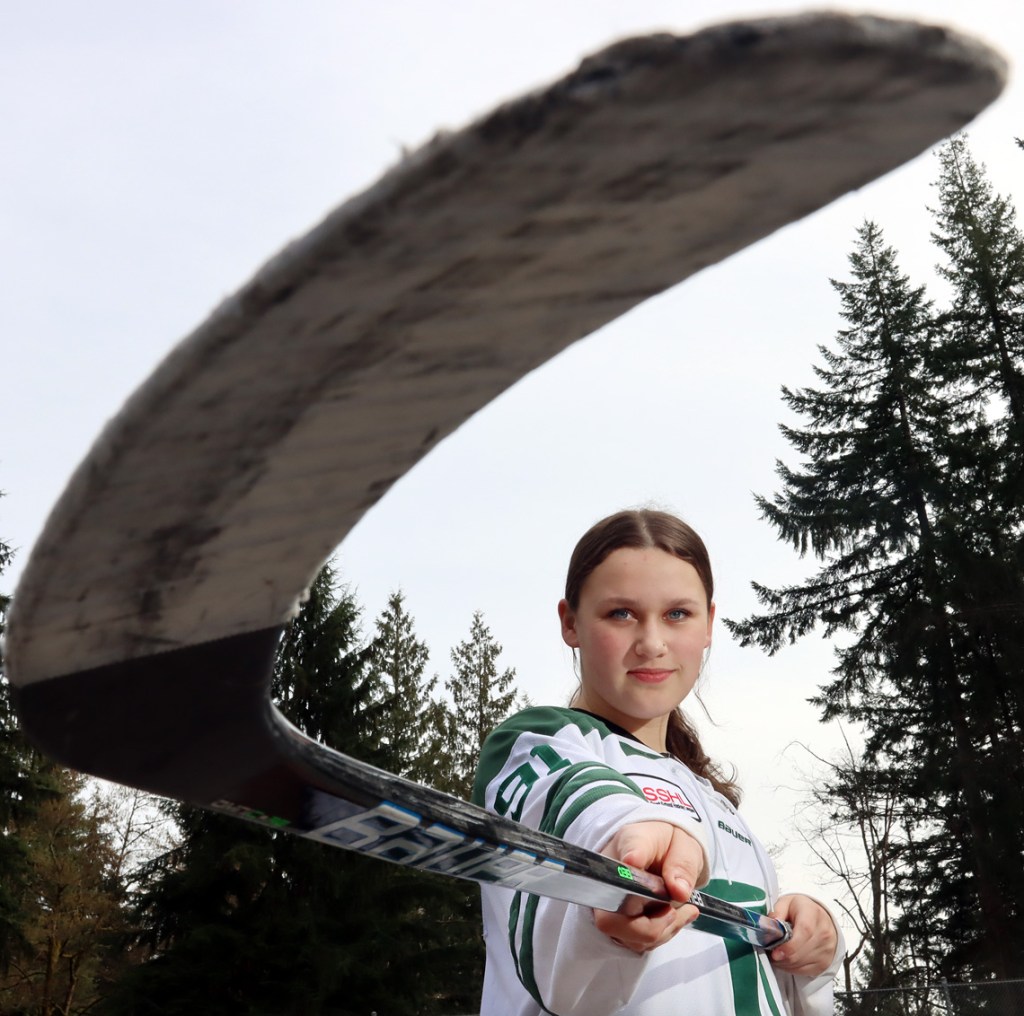
Coquitlam hockey player Jordan Baxter is one of 21 young women from across Canada to receive a Scotia Rising Teammates award that pairs them with top female professional and national team players to learn and take inspiration from their journeys.MARIO BARTEL/THE TRI-CITY NEWS
Brenda Martel returns a volley during a pickleball match at the courts near Dogwood Pavillion in Coquitlam on Friday.MARIO BARTEL/THE TRI-CITY NEWS
Olivia Pero hasn’t let her deafness hold her back. The senior shooting guard with the Heritage Woods Kodiaks senior girls basketball team is preparing to take her game to Trinity Wester University in the fall where she’ll be studying biology.MARIO BARTEL/THE TRI-CITY NEWS
L-R, Gabriela Cross, Rachel Wood, Natalie Hill and Sarah Fong are preparing to move from the senior girls rugby team at Gleneagle secondary school to post-secondary programs in B.C. and Alberta, even as they haven’t been able to play matches for more than a year because of the COVID-19 pandemic.MARIO BARTEL/THE TRI-CITY NEWS
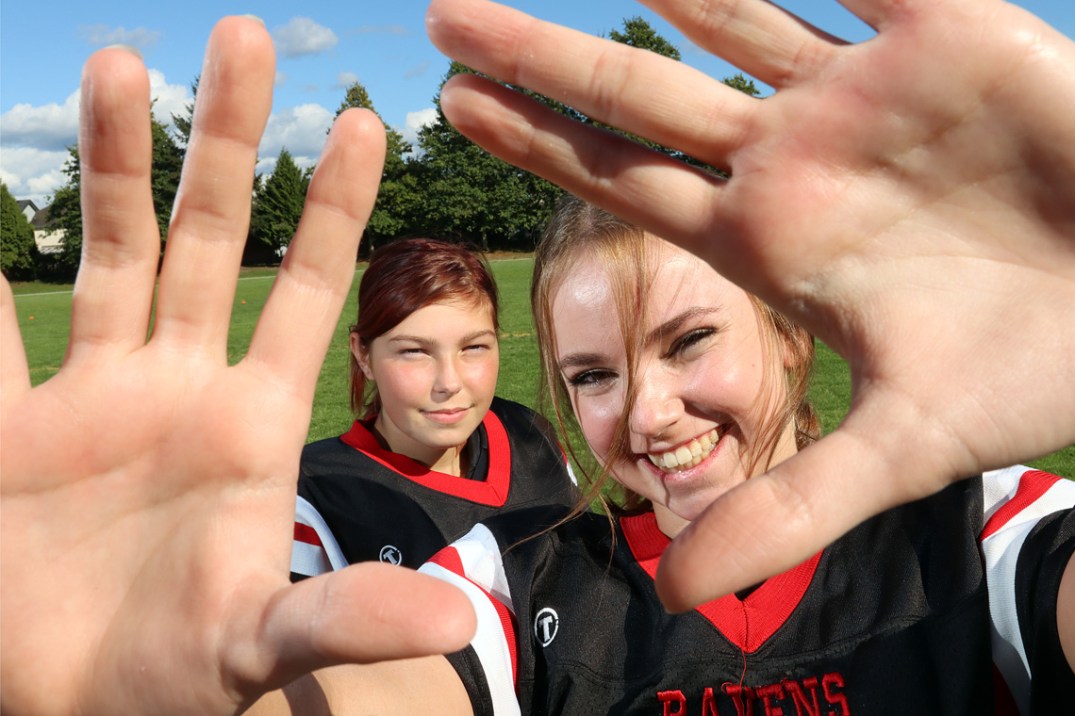
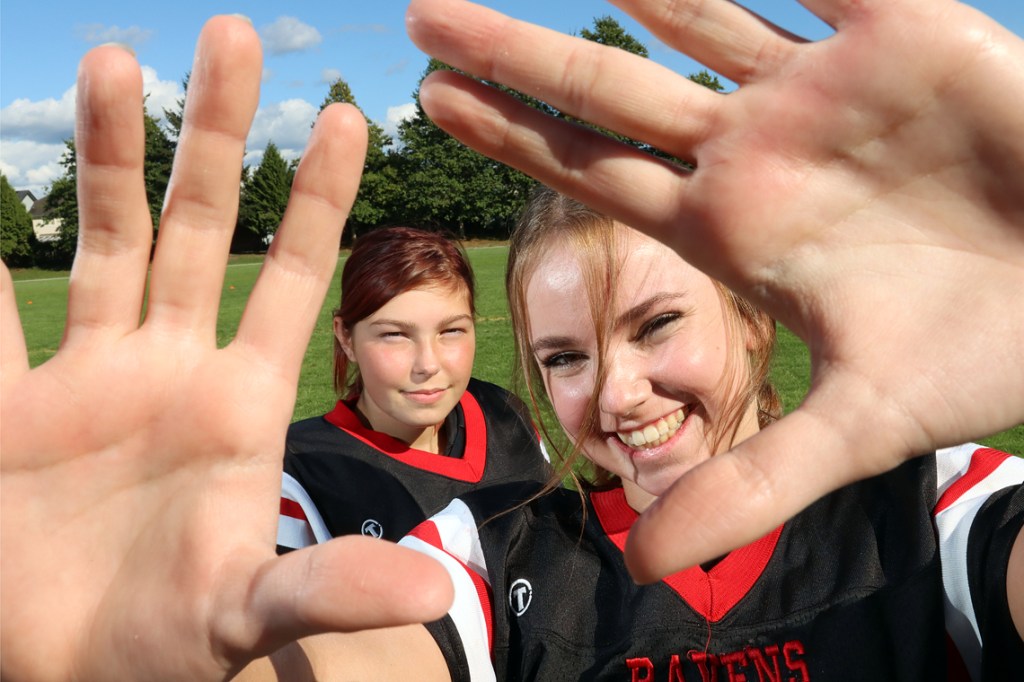
Kali McCready (right) and Robin Rothwell are each taking on a new challenge as the seniors are playing wide receiver for the Terry Fox Ravens. Neither has played football before.MARIO BARTEL/THE TRI-CITY NEWS
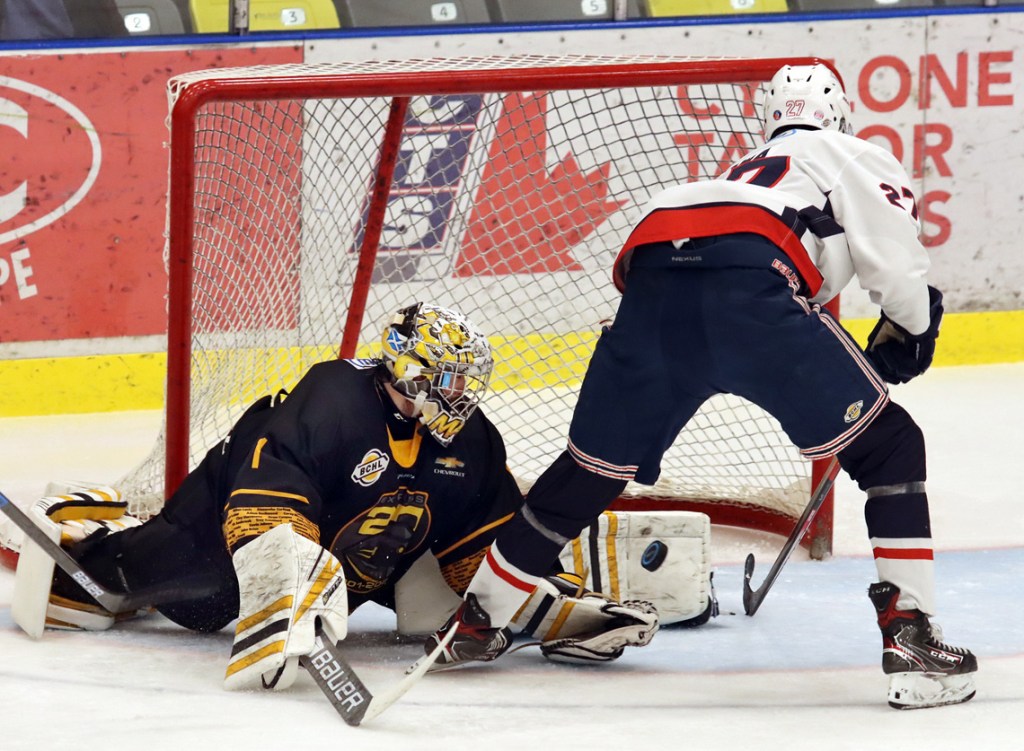
Coquitlam Express goalie Connor Mackenzie makes a pad save on Cowichan Valley Capitals’ forward Arjun Bawa in the second period of their BC Hockey League game, Saturday at the Poirier Sport and Leisure Complex.
It all started so innocently, a couple of stories about local people caught out on cruise ships as a mysterious virus swept through passengers and crew.
Then, more stories on the news about sick people filling hospitals in New York City.
But it took an NBA basketball player testing positive for the novel coronavirus, and the subsequent cancellation of his team’s game that was set to start only moments later that really set 2020 off on its own extraordinary tangent.
Suddenly the reality and seriousness of this new contagion hit home with a resounding thud.
Little did we know at the time just how that thud would reverberate through the year.
My own wife and son were in Arizona, visiting her parents who are snowbirds just outside of Phoenix. My son was excited to see his first NHL game that Thursday night, the Arizona Coyotes vs. his beloved Vancouver Canucks. Alas, it too was cancelled. There were tears.
Then came the scramble to get home before borders were closed. Flights were delayed, worried texts exchanged.
Upon their arrival we headed home where we encamped in self-isolation for two weeks, as prescribed by public health authorities. It all felt a little extreme and overwrought at the time, but in a few weeks, we figured, it would all be over and we could laugh at this weird blip in our routine.
How wrong we were.
The COVID-19 pandemic has coloured virtually every story we told in the Tri-City News since March. In fact, the acronym pretty much auto-fills now every time we type a capital “C.”
The first few weeks of covering the COVID story were a mad scramble just to keep up with reporting on cancellations, closures, and new protocols. As it became apparent this virus would be more than a diversion in the calendar, we settled in for the long haul, looked for stories about people coping, finding their new normal.
We didn’t have to look very hard.
As miserable as 2020 has been — for so many reasons — there have been just as many reasons to celebrate a year that brought out the best in so many people, tested our communities and found them much more resilient and enduring than we’d ever imagined.
In the context of a global pandemic, no story felt too small or mundane, because every one had the potential to offer hope and reassurance we’d all get through this.
Here are some of my favourite photos that accompanied many of those stories. If you click through to the gallery, you’ll be able to read a bit of commentary about each image.
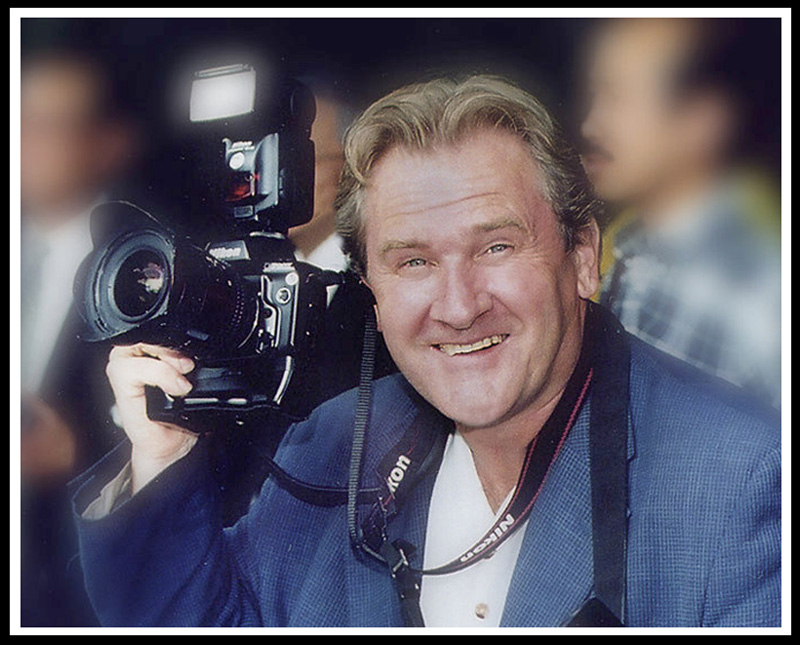
We all have mentors. They’re the people who show us the way, whether they know it or not. Mine was Ron Kuzyk. He was a steelworker and a hell of a photojournalist who worked the weekend shift we came to share for a stretch at the Burlington Post, where I started my career. Ron passed away this week.
In 1984, I was just out of journalism school and determined to use a camera as my storytelling tool of choice. Circumstances that summer connected me to George Tansley, then the chief photographer at the Post. He said he could offer me some shifts to relieve his weekend guy who spent his weekdays working at Stelco and sometimes needed a break from the grind.
That guy was Ron.
We probably first met in the studio/darkroom one of those weekends; he was likely passing through to collect something, and I was probably trying to figure out how I too could get some of the great shots that were printed and hung on the walls of the studio and down the hall outside it. I particularly remember a colour wintry silhouette of a kid balancing on a fence, arms and leg splayed out; I loved that photo.
My friend, and mentor, Ron Kuzyk, was the king of the silhouette. He loved shooting them, even as editors told him they needed to see faces in the newspaper. Of course, when Ron came back from an assignment with one of his beautiful silhouettes, it inevitably ran in the paper, usually on the front page.
Of course it, and many of the others, was shot by Ron.
Especially the sports.
I knew I wanted to be able to shoot sports like Ron.
He could capture peak action like nobody’s business, but he also had a keen eye for those quiet moments, like the kid stealing a glance back at his coach, the consoling hand on a player’s shoulder, the goofiness of 5 year-old t-ballers.
And, amazingly, he didn’t need big time pro athletes or glorious bright arena lighting to get his great sports photos. He made them in dark high school gyms, dusty sandlot baseball diamonds and pocked minor soccer pitches.
Over the course of that summer, as Ron and I crossed paths, we became buddies. He encouraged me, talked me through the frustrations of learning how to shoot with the Hasselblad because the big colour transparencies made for better front page colour reproduction. But mostly he showed me the way with his eye and his instincts.
Whenever I had the chance, I studied his contact sheets, checked out his prints, paid attention to his byline (although, by the second week I was already pretty good at spotting a Ron shot in the paper), and when my shooting shifts came, I distilled what I learned to get in the right position for a good baseball shot, look all around at a spot news scene to find that storytelling moment, seek out a fun juxtaposition at a community event.
When I happened to be in the darkroom and he popped by for a studio shot, I studied how he set up the lights and, more importantly, how he made his subjects feel at ease, joked with them, broke through their guard to find something that captured the story they were there to tell.
Ron was the most natural, instinctual photojournalist I ever met. More importantly, he was also the most fun. Because as much as we liked to bitch about shooting pet of the week or real estate features, as much as the repetitiveness of shooting the same cycle of community events year after year wore down your creativity, he really got a kick out of his job, and that joy came through in every one of his frames (well maybe not the photos of used cars for dealer ads).
The next summer, all the lessons I’d absorbed from Ron paid off when I landed a full-time gig at Oshawa This Week.
On the weekends I wasn’t working, I often came back to Burlington to visit my family and hang with Ron. Usually over beers, we kibitzed and kvetched as professional colleagues. We also complained, because that’s what journalists do when we get together (oh, if only we knew then what was coming for our industry, for our profession…)
But when Ron finally made the decision to cut his ties — and the big paycheque — to Stelco, he was over the moon with delight, thrilled to be working full-time at his passion even if it meant keeping his heap blue car that smelled like an ashtray on the road a little longer.
There were often adventures on those weekends, usually involving Post sports reporters Kevin Nagel, Dave Rashford and Tim Whitnell as well; road hockey in the back parking lot on New Street, some ice hockey games, the annual Metroland slo-pitch tournament, a concert or two.
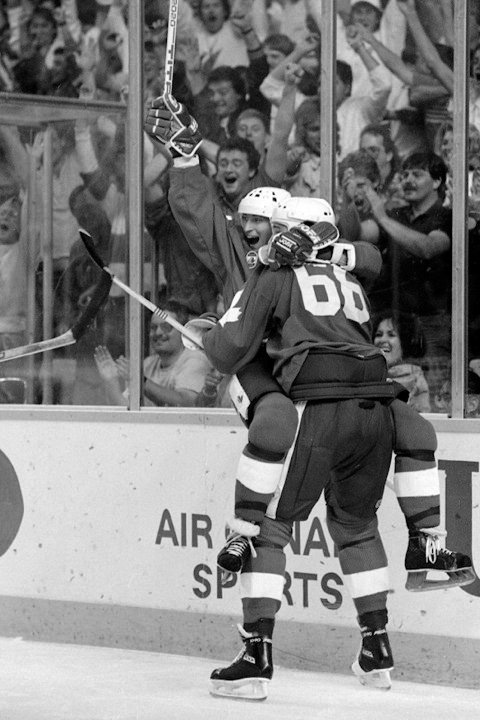
When a group of us bought a tournament package for the 1987 Canada Cup series, Ron somehow managed to get photo accreditation for the climactic final so when Mario Lemieux and Wayne Gretzky and the rest of that amazing Canadian team were celebrating their victory on the ice at Copp’s Coliseum, we were peering through our binoculars from the upper deck at Ron sliding around working the scrums. Oh yeah, he scored an amazing photo of the two superstars celebrating, jumping into each other’s arms behind the net in his corner. Like I said, Ron had great instincts for timing.
Ron Kuzyk and a great love, and eye, for shooting sports. He also had that innate instinct for being in the right place at the right time with the right lens. Oh yeah, and also for securing accreditation for big-time events even though he worked for a community paper.
When I headed west in 1991, our contact became more sporadic.
He came out once, riding shotgun in his brother’s big rig. I drove him around, showing him my new turf, including a bar or two that may or may not have had a brass pole. I think the motel in Port Coquitlam where he stayed burned down shortly after his visit.
Again with the timing.
When I was home for a visit, we’d go for beers or lunch and shoot the shit about old times, compare notes about our current situations.
But I’ve always felt Ron’s guiding hand, tried to follow his eye, even as I forged my own path as a community photojournalist.
I know the changes to our industry weren’t easy for Ron. He was old-school, driven to get the shot and to hell with all the bullshit of the business.
After he left the Post, we caught up a few times on my visits back to Ontario. I think one of those times I managed to tell him how much impact he’d had on my own career, how those early exchanges in the Post studio set me on my path.
We also tried connecting on social media, but Ron was never one for the Facebook, unless he was trading/peddling his vinyl records. I think he Tweetered about 12 times.
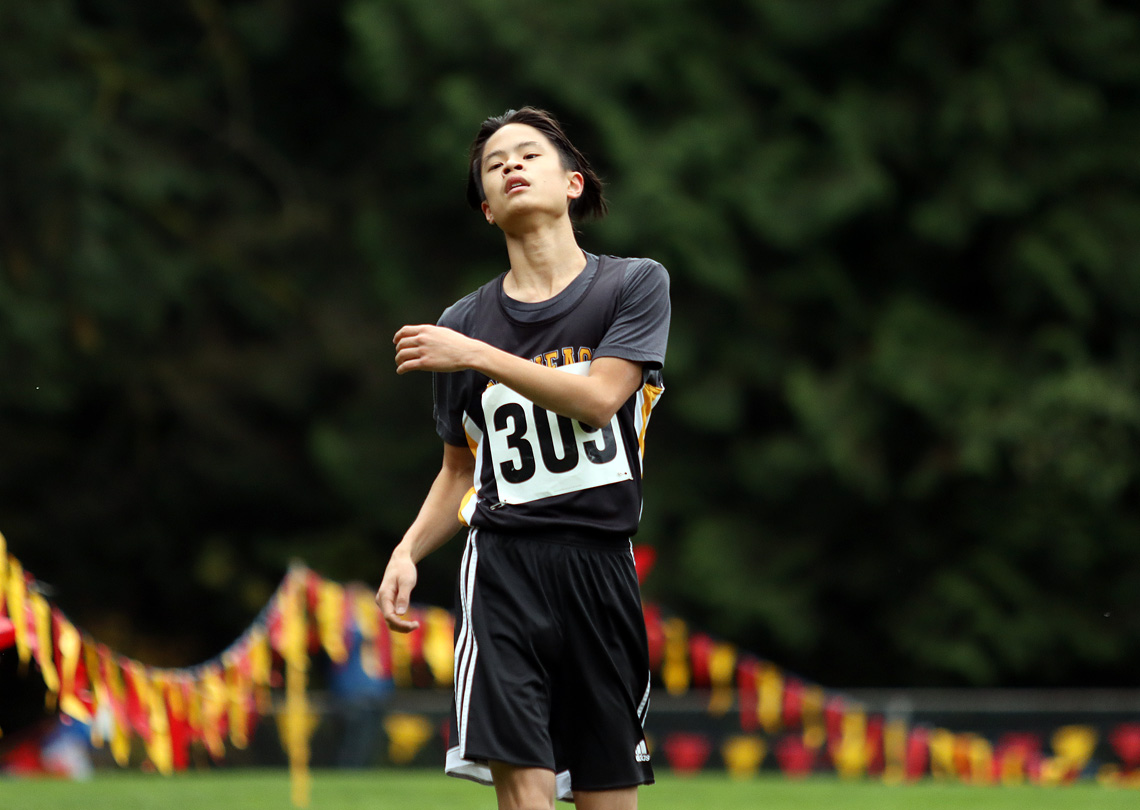
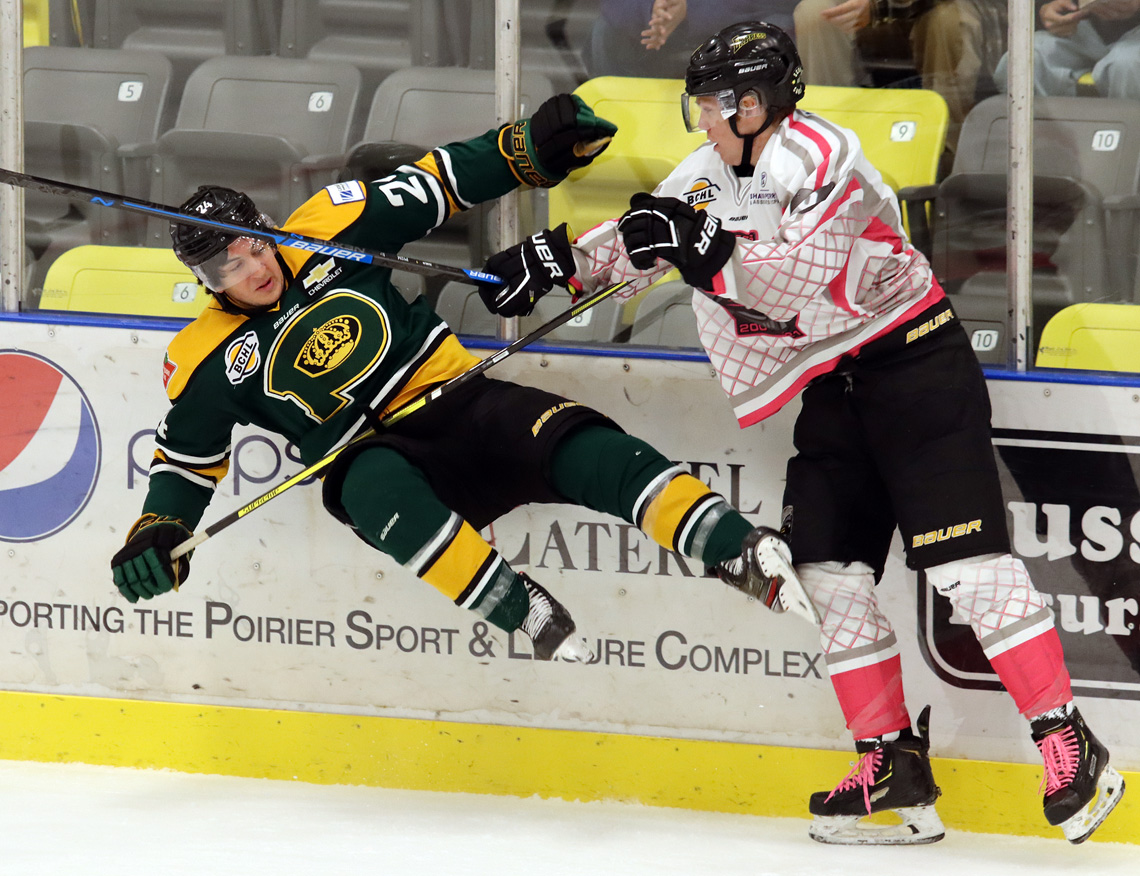
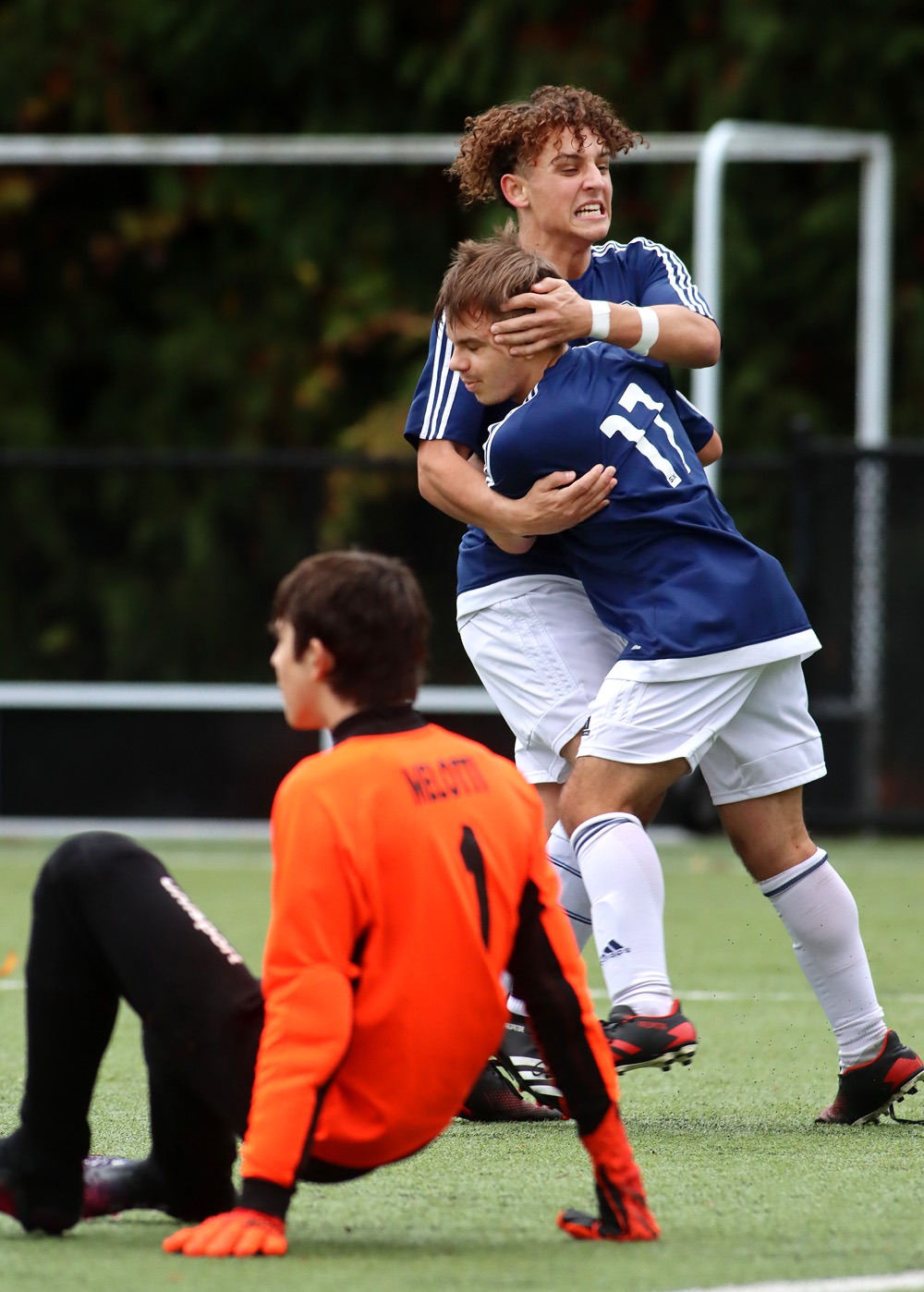
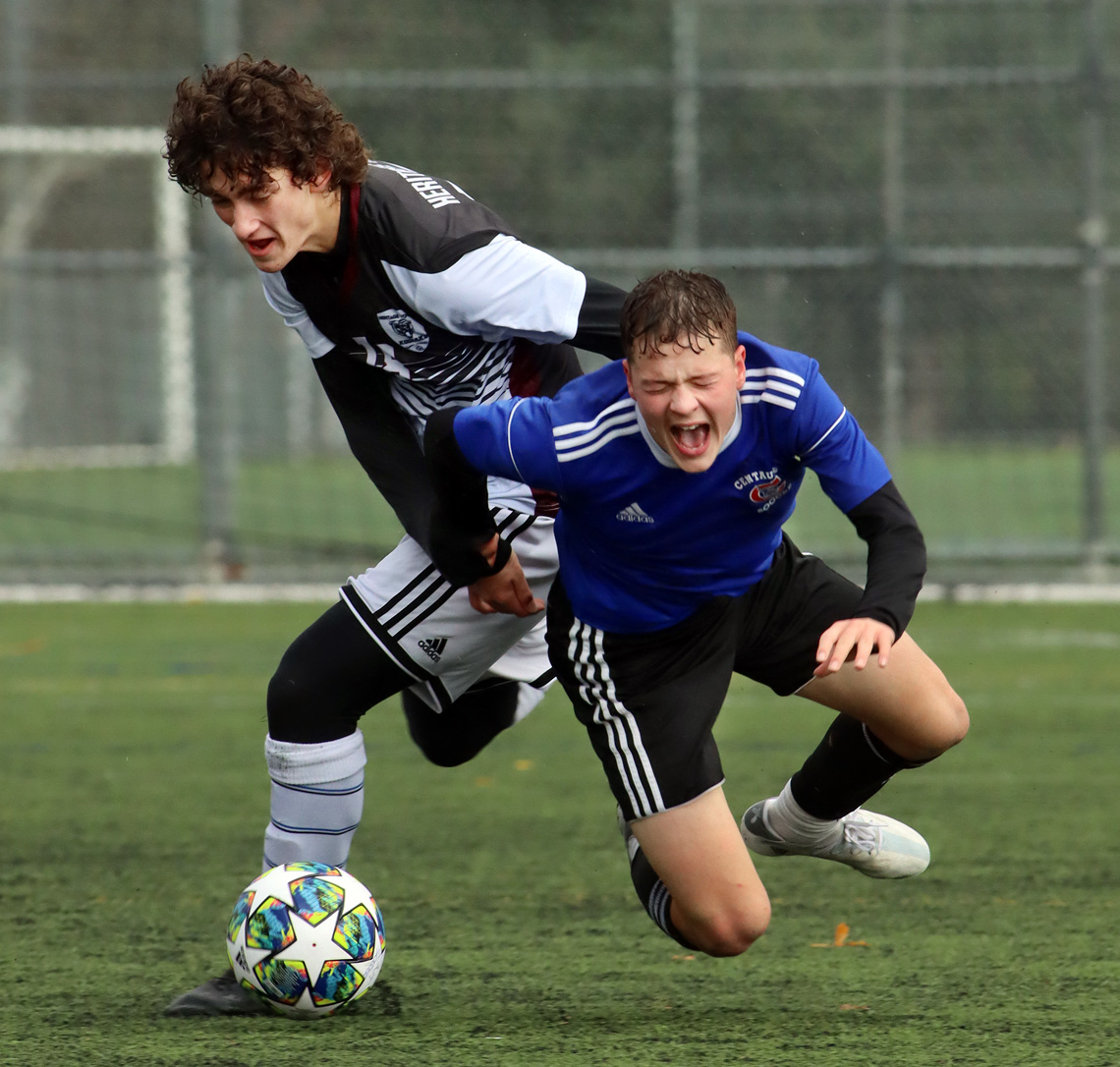
But even as our contact waned, Ron was often in my thoughts. He’s the reason I park myself about three metres back of first base at a baseball game so I can reach second base for a steal or double play, but also can grab a close play at first. He’s the reason I sit instead of stand at the touchline of a soccer match because that means a cleaner background. He’s the reason I keep my eye on the bench near the end of a big game as much as on the playing arena. He’s the reason I’m still trying to emulate that great wintry silhouette of a kid balancing on a fence.












































 MARIO BARTEL