Racing to return to Coquitlam’s Westwood Plateau. Sort of

Racing could soon be returning to Coquitlam’s Westwood Plateau.

But residents of the area’s luxury homes and golfers on the greens of its palatial golf course won’t have to worry about high-speed cars careening into their backyards or disrupting their putts.

An international team of historical racing enthusiasts is building a digital recreation of the plateau’s old Westwood race track that can be used in computer simulators like Assetto Corsa.
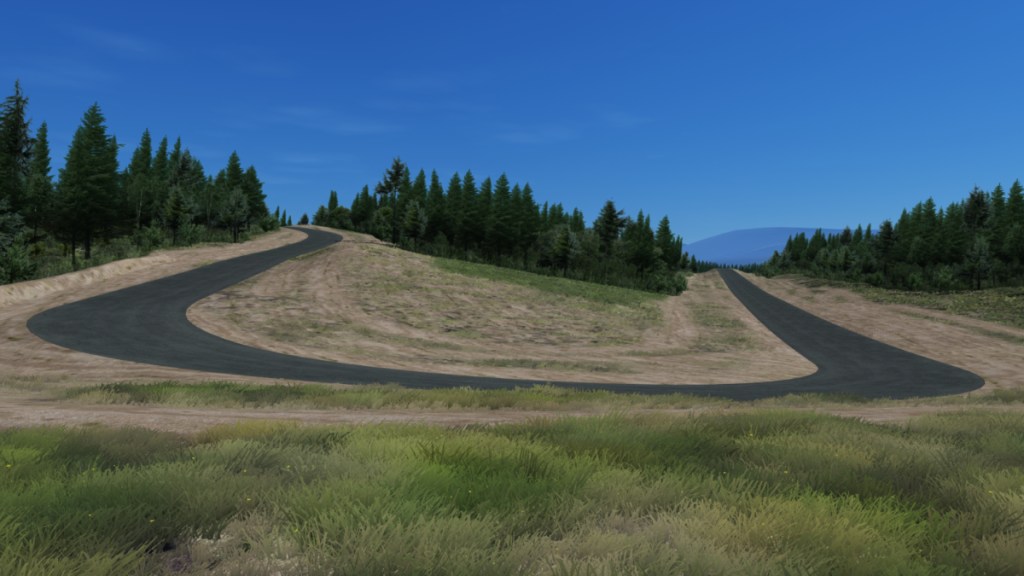
WILLEM PETERS/SCREENGRAB A view of Marshall’s hairpin toward Deer’s Leap in a digital recreation of the old Westwood race track in Coquitlam.

Console games fuel passion

Willem Peters, a graphic designer and care attendant for the elderly in Arnhem, Netherlands, said he’s been a fan of classic sports cars and racing history for as long as he can remember, fuelled by console games like Gran Turismo.

Peters said he started recreating historic racing liveries for cars in Assetto Corsa to be raced on digital versions of legendary circuits like LeMans, Brands Hatch and Watkins Glen. 

It was while researching a classic Ferrari Dino 206 S that was once driven by late Canadian racer David Greenblatt that Peters stumbled upon photos of the old Westwood track.

Peters said the “gorgeous Coquitlam mountains vista… truly captivated me.”

He started digging into Westwood’s history, sharing it with some of his racing simulator friends.

Peters said he found an old digital recreation of the track and tried it out.

‘Each lap exciting’

“Despite spinning out multiple times, it was a very enjoyable layout to race on,” he said. “It looks deceptively simple from above, yet it has all the nuances and oddities about it to make each lap exciting.”

Looking to do the old circuit justice, Peters reached out to Sergio Loro, a fellow historical racing enthusiast who’s digitally recreated storied tracks like Nosiring and Zandvoort as well as circuits like Rouen in France and Stardust International Raceway in Las Vegas that no longer exist.

Working from old photos, videos, maps and topographical information about the surrounding terrain, Loro is able to reconstruct the base layout of the track. Details like guardrails and trackside structures are added later.

“There’s still plenty of missing info on this part of the project,” Peters said, adding the team is seeking more photos, maps, video and even personal recollections that might help fill in some of the gaps.

“To complete the 60’s look, we’ll make sure to model all the details right.”

Peters said the digital Westwood track should be ready for release on Assetto Corsa by the end of the year, with further refinements and more simulator platforms to come.

He said recreating vintage tracks gains even greater significance as many of those circuits are modernized and changed to accommodate contemporary racing or just bulldozed outright for new development.

“It isn’t just a fun playground to drive virtual cars on,” Peters said. “The loss of smaller racing venues impacts the grassroots racing communities the hardest as the modernized, high-tech race circuits of today often don’t allow the more casual, weekend racers to enjoy the tracks. It’s the closest we’ll ever likely get to getting tracks like Westwood back.”

Reality show still chasing lost treasure in mountains north of Coquitlam

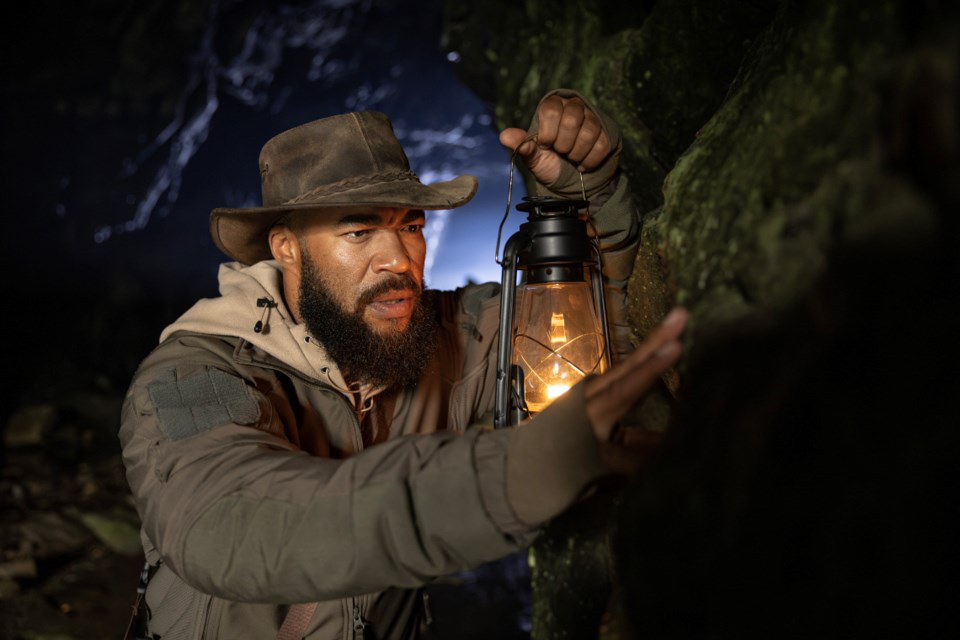
A reality TV series chronicling a team of adventurers and history buffs searching for lost treasure in the mountains north of Coquitlam has embarked on its third season.

But the mystery it’s chasing is no closer to being solved.

Mountaineer and wilderness expert Adam Palmer said the story of his team’s quest to resolve the Deadman’s Curse, that is broadcast weekly on the History Channel, is enlivening a small part of Canada’s past.

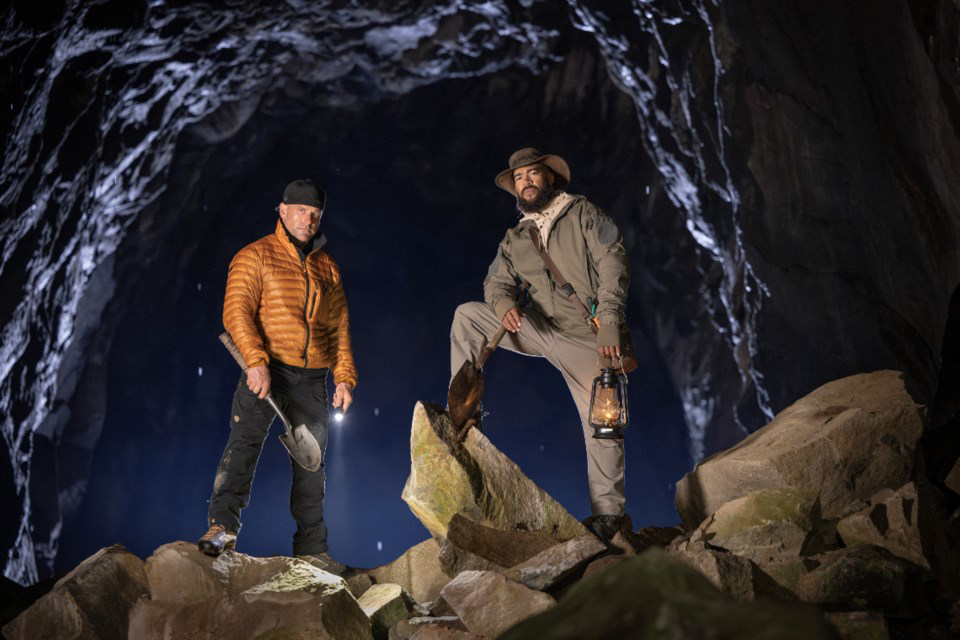
Palmer, who teaches at a First Nations high school, has been working for three years with former Port Moody MMA fighter, Kru Williams, and Indigenous explorer Taylor Starr, to unravel the legend of Slumach’s gold that first came to light in 1858.

SUBMITTED PHOTO A search for lost gold believed to be secreted away somewhere in the mountains north of Coquitlam is now in its third season on the History Channel.

Notations on map

That’s when notations of “gold” and “Indian diggings,” as well as “much gold-bearing quartz rock” scrawled in the margins of maps published in San Francisco began luring prospectors and gold diggers to B.C.’s backcountry in the Fraser Valley and beyond.

Several were stricken by a mysterious illness and died.

An article in a Wisconsin newspaper in the early 20th century linked the deaths to Slumach, an old Katzie prospector who allegedly uttered a curse on anyone seeking the gold just before he was hanged in New Westminster in 1891 for murdering a rival.

Palmer said the story of the gold likely goes back much further.

In the show’s second season, he and Williams pursued clues that linked the treasure to the days of Spanish explorers arriving in the New World on galleons. One episode this season has the team looking into a connection to the legend of Sasquatch on the shores of Harrison Lake.

“There’s so many layers,” Palmer said.

Physical challenges

Peeling back those layers has required the team to endure torrential rainstorms, traverse fragile snow bridges, peer into perilous caves and cross swift-flowing rivers, while also avoiding encounters with bears and mountain lions.

Palmer said he often follows potential leads on his own to determine if they hold promise. He then calls in his partners and the production team.

“We’re like a family now.”

Palmer said his involvement in the show has given him a greater regard for how deep Canadian history goes, and the colourful cast of legends and characters that are still largely unknown or unappreciated.

He said the country’s Indigenous history dates further back than European history.

Palmer said he’s encouraged by viewers’ response to the show, as they enthusiastically submit tips of their own or help connect him to someone who might be able to offer a tidbit of valuable information.

“It keeps everyone engaged,” he said.

Deadman’s Curse is broadcast Thursdays at 10 p.m. on the History Channel.

Is there a vast treasure hidden near this Coquitlam mountain?

This story first appeared in the Tri-City News on Sept. 10, 2024

The rugged rainforest environs of Coquitlam’s Burke Mountain where it tumbles down to the west shore of Pitt Lake could hold the key to unlocking a mystery that involves a lost treasure of gold, prospectors mysteriously dying after trying to sleuth it out and an elderly First Nations’ man hanged for murder.

A contemporary attempt to solve the mystery — and maybe get impossibly rich along the way — is about to launch its second season as the reality series, Deadman’s Curse, on the History channel.

Former Port Moody MMA fighter Kru Williams along with mountaineer and wilderness expert Adam Palmer first embarked on their quest to unearth the legendary cache of gold squirrelled away somewhere in the mountains around Pitt Lake in 2022.

Mountaineer Adam Palmer (left) and former Port Moody MMA fighter Kru Williams continue their quest for a lost treasure of gold somewhere near Pitt Lake in the second season of the History channel TV series, “Deadman’s Curse.” GREAT PACIFIC MEDIA

Palmer, a history buff who teaches outdoor education at a First Nations high school, said he had long been intrigued by the tales of treasure somewhere near Pitt Lake, and the Katzie prospector known as Slumach who was allegedly the only person with knowledge of its whereabouts until he was accused of murdering a rival and hanged in New Westminster in 1891.

“It started with curiosity,” he said in a recent phone interview. “Then you find yourself on top of a mountain and you want to know what happened that brought you there.”

The first reports of a lost treasure came to light in 1858 when a series of maps promoting the gold fields of British Columbia were published in San Francisco.

The notations of “gold” and “Indian diggings,” as well as “much gold bearing quartz rock” in the maps’ margins lured prospectors to head north, joining the already swelling ranks of gold diggers funnelling through New Westminster to the backcountry beyond the Fraser River.

Several died, stricken by mysterious illnesses from which they never recovered.

The mystery deepened early in the 20th century when a story in a Wisconsin newspaper linked the lost gold to Slumach, who allegedly uttered a curse on anyone seeking the treasure before he went to the gallows.

Williams said it was a more pragmatic consideration that lured him into the treasure hunt.

“To think you can put your hand into the dirt and pull out generational wealth, that’s what brought me in,” he said.

Neither foresaw the gruelling nature of heir quest, though.

Along with Indigenous explorer Taylor Starr — a distant relative of Slumach — and her father, Don Froese, Williams and Palmer embarked on a physical journey through dense rainforest, up slippery creek beds and over jagged boulder fields looking for clues that might lead them to the treasure while unravelling its mysteries.

More importantly, said Williams, their quest gave them an insight into the lives and challenges of British Columbia’s earliest residents.

“When you’re out here with a sacred Elder walking his land, it changed my entire viewpoint of the history of the First Nations,” he said.

Palmer said the series takes viewers along as they peel away layers of the lost treasure’s secrets and even leads them down some unexpected paths, not all of them necessarily fruitful to their quest.

“It’s a lot of information and disinformation and we have to sort through that to get to the heart of the legend,” he said.

And unlike reconstructing the history through artefacts, documents, clippings and maps preserved in libraries and archives, Palmer and Williams’ quest came with life-threatening dangers like torrential rainstorms that lasted for days on end, fragile snow bridges and fast-moving rivers. Not to mention encounters with bears and mountain lions as well as a series of eerie ancient pictographs etched into the rocks above Pitt Lake.

“You don’t know what it’s like in the bush until you do it yourself,” Williams said.

Port Moody’s heritage bank branch was also a home, which caught some would-be robbers by surprise

This story first appeared in the Tri-City News on June 3, 2023

Denis Wood remembers the time he was startled awake by a loud thunk on the wall of his second-floor bedroom.

He became even more alarmed when he heard voices outside, so he ran to roust his dad, Robert, who immediately tried to reach Port Moody’s police chief.

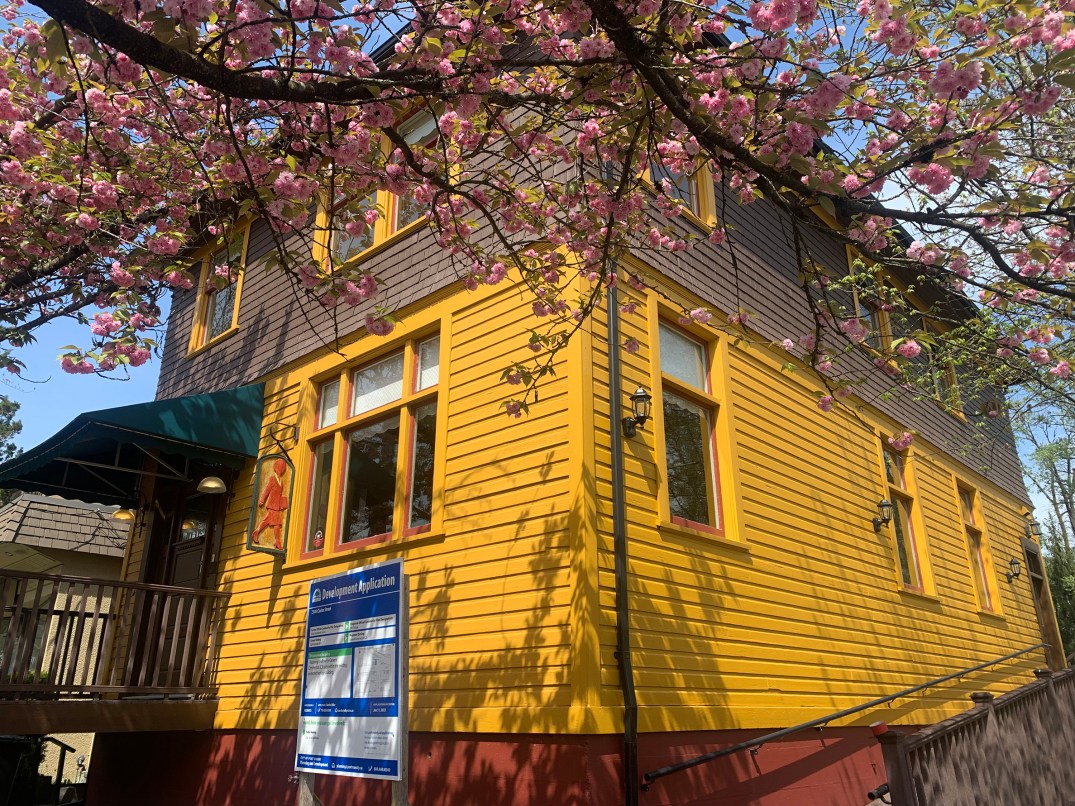
The Wood family, you see, lived above the city’s first Royal Bank branch on Clarke Street, and n’er-do-wells skulking around with a ladder in the pre-dawn hours of a warm spring morning in 1953 might have had more nefarious plans than a simple cat burglary.

PHOTO COURTESY DENIS WOOD
A young Denis Wood outside the Royal Bank branch in Port Moody that was also his family’s home.

While the bank branch moved elsewhere long ago, and the building is on Port Moody’s heritage registry, its current owners are hoping to ensure its character inside and out lives on — by applying for rezoning from light industrial use, so the interior can’t be gutted by any future owners.

For Denis, the building was home.

He was seven years old when his dad became the bank’s manager in 1948 and moved the family into the living quarters on the second floor.

Now living on an acreage south of Vanderhoof after retiring from a career that included several years in the banking industry himself, Wood said growing up above a bank felt important.

But it also came with a weight of responsibility as he and his siblings — brothers Ken and John along with their sister, Roberta — had to be constantly reminded by their mom, Kathleen, not to make too much noise to disturb the business going on a floor below.

PHOTO COURTESY DENIS WOOD
Kathleen Wood relaxes in the living room of her family’s home above the Royal Bank branch in Port Moody in 1953.

Wood said the short commute down a set of stairs on the eastern side of the building meant the family could enjoy breakfast together before Robert Wood pulled on his suit jacket and tightened his necktie to head down to open the bank at 8:30 a.m., the kids headed off to school or play and Kathleen Wood tended to the home or volunteered at the United Church on St. Johns Street.

As a banker, Robert Wood was a pillar of the community: A former flight control officer in England when he served in the Air Force prior to joining Royal Bank, he managed a staff of eight to 10, including a stenographer who wrote his letters to customers by hand.

“She had beautiful handwriting,” recalled Denis.

PHOTO COURTESY DENIS WOOD
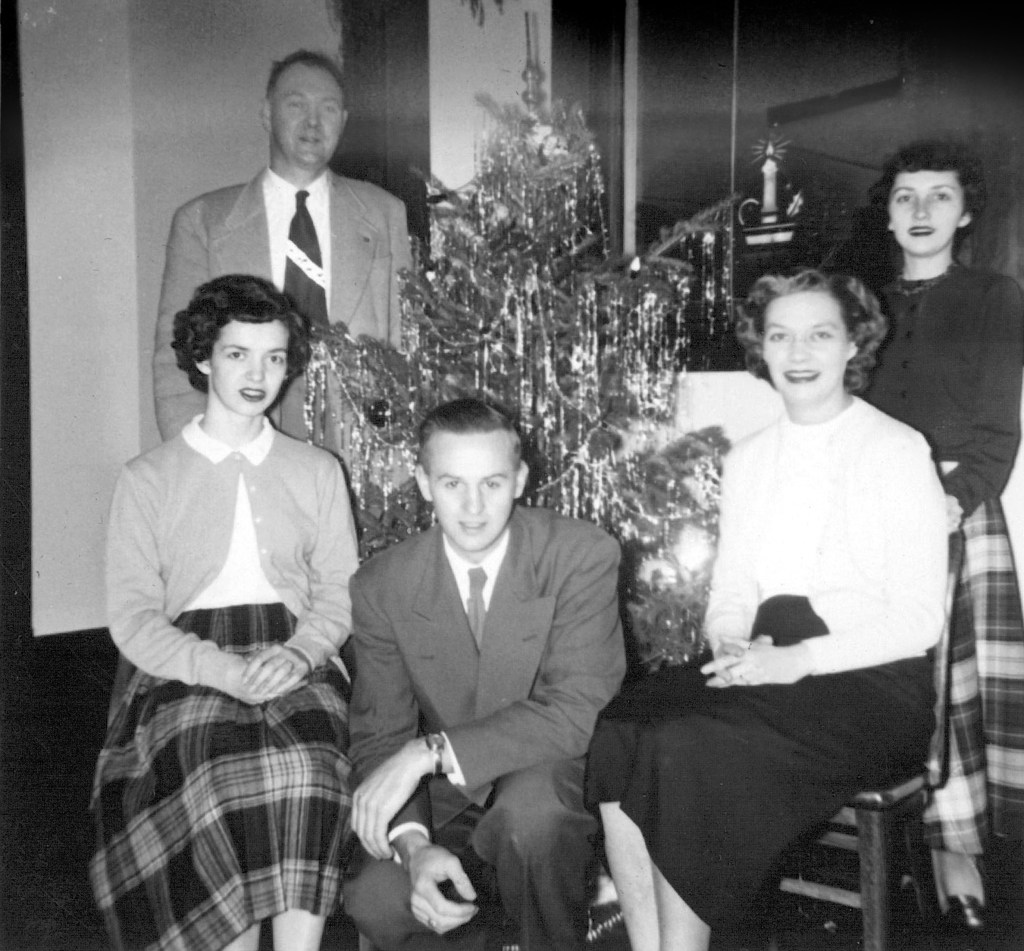
Staff at the Port Moody branch of the Royal Bank celebrate Christmas in 1953.

Among Robert Wood’s duties was ensuring the security of the bank’s two vaults: A big time-locked unit on the main floor and a smaller one in the basement, where he once offered to store a customer’s winning ticket in the old — and then illegal — Irish Sweepstakes, until he could file for his prize.

Also in the basement was the coal furnace that Robert Wood had to stoke himself to keep the building warm.

“I was often amazed the place never burned down,” Denis said, as the tall chimney could easily become choked with soot.

In the mid-20th century, Clarke Street was Port Moody’s thriving commercial core. There was a hotel kitty-corner from the bank, a dry goods store next door, a liquor store nearby and the railway tracks were busy with freight trains pulled by hulking steam engines.

“It was a good town to grow up in,” Denis said.

And while the family moved up to a new home on Gatensbury Avenue in 1956 when the Royal Bank opened a new branch on St. Johns Street, Robert Wood continued to serve as its manager until he retired.

Since then, the building has had various commercial tenants, including a Sears outlet shop for a stretch.

Denis said he still occasionally drives by when he’s in the Lower Mainland to visit his son, who lives in Coquitlam.

As for the possible heist that was foiled by his light sleep, Denis said the men down below were so shocked when his dad leaned his head out the window to yell at them, they scrambled into the bushes along the railway tracks, leaving their ladder behind.

‘Like a hug from a mother’: Port Moody museum exhibit swaddles visitors with sounds of First Nations’ languages

This story first appeared in the Tri-City News on May 30, 2022

British Columbia’s 203 First Nations speak 34 distinct languages.

Several exist only orally and as elders who know them pass away, they’re at risk of disappearing entirely.

A few already have.

The effort to ensure Indigenous languages survive and even flourish is the subject of a travelling exhibit from the Royal BC Museum that’s being featured at Port Moody Station Museum from June 1 to Sept. 10.

The exhibit, entitled Our Living Languages First Peoples’ Voices in BC, is comprised of information panels and interactive stations that tell the history of those languages, the threats to their continued existence and the work that’s being done to document them so they can be passed on to future generations.

Language is a vital component of First Nations’ culture, said Kate Kerr, coordinator of the travelling exhibit.

“Language is unifying,” she said. “It gives you a sense of history and a sense of place.”

But colonial pressures like assimilation, residential schools and even diseases such as smallpox and measles that were introduced to Indigenous communities by white settlers have diminished many First Nations’ languages, undermining their culture.

Bringing those languages back to life has been a bit of a hodgepodge effort over the years, championed by dedicated researchers making audio and video recordings of conversations with elders. Digitizing the tapes has been an ongoing project at Royal BC, Kerr said.

The work is also important to reconciliation, she added.

Language can help build bridges to empathy and awareness, Kerr said. Witness recent initiatives to resurrect Indigenous names for places like Belcarra Regional Park, now təmtəmíxʷtən in the language of the Tsleil-Waututh, or səmiq̓wəʔelə, the Kwikwetlem title for the Riverview lands in Coquitlam.

Brianne Egeto, the manager/curator at Station Museum, said she reached out to learn about the language program that the Tsleil-Waututh community is doing.

“The Port Moody Heritage Society is committed to taking steps towards reconciliation,” she said. “We hope this exhibit will get people wanting to learn more about all the other initiatives taking place within the communities.”

Kerr said the display has the potential to open the ears and hearts of visitors, especially when they take a seat in the specially-constructed “cradleboard theatre” that envelopes listeners in recordings of conversations in Indigenous languages, many of them with children.

The effect is intentional, she said, as a cradleboard is a portable carrier woven or built of wood that is used by many First Nations to transport infants in their first few months of life.

“It swaddles the listener,” Kerr said. “We want it to feel like a hug from a mother.”

Old-world press has a famous connection

In 2018, happenstance reconnected me with one of my favourite stories of my career. A local historian had acquired a vintage letterpress that had once belonged to a renowned typographer in New Westminster whom I had photographed back when I worked at the NewsLeader.
I did two takes on the story; a personal recollection of that reconnection for the New Westminster Record, the paper I once competed against, and this more general feature for the Tri-City News.

These words you’re reading were crafted by the reporter then turned into digital zeros and ones before being printed on paper or uploaded to the internet.

Not so many years ago, the craft of printing words on paper was a much more involved, laborious task that involved dozens of skilled journeymen and tons of heavy machinery.

Each word, paragraph and story committed by the writer to paper had to be assembled into frames with cast lead dies, letter-by-letter, punctation mark-by-punctuation mark.

Those heavy frames, or chases, were then placed into large presses where rollers inked the raised metal letters and then pressed paper to them to create a printed page.

But like so many arduous processes borne of the Industrial Age, manual typesetting and printing is becoming a craft lost to the speed, efficiency and cleanliness offered by computers.

“There is a problem when we go too fast,” said Markus Fahrner a Port Moody graphic artist who’s also the coordinator at the city’s Station Museum.

So, in an effort to slow the process of printing down and reconnect with the skills he first learned as a boy growing up in Germany where his mother was a book designer, Fahrner acquired a Colt Armoury press that was likely built by the gun manufacturer in 1914.

But this is no ordinary old press.

It was once owned and carefully maintained in working order by Jim Rimmer, a world-renowned typographer and letterpress printer who kept the old-world craft alive from a studio behind his New Westminster home until he died in 2010.

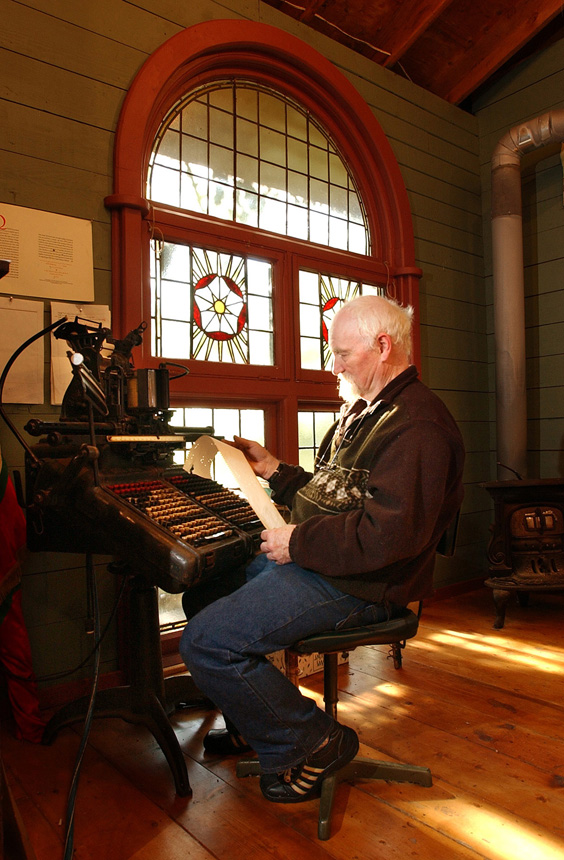
MARIO BARTEL/THE TRI-CITY NEWS The late Jim Rimmer at work on one his vintage typesetters in the studio of his New Westminster home in 2004. Rimmer was a world-renowned typographer who salvaged and restored old printing press machinery and then used them to create fonts and print limited edition posters and books that were coveted by collectors.

The stained glass lit studio and Rimmer’s basement were crammed with old letterpresses, typesetters and spare parts salvaged from print shops that had moved on in technology. He restored the machines and designed dozens of typefaces in metal for printing limited edition books, posters and one-sheets that were coveted by collectors around the world.

Shortly after his death, he was awarded the Robert R. Reid award for lifetime achievement or extraordinary contributions to the book arts in Canada by the Alcuin Society, a volunteer society dedicated to the artistic side of printing books.

Fahrner said he couldn’t believe the good fortune of his find.

While much of Rimmer’s printed works, printers’ dummies, manuscripts and type design work was acquired by the Simon Fraser University library after his passing, the fate of his collection of heavy machinery was less certain.

Fahrner said it’s important to keep the old machines running rather than have them end up as decorative curios in restaurants or antique shops.

“I really admire the craft,” Fahrner said. “I love the way it forces you to slow down.”

In fact, a poster that might take Fahrner a couple of hours to design on a computer can take days to assemble and print on the letterpress.

“It’s slow and precise,” he said. “You suddenly have so much to know about the process, like the way the ambient temperature of the room affects the ink, the type of paper you’re using, how heavy an impression you want to make on the paper.”

The end product, Fahrner said, has a depth and life that can’t be produced digitally.

“There’s an intrinsic love and energy in the things you produce,” he said.

And an eternal connection to a craft whose purpose hasn’t changed since Johannes Gutenberg invented the printing press in the 15th century, even as its technology evolves.

Centuries-old cedar stump a symbol of Burke Mountain’s past

This story first appeared in the Tri-City News on Dec. 1, 2017

It may not have the girth and renown of Stanley Park’s Hollow Tree but Dave Menzies and his wife, Nola, think a centuries-old cedar stump on Burke Mountain is worth saving as development encroaches ever closer.

Menzies, 77, found the stump when he was exploring the woods near the couple’s Burke Mountain home, where they’ve lived since the 1970s. The retired firefighter and fire inspector makes frequent forest forays with his metal detector to root out artifacts from the mountain’s logging past, hiking along old, grown-over trails that were once used by shake-splitters for transporting cedar logs.

It was along just such a trail he encountered the big old hollow stump, its interior charred likely decades ago from — Menzies surmises — a forest fire that swept across the mountain in 1914. The trunk of the tree fell over and was absorbed into the forest floor years ago, possibly weakened by the fire, as he can find no evidence that it had been logged.

Menzies recalled his first impression of the stump, which is big enough that up to 10 people could stand in its hollowed interior: “I was in awe.”

Over the years, he and Nola have brought their children and grandchild to visit the stump and marvel at its history.

Menzies estimates the stump could be 500 years old — maybe as old as 1,000 years — and it probably soared 200 or 300 feet into the air at the peak of its health.

“You don’t get to see them this close anymore,” he said. “I can sense it has the history.”

But its days may be numbered.

Developers are moving into the area. Roads have been built, trees have been tagged. The wild mountain is being tamed by subdivisions of expansive homes.

“Everything is just turning into progress,” said Nola Menzies, 75.

She’d like to see the stump saved, protected from the march of bulldozers through the woods or maybe even uprooted and moved to where it can become an educational monument to what the mountain once was.

“It’s real, it’s natural,” she said.

But first, people have to know about it, which is why the Menzies have pulled on their gumboots and stomped across the loamy, rain-saturated forest floor to show it to a reporter.

Said Dave Menzies, peering up through the hollowed stump towards the sky: “This is amazing.”

In the glory days of radio, this woman helped start a massive Port Moody electronics company

This story first appeared in the Tri-City News on April 10, 2021

The matriarch of a family that put Port Moody on the leading edge of electronics manufacturing for a decade in the 1950s and 60s has died.

Isabelle Chisholm passed away recently, at the age of 98. She was the widow of Edward Chisholm, who built a state-of-the-art manufacturing plant for radios and televisions sets in Port Moody in 1954. She was also the keeper of some of the company’s secrets.

As the chief purchasing agent for Vancouver Radio Laboratories Ltd., Isabelle Chisholm’s tasks included travelling to Ottawa to clear secret components for radio receiver sets used by the Canadian armed forces during WWII that were invented by Edward, and manufactured in his first plant, on Vancouver’s Main Street.

When the war ended, the company’s name was changed to Chisholm Industries Ltd., and it shifted production to table-top radios and phonographs as well as a fancy new technology — black-and-white televisions.

Edward Chisholm’s factory was the only such manufacturer west of Toronto, and Isabelle became the first female electronics salesperson.

“She was a dynamo of energy and conviviality who knew how to make a sale,” said Isabelle Chisholm’s obituary. “She was widely known for her ability to successfully connect with the public through telephone calls.”

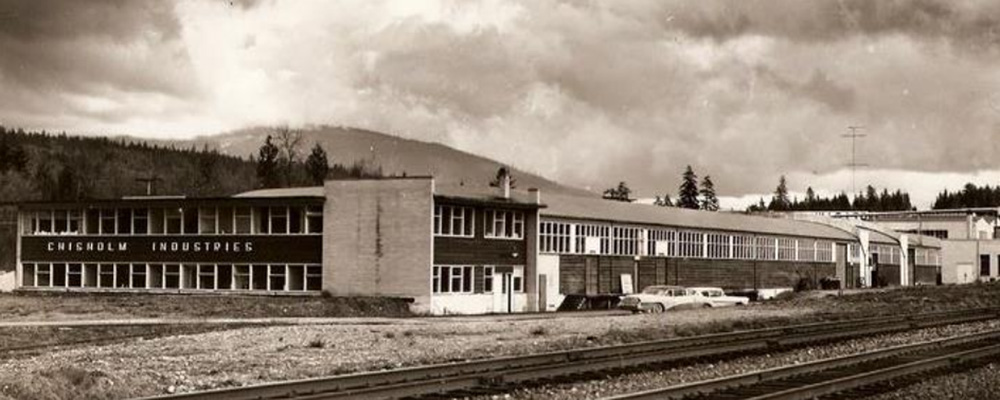
In 1947, the 12,000 sq. ft. plant in Vancouver was damaged by fire, and the Chisholm’s began casting about for space to build a larger facility. They found it in Port Moody, purchasing 23 acres along Murray Street, and construction began in 1954 on a new 56,000 sq. ft. state-of-the-art factory that also contained offices, a warehouse as well as sheet metal and tool and die shops.

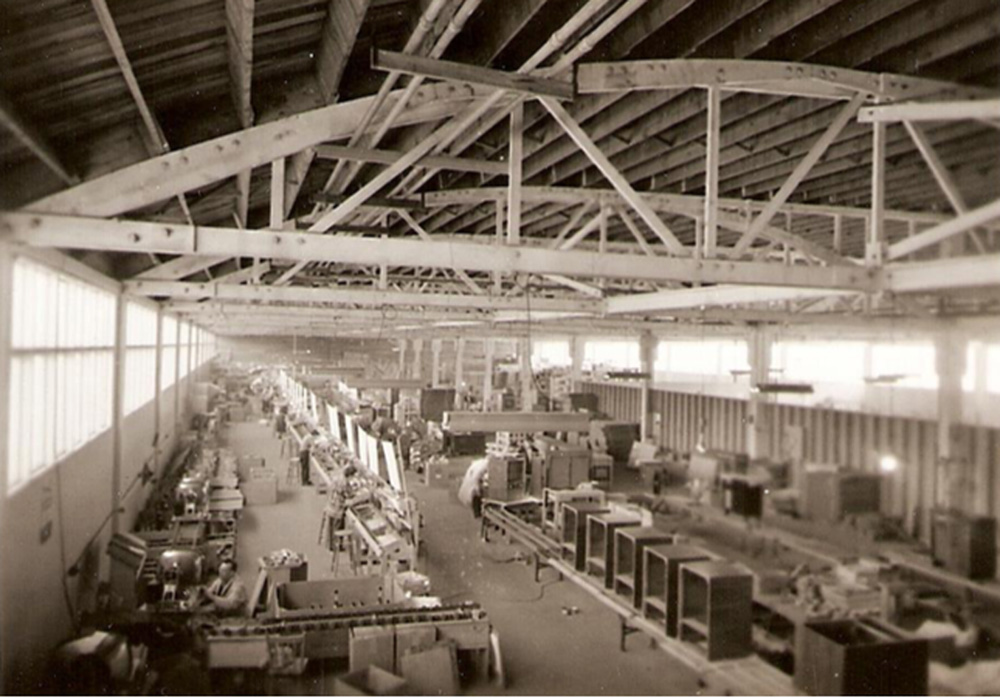
CANADIAN VINTAGE RADIO The factory floor at the old Chisholm Industries plant on Murray Street in Port Moody.

The new home for Chisholm Industries Ltd. opened the next year.

The sprawling main plant was 100 ft. wide and 14 ft. high. The assembly line for radios and TVs was 400 ft. long. There was a large baking oven to fuse paint to the metal surfaces and a cabinetry section to manufacture and finish the high-quality wood boxes that held the radios and TVs. All the engineering and design for products was done in-house.

At peak capacity, the plant could produce 200 units a day.

Chisholm’s products were renowned for their quality. They were sold at furniture stores like Wosks and department stores like Eatons, Woodwards, Sears and Hudson’s Bay.

But the advent of colour television changed the industry. The cost of retooling the plant for the new technology was too high, and more and more electronic goods were being engineered and constructed offshore, in countries like Japan.

By 1963, the factory floor at Chisholm Industries was mostly manufacturing wooden cabinets for other electronics companies like Bell and Packard. The following year, Edward Chisholm closed the plant, with much of its machinery going to his son, James, so he could start Glenayre Electronics in Burnaby.

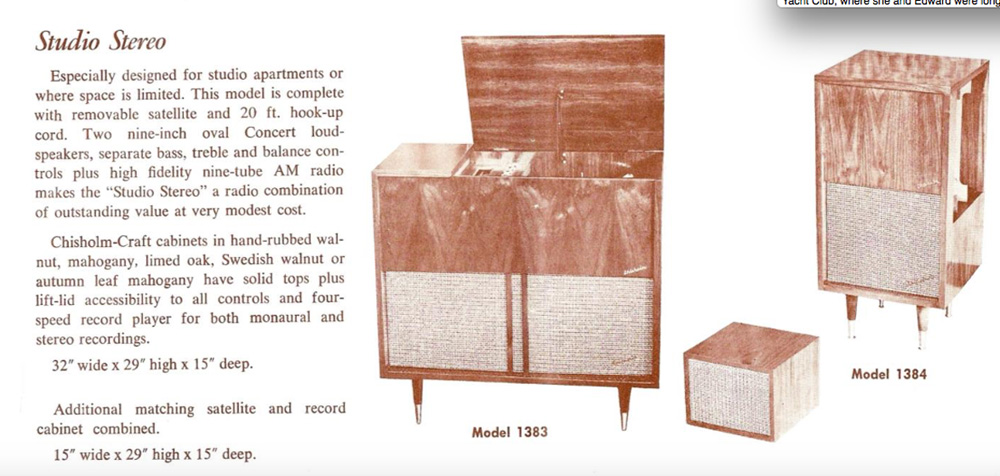
CANADIAN VINTAGE RADIO A catalogue listing for one of the home hifi systems built by Chisholm Industries in Port Moody.

The sprawling plant in Port Moody was rented to various industrial and commercial tenants, as well as artists, until it was demolished in 2010.

In 1967, Isabelle and Edward Chisholm retired to Victoria and began growing hydroponic tomatoes on an acreage they’d purchased, selling much of their produce to the Empress Hotel and Woodwards.

After Edward died in 1968, Isabelle became a successful realtor and joined boards of directors for several organizations like the PNE, ICBC, the Boys and Girls Club and the C.H.I.L.D. Foundation. She was also politically active with the Social Credit party in B.C., as well as the federal Reform, Canadian Alliance and Conservative parties.

According to her obituary, Isabelle Chisholm’s ashes will be scattered near the Royal Vancouver Yacht Club, where she and Edward were longtime members, and his ashes were also distributed.

He’s one of the greatest villains in Canadian sports history. But this Coquitlam historian has a new take

This story first appeared in the Tri-City News on April 2, 2023

A Coquitlam historian is shining a new light on one of the greatest villains in Canadian sports lore.

Cedric Bolz, who graduated from Centennial Secondary School and is now the head of the history department at Douglas College, has published an alternate view of the famous 1972 Canada–Russia hockey Summit Series as it was seen through the eyes of Josef Kompalla, one of its referees.

Kompalla and fellow West German Franz Baader were among eight officials that also included four Americans, a Swede and a Czech, who were assigned to work the historic eight-game showdown between hockey’s two greatest superpowers at the time.

But Canadians old enough to remember the grainy live TV pictures from Moscow’s Luzhniki Ice Palace beamed into their living rooms and even classrooms that September 51 years ago likely recall Kompalla as Public Enemy No. 1.

Even those who’ve only experienced the series second hand through subsequent memoirs and documentary films have come to vilify Kompalla, said Bolz.

Authors and filmmakers have perpetuated the narrative that the amateur referee was out of his depth arbitrating games between hockey’s greatest professional players and the mighty Soviets.

Or worse, they surmised, he was a complicit East German.

Until now.

Historical oversight

Bolz’s book, The September He Remembers, flips Kompalla’s story and his role in the Summit Series on its head.

It is, Bolz said, “the first step in correcting a major historical oversight and adding a new chapter in the Summit Series’ growing, mutable legacy.”

Bolz said he first heard of Kompalla through his stepfather, who’d played professional hockey in Germany for several years before moving his family to Canada.

The veteran referee officiated more than 2,000 games including several world championships.

He was revered in Europe and even earned a place in the International Ice Hockey Federation’s (IIHF) Hall of Fame.

But in Canadian hockey lore, Kompalla is a reviled figure who seemed determined to derail the NHLers from affirming their superiority on the ice over the Soviet Union.

J.P. Parise physically attacked him after he’d been assessed a penalty.

He bore the wrath of a frustrated Alan Eagleson who threatened to pull the Canadian players from Game 8 when Kompalla drew the refereeing assignment for the decisive match and then threw chairs on the ice after Parise was penalized.

He was chased down hallways by players and team officials incensed by some of the calls he’d made.

Even after the series was decided, Kompalla was harassed by Canadian players on a flight to Prague for an exhibition game against the Czech national team.

A quiet life of retirement

When Bolz heard Kompalla was still alive and living a quiet life of retirement in Krefeld, Germany, he reached out, determined to reconcile the conflicting images of a pivotal character in hockey’s greatest drama who seemed to have been left behind by its history.

“I’m a historian,” Bolz said. “My job is to document voices and this was a voice.”

SUBMITTED PHOTO Douglas Collage history instructor Cedric Bolz (right) visits with German referee Josef Kompalla while working on a book about his role in the 1972 Summit Series. Behind them is a photo of Kompalla being attacked by Canada’s J.P. Parise after he was called for a penalty.

Over the course of three years of phone interviews and personal visits, Bolz constructed a picture of a modest man who still loves hockey but can’t understand how he’d become one of the sport’s most notorious characters.

“It was always baffling to him,” Bolz said.

Road blocks

Along the way, Bolz ran into road block after road block in his efforts to gain an understanding of how Kompalla had become so despised.

Players still alive like Red Berenson and Wayne Cashman wouldn’t talk to him.

Even Ken Dryden, the Hall of Fame goaltender renowned for his thoughtful ruminations about the sport and the author of two memoirs about the series, wouldn’t return his calls.

“A narrative had been crafted,” Bolz said. “Legend continues to trump the way things actually were.”

Bolz believes Kompalla was collateral damage, a convenient foil, in a hockey drama that was supposed to be a friendly cultural exchange in the spirit of detente that had started to warm the Cold War in the early 1970s, but quickly devolved into an athletic expression of the great divide that still existed between East and West when the Canadian NHLers realized their opponents wouldn’t be the pushovers as some observers had billed them.

Time is running out

Kompalla is now 87 and Bolz is all too aware time is running out to set the record straight and reform the referee’s legacy.

He hopes his book, academically annotated and cross-referenced through multiple sources, will help facilitate that.

Some who’ve helped shape the story of the Super Series over the past 51 years have taken notice and made overtures to correct the historical record, like the popular misconception that Kompalla was from East Germany when in fact he’d fled communist rule in Poland and settled in Germany’s democratic West.

As for the aging referee who continues to travel the German countryside to attend hockey games as a spectator, Bolz said he still holds out hope his contribution to the series will be recognized in a more positive light.

“He’s always wondered why he’s never been invited to any of the series’ anniversaries,” Bolz said of Kompalla. “It’s important to see him get some sort of closure.”