How this white van delivers health care to homeless populations in the Tri-Cities, Burnaby and New West

This story first appeared in the Tri-City News on March 15, 2024

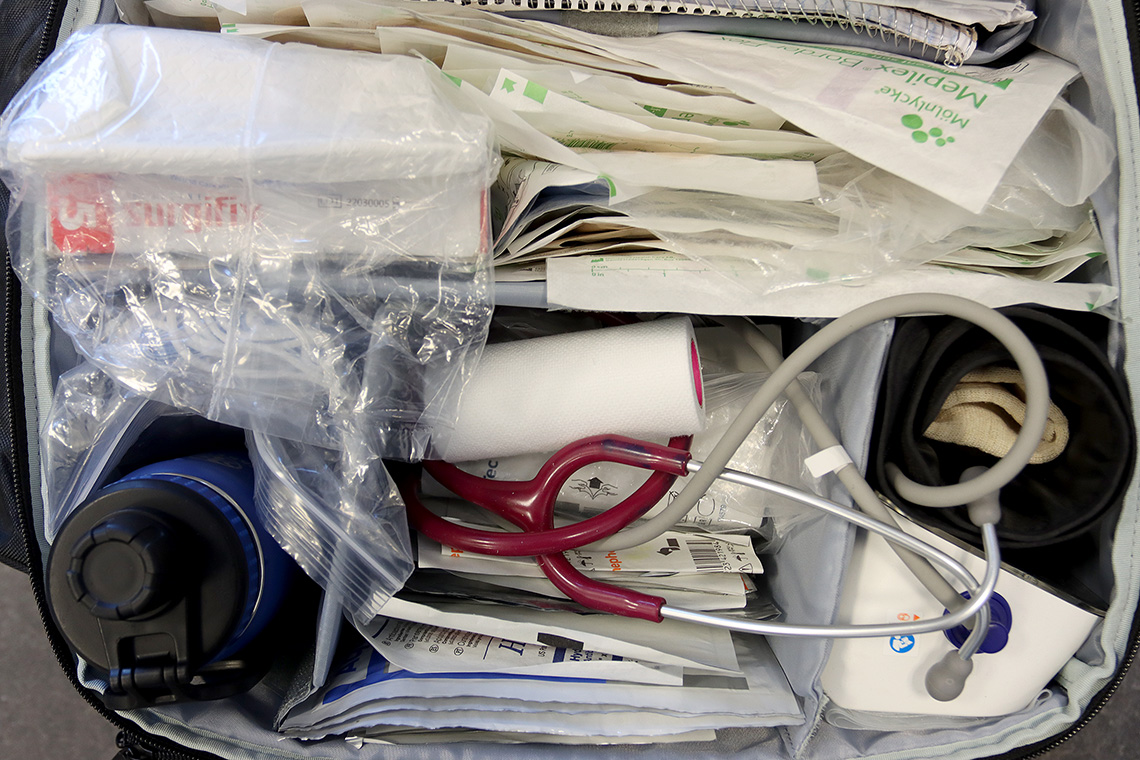
A nondescript white panel van is delivering relief to homeless populations in the Tri-Cities, Burnaby, New Westminster and Maple Ridge.

Sometimes it even helps save a life.

During a recent visit to the 3030 Gordon shelter in Coquitlam, medical professionals from the Integrated Homelessness Action Response Team (IHART) mobilized when a man overdosed on the sidewalk.

As his worried street buddies gathered round and coaxed the man to wake up, registered and practical nurses administered naloxone and notified emergency services. After several tense moments he was responsive and sitting up. Minutes later he walked away, getting on with his day as if nothing unusual had occurred.

While the IHART program has been operating since 2022, it’s been bringing its suite of health care, mental health and outreach services to the streets in a van since January.

Lower barriers

The program’s co-ordinator, Paolo Palomar, said the idea is to lower barriers to obtaining health care for a population that would otherwise have none.

The mobile team that functions five days a week is comprised of nurses, clinicians, as well as peer support, outreach and social workers.

“We’re able to give wrap-around support,” Palomar said.

Sometimes that means distributing requisitions for blood work.

Sometimes it requires cleaning and dressing infections or providing counselling. Sometimes it’s just handing out a cup of warm coffee.

“We try not to say ‘no’ to anyone who needs help,” Palomar said.

The IHART team travels to homeless encampments, shelters and church parking lots across the northern communities of the Fraser Health district while a second team helps out in eastern communities like Abbotsford, Mission, Chilliwack, Agassiz and Hope. The service is also being extended to Surrey.

Relationship of trust

The vans follow a regular schedule so clients can anticipate their visits, Palomar said.

It also helps them build a relationship of trust, he added.

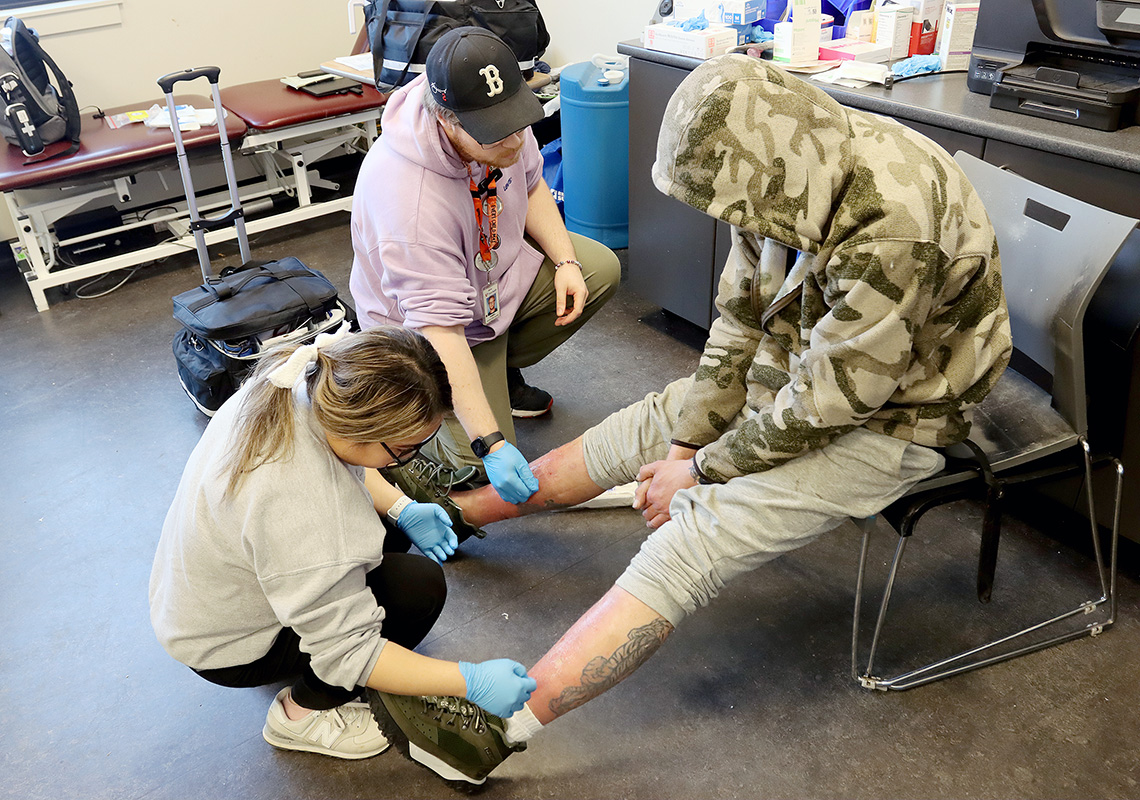
Twice a month the team offers special foot care clinics as homeless populations often have to deal with a condition called “street feet” because their shoes and socks are wet from the rain and snow.

The frontline care can help alleviate the chronic nature of health disparities the homeless population experience, said Fraser Health clinical operations director Sherif Amara.

“The vans provide an additional tool to bring care further into these remote, often secluded, settings.”

Palomar said it can also be the stepping stone to more comprehensive care and possibly even the start of a journey off the streets.

“We’re trying to bridge the gap,” he said.
Fear and violence at the hospital

This story first appeared in the Tri-City News.

Fraser Health says it’s bolstered security at Port Moody’s Eagle Ridge Hospital after three assault incidents since last November.

But the union representing nurses says that’s not enough.

A spokesperson for the health authority that administers Eagle Ridge said it’s increased security staffing at the hospital and is conducting “refreshed training for site security” as well as coaching to “ensure all personnel are fully equipped to manage violent incidents when they occur.”

The latest of those incidents was last Thursday, March 27, when Port Moody police were called just before 8:30 p.m. for a report of a man assaulting a medical staff member.

On Jan. 14, staff at Eagle Ridge were advised to seek a safe escape route when a man started waving a machete “in a threatening manner” inside the hospital’s emergency ward. And last Nov. 20, a 41-year-old man was arrested and charged after a nurse sustained serious injuries in an alleged assault by a discharged patient.

Alarming trend

Tristan Newby, the vice-president of the BC Nurses’ Union, said the run of incidents at Eagle Ridge is alarming, adding it “isn’t the environment that nurses should be expected to provide care and patients shouldn’t have to be concerned about being exposed to violence.”

Newby said a program that places at least two special “relational security officers” around the clock at busy hospitals like Burnaby and Royal Columbian in New Westminster should be expanded. The officers are trained in de-escalation techniques and are qualified to restrain violent patients.

“They’re fully integrated with the care team, they’re not reactive,” Newby said. “Nurses really appreciate that extra support.”

Newby said a recent survey of the union’s membership indicates 34 per cent of nurses in British Columbia are exposed to weapons at least once a month and 81 per cent have experienced verbal or emotional abuse while on duty. He said the problems are exacerbated by understaffing.

“People are coming in stressed,” Newby said. “The stress is compounded because we have a nursing shortage and the emergency department is larger.”

Constant contact

Fraser Health said it is maintaining constant contact with the Port Moody Police Department to debrief on the recent incidents and staff at Eagle Ridge have access to the health authority’s critical incident stress management team.

“When distressing incidents occur, we will reach out to the impacted individuals to offer support,” said the spokesperson.

As well, all hospital sites maintain joint occupational health and safety committees that work with unions to review workplace violence incidents and suggest improvements.

Other measures include:
• integrated security to support staff and medical personnel
• a regional workplace violence committee
• violence risk assessments for all sites
• training in Code White procedures
• provincial workplace violence training for all staff to de-escalate and minimize threats
• advance team response training for key hospital units on the handling of physical violence from patients

Newby said violent incidents like those that occurred at Eagle Ridge compound problems like the nursing shortage.

“We can train up as many nurses as we have capacity, but in the absence of a safe working environment, people are going to choose where they know they can go home safe.”