Port Moody council rejects call to designate old sawmill site for a waterfront park

A 31-acre site on Port Moody’s waterfront won’t be set aside for a park.

But the city will look at implementing a requirement any future development of the property immediately west of Rocky Point Park include “a large, contiguous” park space.

Port Moody Mayor Meghan Lahti said including such a requirement in the city’s new official community plan (OCP) will send a message to potential developers of the property that building “a bunch of small pocket parks” won’t pass muster.

“I do think we should be articulating what we want to see down there in terms of park,” Lahti said during a special meeting of council Tuesday, Oct. 7, that passed first reading of the draft OCP.

The document maps Port Moody’s growth and aspirations by guiding its planning and land use decisions and policies for the next 25 years.

Coun. Diana Dilworth said a motion to designate as a “special study area” the waterfront property where the Flavelle cedar sawmill formerly operated for more than 100 years would essentially re-litigate a decision made by council on 2018 allowing its redevelopment into a high-density, mixed-use neighbourhood for more than 7,000 residents.

“I don’t see the value in rehashing this now,” Dilworth said of the former industrial property that had been a special study area prior to its 2018 redesignation. “We have the opportunity to negotiate with the owner, and I do believe that’s a better option than downzoning the property to park.”

Redevelopment plans since 2015

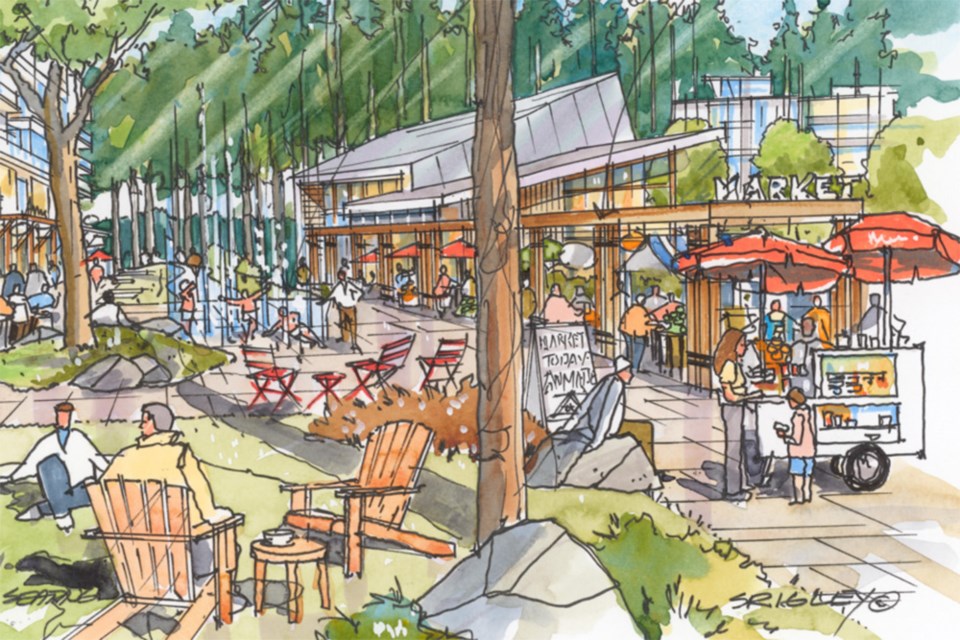
Flavelle’s owner, Surrey-based AP Group, had championed redevelopment of the mill site since 2015 but has yet to act on any of its plan that includes 11 towers ranging from 16 to 38 storeys, a low-rise rental building, retail, office and light industrial spaces as well as the future possibility of a hotel and congregate care facility. The company also pledged to dedicate almost a quarter of the site to public park space, including a boardwalk along the shore linked to Rocky Point Park.

AP Group closed the sawmill in 2020 and quickly dismantled its industrial structures. Since then the vacant property has been used for various film and TV productions, including the acclaimed Shogun limited series that won several Emmy Awards in 2024.

Coun. Haven Lurbiecki, who introduced the motion, said rather than laying fallow, the old sawmill property should become an extension of the 9.5-acre Rocky Point Park, especially as Port Moody’s population grows.

“Let us go back to the community to come up with a plan that better meets the needs of the community,” Lurbiecki said.

But Coun. Kyla Kowles said such a strategy is already in the works after council approved a new master plan for the city’s iconic waterfront park last November that makes its expansion a priority.

“This council has stated clearly over and over again that expansion of Rocky Point Park is a major priority and that has not changed,” she said.

Coun. Amy Lubik said the park’s expansion to the west is a work in progress.

“We haven’t seen a development application yet and I think we’ll see lots of changes,” she said. “Expanding Rocky Point Park will be a part of the site’s redevelopment.”

Tower heights stay maxed at 39 storeys

MARIO BARTEL PHOTO A draft of Port Moody’s new official community plan formalizes a framework to allow towers up to 39 storeys in the neighbourhood immediately around the Moody Centre SkyTrain station.

Meanwhile, another motion introduced by Lurbiecki to scale back development plans in the draft OCP for the neighbourhood immediately surrounding the Moody Centre SkyTrain station also failed to gain traction.

Lurbiecki said formalizing a maximum tower height of 39 storeys for the neighbourhood in the document “invites land speculation” and restricts the city’s ability to negotiate with developers for enhanced amenities like daycare spaces in exchange for allowing higher density.

Lurbiecki said a maximum of up to 20 storeys as outlined in provincial housing legislation mandating the construction of high-density development around mass transit stations should suffice.

“These heights exceed provincial legislation requirements,” she said. “No-one is buying these condos. We’re sitting in a market where thousands of these are sitting empty.”

But Port Moody’s manager of policy planning, Mary De Paoli, said council has already set the bar at 39 storeys with the development framework it had previously adopted to help create a true city core and reducing it to 20 storeys would limit the city’s ability to achieve any amenities in the neighbourhood. Recently, Vancouver-based PCI Development started site preparation for two 39-storey rental towers next to the SkyTrain station that were approved by council in April.

Dilworth said ultimately the market will decide appropriate density.

“If condos aren’t going to sell, buildings won’t get built,” she said.

Podiums to be studied

An additional motion to remove a requirement towers in the Moody Centre neighbourhood be constructed atop podiums of three to six storeys did, however, find mixed favour amongst councillors. While such podiums won’t be required in the new OCP, staff will study the implications of mandating their height requirements.

De Paoli cautioned removing the podium requirement presents “a significant shift” that would likely result in taller towers.

“There will be pressure to put density somewhere,” she said, adding podiums are also an attractive landing spot for amenities like retail and commercial spaces.

Knowles said the decision to build atop a podium should be left to the developer.

“Wouldn’t we want to remain open to a developer coming forward with a new design?” she said.

Dilworth agreed.

“This provides some flexibility,” she said.

Other tweaks to be integrated into the draft OCP prior to second reading later this fall include:

  • removing several aging townhomes on the south side of Dewdney Trunk Road between St. Johns Street and Viewmount Drive from a special study area that covers the entirety of St. Johns’ south side from Clarke Road to the Coquitlam border
  • designating the site currently occupied by Port Moody Elementary school to be parkland when construction of the new elementary school further east on St. Johns Street is completed

OCP process started in 2020

The process to craft Port Moody’s new OCP began in 2020 but had to be paused in 2024 to allow staff to integrate elements of new provincial housing requirements. A revised first draft was presented to council in July.

One said it’s imperative recreation facilities like ice rinks keep pace with anticipated growth while another feared Port Moody would become “a city of towers, from one end of St. Johns to the other, tower after tower and tower.”

A third speaker cautioned council its decisions around the OCP will “define the identity of Port Moody for generations to come.”

Once the draft document passes second reading, it will be referred to external agencies like Metro Vancouver for further comment prior to a public hearing expected some time in December.

Final adoption could occur by March, 2026, said De Paoli.

Climate change challenges Tri-Cities’ mountain bike community

This story first appeared in the Tri-City News on Nov. 17, 2022

Extended droughts that dry out trails, atmospheric rivers that wash them away and intense windstorms that blow down trees are among the climate change challenges facing the local mountain biking community.

So members of the Tri-Cities Off Road Cycling Association (TORCA) are adapting the way they build and maintain trails, as well as how they ride them.

Karaleen Gioia, a director of the group that comprises more than 750 members, said a typical trail on Burke Mountain that 10 years ago was little more than a dirt path — snaking through the towering trees — must now be armoured with logs and rocks, bridged with hand-built wooden spans to allow for drainage in heavy rains, and contoured with little rolling hills to slow riders who could otherwise speed erosion.

“It’s not just getting out and shredding the trails anymore,” Gioia said. “Climate change is another factor to consider.”

Drought followed by big rainstorms can be especially damaging to trails.

Gioia said the former strips all the moisture from the ground that binds the trail beds, threatening their structural integrity, while the latter results in washouts as rainfall in unprecedented volumes is forced to travel in unfamiliar places.

Having both in quick succession can be disastrous.

“The result is that more work is required to make trails sustainable,” Gioia said. “More labour up front means less work in the long run.”

Most of that labour is supplied by a corps of dedicated volunteers over the course of several organized “trail days” throughout the year, as well as individual privateer efforts to stay on top of repairs.

“We’re pretty proactive.”

Gioia said most local mountain bikers are tuned into the privileged position they enjoy with so many trails so close to home. Many file trail reports to document any problems or areas of concern they identify as they roll up or down the mountains.

Gioia said keeping the trails in good shape benefits all users, including hikers, dog walkers and trail runners. That’s been especially important since the advent of the COVID-19 pandemic that sent more people outdoors for their recreational pursuits as activity helped reduce their stress and kept them healthier.

Gioia said education of proper trail use etiquette and trail building technique is an ongoing process. TORCA liaises frequently with other user groups, as well as land managers, to devise solutions to problems as they arise.

“We’re learning as we go,” she said.

In fact, a report conducted for Parks Canada by the Calgary-based Miistakis Institute that looked at the ecological impacts of mountain biking said that’s the case for most user groups, as there’s been very little empirical research.

“Specific effects associated with mountain biking activity and infrastructure characteristic of the other types of use have emerged as a considerable gap in the research literature,” concluded the review.

Gioia said land managers and user groups are gaining a greater appreciation that bolstering trails will help keep mountain biking viable even as weather extremes intensify.

“It makes it enjoyable for all the users,” she said.


Massive Anmore development proposal put on hold at the last minute

A proposed development that would almost triple Anmore’s population has been put on hold.

Less than 15 minutes prior to Monday’s scheduled public hearing into an application by Icona Properties to amend the village’s official community plan so its proposal could proceed, Greg Moore, the company’s CEO, announced on social media it’s taking a break.

“We’ve made the decision to withdraw our current application for Anmore South,” said Moore on Facebook. “This break will allow us to explore a path forward that brings more unity than discord.”

cona was seeking approval to construct 1,750 new townhouses, low-rise apartments and single-family homes on 150 acres of property the company owns near the corner of 1st Avenue and Sunnyside Road.

On June 10, Anmore council voted 5-1 to send the proposal to a public hearing that was scheduled to begin at 6 p.m., Monday, June 23.

The development plan has drawn consternation from residents of the bucolic village of 2,200 residents, as well as the neighbouring communities of Port Moody and Belcarra.

A group called the Anmore Neighbours Community Association (ANCA) said Icona’s plan poses “significant financial risks” to the village.

ANCA’s Rod Rempel and Harriette Chang said a consulting company’s estimate it would cost the developer $30 million to construct services like water, sewer and storm drainage could end up leaving Anmore taxpayers on the hook.

Residents also expressed concerns about increased traffic, higher costs for policing and fire services, as well as public safety because the two access roads into and out of the village could become blocked or overwhelmed in an emergency like a wildfire.

Port Moody and Belcarra shared similar trepidation.

In a letter sent to Anmore council in May, Port Moody Mayor Meghan Lahti said neither the village nor developer had yet to initiative discussions about utility upgrades, most of which would be routed through its urban neighbour.

“If the village is interested in partnering on this infrastructure, time is of the essence,” she said.

Belcarra Mayor Jamie Ross said traffic and construction activity during the development’s 25-year built-out would also be a hardship on his village.

Anmore councillor Doug Richardson, who cast the only dissenting vote to move Icona’s proposal forward, said the project “is not needed.”

But supporters on council countered the village needs to do its part to address Metro Vancouver’s housing crisis by providing “more affordable” options.

Anmore Mayor John McEwen said development of the property is inevitable.

“Change is happening and we want to have a say in how it gets developed.”

In his statement, Moore acknowledged the division his company’s plan has incited.

“This was never our intent,” he said. “In fact, it’s the opposite of what we set out to do.”

Moore said Icona wants to create “a people-first community” that’s “more connected and more compassionate.”

Flow device will make beavers feel at home

This story first appeared in the Tri-City News on Nov. 28, 2018

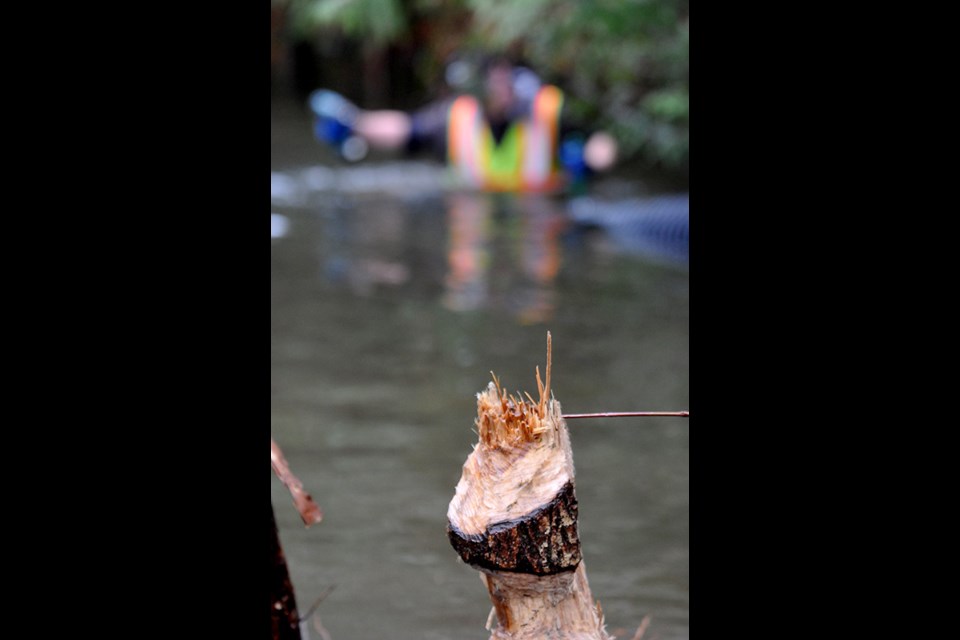
As the city of Port Moody works to create a strategy to manage beavers that take up residence in its waterways, a group of advocates for the industrious rodents is helping make one furry family feel right at home.

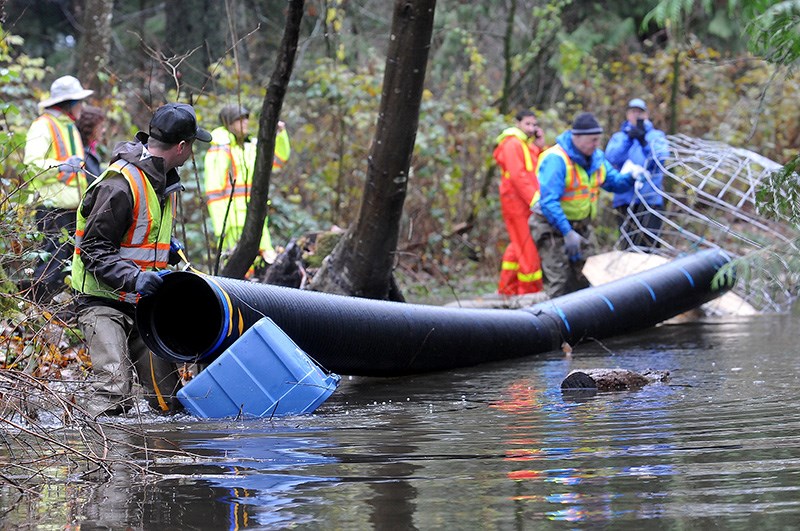
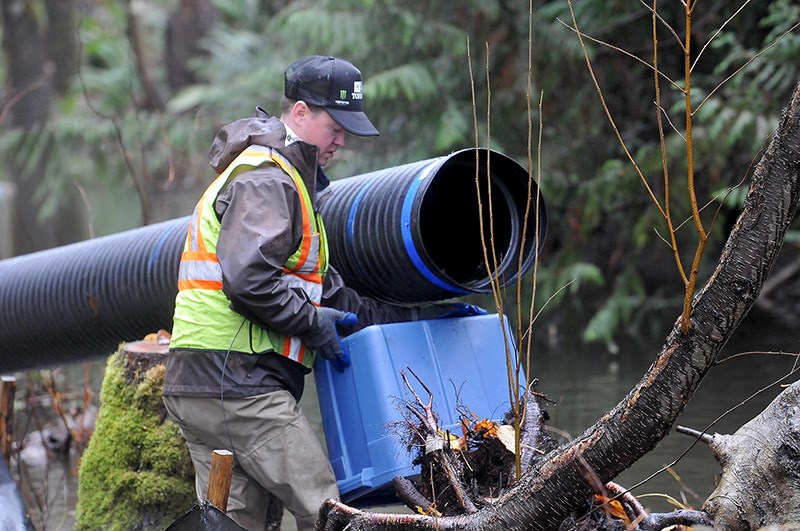
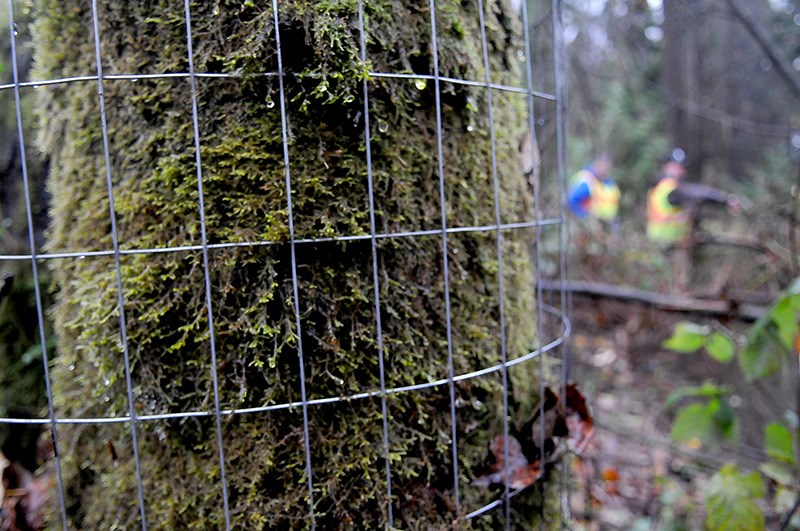
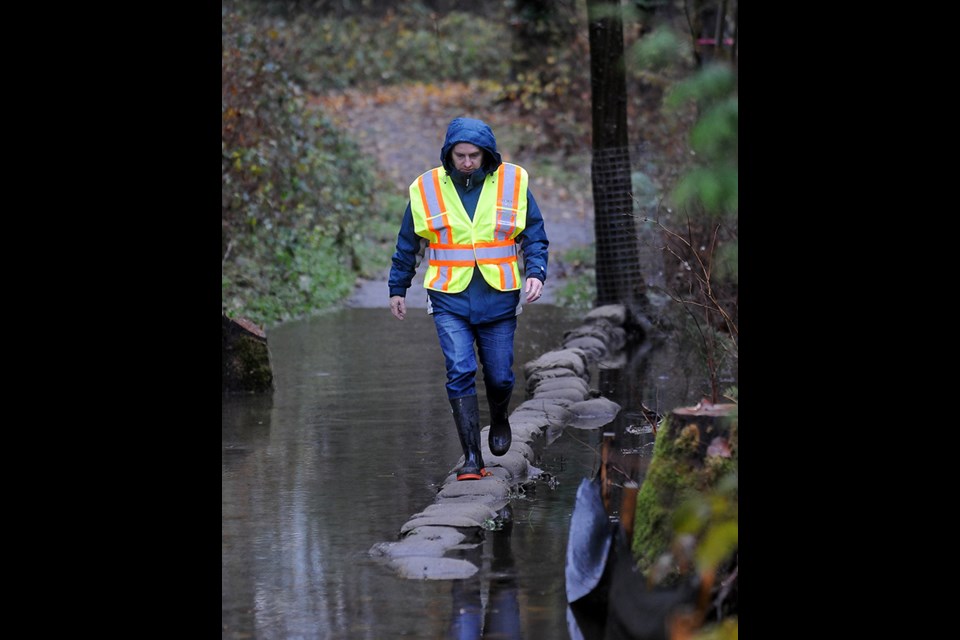
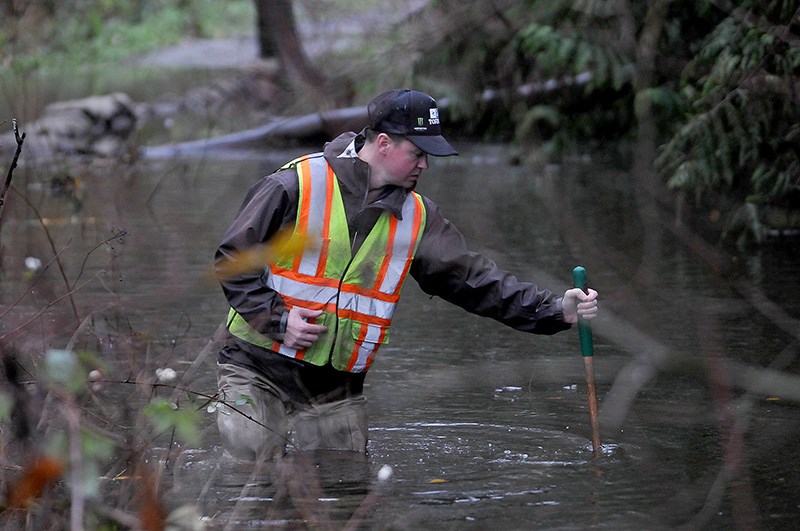
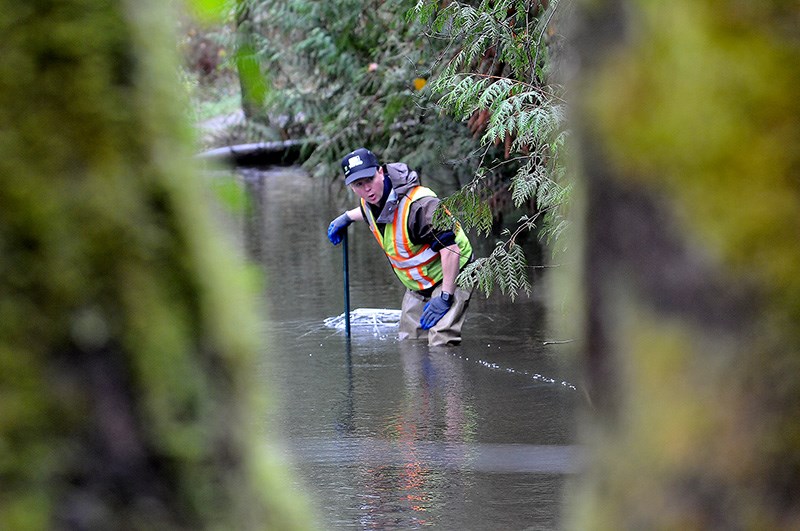
Volunteers from The Fur-Bearers along with local supporters like Jim Atkinson and his partner, Judy Taylor-Atkinson, were immersed in Suter Brook Creek last Friday, installing a device that regulates the level of water in the pond that has been created by a family of beavers between city hall and the public works yard.

The beavers moved there after they were displaced from their previous home in nearby Pigeon Creek when an attempt by the city to evict them from a drainage pipe went awry and a young kit was drowned.

Taylor-Atkinson said the flow device will drain water from the pond — formed when the beavers built a dam — to ease flooding while still maintaining a level high enough for the animals to feel safe.

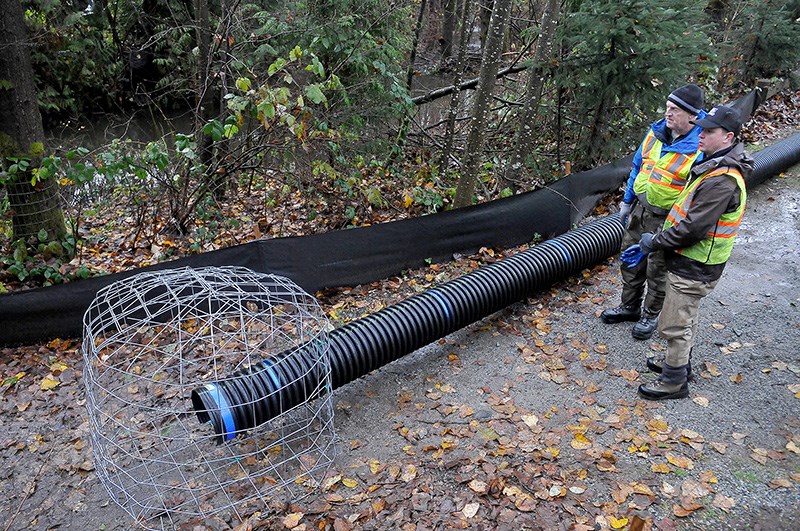
The device consists of a 40-foot length of double-wall, 12-inch culvert pipe with holes drilled into it so it can be sunk to the bottom of the pond. One end of the pipe is protected by a galvanized steel cage so the beavers can’t get in while the other end is inserted through the dam.

Taylor-Atkinson explained the effect is like punching a hole through the dam but the beavers can’t rebuild the structure or plug the pipe. She said after some initial curiosity, they will get used to the pipe and carry on with their lives.

“They need to have the water at a certain level to protect their home and family,” she said. “They’ll do whatever they have to do.”

The device was installed with the city’s blessing and several employees, including city manager Tim Savoie, stopped by to observe the work.

“This is a big step in the city’s beaver management plan,” Taylor-Atkinson said, adding she hopes interpretive signage can be installed to explain to visitors walking along the path that runs along the creek about what is happening. “I think the beavers will be fine.”

Centuries-old cedar stump a symbol of Burke Mountain’s past

This story first appeared in the Tri-City News on Dec. 1, 2017

It may not have the girth and renown of Stanley Park’s Hollow Tree but Dave Menzies and his wife, Nola, think a centuries-old cedar stump on Burke Mountain is worth saving as development encroaches ever closer.

Menzies, 77, found the stump when he was exploring the woods near the couple’s Burke Mountain home, where they’ve lived since the 1970s. The retired firefighter and fire inspector makes frequent forest forays with his metal detector to root out artifacts from the mountain’s logging past, hiking along old, grown-over trails that were once used by shake-splitters for transporting cedar logs.

It was along just such a trail he encountered the big old hollow stump, its interior charred likely decades ago from — Menzies surmises — a forest fire that swept across the mountain in 1914. The trunk of the tree fell over and was absorbed into the forest floor years ago, possibly weakened by the fire, as he can find no evidence that it had been logged.

Menzies recalled his first impression of the stump, which is big enough that up to 10 people could stand in its hollowed interior: “I was in awe.”

Over the years, he and Nola have brought their children and grandchild to visit the stump and marvel at its history.

Menzies estimates the stump could be 500 years old — maybe as old as 1,000 years — and it probably soared 200 or 300 feet into the air at the peak of its health.

“You don’t get to see them this close anymore,” he said. “I can sense it has the history.”

But its days may be numbered.

Developers are moving into the area. Roads have been built, trees have been tagged. The wild mountain is being tamed by subdivisions of expansive homes.

“Everything is just turning into progress,” said Nola Menzies, 75.

She’d like to see the stump saved, protected from the march of bulldozers through the woods or maybe even uprooted and moved to where it can become an educational monument to what the mountain once was.

“It’s real, it’s natural,” she said.

But first, people have to know about it, which is why the Menzies have pulled on their gumboots and stomped across the loamy, rain-saturated forest floor to show it to a reporter.

Said Dave Menzies, peering up through the hollowed stump towards the sky: “This is amazing.”

Port Moody says proposed Anmore development presents ‘significant concerns’

A proposed development that could triple the population of the village of Anmore will have deleterious impacts on Port Moody’s utilities infrastructure, traffic, environment, wildlife, parks and recreation facilities, says the city’s mayor.

Meghan Lahti says a plan by developer Icona Properties to build 2,200 new homes on 150 acres of property the company owns at the corner of 1st Avenue and Sunnyside Road will even increase the risk of a human-caused wildfire by further expanding into the wildland-urban interface.

The draft assessment, to be considered for endorsement by Port Moody council at its meeting on Tuesday, May 27, expands on a preliminary review of Icona’s development proposal sent by Lahti to Anmore at the end of March, along with a request for more time so city staff could thoroughly evaluate several technical studies that weren’t made publicly available until April 10.

While Anmore council agreed to extend its deadline for Port Moody to submit its comments to April 30, several members were irked.

“We can’t let another municipality drive our decisions,” said Coun. Polly Krier.

“They seem to be getting overly involved in Anmore’s business,” added Coun. Kim Trowbridge.

In the latest assessment, that spans 10 pages, Lahti details a number of “significant concerns” with the proposed project, which requires an amendment to Anmore’s official community plan (OCP) along with agreement from Metro Vancouver to expand the region’s urban containment boundary before it can proceed.

More infrastructure for utilities

They include significant expansion of infrastructure like water, sewer and drainage services in Anmore, much of which would have to be built through Port Moody.

But, said Lahti, the village has yet to engage its neighbour to explore how such construction might proceed, where it could occur and how it would be paid for.

“While coordination with the city could be explored if a coordinating or shared project is identified, no such discussions have taken place to date,” Lahti said.

She added Port Moody is currently upgrading water and sewage infrastructure along Ioco Road and any further work to accommodate growth in Anmore would require full resurfacing of the busy roadway.

“If the village is interested in partnering on this infrastructure, time is of the essence.”

Lahti also said an alternate routing of utility services through Bert Flinn Park is a non-starter because of its designation as a park and the risk to environmentally sensitive areas like Mossom Creek.

“Adding an additional 4,500 residents in close proximity to Bert Flinn Park will add pressure on the natural environmental values of this park,” she said.

Strain on road network

Adding so many new residents would also strain the only two roads — Ioco Road and East Road — that connect Anmore to the rest of Metro Vancouver.

Lahti said the routes could only support about 40 per cent of the anticipated traffic the new development would generate without significant upgrades. But physical constraints like topography, property accesses and limited capacity at some intersection make them unfeasible.

Suggestions put forth in the technical reports to ease traffic along the two-lane roadways, like the construction of bus laybys and increasing transit service also aren’t realistic, said Lahti. The former poses safety and livability concerns while Translink hasn’t confirmed any plans for the latter.

A possible private shuttle service operated to link residents of the new development to transit in Port Moody would also have to run all day to be effective, Lahti said.

“Without a realistic and coordinated transportation strategy, the Icona development risks overwhelming the existing network in the area,” she said.

That assessment echoes an independent review of the proposed development’s traffic impacts conducted by Port Coquitlam transportation engineer Alon Weinberger on behalf of the Anmore Neighbours Community Association.

He said vehicle trips during peak hours on weekday afternoons would be almost double the estimate provided in the technical study commissioned by Icona. And the numbers would only increase further on warm summer weekends when visitors from around the region flock to Buntzen Lake and Belcarra Regional Park.

Environment and wildlife also impacted

Lahti said Port Moody’s environment and wildlife would also be negatively impacted by the proposed development, including the water quality of Schoolhouse Creek’s watershed, increased risk of erosion along its banks, decline in forest health because of changes in light availability and fewer trees and a narrowing of wildlife corridors.

As well, Lahti said, Port Moody will bear the pressure of more residents accessing its parks, playgrounds, sports fields and recreational amenities like its pools and arena as the proposed development includes only one park, a 5 km network of greenways for casual users and a 20,000 sq. ft. community centre that likely won’t include a pool or ice surface.

“The future residents will need to leave Anmore to meet these needs,” Lahti said.

As part of its process to consider Icona’s proposal, Anmore also solicited comments from Belcarra, local First Nations, TransLink, Metro Vancouver, Fraser Health, BC Ambulance, RCMP, the Vancouver Fraser Port Authority and village residents.

Anmore planning consultant Tim Savoie, who recently retired as Port Moody’s city manager, said all interested parties will have more opportunities to provide commentary if the development proposal gets to a public hearing and again if its referred to Metro Vancouver for its approval to expand the urban containment boundary.