Port Moody council rejects call to designate old sawmill site for a waterfront park

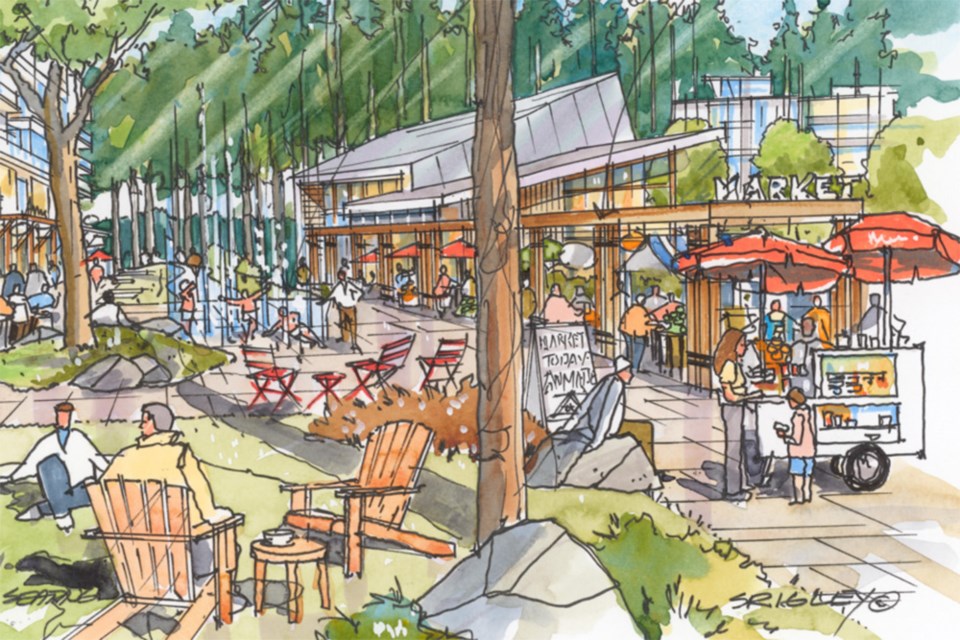
A 31-acre site on Port Moody’s waterfront won’t be set aside for a park.

But the city will look at implementing a requirement any future development of the property immediately west of Rocky Point Park include “a large, contiguous” park space.

Port Moody Mayor Meghan Lahti said including such a requirement in the city’s new official community plan (OCP) will send a message to potential developers of the property that building “a bunch of small pocket parks” won’t pass muster.

“I do think we should be articulating what we want to see down there in terms of park,” Lahti said during a special meeting of council Tuesday, Oct. 7, that passed first reading of the draft OCP.

The document maps Port Moody’s growth and aspirations by guiding its planning and land use decisions and policies for the next 25 years.

Coun. Diana Dilworth said a motion to designate as a “special study area” the waterfront property where the Flavelle cedar sawmill formerly operated for more than 100 years would essentially re-litigate a decision made by council on 2018 allowing its redevelopment into a high-density, mixed-use neighbourhood for more than 7,000 residents.

“I don’t see the value in rehashing this now,” Dilworth said of the former industrial property that had been a special study area prior to its 2018 redesignation. “We have the opportunity to negotiate with the owner, and I do believe that’s a better option than downzoning the property to park.”

Redevelopment plans since 2015

Flavelle’s owner, Surrey-based AP Group, had championed redevelopment of the mill site since 2015 but has yet to act on any of its plan that includes 11 towers ranging from 16 to 38 storeys, a low-rise rental building, retail, office and light industrial spaces as well as the future possibility of a hotel and congregate care facility. The company also pledged to dedicate almost a quarter of the site to public park space, including a boardwalk along the shore linked to Rocky Point Park.

AP Group closed the sawmill in 2020 and quickly dismantled its industrial structures. Since then the vacant property has been used for various film and TV productions, including the acclaimed Shogun limited series that won several Emmy Awards in 2024.

Coun. Haven Lurbiecki, who introduced the motion, said rather than laying fallow, the old sawmill property should become an extension of the 9.5-acre Rocky Point Park, especially as Port Moody’s population grows.

“Let us go back to the community to come up with a plan that better meets the needs of the community,” Lurbiecki said.

But Coun. Kyla Kowles said such a strategy is already in the works after council approved a new master plan for the city’s iconic waterfront park last November that makes its expansion a priority.

“This council has stated clearly over and over again that expansion of Rocky Point Park is a major priority and that has not changed,” she said.

Coun. Amy Lubik said the park’s expansion to the west is a work in progress.

“We haven’t seen a development application yet and I think we’ll see lots of changes,” she said. “Expanding Rocky Point Park will be a part of the site’s redevelopment.”

Tower heights stay maxed at 39 storeys

MARIO BARTEL PHOTO A draft of Port Moody’s new official community plan formalizes a framework to allow towers up to 39 storeys in the neighbourhood immediately around the Moody Centre SkyTrain station.

Meanwhile, another motion introduced by Lurbiecki to scale back development plans in the draft OCP for the neighbourhood immediately surrounding the Moody Centre SkyTrain station also failed to gain traction.

Lurbiecki said formalizing a maximum tower height of 39 storeys for the neighbourhood in the document “invites land speculation” and restricts the city’s ability to negotiate with developers for enhanced amenities like daycare spaces in exchange for allowing higher density.

Lurbiecki said a maximum of up to 20 storeys as outlined in provincial housing legislation mandating the construction of high-density development around mass transit stations should suffice.

“These heights exceed provincial legislation requirements,” she said. “No-one is buying these condos. We’re sitting in a market where thousands of these are sitting empty.”

But Port Moody’s manager of policy planning, Mary De Paoli, said council has already set the bar at 39 storeys with the development framework it had previously adopted to help create a true city core and reducing it to 20 storeys would limit the city’s ability to achieve any amenities in the neighbourhood. Recently, Vancouver-based PCI Development started site preparation for two 39-storey rental towers next to the SkyTrain station that were approved by council in April.

Dilworth said ultimately the market will decide appropriate density.

“If condos aren’t going to sell, buildings won’t get built,” she said.

Podiums to be studied

An additional motion to remove a requirement towers in the Moody Centre neighbourhood be constructed atop podiums of three to six storeys did, however, find mixed favour amongst councillors. While such podiums won’t be required in the new OCP, staff will study the implications of mandating their height requirements.

De Paoli cautioned removing the podium requirement presents “a significant shift” that would likely result in taller towers.

“There will be pressure to put density somewhere,” she said, adding podiums are also an attractive landing spot for amenities like retail and commercial spaces.

Knowles said the decision to build atop a podium should be left to the developer.

“Wouldn’t we want to remain open to a developer coming forward with a new design?” she said.

Dilworth agreed.

“This provides some flexibility,” she said.

Other tweaks to be integrated into the draft OCP prior to second reading later this fall include:

  • removing several aging townhomes on the south side of Dewdney Trunk Road between St. Johns Street and Viewmount Drive from a special study area that covers the entirety of St. Johns’ south side from Clarke Road to the Coquitlam border
  • designating the site currently occupied by Port Moody Elementary school to be parkland when construction of the new elementary school further east on St. Johns Street is completed

OCP process started in 2020

The process to craft Port Moody’s new OCP began in 2020 but had to be paused in 2024 to allow staff to integrate elements of new provincial housing requirements. A revised first draft was presented to council in July.

One said it’s imperative recreation facilities like ice rinks keep pace with anticipated growth while another feared Port Moody would become “a city of towers, from one end of St. Johns to the other, tower after tower and tower.”

A third speaker cautioned council its decisions around the OCP will “define the identity of Port Moody for generations to come.”

Once the draft document passes second reading, it will be referred to external agencies like Metro Vancouver for further comment prior to a public hearing expected some time in December.

Final adoption could occur by March, 2026, said De Paoli.
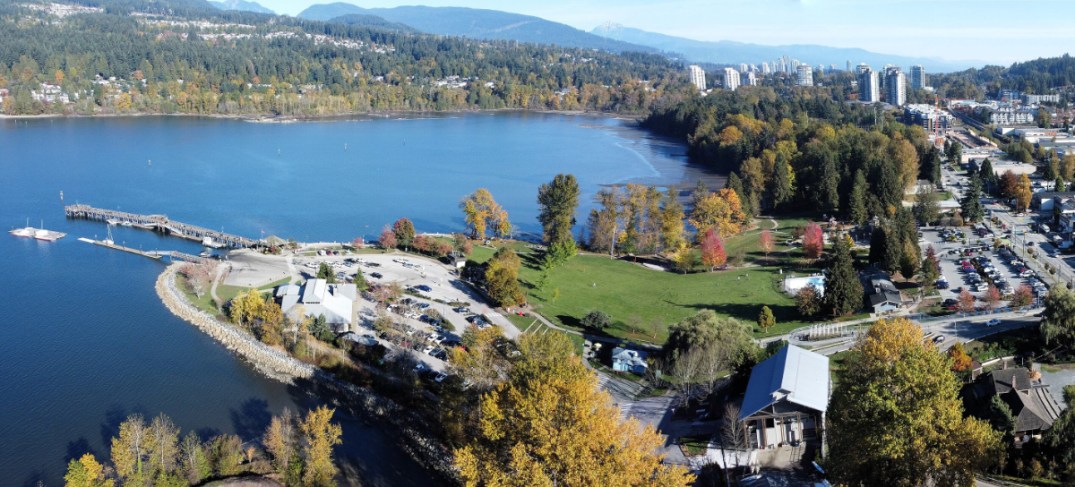
Port Moody ponders future growth, need for amenities and infrastructure

Port Moody councillors say they will continue to advocate for more support from senior levels of government to construct infrastructure like schools and recreation facilities as the city faces increasing pressure to meet housing targets imposed by the province.

But that did little to ease the concerns of residents speaking at a special town hall about Port Moody’s new draft official community plan (OCP) held at the Inlet Theatre on Monday, Sept. 15.

Several said they fear what Port Moody will look like as its population continues to swell to more than 74,000 by 2050.

“We might not have the infrastructure to accommodate that growth,” said one.

“Port Moody isn’t ready for this much density,” said another.

Some residents fretted about insufficient roads and parking spaces, while one offered even transit won’t be able to keep pace with demand.

‘Unrecognizable’

Former councillor Steve Milani said though the draft document falls short in addressing the city’s economic needs. He said the plan will “transform Port Moody into something unrecognizable.”

The draft OCP is a roadmap for the city’s growth and aspirations for the next 25 years. It guides planning and land use decisions and policies as well as the provision of services and infrastructure.

A community’s OCP must be updated every five years.

Port Moody initiated its current draft update in 2020 with a series of virtual visioning workshops followed by an initial community survey in January, 2021.

Since then, there has been three more surveys as well as several workshops and open houses. A previous town hall held in April attracted 50 attendees, prompting a call from Coun. Haven Lurbiecki for a subsequent gathering with councillors in attendance along with support from senior staff.

Not set in stone

Coun. Samantha Agtarap said none of the provisions in the OCP are set in stone.

“This is an idea of what the city might look like 20 years into the future,” she said. “It doesn’t mean it’s going to happen. Things can and do change.”

Coun. Diana Dilworth said it will be incumbent upon council to work with the provincial government to ensure amenities keep pace with population growth.

“We’ve heard a lot of concerns about infrastructure,” she said. “This gives 25 years for whoever sits at this council table to demand the provincial government provide those things if they want housing.”

Coun. Callan Morrison agreed.

“We continue to advocate to higher levels of government for the best interests of our residents,” he said.

OCP vision

Port Moody’s draft OCP update envisions a vibrant community that is safe, inclusive, resilient and carbon neutral. Its unique and complete neighbourhoods are connected by an active transportation network and the city’s residents value its natural environs, heritage character, arts and culture.

To achieve those goals, said the document, Port Moody must promote sustainable transportation, compact, energy-efficient development, protect and restore its urban forests and other environmentally sensitive areas. The city must also expand its parkland supply while providing residents a range of housing options, including rental stock, that is well-served by transit, cycling and pedestrian infrastructure, as well as amenities like schools, civic facilities, commercial spaces and employment opportunities.

Some of the draft OCP’s substantive updates include:

  • building heights from 26 to 39 storeys in the neighbourhood immediately around the Moody Centre transit station
  • expansion of the Inlet Center neighbourhood to Dewdney Trunk Road
  • the establishment of three new special study areas to better identify the impacts and opportunities of their growth:
  • south of St. Johns Street, from the Coquitlam border to Clarke Road
  • the Suncor lands
  • industrial properties along Murray Street
  • increasing the city’s tree canopy coverage from 29 to 31 per cent
  • collaboration with neighbouring communities to address wildlife conflict
  • greater consideration for dog amenities to be a component of new development

Mayor Meghan Lahti said the document is “the culmination of several years of input” from the community.

Residents alienated

But Lurbiecki worried the relatively low turnout at the two town halls indicates residents are feeling alienated from the process.

“This plan doesn’t reflect their vision and they’re not engaged,” she said.

In a report, Port Moody’s manager of policy planning, Mary De Paoli, said the document will be considered by the city’s land use committee in early October before returning to council for first and second readings by the middle of that month.

It will then be referred to external agencies like Metro Vancouver for further comment before a public hearing in December.

De Paoli said if nothing distracts from that timeline, final adoption could occur by March, 2026.


Port Moody developers can score points for bike racks, EV charging

Port Moody wants builders of future developments to pay more heed to accommodating alternate transportation options.

On Sept. 9, council’s city initiatives and planning committee will consider a new mandatory points system that rewards infrastructure and incentives designed to change travel behaviour away from single-occupied vehicles.

A staff report said measures proposed by developers — like providing bicycle parking or a car share service, as part of their rezoning application — are currently negotiated on a case-by-case basis.

But new provincial housing legislation, which gives municipalities more authority to require plans for managing transportation demand, has opened the door for the implementation of more rigorous and standardized requirements.

“These changes to the legislative context created an opportunity to improve the city’s approach to TDM [transportation demand management],” said the report.

If council endorses the new plan put together by Urban Systems, a community consulting firm, developers will be able to choose their approach to managing traffic demand from a list of 38 options, including measures to encourage active transportation, transit use and parking management.

They will then be given a score based on the impact the measures have on shifting transportation away from single-occupant vehicles, reducing the number of vehicle kilometres travelled and greenhouse gas emissions.

And measures that can work together to change behaviours can achieve a higher score.

Some of the measures to be scored include:

  • enhanced bike parking that is sheltered from the elements
  • additional parking spaces with EV charging facilities
  • on-site daycare spaces

The report said the points system can be refined further based on feedback from developers.

“This approach will help ensure the requirements meaningfully promote sustainable transportation without placing an undue burden on applicants.”

Is a fried chicken restaurant at this Port Moody gas station a finger-lickin’ good idea?

Port Moody’s land use committee will recommend whether a proposal to add a fast food fried chicken restaurant to a gas station is a finger-lickin’ good idea.

The owner of the Petro-Canada station at 3102 St. Johns Street wants to add a KFC restaurant on the 32,098 sq. ft. lot between Buller Street and Electronic Avenue.

The application requires the property be rezoned for comprehensive development because its current C4 designation prohibits retail food services.

In a report, development planner Sarah Bercu said the proponent also wants to expand the gas station’s existing convenience store by about 300 sq. ft. and relocate it to the southeast corner of the lot, as well as increase the number of parking spots from 18 to 23 — eight of those are at the gas pumps.

The changes would require the removal of eight trees and two hedges and the existing westbound bus stop in front of the station would have to be relocated slightly east.

Bercu said while the property is within the Moody Centre transit-oriented-development area that recommends greater height and density for residential development, “the proposal to renew the commercial building is seen as an interim development until the property owner is prepared to fully develop the site to the highest and best use.”

Bercu said the proposal will also require a review by Port Moody’s architect and landscape architect consultants. She added modernizing the gas station and expanding its commercial component “is a positive advancement for the site.”

The land use committee next meets on Sept. 8. It is comprised of representatives from Port Moody’s various neighbourhoods who are able to review development applications to comment and offer advice on whether they’re an appropriate use of land prior to council’s consideration.

Housing prices squeezing families, seniors and immigrants: study

This story first appeared in the Tri-City News on Sept. 21, 2021

Port Moody has plenty of housing getting built or in the process of being approved to meet projected regional growth targets.

But the city needs more diversity of housing options to keep it affordable for families, single people, low income earners, immigrants and people with disabilities, says a study by community planning and development consultant, CitySpaces Consulting.

According to the study, which is to be presented to council Sept. 21, the gap between what households can afford to pay for housing in Port Moody and the housing that is available is growing.

Since 2013, the median sales prices of single-detached homes and townhouses have nearly doubled. Rents have also skyrocketed at a similar pace, and the vacancy rate for units with three or more bedrooms is currently 0 per cent. As a result, one in five residents are spending more than 30 per cent of their income on housing costs, a level that is considered a standard measure of affordability.

“Housing is becoming more expensive and fewer residents are able to enter the home ownership market,” said the report, adding Port Moody’s housing situation isn’t about a lack of dwellings to be built, or land where they can be located. Rather, there isn’t enough diversity of housing, including more affordable housing options, as well as accessible and family-friendly units.

Renters, who comprise one-quarter of city residents, are also struggling with higher costs and less availability, said the report. The median rent in Port Moody is now more than $1,000 per month while the vacancy rate for all units is between 0.5 per cent and 1.9 per cent — a healthy vacancy rate is between one and three per cent.

“Some households may be able to find a rental unit for less than $1,000 a month, but this typically comes with trade-offs such as being in poorer quality condition, further away from public transit and amenities and may not be suitable to meet their needs,” said the report.

But as Port Moody strains under the same market forces that afflict the entire Tri-Cities area, there are still ways to turn the tide.

“For Port Moody, the number of units being developed is keeping pace with demand,” said the report. “However, consideration to adjust the mix and secure rental housing and affordable units is a key area of opportunity.”

According to CitySpaces, zoning bylaws in Port Moody often don’t mesh with land designations, creating challenges to build viable developments without expensive lot consolidations, and some areas of the city are falling short of their potential to accommodate new, more diverse housing. Developers, the consultant said, require certainty and standardized policy in development expectations and incentives, as well as expedited processes to move approvals along.

And that could require more staff, said the report.

“It appears that the local government may need to scale-up staffing levels to match the scale of development to not only move projects through the process in a timely manner, but to also ensure that opportunities to capture units for affordability is not missed.”

The study was commissioned by Port Moody in 2020 to fulfill new regulations under the provincial Local Government Act for municipalities to complete housing needs reports by 2022, and then subsequent reports every five years after that. The consulting company used data from various sources including Statistics Canada, BC Assessment and BC Housing, as well as an online survey, virtual workshops, interviews and a workshop with city staff.

Massive Anmore development proposal put on hold at the last minute

A proposed development that would almost triple Anmore’s population has been put on hold.

Less than 15 minutes prior to Monday’s scheduled public hearing into an application by Icona Properties to amend the village’s official community plan so its proposal could proceed, Greg Moore, the company’s CEO, announced on social media it’s taking a break.

“We’ve made the decision to withdraw our current application for Anmore South,” said Moore on Facebook. “This break will allow us to explore a path forward that brings more unity than discord.”

cona was seeking approval to construct 1,750 new townhouses, low-rise apartments and single-family homes on 150 acres of property the company owns near the corner of 1st Avenue and Sunnyside Road.

On June 10, Anmore council voted 5-1 to send the proposal to a public hearing that was scheduled to begin at 6 p.m., Monday, June 23.

The development plan has drawn consternation from residents of the bucolic village of 2,200 residents, as well as the neighbouring communities of Port Moody and Belcarra.

A group called the Anmore Neighbours Community Association (ANCA) said Icona’s plan poses “significant financial risks” to the village.

ANCA’s Rod Rempel and Harriette Chang said a consulting company’s estimate it would cost the developer $30 million to construct services like water, sewer and storm drainage could end up leaving Anmore taxpayers on the hook.

Residents also expressed concerns about increased traffic, higher costs for policing and fire services, as well as public safety because the two access roads into and out of the village could become blocked or overwhelmed in an emergency like a wildfire.

Port Moody and Belcarra shared similar trepidation.

In a letter sent to Anmore council in May, Port Moody Mayor Meghan Lahti said neither the village nor developer had yet to initiative discussions about utility upgrades, most of which would be routed through its urban neighbour.

“If the village is interested in partnering on this infrastructure, time is of the essence,” she said.

Belcarra Mayor Jamie Ross said traffic and construction activity during the development’s 25-year built-out would also be a hardship on his village.

Anmore councillor Doug Richardson, who cast the only dissenting vote to move Icona’s proposal forward, said the project “is not needed.”

But supporters on council countered the village needs to do its part to address Metro Vancouver’s housing crisis by providing “more affordable” options.

Anmore Mayor John McEwen said development of the property is inevitable.

“Change is happening and we want to have a say in how it gets developed.”

In his statement, Moore acknowledged the division his company’s plan has incited.

“This was never our intent,” he said. “In fact, it’s the opposite of what we set out to do.”

Moore said Icona wants to create “a people-first community” that’s “more connected and more compassionate.”

Anmore residents’ group concerned as massive development proposal goes to public hearing

A group opposed to a proposed development in South Anmore says even a scaled-down version of the project still isn’t realistic.

Rod Rempel and Harriette Chang, of the Anmore Neighbours Community Association (ANCA), said the plan by Port Moody-based Icona Properties to build 1,750 new homes on 150 acres of property the company owns near the corner of 1st Avenue and Sunnyside Road presents “significant financial risks” to the village and its 2,200 residents.

Tuesday, June 10, Anmore council voted 5-1 to send the proposal to a public hearing on Monday, June 23, prior to its consideration the next night of third reading for an amendment to the village’s official community plan bylaw required for the development to proceed.

The extraordinary scheduling is in anticipation of a long night that could stretch to council’s regular meeting on June 24.

It’s also a month later than originally envisioned by Anmore Mayor John McEwen in April when council approved a timetable that included a community survey, workshops with various village committees, and an open house.

McEwen said council wanted to collect “as much feedback as we can” about the project, which the developer had slimmed down from 2,200 homes on May 27.

Those economies were achieved by trimming the number of standalone apartment buildings up to six storeys tall from 22 to 10 while adding another 200 ground-oriented townhomes from the original 760.

The project would also include a small strip of commercial units as well as a smaller 16,000 sq. ft. recreation centre, a 9.3-acre park and four kilometres of nature trails and greenways.

Too much

Rempel and Chang said it’s still too much.

They said a consulting company’s estimate that it will cost Icona $30 million to extend services like water, sewer and storm drainage to the development isn’t achievable and could leave Anmore taxpayers on the hook for any budget increases, especially given Port Moody’s objections to constructing any of that infrastructure along Ioco Road or through Bert Flinn Park, the two closest corridors to the proposed development.

In a letter sent to Anmore council in May, Port Moody Mayor Meghan Lahti said the city has yet to have any discussions with the village about accommodating possible utility upgrades.

“If the village is interested in partnering on this infrastructure, time is of the essence.”

Lahti said Port Moody also won’t entertain any thoughts of widening Ioco Road in anticipation of increased traffic to and from the new development.

“Without a realistic and coordinated transportation strategy, the Icona development risks overwhelming the existing network in the area,” she said.

Belcarra also concerned

Neighbouring Belcarra expressed similar concerns about construction management and transportation plans in a letter sent to Anmore on April 1.

Mayor Jamie Ross said Icona hasn’t addressed the impact its proposal would have on Bedwell Bay Road, Belcarra’s only road access point, nor has it provided a plan to manage stormwater during construction and once the development is completed.

Rempel and Chang said the scale of the project and its infrastructure requirements could quickly overwhelm Icona.

“This developer has never delivered a project of this scale in British Columbia,” they said. “Anmore citizens want to ensure we are not being unilaterally committed to future risks and costs.”

‘A complete Anmore’

But Paul Fenske, a principal of Placemark Design and Development, that’s working with Icona, said the proposal for Anmore South will provide the village with more diverse housing options and expanded tax base.

“It’s a vision for a complete Anmore,” he said.

Planning consultant Tim Savoie, who was formerly Port Moody’s city manager, said Icona’s plan “offers a unique opportunity to develop this site.”

Still, Coun. Doug Richardson said, “it’s not needed.”

In casting the only vote against moving the proposal forward, he added Icona’s proposal flies against Metro Vancouver planning guidelines to concentrate dense development around mass transit stations.

Richardson said the developer also doesn’t adequately address increased costs for police, fire and recreation services the village could face as its population more than doubles.

“I can’t support this in any way,” he said.

Coun. Paul Wevering, however, said Anmore has to do its part to address the region’s housing crisis by providing “more affordable” options.

“We’ve got a strategic plan that talks about different forms of housing, but we don’t really do anything about it,” he said, adding Icon’s plan offers “a future vision for this community.”

The June 23 public hearing will begin at 6 p.m. at Anmore’s Community Hub (2697 Sunnyside Rd.).

Revised Port Moody proposal still poses problems: report

A proposal to construct a six-storey commercial building on the south side of St. Johns Street next to the Spacca Napoli restaurant has now become a mixed-use project that includes 52 residential units with commercial and retail spaces on the ground floor.

But challenges remain.

According to a report by Port Moody senior planner, Dejan Teodorovic, concerns about the viability, height and massing of the project’s previous incarnation after it was reviewed by the city’s advisory design panel, land use committee and council’s committee of the whole, caused the proponent to withdraw their application for zoning amendments and begin anew.

The 52 residential units in the revised version that is also designed by Mara + Natha Architecture, include six affordable apartments that would be available at below-market rents.

But, said Teodorovic in his report, that’s still below the 15 per cent required by Port Moody’s inclusionary zoning policy.

Also, said Teodorovic, the new proposal doesn’t address worries about the future of a mature red oak tree — one of the oldest in the city — at the rear of the property, as well as several other trees that would have to be removed to accommodate construction.

“There is not planned tree retention or room for future mature trees that will mitigate the urban heat island effects and canopy coverage challenges in the St. Johns Street corridor.”

The planner also noted the number of units is a lot to cram onto two single-family lots, “which impact the ability of the development to achieve urban design and livability standards.”

Teodorovic suggested the proponent acquire a third property to lessen the building’s density. The property to the east is currently occupied by a single-family home, while a commercial building with the pizzeria, a butcher shop and the Block 8 Academy child care and education centre is to the west.

Port Moody’s land use committee will get its chance to review the revised application on June 2.

Centuries-old cedar stump a symbol of Burke Mountain’s past

This story first appeared in the Tri-City News on Dec. 1, 2017

It may not have the girth and renown of Stanley Park’s Hollow Tree but Dave Menzies and his wife, Nola, think a centuries-old cedar stump on Burke Mountain is worth saving as development encroaches ever closer.

Menzies, 77, found the stump when he was exploring the woods near the couple’s Burke Mountain home, where they’ve lived since the 1970s. The retired firefighter and fire inspector makes frequent forest forays with his metal detector to root out artifacts from the mountain’s logging past, hiking along old, grown-over trails that were once used by shake-splitters for transporting cedar logs.

It was along just such a trail he encountered the big old hollow stump, its interior charred likely decades ago from — Menzies surmises — a forest fire that swept across the mountain in 1914. The trunk of the tree fell over and was absorbed into the forest floor years ago, possibly weakened by the fire, as he can find no evidence that it had been logged.

Menzies recalled his first impression of the stump, which is big enough that up to 10 people could stand in its hollowed interior: “I was in awe.”

Over the years, he and Nola have brought their children and grandchild to visit the stump and marvel at its history.

Menzies estimates the stump could be 500 years old — maybe as old as 1,000 years — and it probably soared 200 or 300 feet into the air at the peak of its health.

“You don’t get to see them this close anymore,” he said. “I can sense it has the history.”

But its days may be numbered.

Developers are moving into the area. Roads have been built, trees have been tagged. The wild mountain is being tamed by subdivisions of expansive homes.

“Everything is just turning into progress,” said Nola Menzies, 75.

She’d like to see the stump saved, protected from the march of bulldozers through the woods or maybe even uprooted and moved to where it can become an educational monument to what the mountain once was.

“It’s real, it’s natural,” she said.

But first, people have to know about it, which is why the Menzies have pulled on their gumboots and stomped across the loamy, rain-saturated forest floor to show it to a reporter.

Said Dave Menzies, peering up through the hollowed stump towards the sky: “This is amazing.”

Port Moody says proposed Anmore development presents ‘significant concerns’

A proposed development that could triple the population of the village of Anmore will have deleterious impacts on Port Moody’s utilities infrastructure, traffic, environment, wildlife, parks and recreation facilities, says the city’s mayor.

Meghan Lahti says a plan by developer Icona Properties to build 2,200 new homes on 150 acres of property the company owns at the corner of 1st Avenue and Sunnyside Road will even increase the risk of a human-caused wildfire by further expanding into the wildland-urban interface.

The draft assessment, to be considered for endorsement by Port Moody council at its meeting on Tuesday, May 27, expands on a preliminary review of Icona’s development proposal sent by Lahti to Anmore at the end of March, along with a request for more time so city staff could thoroughly evaluate several technical studies that weren’t made publicly available until April 10.

While Anmore council agreed to extend its deadline for Port Moody to submit its comments to April 30, several members were irked.

“We can’t let another municipality drive our decisions,” said Coun. Polly Krier.

“They seem to be getting overly involved in Anmore’s business,” added Coun. Kim Trowbridge.

In the latest assessment, that spans 10 pages, Lahti details a number of “significant concerns” with the proposed project, which requires an amendment to Anmore’s official community plan (OCP) along with agreement from Metro Vancouver to expand the region’s urban containment boundary before it can proceed.

More infrastructure for utilities

They include significant expansion of infrastructure like water, sewer and drainage services in Anmore, much of which would have to be built through Port Moody.

But, said Lahti, the village has yet to engage its neighbour to explore how such construction might proceed, where it could occur and how it would be paid for.

“While coordination with the city could be explored if a coordinating or shared project is identified, no such discussions have taken place to date,” Lahti said.

She added Port Moody is currently upgrading water and sewage infrastructure along Ioco Road and any further work to accommodate growth in Anmore would require full resurfacing of the busy roadway.

“If the village is interested in partnering on this infrastructure, time is of the essence.”

Lahti also said an alternate routing of utility services through Bert Flinn Park is a non-starter because of its designation as a park and the risk to environmentally sensitive areas like Mossom Creek.

“Adding an additional 4,500 residents in close proximity to Bert Flinn Park will add pressure on the natural environmental values of this park,” she said.

Strain on road network

Adding so many new residents would also strain the only two roads — Ioco Road and East Road — that connect Anmore to the rest of Metro Vancouver.

Lahti said the routes could only support about 40 per cent of the anticipated traffic the new development would generate without significant upgrades. But physical constraints like topography, property accesses and limited capacity at some intersection make them unfeasible.

Suggestions put forth in the technical reports to ease traffic along the two-lane roadways, like the construction of bus laybys and increasing transit service also aren’t realistic, said Lahti. The former poses safety and livability concerns while Translink hasn’t confirmed any plans for the latter.

A possible private shuttle service operated to link residents of the new development to transit in Port Moody would also have to run all day to be effective, Lahti said.

“Without a realistic and coordinated transportation strategy, the Icona development risks overwhelming the existing network in the area,” she said.

That assessment echoes an independent review of the proposed development’s traffic impacts conducted by Port Coquitlam transportation engineer Alon Weinberger on behalf of the Anmore Neighbours Community Association.

He said vehicle trips during peak hours on weekday afternoons would be almost double the estimate provided in the technical study commissioned by Icona. And the numbers would only increase further on warm summer weekends when visitors from around the region flock to Buntzen Lake and Belcarra Regional Park.

Environment and wildlife also impacted

Lahti said Port Moody’s environment and wildlife would also be negatively impacted by the proposed development, including the water quality of Schoolhouse Creek’s watershed, increased risk of erosion along its banks, decline in forest health because of changes in light availability and fewer trees and a narrowing of wildlife corridors.

As well, Lahti said, Port Moody will bear the pressure of more residents accessing its parks, playgrounds, sports fields and recreational amenities like its pools and arena as the proposed development includes only one park, a 5 km network of greenways for casual users and a 20,000 sq. ft. community centre that likely won’t include a pool or ice surface.

“The future residents will need to leave Anmore to meet these needs,” Lahti said.

As part of its process to consider Icona’s proposal, Anmore also solicited comments from Belcarra, local First Nations, TransLink, Metro Vancouver, Fraser Health, BC Ambulance, RCMP, the Vancouver Fraser Port Authority and village residents.

Anmore planning consultant Tim Savoie, who recently retired as Port Moody’s city manager, said all interested parties will have more opportunities to provide commentary if the development proposal gets to a public hearing and again if its referred to Metro Vancouver for its approval to expand the urban containment boundary.