Legendary Port Coquitlam cyclist remembered as a ‘tough old guy’

This story first appeared in the Tri-City News on Jan. 15, 2021

Dan McGuire was small in stature; but in British Columbia’s quirky community of long distance cyclists, the longtime Port Coquitlam resident was larger than life.

McGuire died Dec. 12 at the Lakeshore Care Centre in Coquitlam. He was 88.

His daughter, Tara, posted on social media that he died from COVID-19 — only three days after he was diagnosed.

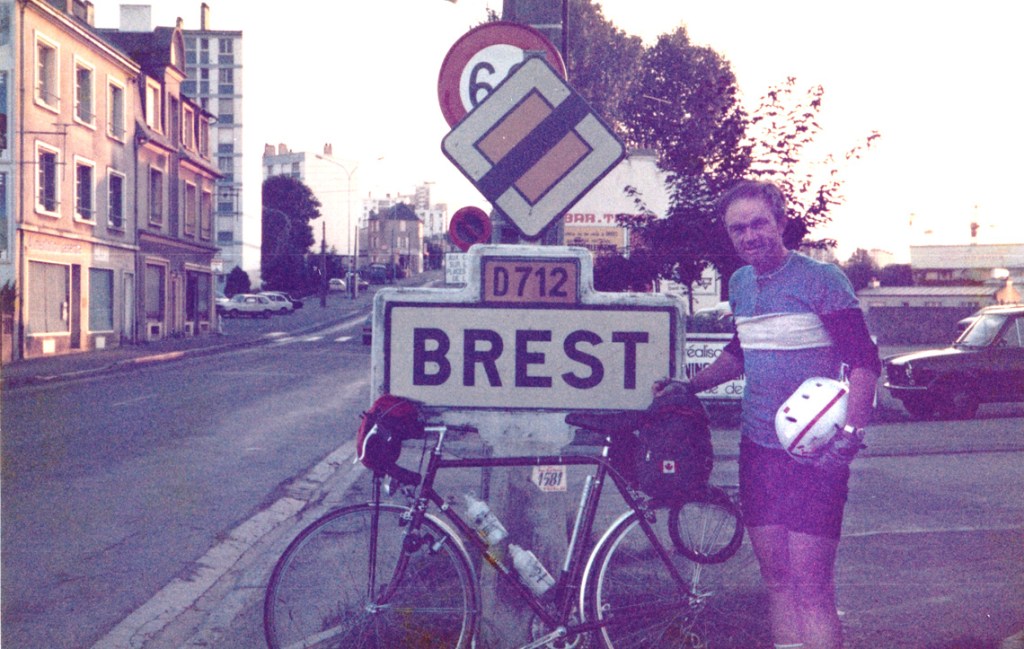
Born in Saskatchewan, McGuire was one of the founding members of the BC Randonneurs, a group of cyclists dedicated to logging long days on two — and sometimes three — wheels. He was part of a contingent of riders that organized a series of long-distance events ranging from 200 to 1,000 km in 1979 that would qualify them to participate in the famed Paris-Brest-Paris brevet, a 1,200-km endurance event in France that is held every four years.
B.C. RANDONNEURS
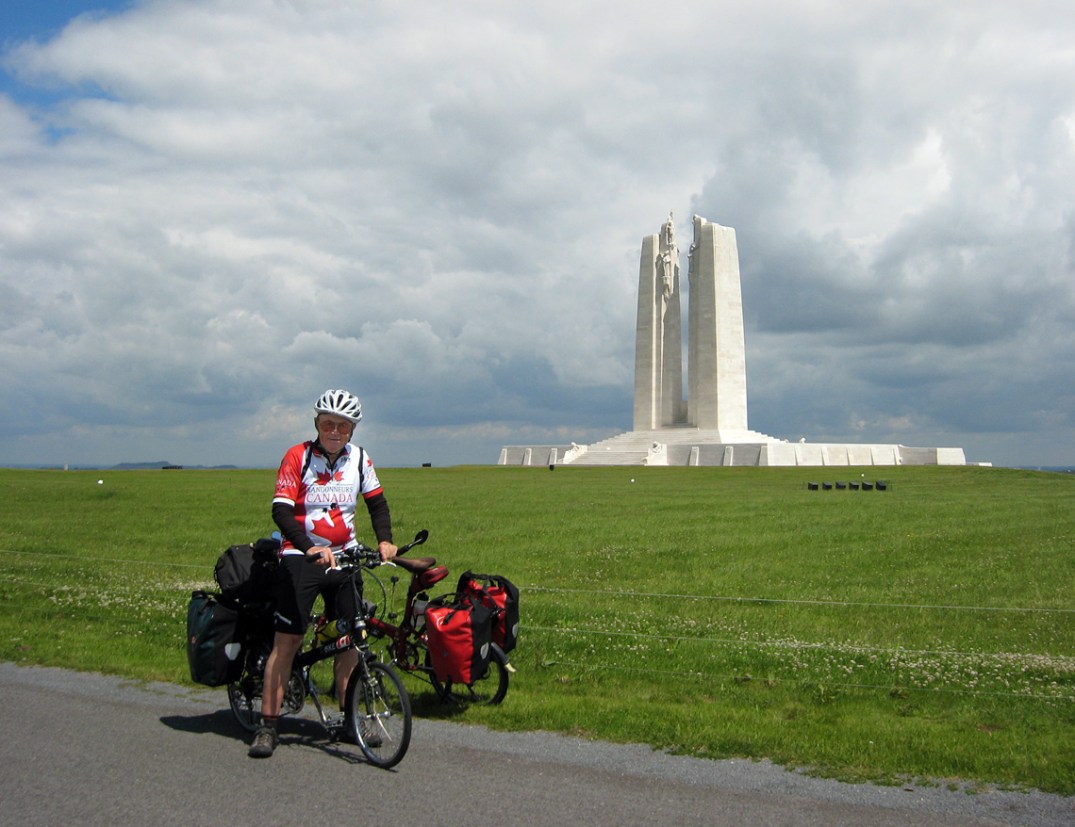
Dan McGuire helped form the B.C. Randonneurs cycling club so he and like-minded cyclists could prepare to take on the 1,200 km Paris-Brest-Paris brevet that is held once every four years.. He went on to complete the event three times.

McGuire went on to ride it three times. He also travelled to the event on several more occasions to support other riders from the club.

Garry Pareja, a member of the old Vancouver Bicycle Club that spun off the collection of hard-core riders that became the BC Randonneurs, said the group prepared by riding to Mt. Baker and back, or completing ascents of Cypress Bowl, Mt. Seymour and Burnaby Mountain all in one day.

“This branch of the club became the ‘Hard Riders,’” Pareja wrote on the BC Randonneur’s historical timeline.

But it was McGuire’s determination to keep pedalling even after his mobility diminished because of Parkinson’s disease that really cemented his status among the sport’s giants as well as an inspiration to show others living with the degenerative affliction what’s possible.

McGuire, who discovered cycling when he was about 40, had ridden across Canada a few times.

But at the age of 80, and coping with various ailments like arthritic knees and hands, scoliosis in his spine, macular degeneration in his eyes and the onset of Parkinson’s, he decided he wanted to pedal his bike to the four corners of the country — a journey of about 10,000 km.

By then, wrote Tara in a blog post, the disease and medication had so diminished her father, when he’d occasionally fall asleep at the dinner table “he’d look very much like a skinny grieving question mark.”

There was no questioning his determination to realize his cycling dream, though.

“Dan could focus intensely on an idea and the tasks that lay ahead,” wrote Leo Boon, another of the sport’s pioneers in B.C., in a memoriam on the Randonneurs’ website.

“He was just so stubborn,” Tara said.

McGuire’s journey to Canada’s most westerly, northerly, southerly and easterly points took him two years, with a break in between to rest his ailing back.

When he resumed in the summer of 2014, he’d switched from a two-wheeled bicycle to a three-wheeled recumbent to ease some of the aches of his aging body and keep him from tipping over.

As well, Tara said, it allowed him to pull to the side of the road whenever he pleased to just bow his head for a bit of a snooze. He had no organized support team, no motorhome to which he could retire when he wearied.

Instead, Tara said, her father relied on the kindness of strangers to look out for him.

“Dad’s confidence in the positivity, general all-around goodness of the human race, was a gamble he was willing and pleased to take.”

That spirit was infectious.

Fellow randonneur Ralph Maundrell wrote in tribute, “Dan had the ability to install confidence in people,” adding McGuire inspired his own pursuits in long-distance cycling and even marathon running.

“We have lost a wonderful human being, a tough old guy, a great cyclist,” said Boon.

“He could be gruff, but he was also very generous,” said fellow cyclist Deirdre Arscott.

Tara said it’s been heartwarming to hear the impact her father had on so many cyclists.

“He really worked hard to get people cycling,” she said. “We were always kind of impressed with his accomplishments.”

Coquitlam Rotary’s new speaker series shines a light on mental health

This story first appeared in the Tri-City News on Oct. 13, 2024

The COVID-19 pandemic may have had a silver lining, says a Coquitlam psychologist.

Denis Boyd says the public health crisis that shuttered people indoors for months at a time and created trepidation about mixing with large crowds was a big “wake-up call” to some of the everyday stresses to which we’d become complacent.

Boyd is the first presenter in Coquitlam Rotary’s new mental health speaker series that launches Oct. 29, 7 to 8:30 p.m., at Douglas College in Coquitlam. He will be speaking about the signs and causes of stress, as well as the kinds of tools that can be used effectively to manage it.

Boyd said the COVID-19 pandemic raised stress levels “a notch or five.”

He said the daily news reports of deaths and hardships brought people face-to-face with their mortality and often sparked a re-evaluation of life’s priorities.

Suddenly freed by employers to do their jobs from home, many people coped by finding a better balance between the demands of work and the opportunities of life. Cooped up, they went outdoors more to take a walk in the park, commune with their natural surroundings. They whittled their social circles down to those most important to them.

“It was sobering to have everything shut down,” Boyd said.

But as memories of those darkest days dim, old habits and routines are returning. Employers are demanding employees return to the office. Doom scrolling through social media feeds has become endemic, isolating.

Boyd said it’s important society doesn’t abandon the lessons learned through the pandemic.

“We have to always make sure we balance our work life with our personal life,” he said, adding it’s critical we constantly cultivate our relationships with others.

“The most impactful thing we can do is improve our relationships, share our journeys with each other.”

Boyd said the realities of modern living, like residing in large condo developments where getting to know your neighbours can be difficult, and the temptations of social media and video gaming as proxies to real in-person interactions can present challenges for cultivating connections.

“Our conveniences have made us more isolated,” Boyd said, adding the anxiety that comes from such isolation exacts a toll as it builds.

“When you load up and reach your capacity of stress, you’re going to get sick.”

How to attend

Admission to Coquitlam Rotary’s mental health speaker series if free, but pre-registration is required.

The second event, on Nov. 26, will feature psychologist Tamara Williams talking about the use of modern neuroscience to help caregivers and children manage emotions together. Further speakers will be announced in the new year.

The best of times, the worst time: My journey with the Tri-City News

I first alighted at the Tri-City News 34 years ago almost to the day, a refugee from the 1990 Ontario recession that had cost my job of five years as a photojournalist at a paper in Oshawa.

An industry contact told me to talk to Craig Hodge and happenstance brought him to a conference in Toronto.

He told me if I came west, there would be work.

So I turned down an offer at a paper in Sydney, Nova Scotia, and pointed my red Toyota in the opposite direction.

The Tri-City News in 1991 was as close to a daily paper you could get without publishing six or seven days a week.

Under the guidance of Hodge, we were a department of six photographers, an office manager and assorted freelancers. The newsroom upstairs was similarly staffed.

We had a studio, full colour darkroom and we were all connected with pagers (!) and two-way radios. We covered stories seven days a week from 8 a.m. to 10 p.m., from Boundary Road to eastern Maple Ridge.

Travel budget

Occasionally, there was budget to go out of town, to the BC Winter and Summer Games, the Canada Summer Games in Kamloops, the Commonwealth Games in Victoria, to Miami to cover the IndyCar debut of local racer Greg Moore. During provincial elections, someone was sent into Vancouver to cover the big celebration for the winning party.

MARIO BARTEL/TRI-CITY NEWS
Greg Moore heads home from the track at Homestead, Florida, at the end of IndyCar spring training in 1996.

One year, the company chartered a plane to fly several of us to Spokane, Wash., for a photojournalism conference. We took great delight in telling others we had to cut out of Happy Hour because our plane was warming up its engines at the airport.

Around the light table where we gathered at the end of every shift to edit our negatives and debrief the day, we speculated it was only a matter of time we’d become a daily. The news was out there, the papers were robust, filled with ads and flyers.

On April 17, the Tri-City News went dark after more than 40 years, although it was already diminished from its former self in August, 2023, when the decision was made to end the actual print publication to exist solely online.

The plummet of local news has been precipitous and painful.

While organizational changes had sent me to the Burnaby and New Westminster NewsLeader for 15 years until they were closed in 2015, I remained connected to the Tri-City News, occasionally sending stories that might be of interest, often sharing photos when a team or athlete from Coquitlam, Port Coquitlam or Port Moody was playing in a tournament or provincial championship at the Burnaby Lake Sports Complex, Copeland or Queen’s Park arenas.

When former TCN editor Richard Dal Monte had an opening in 2017, I jumped at it after 18 months wandering the wilds of freelancing, riding my bike and producing digital content for a realtor. You can take the boy out of the News, but you’ll never take the News out of the boy.

I came back with eyes wide open; our industry has been precarious for years.

Stories to be told

But there were still so many stories to be told.

So we put our heads down and forged ahead, even as we went from publishing twice a week to just once. Even as newsroom vacancies started to go unfilled. Even as the COVID-19 pandemic scattered us to our homes, conducting interviews over the phone or making arrangements to meet in open spaces like parks, driving deserted streets looking for photos that captured the weird vibe of that extraordinary time.

Heading to an assignment with a few minutes to spare; I searched for a shot that would somehow capture the feelings of isolation many were enduring during the first weeks of the COVID-19 pandemic as businesses closed and people stayed apart.

Our coverage of those early months of fear and uncertainty was some of the best I’d ever been a part of. Along with keeping up with the frenetic pace of event cancellations and societal changes brought on by the public health crisis, we found unique features of people persevering: the Shriners band playing for isolated seniors; an Elvis impersonator giving drive-by concerts; businesses trying new ideas to keep money coming in when their customers were staying home; the challenges faced by young student athletes with no sports to play.

It took a pandemic to revive Elvis. Darren Lee reignited his career as an Elvis tribute performer by driving to various neighbourhoods to entertain people shut in by the COVID-19 pandemic.

But even as we put in long hours in trying conditions to keep readers informed of all that was changing during the pandemic, the die was being cast for our ultimate demise.

Businesses trying to hang onto every penny to stay afloat themselves stopped advertising; many never came back. Readers’ habits changed, perhaps conditioned by hours of doomscrolling on social media platforms to keep up with the moment-by-moment developments during the pandemic.

Even going online exclusively, sparing the expenses of newsprint, ink, distribution and, eventually, a physical office, couldn’t turn the tide.

Tough times

The months since that decision haven’t been easy. Spending hours covering a contentious council debate about a major development proposal that barely registers a couple of hundred page views while a five-minute effort to recast a press release about a new donut shop coming to town goes off the scale can be dispiriting.

So can watching editors churn and colleagues depart.

But through it all we’ve tried to keep our communities informed and connected by sharing their stories.

I guess the void ahead will be the true test of whether that even matters anymore in an age when the first thing people do in the morning is scroll their Facebook feed rather than open the local paper and algorithms direct people into a perpetual feedback loop affirming their darkest inclinations.

It’s truly has been the best of times. It is the worst of times.

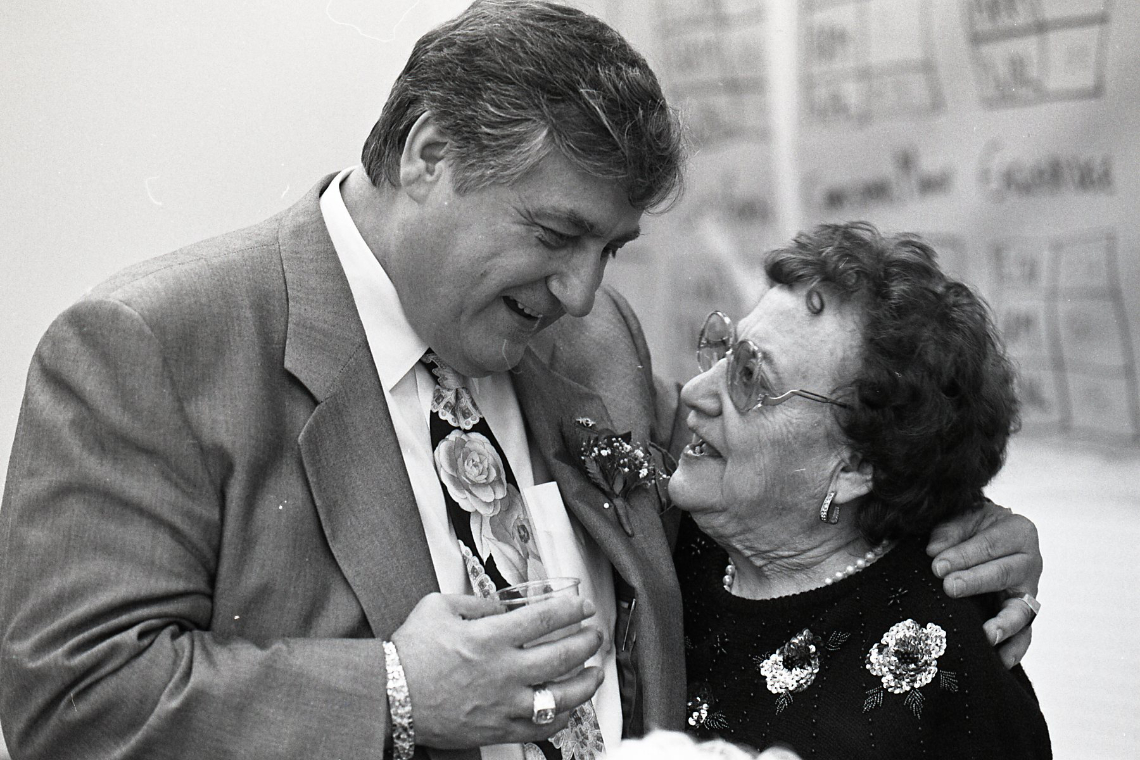
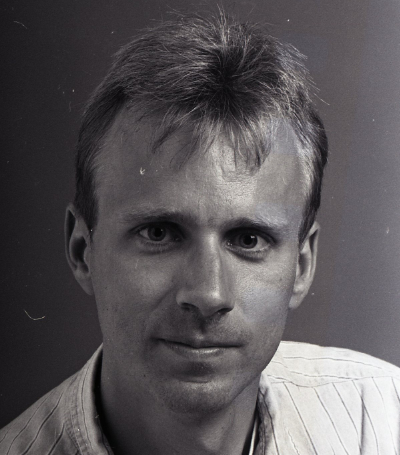
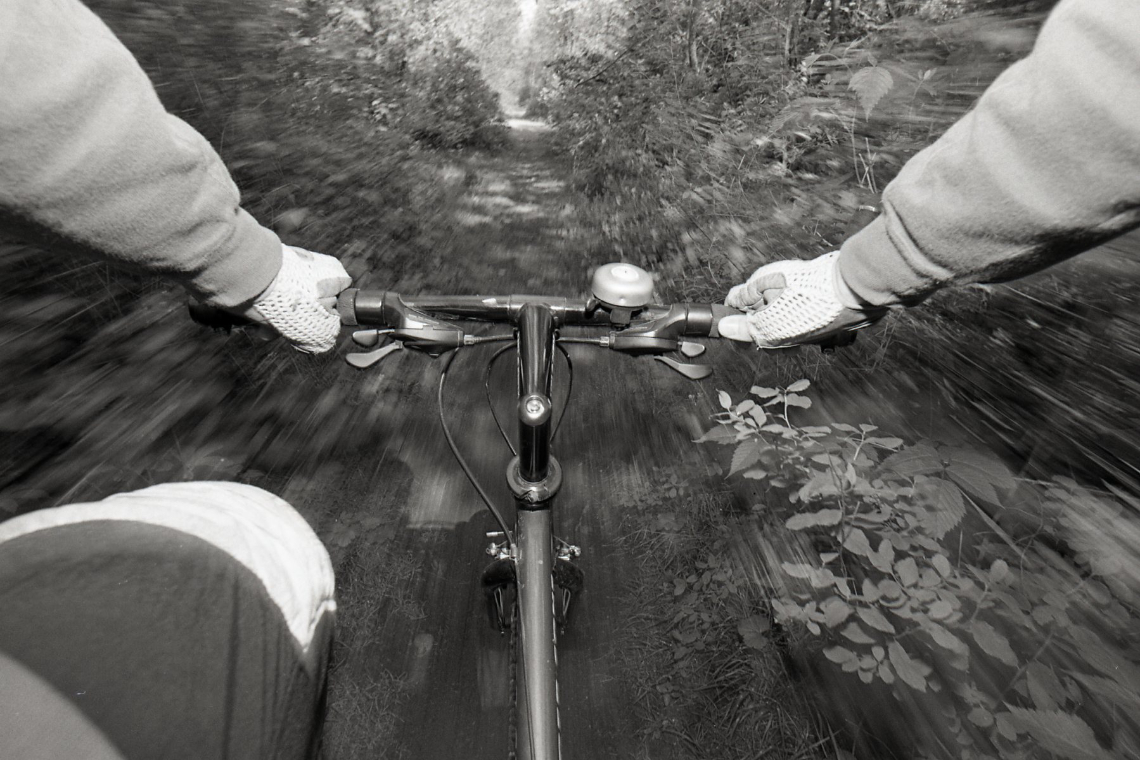
A selection of photos I’d shot in my first couple of years working in the photo department at the Tri-City News. They, and many more, have been carefully preserved and digitized by the City of Coquitlam Archives.