Port Moody is considering whether to spend up to $355,000 to host public viewing parties for the 2026 FIFA World Cup.
That’s the most expensive of several options for viewing events to be presented to council at its meeting Oct. 14.
In a report, the city’s manager of cultural services, Karen Pighin, said the budget for public viewing events at Rocky Point Park that would attract up to 2,000 people to watch matches on a large outdoor screen would start at $130,000.
But that would only cover three games.
Adding a family-friendly activation zone would cost an additional $10,000, she said. Five outdoor viewing events would raise the cost to $203,000 plus another $11,000 for the activation zone.
Showing 10 matches on the outdoor screen, including the semi-final, bronze and gold medal finals, would cost $314,000, with another $13,000 to add the activation zone.
The cost for hosting the viewing events in a large tent in the park that can accommodate 250 people would range from $114,500 for three matches and no activation area to the maximum proposed budget of $355,000 for 10 matches plus the family area.
Hosting the viewing parties at the outdoor amphitheatre behind city hall, as well as the nearby parking lot and warm-up field, would cost anywhere from $800,000 to $219,000 and if the events are held in the curling rink at the recreation complex, the costs range from $35,000 to $134,000.
No sponsorships allowed
Pighin said FIFA rules won’t allow the city to recoup any of its costs for the viewing parties through sponsorships, although those rules don’t apply to the activation areas.
“A separate family fun zone may be able to have sponsorship attached where the physical location is set in another area from the viewing site,” Pighin said in her report, adding parking revenue could also help cover costs for the viewing parties or the city could chose to cancel other events like Car-Free Day and reallocate their budgets.
Pighin said the budget estimates are still preliminary as the city doesn’t know what sort of funding might be available from the provincial government, which has put out a call to communities to join the World Cup party, nor does it yet know how much will cost to license broadcasts of the matches. Technical costs could also balloon, she added, because they depend on the scale of the viewing parties and their set-up, which “may require advance technical infrastructure.”
The budget estimates also include costs for staffing, security, policing and rental of equipment such as chairs, tables, tents, waste management and portable washrooms.
Other viewing options nearby
Pighin said while other nearby communities, like Port Coquitlam, Coquitlam, Burnaby and Richmond, have expressed interest in public hosting viewing parties, most are still just in the planning stages. Fans seeking a communal experience will also be able to attend the FIFA Fan Festival at Hastings Park in Vancouver as well as local businesses like bars and cafés.
Pighin said in her report some summer events in the city have already decided to scale back their ambitions to avoid conflicting with the World Cup. The Sunday summer concerts in Rocky Point Park will focus on dates in August, RibFest will run later in July, from the 26th to the 28th, and Golden Spike Days may also be truncated.
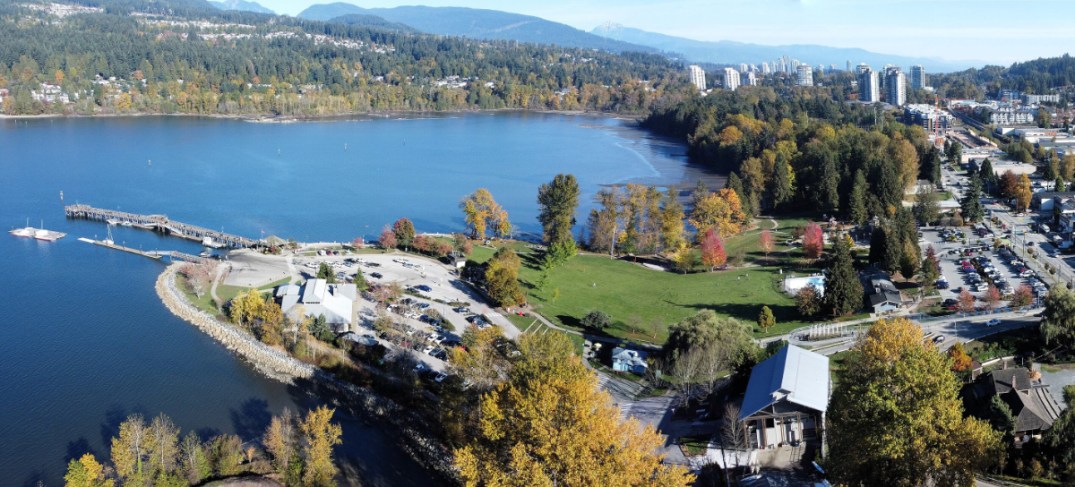
A 31-acre site on Port Moody’s waterfront won’t be set aside for a park.
But the city will look at implementing a requirement any future development of the property immediately west of Rocky Point Park include “a large, contiguous” park space.
Port Moody Mayor Meghan Lahti said including such a requirement in the city’s new official community plan (OCP) will send a message to potential developers of the property that building “a bunch of small pocket parks” won’t pass muster.
“I do think we should be articulating what we want to see down there in terms of park,” Lahti said during a special meeting of council Tuesday, Oct. 7, that passed first reading of the draft OCP.
The document maps Port Moody’s growth and aspirations by guiding its planning and land use decisions and policies for the next 25 years.
Coun. Diana Dilworth said a motion to designate as a “special study area” the waterfront property where the Flavelle cedar sawmill formerly operated for more than 100 years would essentially re-litigate a decision made by council on 2018 allowing its redevelopment into a high-density, mixed-use neighbourhood for more than 7,000 residents.
“I don’t see the value in rehashing this now,” Dilworth said of the former industrial property that had been a special study area prior to its 2018 redesignation. “We have the opportunity to negotiate with the owner, and I do believe that’s a better option than downzoning the property to park.”
Redevelopment plans since 2015
Flavelle’s owner, Surrey-based AP Group, had championed redevelopment of the mill site since 2015 but has yet to act on any of its plan that includes 11 towers ranging from 16 to 38 storeys, a low-rise rental building, retail, office and light industrial spaces as well as the future possibility of a hotel and congregate care facility. The company also pledged to dedicate almost a quarter of the site to public park space, including a boardwalk along the shore linked to Rocky Point Park.
AP Group closed the sawmill in 2020 and quickly dismantled its industrial structures. Since then the vacant property has been used for various film and TV productions, including the acclaimed Shogun limited series that won several Emmy Awards in 2024.
Coun. Haven Lurbiecki, who introduced the motion, said rather than laying fallow, the old sawmill property should become an extension of the 9.5-acre Rocky Point Park, especially as Port Moody’s population grows.
“Let us go back to the community to come up with a plan that better meets the needs of the community,” Lurbiecki said.
But Coun. Kyla Kowles said such a strategy is already in the works after council approved a new master plan for the city’s iconic waterfront park last November that makes its expansion a priority.
“This council has stated clearly over and over again that expansion of Rocky Point Park is a major priority and that has not changed,” she said.
Coun. Amy Lubik said the park’s expansion to the west is a work in progress.
“We haven’t seen a development application yet and I think we’ll see lots of changes,” she said. “Expanding Rocky Point Park will be a part of the site’s redevelopment.”
Tower heights stay maxed at 39 storeys
MARIO BARTEL PHOTOA draft of Port Moody’s new official community plan formalizes a framework to allow towers up to 39 storeys in the neighbourhood immediately around the Moody Centre SkyTrain station.
Meanwhile, another motion introduced by Lurbiecki to scale back development plans in the draft OCP for the neighbourhood immediately surrounding the Moody Centre SkyTrain station also failed to gain traction.
Lurbiecki said formalizing a maximum tower height of 39 storeys for the neighbourhood in the document “invites land speculation” and restricts the city’s ability to negotiate with developers for enhanced amenities like daycare spaces in exchange for allowing higher density.
Lurbiecki said a maximum of up to 20 storeys as outlined in provincial housing legislation mandating the construction of high-density development around mass transit stations should suffice.
“These heights exceed provincial legislation requirements,” she said. “No-one is buying these condos. We’re sitting in a market where thousands of these are sitting empty.”
But Port Moody’s manager of policy planning, Mary De Paoli, said council has already set the bar at 39 storeys with the development framework it had previously adopted to help create a true city core and reducing it to 20 storeys would limit the city’s ability to achieve any amenities in the neighbourhood. Recently, Vancouver-based PCI Development started site preparation for two 39-storey rental towers next to the SkyTrain station that were approved by council in April.
Dilworth said ultimately the market will decide appropriate density.
“If condos aren’t going to sell, buildings won’t get built,” she said.
Podiums to be studied
An additional motion to remove a requirement towers in the Moody Centre neighbourhood be constructed atop podiums of three to six storeys did, however, find mixed favour amongst councillors. While such podiums won’t be required in the new OCP, staff will study the implications of mandating their height requirements.
De Paoli cautioned removing the podium requirement presents “a significant shift” that would likely result in taller towers.
“There will be pressure to put density somewhere,” she said, adding podiums are also an attractive landing spot for amenities like retail and commercial spaces.
Knowles said the decision to build atop a podium should be left to the developer.
“Wouldn’t we want to remain open to a developer coming forward with a new design?” she said.
Dilworth agreed.
“This provides some flexibility,” she said.
Other tweaks to be integrated into the draft OCP prior to second reading later this fall include:
removing several aging townhomes on the south side of Dewdney Trunk Road between St. Johns Street and Viewmount Drive from a special study area that covers the entirety of St. Johns’ south side from Clarke Road to the Coquitlam border
designating the site currently occupied by Port Moody Elementary school to be parkland when construction of the new elementary school further east on St. Johns Street is completed
OCP process started in 2020
The process to craft Port Moody’s new OCP began in 2020 but had to be paused in 2024 to allow staff to integrate elements of new provincial housing requirements. A revised first draft was presented to council in July.
One said it’s imperative recreation facilities like ice rinks keep pace with anticipated growth while another feared Port Moody would become “a city of towers, from one end of St. Johns to the other, tower after tower and tower.”
A third speaker cautioned council its decisions around the OCP will “define the identity of Port Moody for generations to come.”
Once the draft document passes second reading, it will be referred to external agencies like Metro Vancouver for further comment prior to a public hearing expected some time in December.
Final adoption could occur by March, 2026, said De Paoli.
Port Moody councillors say they will continue to advocate for more support from senior levels of government to construct infrastructure like schools and recreation facilities as the city faces increasing pressure to meet housing targets imposed by the province.
But that did little to ease the concerns of residents speaking at a special town hall about Port Moody’s new draft official community plan (OCP) held at the Inlet Theatre on Monday, Sept. 15.
Several said they fear what Port Moody will look like as its population continues to swell to more than 74,000 by 2050.
“We might not have the infrastructure to accommodate that growth,” said one.
“Port Moody isn’t ready for this much density,” said another.
Some residents fretted about insufficient roads and parking spaces, while one offered even transit won’t be able to keep pace with demand.
‘Unrecognizable’
Former councillor Steve Milani said though the draft document falls short in addressing the city’s economic needs. He said the plan will “transform Port Moody into something unrecognizable.”
The draft OCP is a roadmap for the city’s growth and aspirations for the next 25 years. It guides planning and land use decisions and policies as well as the provision of services and infrastructure.
A community’s OCP must be updated every five years.
Port Moody initiated its current draft update in 2020 with a series of virtual visioning workshops followed by an initial community survey in January, 2021.
Since then, there has been three more surveys as well as several workshops and open houses. A previous town hall held in April attracted 50 attendees, prompting a call from Coun. Haven Lurbiecki for a subsequent gathering with councillors in attendance along with support from senior staff.
Not set in stone
Coun. Samantha Agtarap said none of the provisions in the OCP are set in stone.
“This is an idea of what the city might look like 20 years into the future,” she said. “It doesn’t mean it’s going to happen. Things can and do change.”
Coun. Diana Dilworth said it will be incumbent upon council to work with the provincial government to ensure amenities keep pace with population growth.
“We’ve heard a lot of concerns about infrastructure,” she said. “This gives 25 years for whoever sits at this council table to demand the provincial government provide those things if they want housing.”
Coun. Callan Morrison agreed.
“We continue to advocate to higher levels of government for the best interests of our residents,” he said.
OCP vision
Port Moody’s draft OCP update envisions a vibrant community that is safe, inclusive, resilient and carbon neutral. Its unique and complete neighbourhoods are connected by an active transportation network and the city’s residents value its natural environs, heritage character, arts and culture.
To achieve those goals, said the document, Port Moody must promote sustainable transportation, compact, energy-efficient development, protect and restore its urban forests and other environmentally sensitive areas. The city must also expand its parkland supply while providing residents a range of housing options, including rental stock, that is well-served by transit, cycling and pedestrian infrastructure, as well as amenities like schools, civic facilities, commercial spaces and employment opportunities.
Some of the draft OCP’s substantive updates include:
building heights from 26 to 39 storeys in the neighbourhood immediately around the Moody Centre transit station
expansion of the Inlet Center neighbourhood to Dewdney Trunk Road
the establishment of three new special study areas to better identify the impacts and opportunities of their growth:
south of St. Johns Street, from the Coquitlam border to Clarke Road
the Suncor lands
industrial properties along Murray Street
increasing the city’s tree canopy coverage from 29 to 31 per cent
collaboration with neighbouring communities to address wildlife conflict
greater consideration for dog amenities to be a component of new development
Mayor Meghan Lahti said the document is “the culmination of several years of input” from the community.
Residents alienated
But Lurbiecki worried the relatively low turnout at the two town halls indicates residents are feeling alienated from the process.
“This plan doesn’t reflect their vision and they’re not engaged,” she said.
In a report, Port Moody’s manager of policy planning, Mary De Paoli, said the document will be considered by the city’s land use committee in early October before returning to council for first and second readings by the middle of that month.
It will then be referred to external agencies like Metro Vancouver for further comment before a public hearing in December.
De Paoli said if nothing distracts from that timeline, final adoption could occur by March, 2026.
Port Moody wants builders of future developments to pay more heed to accommodating alternate transportation options.
On Sept. 9, council’s city initiatives and planning committee will consider a new mandatory points system that rewards infrastructure and incentives designed to change travel behaviour away from single-occupied vehicles.
A staff report said measures proposed by developers — like providing bicycle parking or a car share service, as part of their rezoning application — are currently negotiated on a case-by-case basis.
But new provincial housing legislation, which gives municipalities more authority to require plans for managing transportation demand, has opened the door for the implementation of more rigorous and standardized requirements.
“These changes to the legislative context created an opportunity to improve the city’s approach to TDM [transportation demand management],” said the report.
If council endorses the new plan put together by Urban Systems, a community consulting firm, developers will be able to choose their approach to managing traffic demand from a list of 38 options, including measures to encourage active transportation, transit use and parking management.
They will then be given a score based on the impact the measures have on shifting transportation away from single-occupant vehicles, reducing the number of vehicle kilometres travelled and greenhouse gas emissions.
And measures that can work together to change behaviours can achieve a higher score.
Some of the measures to be scored include:
enhanced bike parking that is sheltered from the elements
additional parking spaces with EV charging facilities
on-site daycare spaces
The report said the points system can be refined further based on feedback from developers.
“This approach will help ensure the requirements meaningfully promote sustainable transportation without placing an undue burden on applicants.”
Port Moody’s Shoreline Shuttle could be making a comeback.
Mayor Meghan Lahti says the free service that connected the city’s Inlet Centre area to Rocky Point Park, Brewers Row and the downtown heritage district for the summer in 2018 but then was deemed too expensive, could be paid for with revenue from paid parking.
Council will debate Lahti’s motion to revive the service at its meeting on Tuesday, June 10.
In a report, the mayor said the shuttle service would reduce traffic congestion, improve safety for pedestrians and improve air quality.
“Perhaps more important though,” said Lahti, “ensuring that transportation to the busy area is accessible to everyone, regardless of economic status, will promote inclusivity and enhance community engagement.”
Lahti said money from the city’s parking reserve fund could be used to relaunch the service, As of Dec., 2024, that amounted to $72,500.
The pilot shuttle program in 2018 was budgeted to cost $50,000, including the cost of contracting a 20-passenger bus and the installation of signs for its 13 stops. The service ran every 30 minutes on weekend afternoons and evenings until midnight on Fridays and Saturdays and 10 p.m. on Sundays. Adjustments were made to accommodate extra demand during events like RibFest, Canada Day and car-free day.
Despite a $20,000 subsidy from Richmond-based developer Panatch Group to operate the shuttle, council decided in 2019 it was too expensive to continue the pilot. A report estimated the 3,700 rides ended up costing $13.50 per passenger.
Rob Vagramov, Port Moody’s mayor at the time, said it would have been cheaper to put every passenger in a taxi or limo instead.
“Not every idea pans out exactly as we’d hoped,” he said.
Lahti said now that the city is charging for parking in busy areas like Rocky Point Park, along Murray Street and around Eagle Ridge Hospital, a portion of revenues could support relaunching the shuttle service.
“By utilizing pay parking revenue for this shuttle, the community directly benefits from the fees paid by users,” she said in her report. “It creates a sense of accountability and transparency about how the funds are being used.”
According to the report, the pay parking stations generated $158,120.70 in gross revenue since they were implemented midway through Sept., 2024 through March, 2025.
A popular series of live music concerts at Port Moody’s Inlet Theatre will receive a $5,000 boost from the city.
The art, culture and heritage grant allows promoters Bill Sample and Darlene Cooper to continue booking top touring and local musicians like Shari Ulrich, Roy Forbes and The Paperboys while maintaining affordable ticket prices.
It’s one of $40,000 worth of grants approved by council’s finance committee Tuesday, May 20, for distribution to several local organizations.
Cooper said the concerts have put the city “on the map as a bit of a cultural hub.”
She and Sample, who are both accomplished musicians themselves, launched the series in 2022 after moving to Port Moody from Vancouver and finding the local live music scene somewhat lacking, especially after the demise of Bistro Gallery that burned down in 2019.
Sample said the little bistro on Clarke Street had become a popular performance venue for local and guest musicians, poets, writers and visual artists. But with no place to play, many were bypassing Port Moody while on tour.
“We need music in our lives,” Sample said, of the series that presents up to eight concerts during the fall, winter and spring months in the venue that can seat as many as 208 patrons.
In March, 2024, Port Moody council voted to extend an agreement with Sample and Cooper to waive rental fees at the theatre for two more years to help keep concert costs down.
Devin Jain, who was then the city’s manager of cultural services but recently retired, said the promoters have “brought a consistent and professional music series to the community” which has “filled a gap within the cultural landscape of Port Moody.”
Other organizations awarded grants include:
Big Sisters of BC Lower Mainland and Big Brothers of Greater Vancouver will each receive $2,608 community grants to enhance their mentoring and youth leadership programs
Crossroads Hospice Society will get a $3,000 community grant to bolster its activities that enhance the quality of care for it patients
PoCoMo Meals on Wheels Society will get $3,000 to help keep the price of meals affordable
SHARE Family and Community Services also gets a $3,000 community grant to offset the cost of emergency hampers for vulnerable community members
The Crisis Intervention and Suicide Prevention Centre also gets $3,000 to boost its operational support for mental health care
Port Moody Men’s Shed society’s $1,404 community grant will help its members build community bird houses
Port Moody Heritage Society will receive a $5,000 arts, culture and heritage grant to help fund a new exhibit
POMO Players will use its $4,500 arts, culture and heritage grant to fund booking of a venue, creative costs and insurance for its production of “A Christmas Carol”
The Port Moody Art Association will get $3,000 for room rental, permits and insurance costs
Arts Connect gets a $2,500 grant to help it attract top musical acts to Port Moody
As well, five artists will share a total of $4,717 in grants to help them put on exhibitions, open a studio, produce a short film or acquire materials and equipment. They are:
Crystal Koskinen
Amy Narky
Ramin Mohseni
Husein Kamrudin
Samira Messchian Moghadam
Port Moody Mayor Meghan Lahti said she was pleased by the quality of the recipients.
“They all look like very good applicants,” she said.
According to a staff report, Port Moody received 47 applications for its three grant programs. Each was evaluated by staff and the city’s citizens advisory group based on criteria like:
the extent to which the grant will help address a need in the community
how the grant will promote the well-being and quality of life of Port Moody residents
how much of the money will be spent in the city and benefit the community as a whole
the needs of the organization or group requesting the funding
how the funds will be directed to support equity, diversity, inclusions and reconciliation initiatives
the involvement of volunteers and promotion of community spirit
The plastic lane delineators creating chicanes to slow traffic on Port Moody’s Moray Street could soon be gone.
In their place, new curb bulges will be built at Pinda Drive and Brookmount Avenue, along with new lane markings and crosswalks. But a planned bike lane on the east side of Moray Street will have to wait.
Tuesday, May 20, Port Moody council’s initiatives and planning committee will consider spending an additional $353,000 to construct the new, permanent elements. That’s on top of the previous budget of $795,000 that had been approved in 2022.
Since then, though, construction costs have risen, additional design work was required and $187,000 will be allocated to a new multi-use path on the west side of Moray, resulting in a total budget of $1.248 million, said a staff report; $100,000 of that will be covered by the city’s street lighting relocation program, and another $155,000 will come from a TransLink grant.
A pilot project to slow traffic using Moray Street that was implemented in the summer of 2022 resulted in a 5-6 km/h reduction of speeds on the busy connector route to Coquitlam, according to the report.
But some residents said the temporary measures, that included the plastic lane delineators, new markings on the pavement to configure curb bulges at intersections and a temporary sidewalk on Moray’s west side, actually made the situation worse.
“It may have calmed traffic on the east side, but they’re going faster on the west side,” said one resident prior to a meeting last June when council decided the traffic calming measures should be made permanent.
Subsequent feedback from residents following a public information session earlier this year revealed further concerns like the loss of several on-street parking spots, worries about pedestrian safety from cyclists speeding down a northbound bike lane and turns lanes at the St. Johns Street intersection too short to accommodate the volume of vehicles.
As a result, said the report, further refinements have been made to the permanent calming plan, including:
the addition of eight new on-street parking spots on the east side of Moray, between Brookmount Avenue and Portview Place
the removal of the northbound cycling lane on the east side of Moray; instead, cyclists heading down the hill will be directed to use Brookmount Avenue and Clearview Drive while staff consider further options
additional curb bulges to be built at the intersection of Moray and Brookmount, as well as a new marked crosswalk on the north leg
adjustments to the lane geometry at Moray and St. Johns to extend the turning lanes so they can accommodate more vehicles
The report said the permanent changes should be in place by the end of the year.
This story was originally published in the Tri-City News Nov. 10, 2024
Frances Stone had never lived in a home that requires a security fob or a building that has an elevator.
Recently, she and her teenage daughter moved into a gleaming two-bedroom-plus-den condo in Anthem Properties’ new SOCO project just off North Road in Coquitlam.
How Stone got there is a study in transformational importance of securing safe, affordable housing.
Stone and her daughter were living in a walk-up rental building in uptown New Westminster when her landlord informed her she needed to move so a family member could move in.
Stone, an addictions counsellor, considered uprooting to Alberta where the provincial government is offering financial incentives to newcomers and rents are much cheaper.
Then a friend told her about a partnership between the Affordable Housing Society and Vancouver-based developer Anthem Properties that would make 18 rental homes in two new condo towers in Coquitlam available at rates geared to tenants’ income.
According to the Canada Mortgage and Housing Corp.(CMHC), that means a tenant pays 30 per cent or less of their gross income for rent.
Secure future
Stone said since moving into her new home in August, it’s the first time in her adult life she’s felt secure about her future.
So much so, Stone said she’s in the final stages of adopting a rescue dog to add to her family, something she’s wanted to do for years but failed to pursue because of her ongoing housing uncertainty.
That’s music to the ears of Stephen Bennett, CEO of the Affordable Housing Society.
He said being able to live in a safe, affordable home impacts every aspect of a person’s life.
“We don’t understand what a lack of choice means for people,” he said. “Because it’s so unaffordable out there, people are stuck.”
Best interests of the community
As municipalities across B.C. strive to attain housing targets recently mandated by the provincial government, they’re also wrestling with the challenge of ensuring those homes can be accessed by a broad spectrum of residents.
“We still have to predicate all of our decisions based on what is in the best interest of our community as a whole,” said Port Moody Mayor Meghan Lahti about the pressure to approve the construction of more homes.
Bennett said affordability can only be achieved when all levels of government work together to provide necessary funding because the cost of constructing homes has spiralled so high. He said without subsidies and grants from programs through agencies like BC Housing, BC Builds and CMHC, rent for apartments could be as much as $5,000 a month.
‘It can often be a tightrope’
Melissa Howey, Anthem’s vice-president of development, said companies like hers are feeling the pressure as well, as they look to deliver housing stock that meets communities’ needs.
“It is balancing the costs, the availability of density,” she said. “It can often be a tightrope to walk.”
Howey said inflationary pressures and constraints on capital are making that tightrope even tauter.
Inclusionary zoning policies and negotiations for additional density can help spur developers to find creative solutions that will allow them to include affordable units in their projects, but the long process to get approvals means the landscape is always shifting.
“Every municipality operates differently,” Howey said, adding the navigation of those varying procedures comes with more layers of expense.
“It can be a challenge to deliver the other forms of housing in a project at somewhat affordable rates.”
In fact, Anthem recently had to scale back a plan to designate half the 128 units in a rental building its seeking to build in Port Moody to just 13. The company said its original intent proved “financially unviable.”
Complicated process
Bennett said his society is always working to devise new models to help fund affordable units, sometimes pooling financial contributions from several agencies.
But, he said, “to pull all those pieces together is exceedingly complicated and it takes a lot of work.”
Stone said she’s keenly aware of the challenge to provide enough affordable housing.
Prior to losing her apartment in New Westminster, she’d been on the BC Housing waiting list for five years. She said she’d also applied to every co-op in Metro Vancouver but “nothing was available.”
“It was pretty hopeless,” Stone said.
Now that she’s settled in her new home, though, Stone is starting to take advantage of her building’s host of luxurious amenities, like its indoor basketball/badminton court, the games and community room that features a full kitchen, a gym and yoga studio as well as an outdoor garden atop the parkade with seating areas, play structures and several gas barbecues. She said she’s keen to start a podcast that she can record in the building’s special sound room as well.
It’s a lifestyle Stone never imagined for herself.
“I would never have been able to work hard enough to live in a building like this,” she said. “It changes your perception of yourself.”
This story was scheduled to appear in the Tri-City News.
A changing media landscape, including the demise of the Tri-City News, has the City of Port Moody scrambling to find new ways to share factual information with residents and counter disinformation spread on social media.
Tuesday, April 15, council approved an expenditure of $50,000 this year, and an $85,000 budget item in 2026, to boost the city’s communication resources.
The money will be spent to help fill an “anticipated information gap on timely information” about council decisions, as well as other general city news, good news stories, details about city services and programming along with calls to action.
The information will be posted on the city’s redesigned website, which is expected to be ready to launch in June, through a newsfeed that would trigger emails to subscribers or possibly even an e-newsletter, said Port Moody’s manager of communications and engagement, Lindsay Todd, in a presentation.
Todd said with the closure of the Tri-City News, which its parent company Glacier Media announced Feb. 21 (and subsequently occurred April 17), “a gap will emerge in information being pushed out to residents.”
The News has covered civic affairs and other happenings in Port Moody, as well as Coquitlam, Port Coquitlam and the villages of Anmore and Belcarra for more than 40 years. It ceased its print publication in Aug., 2023 to exist exclusively online, a model the company said has proved “unsustainable.”
Another publication that also covered the Tri-Cities, the Coquitlam Now, closed in 2015.
Todd said having the city take more control of disseminating its own information and sharing its good news stories will “improve trust and transparency.”
Coun. Diana Dilworth said the rise of social media and demise of traditional media is making it challenging to ensure residents get factual information about what the city is up to.
“There’s got to be a better way to do something different and better.”
Coun. Amy Lubik agreed.
“I think it’s really important we’re being proactive, especially with the loss of local media,” she said. “Humans are storytelling creatures and if there’s a gap in information, we fill it.”
More often than not, she added, that gap is filled with misinformation or disinformation spread on social media that polarizes residents.
“I hope we can use this as a tool to bring people together.”
But a journalism instructor at Langara College and former editor of the Tri-City News, Rich Dal Monte, said it can be challenging for an institution with a vested interest to gain trust that it’s disseminating a fulsome set of facts.
“For better or for worse, since the COVID-19 pandemic, there’s a lot more mistrust of institutions,” said Dal Monte. “There’s always going to be people who don’t believe what they’re being told.”
Dal Monte said an independent news entity, however, has no vested interest when reporting on civic affairs. “Whatever they do, we’re going to cover it.”
Coun. Haven Lurbiecki, the only councillor to vote against the motion, said no amount of message massaging by the city can counter unsubstantiated misinformation residents may read on social media or the way they feel about council decisions.
“I’m just wondering what the problem is we’re trying to address,” she said.




 MARIO BARTEL