Port Moody is considering whether to spend up to $355,000 to host public viewing parties for the 2026 FIFA World Cup.
That’s the most expensive of several options for viewing events to be presented to council at its meeting Oct. 14.
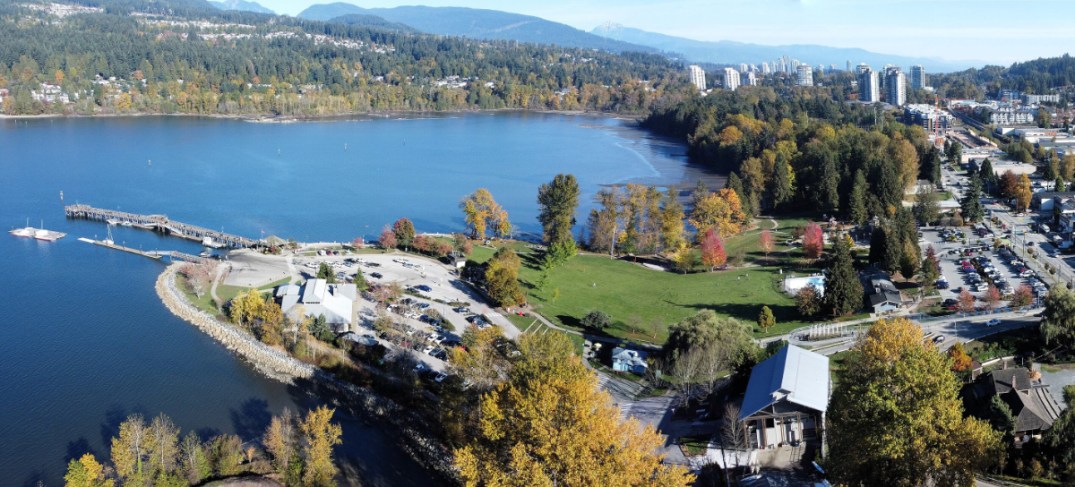
In a report, the city’s manager of cultural services, Karen Pighin, said the budget for public viewing events at Rocky Point Park that would attract up to 2,000 people to watch matches on a large outdoor screen would start at $130,000.
But that would only cover three games.
Adding a family-friendly activation zone would cost an additional $10,000, she said. Five outdoor viewing events would raise the cost to $203,000 plus another $11,000 for the activation zone.
Showing 10 matches on the outdoor screen, including the semi-final, bronze and gold medal finals, would cost $314,000, with another $13,000 to add the activation zone.
The cost for hosting the viewing events in a large tent in the park that can accommodate 250 people would range from $114,500 for three matches and no activation area to the maximum proposed budget of $355,000 for 10 matches plus the family area.
Hosting the viewing parties at the outdoor amphitheatre behind city hall, as well as the nearby parking lot and warm-up field, would cost anywhere from $800,000 to $219,000 and if the events are held in the curling rink at the recreation complex, the costs range from $35,000 to $134,000.
No sponsorships allowed
Pighin said FIFA rules won’t allow the city to recoup any of its costs for the viewing parties through sponsorships, although those rules don’t apply to the activation areas.
“A separate family fun zone may be able to have sponsorship attached where the physical location is set in another area from the viewing site,” Pighin said in her report, adding parking revenue could also help cover costs for the viewing parties or the city could chose to cancel other events like Car-Free Day and reallocate their budgets.
Pighin said the budget estimates are still preliminary as the city doesn’t know what sort of funding might be available from the provincial government, which has put out a call to communities to join the World Cup party, nor does it yet know how much will cost to license broadcasts of the matches. Technical costs could also balloon, she added, because they depend on the scale of the viewing parties and their set-up, which “may require advance technical infrastructure.”
The budget estimates also include costs for staffing, security, policing and rental of equipment such as chairs, tables, tents, waste management and portable washrooms.
Other viewing options nearby
Pighin said while other nearby communities, like Port Coquitlam, Coquitlam, Burnaby and Richmond, have expressed interest in public hosting viewing parties, most are still just in the planning stages. Fans seeking a communal experience will also be able to attend the FIFA Fan Festival at Hastings Park in Vancouver as well as local businesses like bars and cafés.
Pighin said in her report some summer events in the city have already decided to scale back their ambitions to avoid conflicting with the World Cup. The Sunday summer concerts in Rocky Point Park will focus on dates in August, RibFest will run later in July, from the 26th to the 28th, and Golden Spike Days may also be truncated.
Tuesday, Kindel became the fifth-youngest player in Penguins history to make his NHL debut. The 18-year-old — who’s still more than half a year away from his 19th birthday — skated on a line with veteran superstars Sidney Crosby and Evgeni Malkin in a 3-0 win over the New York Rangers at Madison Square Gardens.
Kindel’s 15:11 of playing time was fifth-highest of all Penguins’ players in the game, he won four of his five faceoffs, recorded one shot on net and blocked another.
Maglio, who was at the game in New York with Kindel’s dad, told Penguins’ team reporter Michelle Grechiolo her son always believed he was going to someday play in the NHL.
“Me knowing the statistics and the percentage, I never really let myself believe it,” Maglio said. “Not that I didn’t believe in him, but we’re realistic.”
Unlikely accomplishment
Making the Penguins roster right out of the Western Hockey League, where he played two seasons with the Calgary Hitmen, is an especially unlikely accomplishment for a kid who grew up in a soccer household.
Kindel’s dad, Steve, played for the Vancouver Whitecaps and the old Vancouver 86ers, as well as Canada’s national team. And his younger sister, Lacey, will play for the U-17 women’s national team that will play at the FIFA U-17 Women’s World Cup in Rabat, Morocco, from Oct. 17 to Nov. 8.
Steve Kindel told Grechiolo his son’s love for hockey was forged watching Montreal Canadiens games on TV together, as the Habs were his favourite team.
“It seems like when he was that little kid up until now, it went by in a flash,” he said.
Not his first rodeo at MSG
Tuesday’s game in New York wasn’t Ben Kindel’s first time in Madison Square Garden. He and his family toured the famous facility in 2022 during a side trip following a spring hockey tournament in Philadelphia.
“I feel like that wasn’t very long ago,” Kindel told reporters after his debut game. “I think it’s one of the best buildings in the league. The energy in there was just unbelievable, so it was just a great experience.”
Penguins coach Dan Muse was full of praise for Kindel and fellow WHL graduate, defenseman Harrison Brunicke.
“They were poised out there,” he said of the rookies. “They were in good spots. I didn’t think that there was anything too loud the wrong way. It’s a good start.”
Kindel signed a three-year entry-level contract with Pittsburgh on July 8. In his two seasons with the Hitmen, he scored 159 points in 133 games, including a franchise-record point steak that lasted 23 games. He also played five games for Canada’s gold medal-winning team at the 2025 IIHF U-18 World Championship in Texas, where he scored a goal and added six assists.
A 31-acre site on Port Moody’s waterfront won’t be set aside for a park.
But the city will look at implementing a requirement any future development of the property immediately west of Rocky Point Park include “a large, contiguous” park space.
Port Moody Mayor Meghan Lahti said including such a requirement in the city’s new official community plan (OCP) will send a message to potential developers of the property that building “a bunch of small pocket parks” won’t pass muster.
“I do think we should be articulating what we want to see down there in terms of park,” Lahti said during a special meeting of council Tuesday, Oct. 7, that passed first reading of the draft OCP.
The document maps Port Moody’s growth and aspirations by guiding its planning and land use decisions and policies for the next 25 years.
Coun. Diana Dilworth said a motion to designate as a “special study area” the waterfront property where the Flavelle cedar sawmill formerly operated for more than 100 years would essentially re-litigate a decision made by council on 2018 allowing its redevelopment into a high-density, mixed-use neighbourhood for more than 7,000 residents.
“I don’t see the value in rehashing this now,” Dilworth said of the former industrial property that had been a special study area prior to its 2018 redesignation. “We have the opportunity to negotiate with the owner, and I do believe that’s a better option than downzoning the property to park.”
Redevelopment plans since 2015
Flavelle’s owner, Surrey-based AP Group, had championed redevelopment of the mill site since 2015 but has yet to act on any of its plan that includes 11 towers ranging from 16 to 38 storeys, a low-rise rental building, retail, office and light industrial spaces as well as the future possibility of a hotel and congregate care facility. The company also pledged to dedicate almost a quarter of the site to public park space, including a boardwalk along the shore linked to Rocky Point Park.
AP Group closed the sawmill in 2020 and quickly dismantled its industrial structures. Since then the vacant property has been used for various film and TV productions, including the acclaimed Shogun limited series that won several Emmy Awards in 2024.
Coun. Haven Lurbiecki, who introduced the motion, said rather than laying fallow, the old sawmill property should become an extension of the 9.5-acre Rocky Point Park, especially as Port Moody’s population grows.
“Let us go back to the community to come up with a plan that better meets the needs of the community,” Lurbiecki said.
But Coun. Kyla Kowles said such a strategy is already in the works after council approved a new master plan for the city’s iconic waterfront park last November that makes its expansion a priority.
“This council has stated clearly over and over again that expansion of Rocky Point Park is a major priority and that has not changed,” she said.
Coun. Amy Lubik said the park’s expansion to the west is a work in progress.
“We haven’t seen a development application yet and I think we’ll see lots of changes,” she said. “Expanding Rocky Point Park will be a part of the site’s redevelopment.”
Tower heights stay maxed at 39 storeys
MARIO BARTEL PHOTOA draft of Port Moody’s new official community plan formalizes a framework to allow towers up to 39 storeys in the neighbourhood immediately around the Moody Centre SkyTrain station.
Meanwhile, another motion introduced by Lurbiecki to scale back development plans in the draft OCP for the neighbourhood immediately surrounding the Moody Centre SkyTrain station also failed to gain traction.
Lurbiecki said formalizing a maximum tower height of 39 storeys for the neighbourhood in the document “invites land speculation” and restricts the city’s ability to negotiate with developers for enhanced amenities like daycare spaces in exchange for allowing higher density.
Lurbiecki said a maximum of up to 20 storeys as outlined in provincial housing legislation mandating the construction of high-density development around mass transit stations should suffice.
“These heights exceed provincial legislation requirements,” she said. “No-one is buying these condos. We’re sitting in a market where thousands of these are sitting empty.”
But Port Moody’s manager of policy planning, Mary De Paoli, said council has already set the bar at 39 storeys with the development framework it had previously adopted to help create a true city core and reducing it to 20 storeys would limit the city’s ability to achieve any amenities in the neighbourhood. Recently, Vancouver-based PCI Development started site preparation for two 39-storey rental towers next to the SkyTrain station that were approved by council in April.
Dilworth said ultimately the market will decide appropriate density.
“If condos aren’t going to sell, buildings won’t get built,” she said.
Podiums to be studied
An additional motion to remove a requirement towers in the Moody Centre neighbourhood be constructed atop podiums of three to six storeys did, however, find mixed favour amongst councillors. While such podiums won’t be required in the new OCP, staff will study the implications of mandating their height requirements.
De Paoli cautioned removing the podium requirement presents “a significant shift” that would likely result in taller towers.
“There will be pressure to put density somewhere,” she said, adding podiums are also an attractive landing spot for amenities like retail and commercial spaces.
Knowles said the decision to build atop a podium should be left to the developer.
“Wouldn’t we want to remain open to a developer coming forward with a new design?” she said.
Dilworth agreed.
“This provides some flexibility,” she said.
Other tweaks to be integrated into the draft OCP prior to second reading later this fall include:
removing several aging townhomes on the south side of Dewdney Trunk Road between St. Johns Street and Viewmount Drive from a special study area that covers the entirety of St. Johns’ south side from Clarke Road to the Coquitlam border
designating the site currently occupied by Port Moody Elementary school to be parkland when construction of the new elementary school further east on St. Johns Street is completed
OCP process started in 2020
The process to craft Port Moody’s new OCP began in 2020 but had to be paused in 2024 to allow staff to integrate elements of new provincial housing requirements. A revised first draft was presented to council in July.
One said it’s imperative recreation facilities like ice rinks keep pace with anticipated growth while another feared Port Moody would become “a city of towers, from one end of St. Johns to the other, tower after tower and tower.”
A third speaker cautioned council its decisions around the OCP will “define the identity of Port Moody for generations to come.”
Once the draft document passes second reading, it will be referred to external agencies like Metro Vancouver for further comment prior to a public hearing expected some time in December.
Final adoption could occur by March, 2026, said De Paoli.
Racing could soon be returning to Coquitlam’s Westwood Plateau.
But residents of the area’s luxury homes and golfers on the greens of its palatial golf course won’t have to worry about high-speed cars careening into their backyards or disrupting their putts.
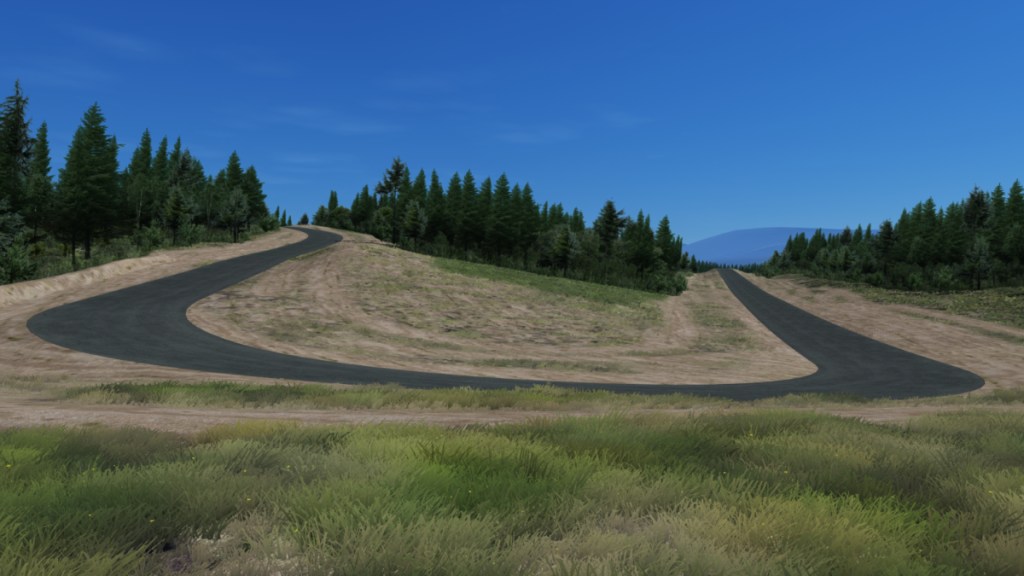
An international team of historical racing enthusiasts is building a digital recreation of the plateau’s old Westwood race track that can be used in computer simulators like Assetto Corsa.
WILLEM PETERS/SCREENGRABA view of Marshall’s hairpin toward Deer’s Leap in a digital recreation of the old Westwood race track in Coquitlam.
Console games fuel passion
Willem Peters, a graphic designer and care attendant for the elderly in Arnhem, Netherlands, said he’s been a fan of classic sports cars and racing history for as long as he can remember, fuelled by console games like Gran Turismo.
Peters said he started recreating historic racing liveries for cars in Assetto Corsa to be raced on digital versions of legendary circuits like LeMans, Brands Hatch and Watkins Glen.
It was while researching a classic Ferrari Dino 206 S that was once driven by late Canadian racer David Greenblatt that Peters stumbled upon photos of the old Westwood track.
Peters said the “gorgeous Coquitlam mountains vista… truly captivated me.”
He started digging into Westwood’s history, sharing it with some of his racing simulator friends.
Peters said he found an old digital recreation of the track and tried it out.
‘Each lap exciting’
“Despite spinning out multiple times, it was a very enjoyable layout to race on,” he said. “It looks deceptively simple from above, yet it has all the nuances and oddities about it to make each lap exciting.”
Looking to do the old circuit justice, Peters reached out to Sergio Loro, a fellow historical racing enthusiast who’s digitally recreated storied tracks like Nosiring and Zandvoort as well as circuits like Rouen in France and Stardust International Raceway in Las Vegas that no longer exist.
Working from old photos, videos, maps and topographical information about the surrounding terrain, Loro is able to reconstruct the base layout of the track. Details like guardrails and trackside structures are added later.
“There’s still plenty of missing info on this part of the project,” Peters said, adding the team is seeking more photos, maps, video and even personal recollections that might help fill in some of the gaps.
“To complete the 60’s look, we’ll make sure to model all the details right.”
Peters said the digital Westwood track should be ready for release on Assetto Corsa by the end of the year, with further refinements and more simulator platforms to come.
He said recreating vintage tracks gains even greater significance as many of those circuits are modernized and changed to accommodate contemporary racing or just bulldozed outright for new development.
“It isn’t just a fun playground to drive virtual cars on,” Peters said. “The loss of smaller racing venues impacts the grassroots racing communities the hardest as the modernized, high-tech race circuits of today often don’t allow the more casual, weekend racers to enjoy the tracks. It’s the closest we’ll ever likely get to getting tracks like Westwood back.”
A reality TV series chronicling a team of adventurers and history buffs searching for lost treasure in the mountains north of Coquitlam has embarked on its third season.
But the mystery it’s chasing is no closer to being solved.
Mountaineer and wilderness expert Adam Palmer said the story of his team’s quest to resolve the Deadman’s Curse, that is broadcast weekly on the History Channel, is enlivening a small part of Canada’s past.
Palmer, who teaches at a First Nations high school, has been working for three years with former Port Moody MMA fighter, Kru Williams, and Indigenous explorer Taylor Starr, to unravel the legend of Slumach’s gold that first came to light in 1858.
SUBMITTED PHOTOA search for lost gold believed to be secreted away somewhere in the mountains north of Coquitlam is now in its third season on the History Channel.
Notations on map
That’s when notations of “gold” and “Indian diggings,” as well as “much gold-bearing quartz rock” scrawled in the margins of maps published in San Francisco began luring prospectors and gold diggers to B.C.’s backcountry in the Fraser Valley and beyond.
Several were stricken by a mysterious illness and died.
An article in a Wisconsin newspaper in the early 20th century linked the deaths to Slumach, an old Katzie prospector who allegedly uttered a curse on anyone seeking the gold just before he was hanged in New Westminster in 1891 for murdering a rival.
Palmer said the story of the gold likely goes back much further.
In the show’s second season, he and Williams pursued clues that linked the treasure to the days of Spanish explorers arriving in the New World on galleons. One episode this season has the team looking into a connection to the legend of Sasquatch on the shores of Harrison Lake.
“There’s so many layers,” Palmer said.
Physical challenges
Peeling back those layers has required the team to endure torrential rainstorms, traverse fragile snow bridges, peer into perilous caves and cross swift-flowing rivers, while also avoiding encounters with bears and mountain lions.
Palmer said he often follows potential leads on his own to determine if they hold promise. He then calls in his partners and the production team.
“We’re like a family now.”
Palmer said his involvement in the show has given him a greater regard for how deep Canadian history goes, and the colourful cast of legends and characters that are still largely unknown or unappreciated.
He said the country’s Indigenous history dates further back than European history.
Palmer said he’s encouraged by viewers’ response to the show, as they enthusiastically submit tips of their own or help connect him to someone who might be able to offer a tidbit of valuable information.
“It keeps everyone engaged,” he said.
• Deadman’s Curse is broadcast Thursdays at 10 p.m. on the History Channel.
The event heralds the return to the squared-circle of former Canadian Apex Wrestling champion Dance Daddy DeNero, who hurt his knee the last time he fought at Site B, in Oct., 2024.
But DeNero, who favours a wardrobe of garish neon-coloured spandex and outsized goggles, was far from idle during his downtime.
DeNero and his alter-ego, workshare executive Mike Arboit, decided to go their own way and form Port Moody’s first hometown wrestling promotion company, Tapped Wrestling Federation.
The TWF aims to put on four shows a year at Site B, in partnership with The Fountainhead Network as well as Brave and Twin Sails breweries.
Take control
DeNero said the time was right to take full control of his own career as well as provide opportunities for other local pro wrestlers to develop their personas.
He said like his 1980s fashion sensibilities, TWF is a throwback to the colourful characters from that era like Hulk Hogan, Randy “Macho Man” Savage and Rowdy Roddy Piper, who helped propel the sport from dingy arenas and beer halls to 60,000-seat domed stadiums.
“It’s okay to have these over-the-top characters again,” DeNero said. “It’s part of the show.”
Not that Arboit has any illusions about taking his show from the 2-300 seats at Site B to BC Place anytime soon.
SUBMITTED PHOTOPort Moody wrestler Dance Daddy DeNero, in action at a recent card at Site B Community Space.
Arboit, whose Fountainhead Network workshare space recently merged with the company that runs Site B, along with Brave and Twin Sails, said the decision to bring together the various enterprises that already share a working relationship made logistical sense.
More than a ‘side project’
“It’s a lot of work to put on these shows,” Arboit said. “It’s time to look at it more as a business than a side project.”
Of course, working out the finer details like scheduling wrestlers, crafting storylines, finding sponsors and securing insurance, didn’t leave much time for training.
To ease his way back into the ring, DeNero will form half of a tag-team duo with the White Tiger, another veteran Port Moody wrestler who’s decided to cast aside the mask that used to hide his true identity and now flaunts his distinctive long handlebar moustache in all its flowing glory.
“We’re on the same page with a lot things,” DeNero said of their partnership. “We understand each other.”
DeNero said the key to the duo finding success in the ring will be putting aside individual egos for the sake of the team
Working together
“It’s not about who does the flashiest moves,” he said. “You have to work together, know when to tag your partner in at the right moment.”
Also on the card will be “Heartless” Sharif Morrow, who’s known for his aerial manouevres off the turnbuckles and top rope, going against up-and-comer Cyrus Maddox.
As well, there will be a “hard-core match” in which combatants BJ Laredo and “Bad Man” McCann are allowed to use pretty much anything they can get their hands on and haul into the ring, like tables, chairs to trash cans, to defeat their opponent.
And, of course, given the current state of cross-border tensions, there will be opportunities for fans to boo some bad guy wrestlers from Washington state deigning to assert their authority on Canadian good guys.
“You’ve got to go heavy with what works,” said DeNero.
“It’s something the community craves,” added Arboit about wrestling’s future in Port Moody.
Port Moody councillors say they will continue to advocate for more support from senior levels of government to construct infrastructure like schools and recreation facilities as the city faces increasing pressure to meet housing targets imposed by the province.
But that did little to ease the concerns of residents speaking at a special town hall about Port Moody’s new draft official community plan (OCP) held at the Inlet Theatre on Monday, Sept. 15.
Several said they fear what Port Moody will look like as its population continues to swell to more than 74,000 by 2050.
“We might not have the infrastructure to accommodate that growth,” said one.
“Port Moody isn’t ready for this much density,” said another.
Some residents fretted about insufficient roads and parking spaces, while one offered even transit won’t be able to keep pace with demand.
‘Unrecognizable’
Former councillor Steve Milani said though the draft document falls short in addressing the city’s economic needs. He said the plan will “transform Port Moody into something unrecognizable.”
The draft OCP is a roadmap for the city’s growth and aspirations for the next 25 years. It guides planning and land use decisions and policies as well as the provision of services and infrastructure.
A community’s OCP must be updated every five years.
Port Moody initiated its current draft update in 2020 with a series of virtual visioning workshops followed by an initial community survey in January, 2021.
Since then, there has been three more surveys as well as several workshops and open houses. A previous town hall held in April attracted 50 attendees, prompting a call from Coun. Haven Lurbiecki for a subsequent gathering with councillors in attendance along with support from senior staff.
Not set in stone
Coun. Samantha Agtarap said none of the provisions in the OCP are set in stone.
“This is an idea of what the city might look like 20 years into the future,” she said. “It doesn’t mean it’s going to happen. Things can and do change.”
Coun. Diana Dilworth said it will be incumbent upon council to work with the provincial government to ensure amenities keep pace with population growth.
“We’ve heard a lot of concerns about infrastructure,” she said. “This gives 25 years for whoever sits at this council table to demand the provincial government provide those things if they want housing.”
Coun. Callan Morrison agreed.
“We continue to advocate to higher levels of government for the best interests of our residents,” he said.
OCP vision
Port Moody’s draft OCP update envisions a vibrant community that is safe, inclusive, resilient and carbon neutral. Its unique and complete neighbourhoods are connected by an active transportation network and the city’s residents value its natural environs, heritage character, arts and culture.
To achieve those goals, said the document, Port Moody must promote sustainable transportation, compact, energy-efficient development, protect and restore its urban forests and other environmentally sensitive areas. The city must also expand its parkland supply while providing residents a range of housing options, including rental stock, that is well-served by transit, cycling and pedestrian infrastructure, as well as amenities like schools, civic facilities, commercial spaces and employment opportunities.
Some of the draft OCP’s substantive updates include:
building heights from 26 to 39 storeys in the neighbourhood immediately around the Moody Centre transit station
expansion of the Inlet Center neighbourhood to Dewdney Trunk Road
the establishment of three new special study areas to better identify the impacts and opportunities of their growth:
south of St. Johns Street, from the Coquitlam border to Clarke Road
the Suncor lands
industrial properties along Murray Street
increasing the city’s tree canopy coverage from 29 to 31 per cent
collaboration with neighbouring communities to address wildlife conflict
greater consideration for dog amenities to be a component of new development
Mayor Meghan Lahti said the document is “the culmination of several years of input” from the community.
Residents alienated
But Lurbiecki worried the relatively low turnout at the two town halls indicates residents are feeling alienated from the process.
“This plan doesn’t reflect their vision and they’re not engaged,” she said.
In a report, Port Moody’s manager of policy planning, Mary De Paoli, said the document will be considered by the city’s land use committee in early October before returning to council for first and second readings by the middle of that month.
It will then be referred to external agencies like Metro Vancouver for further comment before a public hearing in December.
De Paoli said if nothing distracts from that timeline, final adoption could occur by March, 2026.
Coquitlam’s Dawson Hodge isn’t letting professional setbacks get him down.
Instead, the kicker for the Wilfrid Laurier Golden Hawks is getting better.
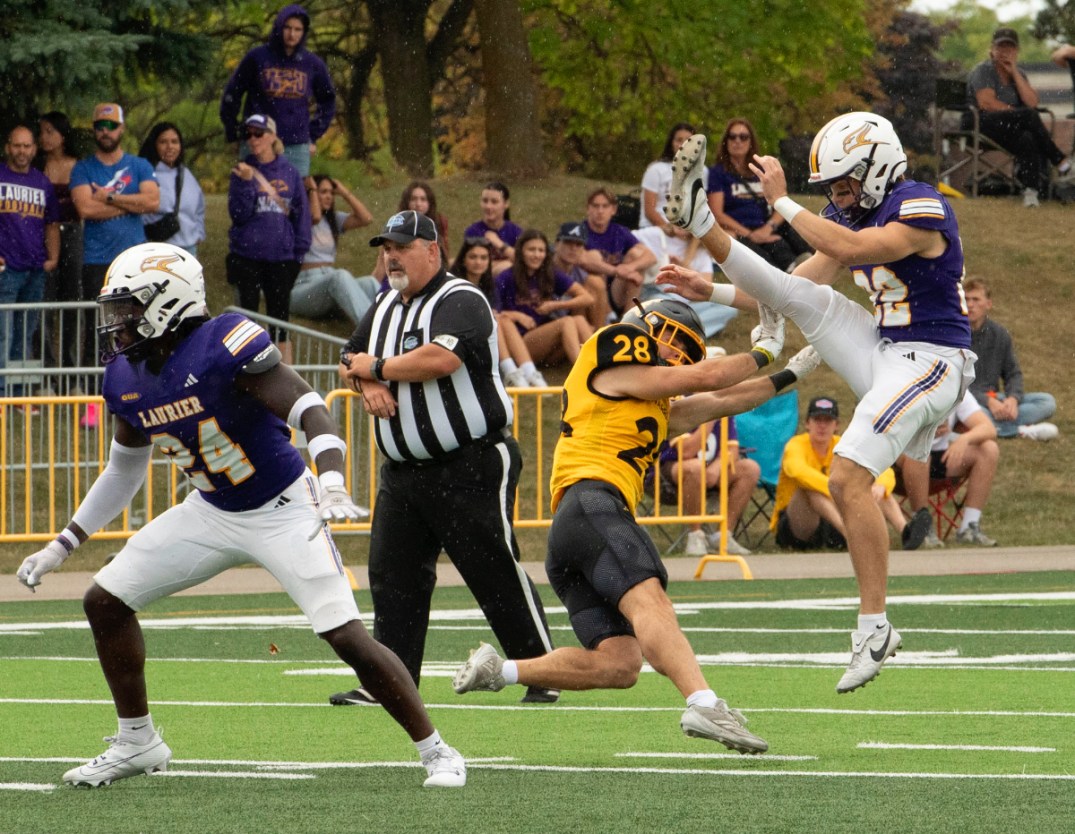
Saturday, Sept. 27, Hodge set a new school record for kickoff yards in a single game and became Laurier’s second-leading career scorer in the team’s 59-21 win over the University of Toronto Blues in Waterloo.
Hodge’s nine kicks from the tee sailed a total of 640 yards, breaking the previous record of 629 yards set in 2011 by former Canadian Football Leaguer Ronnie Pfeffer. Five of his kicks in Saturday’s game sailed deep into the Blues’ end zone for single points.
Hodge also kicked seven touchdown conversions as well as a field goal, bringing his career total points to 296.
“The guys had me working today. It was a lot of fun,” Hodge told Golden Hawks’ reporter Natasha Giannantonio after the game, which elevated the team’s record to six wins in six starts and solidified its place atop the U Sports national rankings for a sixth consecutive week.
Back to school
Hodge is in his fifth season at Laurier. He returned to the school for his final year of eligibility after failing to get selected in the CFL draft then attending training camps for the Toronto Argonauts and Saskatchewan Roughriders as a free agent last May. He kicked a 31-yard field goal in the third quarter of his lone appearance in an exhibition game, a 27-20 win by the Roughriders over the Winnipeg Blue Bombers.
Hodge didn’t start playing football until his senior year at Terry Fox Secondary School in Port Coquitlam, after his twin brother, Brandon, coaxed his soccer-playing sibling to try his toe as the Ravens’ kicker.
He subsequently helped the team reach the semi-finals of the 2018 Subway Bowl provincial championships.
Working to hone his game with former BC Lions kicker Lui Passaglia — who also happens to be a neighbour — Hodge turned heads at a high performance kicking camp attended by some of the best high school kickers in America then enrolled for an additional year of secondary school at a football academy in Toronto.
The strategy paid off.
Hodge was recruited by half a dozen university programs in Ontario as well as Simon Fraser University in Burnaby.
Kicking history
He opted for Wilfrid Laurier, which has a history of sending kickers like Pfeffer on to play in the CFL.
Hodge said it was a special moment when Pfeffer, who is a kicking consultant for his alma mater, celebrated his performance against the Blues.
“I have Ronnie mentoring me every day,” he said, adding Pfeffer “came over, shook my hand and said congratulations.”
In 2021, Hodge was awarded the Golden Hawks’ rookie of the year and the following season he was named an Ontario University Athletics all-star and second-team All-Canadian. The geography student is also a four-time U Sports Academic All-Canadian.
Last season, Hodge helped Laurier to its first appearance in the Vanier Cup national championship since 2005, where the team was defeated by the Laval Rouge et Or 22-17.
So far this season, Hodge has successfully hit on six of his 10 field goal attempts and all 29 of his point-after kicks. His kickoffs have sailed a total of 2,134 yards.
Laurier’s next game is Oct. 10, against the Carleton Ravens.
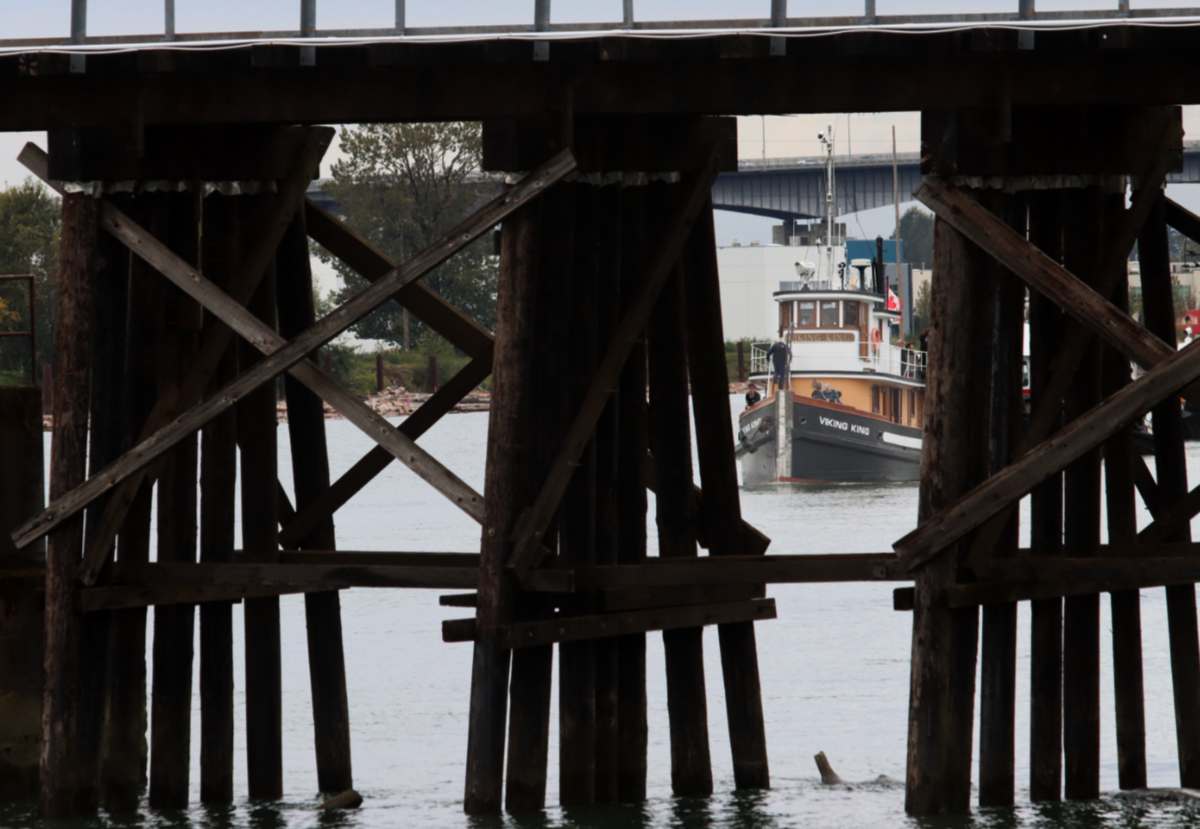
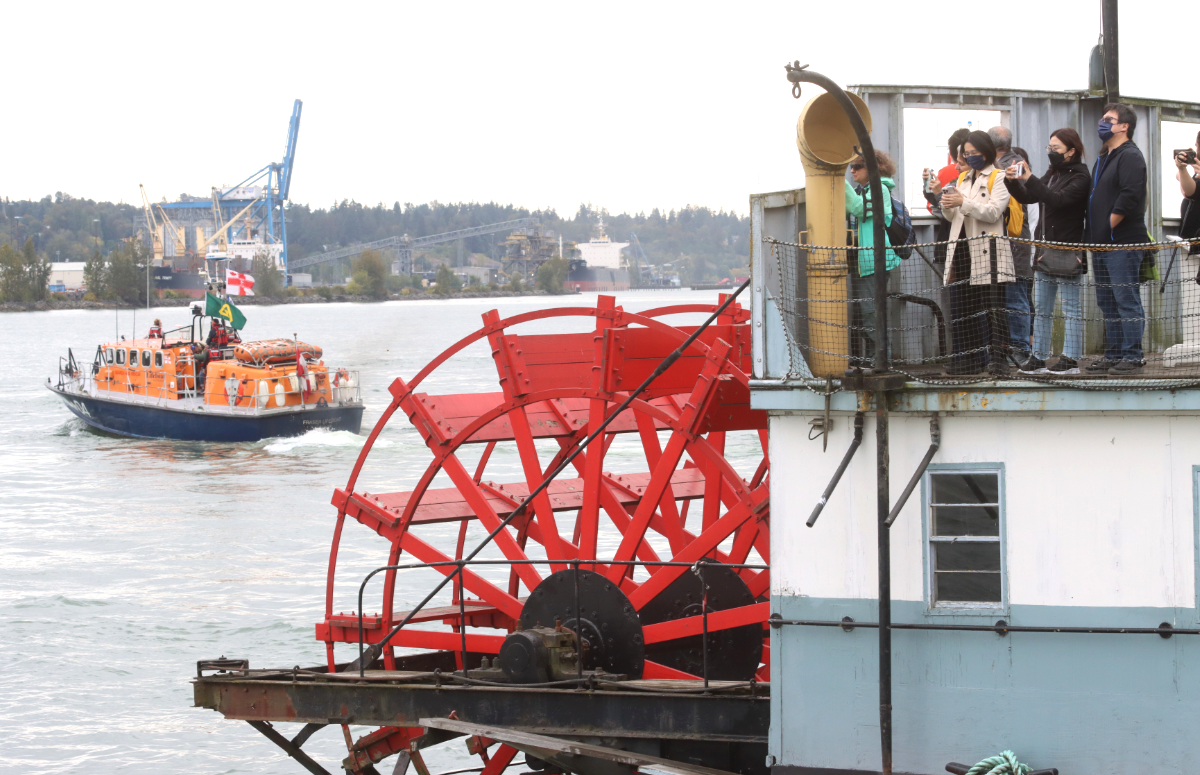
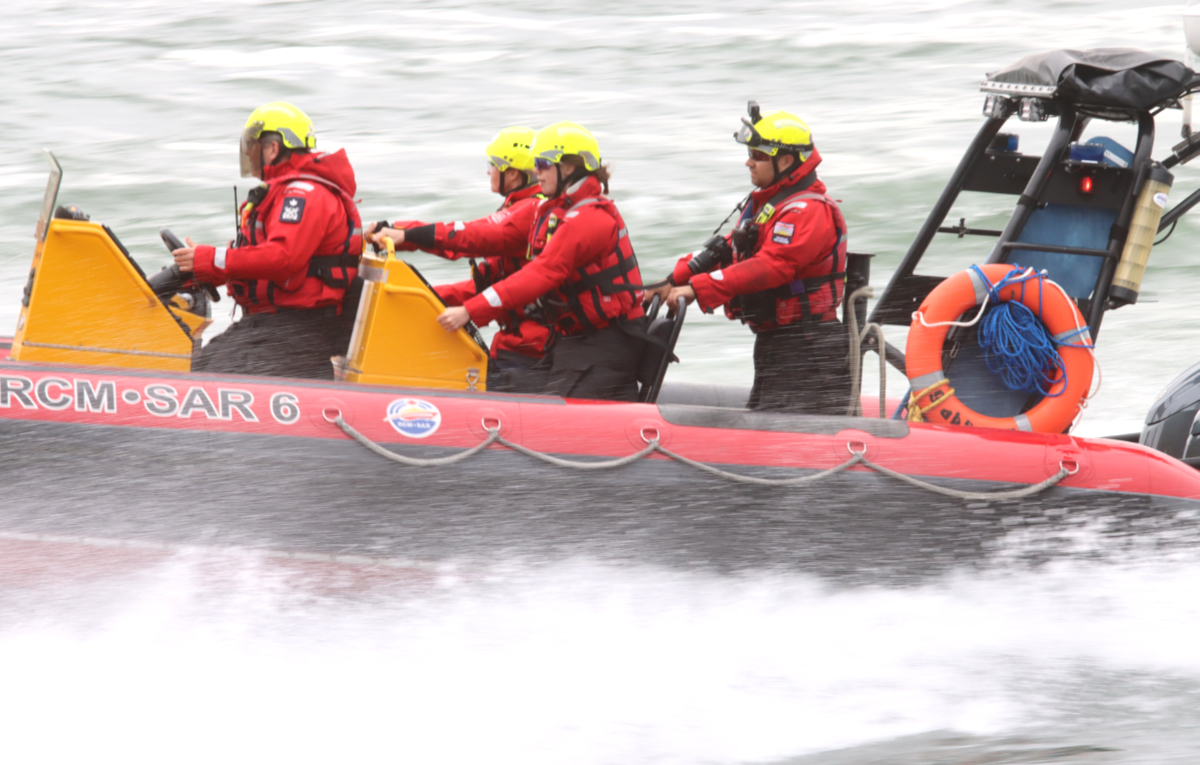
More than a dozen craft of different sizes and tasks sailed along New Westminster’s waterfront on Saturday, Sept. 27.
The annual Lucille Johnstone workboat parade is part of the RiverFest celebration of BC River’s Day.
The event is named in honour of the late Lucille Johnstone who helped build Rivtow into one of the largest tugboat operators in the world. She was also a driving force behind Expo 86. She’s also a recipient of the Order of British Columbia and Order of Canada.
This story first appeared in the Tri-City News in Feb., 2019
Al Ores helped build the sport of car racing in British Columbia. So much so, his efforts are being honoured by the Burnaby Sports Hall of Fame when he’s inducted as a builder on Feb. 28.
But the 85-year-old mechanic and racer can’t bring himself to visit the site where most of that building took place.
Almost 30 years after it was closed to make way for a golf course and luxury homes, the loss of the Westwood Motorsport Park on Coquitlam’s Westwood Plateau still cuts deeply into the heart of the province’s racing community.
“It was something very special,” Ores said of the 2.9 km track that sliced through the woods on the southern flank of Eagle Mountain.
Westwood was the first purpose-built permanent road racing course in Canada. It was constructed and operated by the Sports Car Club of British Columbia (SCCBC) to support grass roots racing and help develop young racers who were looking to step up from the go-kart track nestled inside Turn One of the eight-turn circuit. One of its most famous graduates was the late Greg Moore, who worked his way up from the karts at 10-years-old to Formula 1600 and 2000, Indy Lights and then won five races in four seasons in the Champ Car World Series before he was killed in a racing accident in California in 1999.
Ray Stec, who served as the president of the SCCBC three times, said while Westwood was geared toward the amateur racing crowd of local hobbyists and weekend warriors, the track’s unique challenges attracted some of the sport’s biggest names, like former Formula 1 world champion Keke Rosberg, Indy 500 winners Bobby Rahal and Danny Sullivan, Daytona 500 champion Bill Elliott, as well as Gilles Villeneuve and Michael Andretti in the formative years of their illustrious careers. Even the legendary Stirling Moss visited.
“The setting of the track was very technical and quick,” Stec said, recalling the often rainy conditions that made navigating the 15-degree banking of the first corner or the hump halfway along the long backstretch that was known as Deer’s Leap especially precarious and teeth-clenching. “The luminaries were all impressed with the facility. Nobody had negative comments about it.”
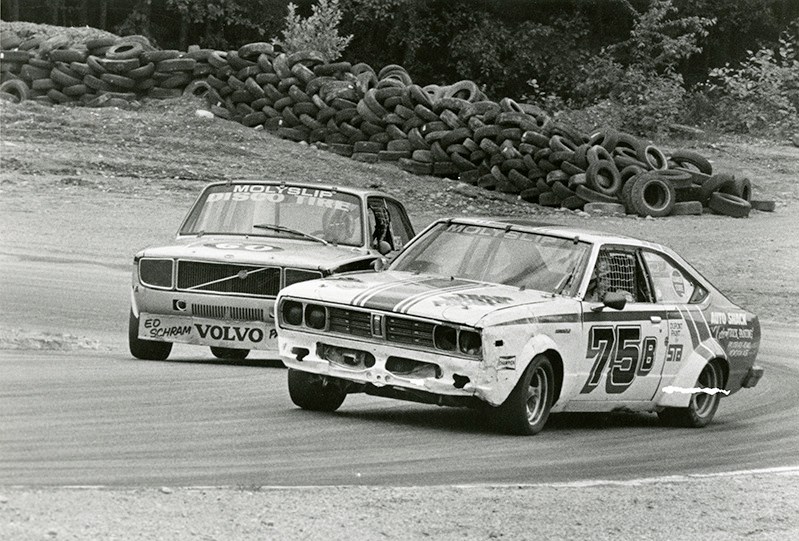
COQUITLAM ARCHIVES Racers clash in one of the famous turns at the old Westwood Motorsport Park that was closed in 1990, but not before it attracted a star-studded lineup of amateur racers from across North America, and top professionals from around the world, including Formula ! champions like Mario Andretti and Gilles Villeneuve.
Ores said the ability for amateurs to rub shoulders — and paint — with top professional racers was part of Westwood’s magic.
“You were just the average guy talking to these big time racers,” Ores said.
The hobbyist nature of the track also made it a family place, where the racers tried to keep their costs down by enlisting family members and friends to work in the pits, count laps, and keep time.
Ores said his four kids grew up at the track, helping out by bleeding brakes, or keeping time from the bleachers. All of them went on to take driver’s training at the track and his late son, Mike, raced for a stretch. Some of his grandchildren remain active in the sport.
“We were involved so much,” he said. “We lived up there the whole time in the summer.”
Westwood’s first official race was held on July 29, 1959. It attracted more than 20,000 spectators. Open-wheel Formula Atlantic cars raced there regularly from 1971 until it closed, as did sedans from the Sports Car Club of America Trans-Am series, the Players GM Challenge series and even high-powered Porsche 911s. Motorbikes, including ones with sidecars attached, held races there, and modified mud buggies churned around before the track was paved.
Ores recalled ploughing his way through two-foot snowdrifts to open the gates to the track so the Canadian military could conduct winter maneouvers there.
But as Vancouver’s urban sprawl began extending eastward towards Coquitlam, Ores said the racing community sensed the end of Westwood was nigh.
“We knew we were going to have to move,” he said, adding efforts to establish a new facility in the Fraser Valley inevitably ran into resistance.
“Even to the last year or two, we were still hopeful that the winds of politics would change and people would realize the value of the track being there,” Stec said.
When the checkered flag fell for the last time in August, 1990, it was a tough moment, said Ores, who was among the crew of volunteers who helped dismantle the track after it closed.
“We got so hooked being up there, it was like an addiction,” he said.
Stec said membership in the SCCBC plummeted from about 350 to 80 in the aftermath of Westwood’s closure. And while the club is back to around 350 members now as racers rent track time at Mission Raceway, it’s not the same.
“Racing has fallen out of the top of mind of people,” Stec said, adding the demise of high-profile events like the Vancouver Molson Indy, along with the declining interest in driving amongst young people hasn’t helped.
The Westwood track is memorialized in some of the Plateau’s street names, like Paddock Drive, Carousel Court and Deer’s Leap Place, that wind amidst the multi-million dollar homes and exclusive townhomes. But, Stec said, aside from a delivery he once made to the area, he’s had no inclination to revisit past glories on those streets.
“I just can’t bring myself to go up there,” he said. “Once the door closes, you can’t.”
Ores said he’s only visited once, to attend a friend’s memorial at the golf club.
“I went on the balcony and saw part of the pits, the way it was, and turn one, and that’s it, I don’t want to go back there anymore,” he said.









 MARIO BARTEL