
The story of the COVID-19 pandemic is still being written. While the immediate fear and uncertainty of the public health scare has faded into the background of our memories, its impact on our daily lives endures.
The first story, about a pair of local athletes preparing to represent Canada at the World Ultimate Championships, was actually ready to go into the Tri-City News when the pandemic hit. A quick rewrite of the lede accounted for the unknown we were all facing at that time while still sharing their journey.
Of course, the pandemic turned out to be more than just a minor speed bump, and three years later I was able to connect with the same athletes to reflect on how it had shaped their lives and aspirations and their own plans to move forward.
A pair of Ultimate players from the Tri-Cities will have to wait a little longer to get to know their teammates on Canada’s national U20 team.
A special four-day training camp that was scheduled to be held at Coquitlam’s Gleneagle secondary school March 19 to 22 has been postponed because of the COVID-19 pandemic.
Coquitlam’s Devon Bringeland and Port Coquitlam’s Ricky McLeod are among the 28 Ultimate athletes who will compete for Canada at the 2020 World Junior Ultimate Championships in Malmo, Sweden, July 18 to 25.
Bringeland, who turns 19 this week, said it was Ultimate’s supportive, nurturing spirit that attracted him to the sport when he was in Grade 6 at Stratford Hall, an independent school in Vancouver.
“In Ulitmate, we’re all in it together,” said Bringeland, who’s now studying kinesiology at the University of British Columbia.
McLeod, who’s also 19, said the community vibe of Ultimate is a marked contrast to the negativity he experienced when he was playing competitive soccer.
“Being nice to your opponent is part of this sport,” said McLeod, who finally made the national team after he failed to make in his first attempt a few years ago.
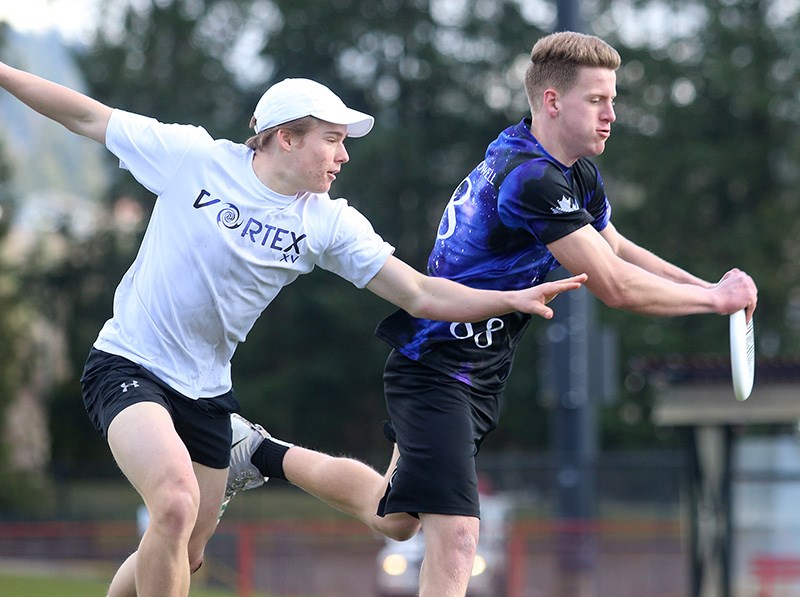
Not that players’ competitive zeal is diminished by their collegial attitude, that’s been a touchstone of the sport since it was invented at a high school in New Jersey in 1968, said the national team’s head coach, Michael Fung.
To get named to Canada’s roster, athletes first had to catch the eye of coaches responsible for selection camps in each of the sport’s regional hubs in Canada — Vancouver, Winnipeg, Metro Toronto and the Ottawa-Gatineau area. Prospective players were tested for their fitness and then run through various drills and scrimmages to showcase their skills. Those who made the cut then attend two training camps prior to worlds to get to know each other and learn how to work together.
“Chemistry is huge in Ultimate,” Fung said, adding each part of the country approaches the sport and its strategies a little differently.
Turning disparate athletes into a cohesive unit when everyone is mostly apart, doing their own thing on club or school teams is an ongoing challenge, he said. Players stay in touch via a Facebook group, they review game recordings and strategy sessions together online, and they share fitness challenges.
“We have to create a platform for them to get to know each other,” Fung said, adding the training camps, that are often based out of someone’s home, can be especially beneficial to achieve that as players have to live, cook, and eat together in close quarters.
He said routine tasks like navigating meal times, cleaning up and sharing bathrooms, as well as planned bonding activities like ping pong and video game tournaments can help develop the synchronicity and communications skills that are vital to success in actual games. It also helps save money as, aside from some small sponsorship to pay for uniforms, everyone on the team pays their own way.
Bringeland said the sacrifices are worth it, especially as the sport’s popularity grows beyond its power base in the United States and Canada; 30 teams will compete in Sweden.
“It’s the next level,” he said of competing at the worlds, which are contested every two years. “It’s what everyone in the sport is driving for, to represent their country.”
Tri-City Ultimate athletes getting a second chance to represent Canada
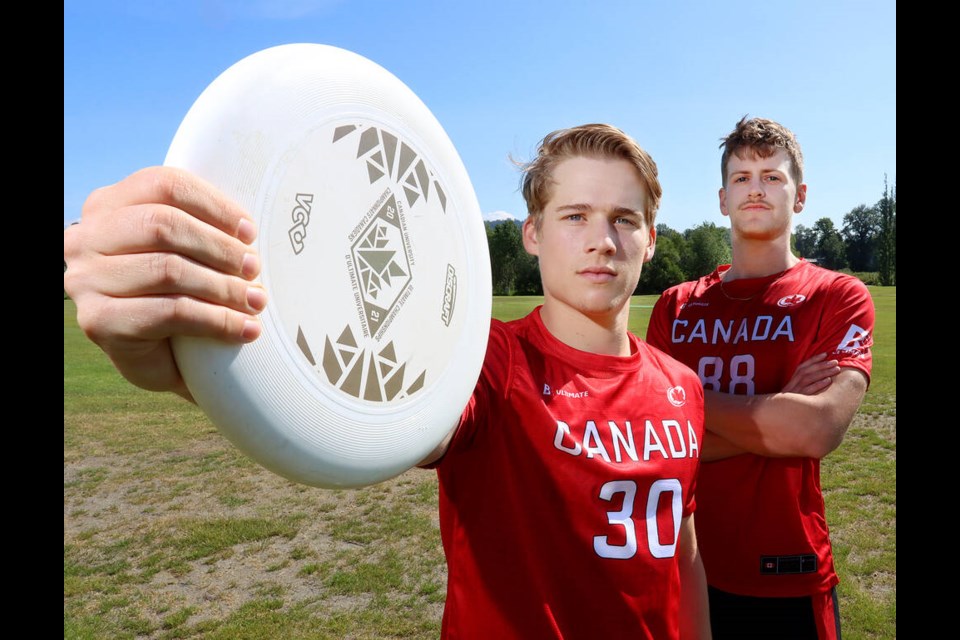
There’s nothing like having something snatched away to motivate you to want it even more.
Port Coquitlam’s Ricky McLeod and Coquitlam’s Devon Bringeland were about to participate in a special training camp for Canada’s national Ultimate team heading to the U20 world championships in Malmo, Sweden, three years ago when the global COVID-19 pandemic yanked away their dream.
This year, they’re back as members of the U24 national side that will be one of 15 teams competing in the open division at the 2024 championships in Nottingham, England, July 2–8.
In between, McLeod and Bringeland had to soothe the sting of missing their chance to compete at the 2020 worlds and embarked on busy studies at the University of Victoria and the University of British Columbia, respectively, recommitted to their training and stepped up their game playing for Canada’s top men’s club: the Vancouver Furious George.
All with their eyes firmly fixed on the prize of being the best in the world.
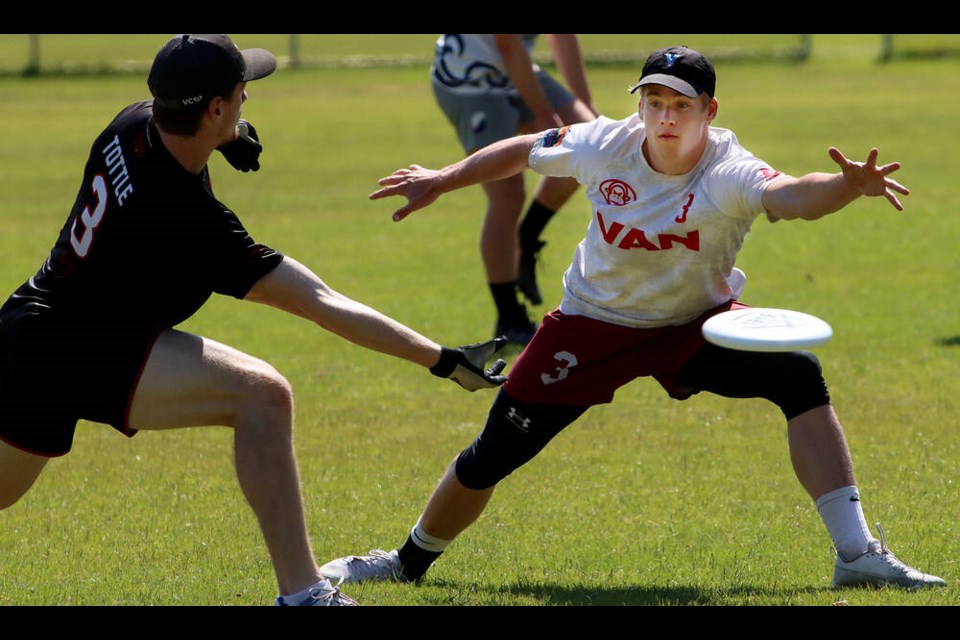
Bringeland said getting robbed of the worlds in 2020 was “an emotional roller coaster” that took him a while to ride out.
“It was heartbreaking,” he said. “Making Team Canada was something I’d dreamed about.”
McLeod said the COVID-19 shutdown in the spring and early summer of 2020 put his Ultimate aspirations at a crossroads.
“You could quit, or you could work even harder.”
By late summer, as public health restrictions eased and sporting activities resumed, the fire to compete had reignited in McLeod and Bringeland.
“I was missing it,” McLeod said. “As soon as I got a taste of it, I was hungry for the future.”
Bringeland said the competitive progression from U19 to U24 is significant. Speed, intensity, athleticism, skill and strategy are all kicked up a notch.
“It’s a huge step up from juniors,” added McLeod.
In anticipation of their next opportunity to play for Canada, McLeod and Bringeland hit the gym to develop their strength, power and explosiveness.
They ran 10 X 400 m laps around the track for endurance.
They honed their fitness to prevent injury and to sharpen their competitive instincts, they tried out — and made — the Furious George side that has won 11 Canadian championships.
They also play for their respective university teams that are part of U.S.-based leagues.
Bringeland said at its top level, Ultimate is no longer about the good-time vibes and tie-dye shirts that come from the sport’s hippie roots, although games are still self-refereed that commands a high level of respect and communication between opposing players.
“It’s a pure level of competition,” McLeod said. “But you don’t yell at people.”
Aside from the physical preparation to compete on the world stage, there’s also a playbook of set offensive and defensive strategies to learn — much like football — and money to be raised.
Canada’s national Ultimate program doesn’t receive government funding, so the athletes have to pay their own way to competitions — about $5,000 for the season. That means bunking down en masse at someone’s family home during training camps, carpooling to and from the fields and cooking communal meals.
It also obligates team members to launch personal GoFundMe campaigns and hit up corporate contacts for whatever support they can muster.
All while keeping up with their studies and part-time jobs.
“It’s a lot of late nights,” said Bringeland.
But the payoff will be worth the sacrifices, said McLeod.
“We take it very seriously,” he said. “Our goal is to dominate.”
 MARIO BARTEL